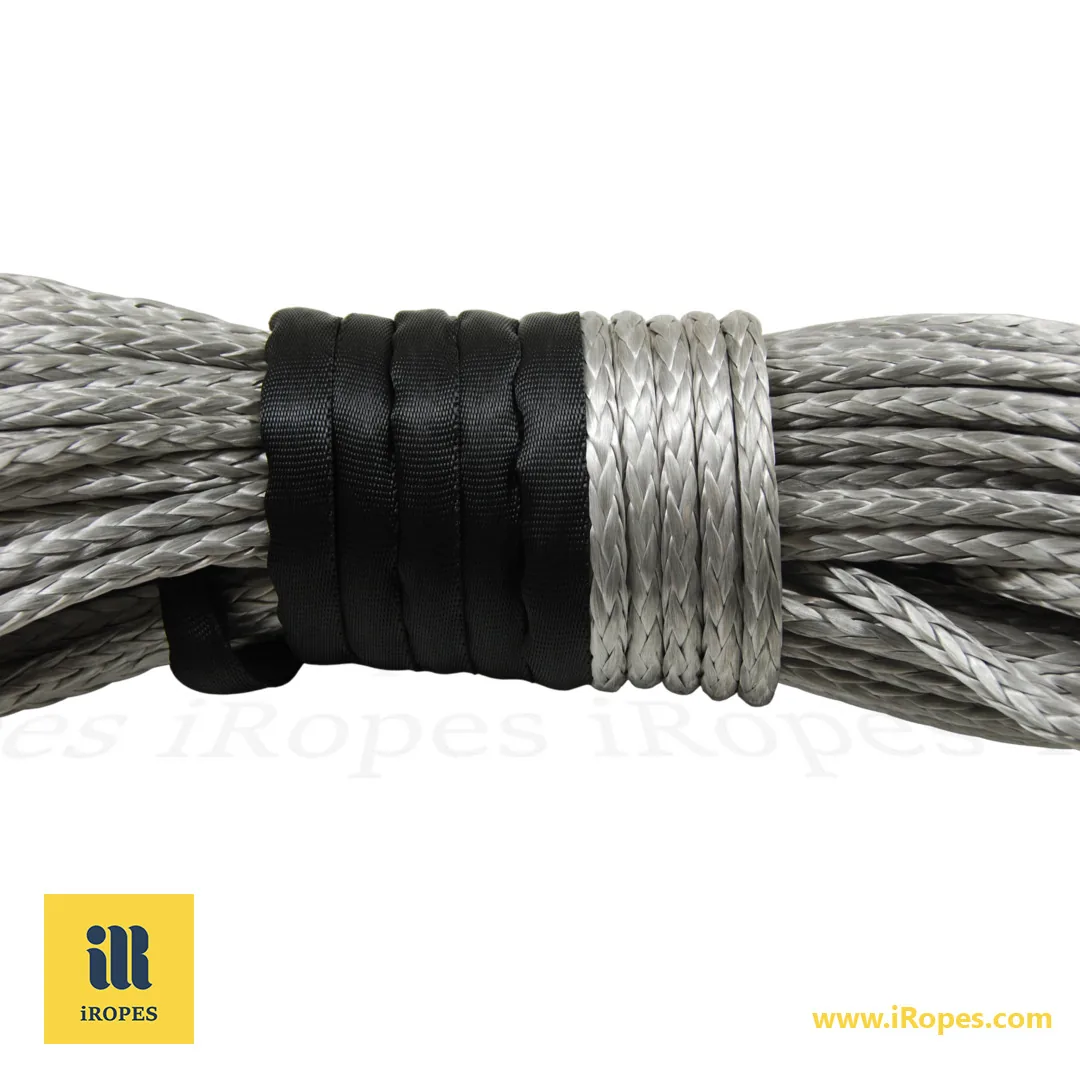
iRopes’ 15‑year stretch‑testing and post‑setting process minimises elongation to within EN 1891‑A’s ≤ 5 % limit — delivering more consistent load‑position accuracy.
Read in 2 minutes – what you’ll gain
- ✓ Reduce rope give to low‑stretch levels → tighter lifts and fewer re‑adjustments.
- ✓ Choose the optimal material (nylon, polyester or polypropylene) with a clear stretch chart.
- ✓ Apply a quick safety‑factor formula (SWL ≈ MBS ÷ 5) to size diameter in seconds.
- ✓ Unlock iRopes’ custom‑branding service that safeguards your IP and meets EN 1891‑A requirements when specified.
Most engineers assume any rope labelled ‘low‑stretch’ will keep a heavy load steady, yet many general‑purpose ropes still elongate 7–15 % under working load, causing drift and re‑rigging. iRopes has developed proprietary drawing, stretching and setting equipment over 15 years. By pre‑stretching and heat‑setting each build, we minimise elongation and maximise strength, then validate performance on a calibrated test rig. Keep reading to discover the steps that turn that process into measurable performance on your next project.
Understanding low stretch rope: Definition, standards and stretch limits
After seeing how iRopes’ specialised equipment trims unwanted give, it’s worth clarifying what actually qualifies as a low stretch rope. In plain terms, it is a rope that stretches no more than 5 % of its original length under the standard’s specified test loads.

The European standard EN 1891‑A defines low‑stretch kernmantel ropes with static elongation ≤ 5 % under specified test loads. Manufacturers demonstrate compliance through repeatable lab tests, and iRopes records test results for full traceability before the product leaves the factory.
- Definition – a rope that elongates no more than 5 % of its original length under the standard’s test loads.
- Standard – EN 1891‑A specifies the ≤ 5 % requirement for low‑stretch classification.
- Typical use – applications that demand precise positioning, such as rigging heavy loads or marine anchoring.
Measuring that tiny amount of give follows a straightforward method. First, the rope is secured on a calibrated load frame. A known load is applied, and the resulting elongation is recorded in millimetres. The stretch percentage is then calculated as (elongation ÷ original length) × 100. This simple formula turns a raw number into an easily comparable metric.
When people ask, “How much stretch is in low stretch rope?” the answer is clear: ≤ 5 %. For example, a 2‑metre rope at the standard’s test load would lengthen by no more than 10 cm, keeping the system’s geometry largely unchanged.
At iRopes we have refined proprietary drawing, stretching and setting equipment over 15 years. Each batch is pre‑stretched and set, then loaded to specified test loads while we record exact elongation — ensuring every low‑stretch rope we ship is validated to the EN 1891‑A ≤ 5 % limit when required and delivers predictable performance.
Understanding these definitions and measurement basics sets the stage for selecting the right low stretch cord for your project, whether you’re weighing nylon, polyester or even considering the unique behaviour of polypropylene rope stretch.
Choosing the right low stretch cord for specific applications
Now that you understand the definition and the testing method, the next step is matching the material to the job. The right low stretch cord can mean the difference between a precise lift and an unexpected swing.

The three most widely used polymers each bring a distinct stretch profile:
- Nylon
- Polyester
- Polypropylene
Nylon offers high tensile strength but typically elongates around 15 % under load, making it less suitable when you need tight positioning.
Polyester sits in the middle ground with a stretch of roughly 8 % and a good balance of UV resistance and strength, ideal for outdoor rigging.
Polypropylene is a low‑stretch contender for many marine and utility tasks, stretching only 3‑5 % and floating on water because of its low density.
When you decide which diameter and core to specify, start with the maximum load your application will see, then apply the common safety‑factor rule (SWL ≈ MBS ÷ 5). Choose a larger diameter if the calculated safe‑work load falls short, and select a core type — solid polyester or parallel‑core nylon — that complements the required flexibility.
Is polypropylene rope low stretch? Yes — its typical 3‑5 % elongation under standard test loads meets the ≤ 5 % criterion defined for low‑stretch products, while also providing buoyancy for dock‑line use.
iRopes Custom‑Cord Expertise
With 15 years of dedicated research, iRopes has built proprietary stretching and setting equipment and a calibrated test rig. Our engineers can tailor diameter, core composition, colour and branding while validating the exact stretch performance you specify, including EN 1891‑A compliance on request.
Armed with the material data and sizing guidelines, you can now move on to the final stage: understanding polypropylene’s marine advantages and the remaining trade‑offs before placing an order.
Polypropylene rope stretch characteristics and marine advantages
When a line is required to stay taut yet float freely, polypropylene often becomes the material of choice. Its density of about 0.9 g/cm³ means the rope naturally stays on the surface, eliminating the need for extra buoyancy aids.

Typical polypropylene rope stretch falls between 3 % and 5 % under standard test loads, which satisfies the EN 1891‑A definition of a low stretch rope. This modest elongation keeps positioning errors minimal, a crucial factor for precise marine operations such as mooring or rescue line deployment.
Beyond stretch, the material brings two marine‑specific benefits. First, the inherent buoyancy keeps the line visible and prevents it from sinking if it parts from a dock. Second, the low density reduces overall rig weight, making handling on deck quicker and less fatiguing.
For comprehensive guidance on marine rope fittings, refer to our Mastering Marine Rope Fittings with iRopes article.
Advantages
Why PP shines in marine work
Buoyancy
Density ~0.9 g/cm³ makes the rope float, ideal for dock‑lines and rescue lines.
Low stretch
Typical elongation 3‑5 % under test load meets EN 1891‑A low‑stretch definition.
Cost‑effective
Polypropylene is cheaper per metre than nylon or polyester, reducing project expenses.
Considerations
Limitations to keep in mind
UV exposure
Sunlight degrades polymer chains, cutting strength by up to ~50 % after about six months without UV inhibitors.
Strength
Lower tensile strength than nylon; larger diameters are required for heavy loads.
Heat
Melts above ~160 °C, so it’s unsuitable for high‑temperature environments.
Apply a UV‑inhibitor coating or store rope in shade to preserve strength over time.
iRopes validates every batch of polypropylene with the same testing and post‑setting process used for all low stretch ropes. Each coil is pre‑stretched and set, then loaded to specified test loads; the elongation is recorded and the result is logged before the product leaves the factory. This systematic approach ensures every metre you receive performs within the expected 3‑5 % window.
Armed with these performance insights, the next logical step is to match the rope’s specifications to your project’s load and environmental requirements.
Buying guide and custom solutions with iRopes
Having explored how polypropylene rope stretch delivers reliable performance, the logical next step is to align those numbers with your project’s budget, environment and safety requirements – and then see how iRopes can turn those specs into a rope that bears your brand.
Key Buying Criteria
Load capacity, operating environment, price per metre and certification (EN 1891‑A, NFPA 1983) form the decision‑making backbone.
If you are considering polyester options, our Unlock Top Performance with Low Stretch Polyester Rope guide provides detailed insights.
Load & Safety
Calculate the maximum working load, then apply a safety factor of 5 or 4 for dynamic applications. Choose a diameter that keeps the safe‑work load above your peak force.
Environment
UV‑intense sites benefit from polyester‑core ropes with UV inhibitors, while marine settings favour polypropylene’s buoyancy and low‑stretch profile.
Cost & Certification
Compare price per metre against the required EN 1891‑A or NFPA 1983 certification. Certified low‑stretch rope guarantees the ≤ 5 % stretch limit.
Custom Diameter & Colour
iRopes can produce a wide range of diameters and match your corporate palette, ensuring visual consistency across your fleet.
Branding & Accessories
Add loops, thimbles, colour‑coded tags or your logo directly onto the rope or its packaging — all without compromising low‑stretch performance.
IP Protection & ISO 9001
Every custom batch is recorded in our secure IP‑protected workflow and audited to ISO 9001 standards, guaranteeing traceability and quality.

When you request a free quote, our engineers will apply the same 15‑year‑refined testing and post‑setting process that validates every metre of low stretch rope. You’ll receive a downloadable spec sheet that details tensile strength, stretch percentage and compliance certificates, so you can compare options side‑by‑side before placing an order.
Explore iRopes' ultimate rope and wire rope shop and download the low‑stretch rope specification sheet to see exactly how iRopes can meet your performance and branding goals.
Need a personalised low‑stretch rope solution?
Now that you know the EN 1891‑A ≤ 5 % definition, the material choices and the marine benefits of polypropylene, you can confidently select a rope that offers precise positioning while staying light and buoyant. iRopes’ 15‑year legacy — including proprietary stretching and setting equipment — ensures every product, whether a low stretch rope or a low stretch cord, is built to meet exact elongation targets, and our polypropylene rope stretch performance is validated for each batch. Pair these insights with the buying guide to match load, environment and certification, and you’ll have a solid foundation for a safe, efficient solution.
If you’d like a tailored recommendation based on your specific load, environment or branding needs, simply fill out the form above and our engineers will get back to you.