iRopes supplies customised synthetic ropes that deliver up to 10× the strength of comparable cotton lines, with competitive pricing and OEM lead times as fast as 4–6 weeks ⚡.
What you’ll gain – approx. 12‑minute read
- ✓ Reduce total cost of ownership on bulk orders compared with many domestic options.
- ✓ Cut custom‑order lead time from 6–12 weeks to 4–6 weeks, depending on scope.
- ✓ Choose high‑performance fibres such as UHMWPE, Technora™, Kevlar™, Vectran™, polyamide and polyester, with typical tensile strengths of 10,000 lb – 30,000 lb for advanced lines.
- ✓ Protect your designs with a worldwide IP‑confidentiality agreement.
Many buyers assume only a USA‑made rope guarantees strength, compliance and brand safety—a belief that can inflate costs and stretch lead times. What if you could combine rigorous quality control with a Chinese‑engineered synthetic line that offers up to 10× higher tensile strength versus cotton, faster delivery, and full IP protection? In the sections below, we outline a practical decision matrix that helps you unlock those gains without compromising standards.
Understanding the Role of a rope manufacturer USA
Now that you see why rope quality matters in demanding projects, it’s time to unpack what makes a rope manufacturer USA truly reliable. Knowing the hallmarks of a reputable supplier helps you avoid costly missteps before you place a bulk order.
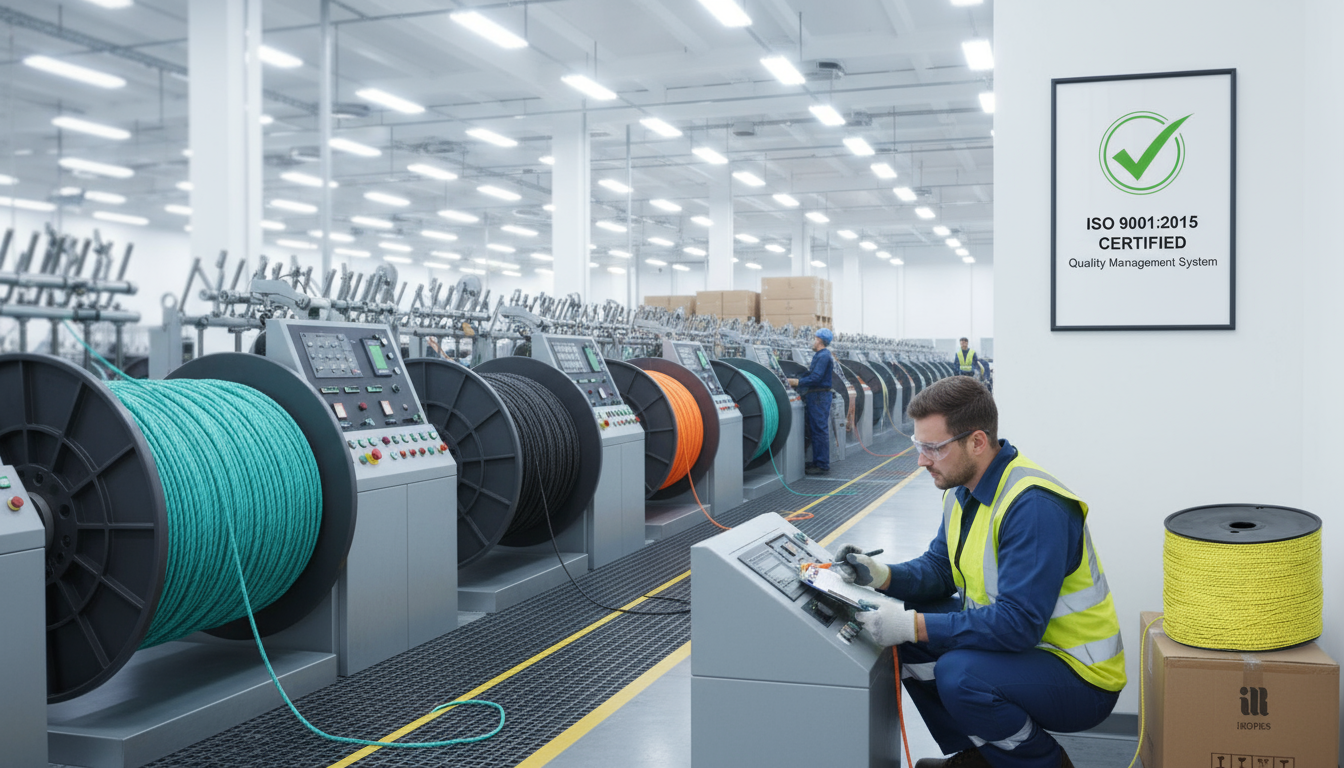
Key hallmarks of a reputable rope manufacturer USA
- ISO 9001 certification – shows the company follows a systematic quality‑management system across design, production and after‑sales support.
- OEM/ODM capabilities – let you request a fully customised rope, from fibre selection to colour, branding and specialised terminations.
- Traceable domestic supply chain – demonstrates that the majority of manufacturing costs occur in the United States, supporting the FTC “Made in USA” threshold.
With those criteria in mind, several firms consistently rank at the top. Atwood Rope produces extensive utility and kernmantle lines for commercial and outdoor use. SGT KNOTS focuses on 100 % USA‑grown cotton rope, catering to décor, crafts and low‑load marine uses. Rope Inc. offers a broad catalogue ranging from heavy‑duty polyester to lightweight nylon. Right Rope is known for colour‑customisation options and rapid‑turnaround OEM projects for outdoor equipment brands.
What are the best rope manufacturers in the USA?
- Atwood Rope – marine and industrial kernmantle, ISO 9001, 37‑year heritage.
- SGT KNOTS – 100 % USA‑grown cotton, extensive colour palette, custom spooling services.
- Rope Inc. – heavy‑duty polyester, nylon and polypropylene, fast lead times.
- Right Rope – colour‑branding, low‑MOQ OEM, strong focus on outdoor‑sport markets.
- iRopes (benchmark) – China‑based synthetic‑fibre specialist, useful for cost‑sensitive international projects.
Understanding these strengths sets the stage for the next step: confirming that the rope you purchase truly qualifies as USA‑made. The verification methods below help you cross‑check labels, cost breakdowns and plant addresses, ensuring the supplier lives up to its claims.
How to Verify That a Rope Is Truly USA Made Rope
After learning what makes a reputable U.S. rope maker reliable, the logical next step is to prove that the rope you are about to buy genuinely meets the “USA‑made” claim. The Federal Trade Commission (FTC) sets a clear benchmark, and a systematic check can protect you from misleading labels.
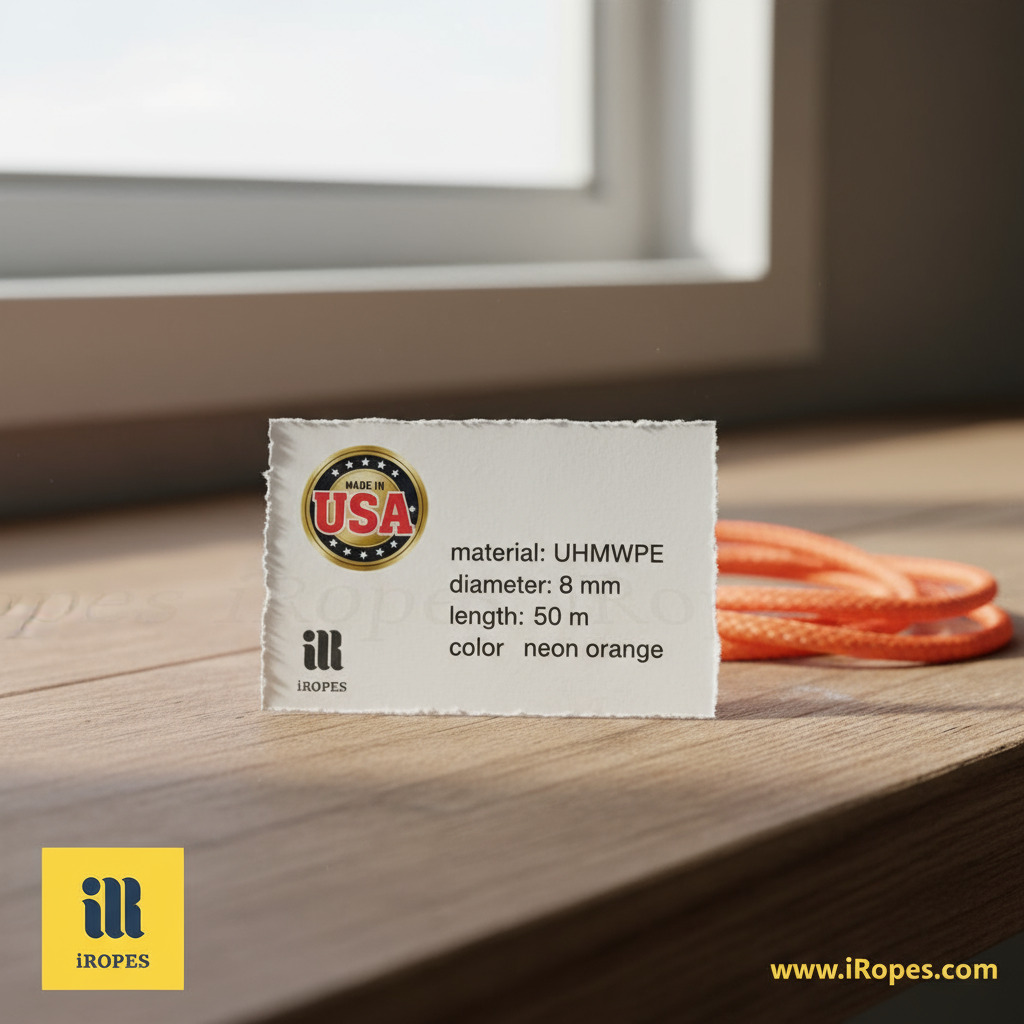
The FTC’s “Made in USA” standard requires that more than 75 % of the total manufacturing costs be incurred within the United States. This includes raw‑material acquisition, processing and final assembly. Anything below that threshold can only use the phrase in a qualified statement, such as “Made in USA with imported components.” Knowing this rule helps you spot half‑truths early.
Step‑by‑step verification checklist
Use the following quick audit whenever you receive a quote or product sample. Treat each item as a gate—if the answer is “no,” ask the supplier for clarification before committing.
USA‑Made Verification
1. Label review – locate a visible “Made in USA” badge and note the manufacturer’s name and address.
2. Cost breakdown request – ask for a detailed invoice that separates material, labour and overhead costs; confirm that the sum of U.S.‑based expenses exceeds 75 % of the total.
3. Domestic plant confirmation – verify the listed address with a public business registry or a site‑visit photo; the plant should be on U.S. soil, not merely a sales office.
4. Certification check – look for ISO 9001 certification and test reports to ASTM D2256; supporting documents should reference the relevant U.S. facility.
5. Third‑party audit – request an independent compliance review or a signed “Made in USA” statement for your records.
Answering each of those points gives you a concrete picture of where the rope originates. For example, a label that reads “Made in USA” but is paired with a plant address outside the country fails step 3, and the cost sheet will usually reveal a sub‑75 % domestic share.
How can I tell if a rope is truly Made in USA?
The answer can be distilled into three actions: first, inspect the label for a bona‑fide badge and domestic address; second, request a cost‑allocation statement that demonstrates the 75 % threshold is met; third, cross‑verify the manufacturing site through public records or a supplier‑provided facility photo. When every step aligns, you have solid evidence that the rope qualifies as genuine USA‑made.
FTC guidance makes clear that “Made in USA” is a legal standard, not a marketing slogan. In practice, a transparent cost breakdown is often the most persuasive evidence of compliance.
By applying this checklist, you can move from a vague claim to a data‑driven confirmation. The process also builds a paper trail you can present to compliance teams or procurement auditors, ensuring that every rope in your inventory supports the domestic‑manufacturing narrative you value.
Now that you have a reliable verification method, the next part of the guide explores the niche world of cotton‑rope manufacturers in the United States and why their natural‑fibre products often merit special consideration.
Exploring cotton rope manufacturers USA and Their Unique Offerings
Now that you know how to confirm a genuine USA‑made claim, the next logical step is to see which domestic producers actually spin 100 % cotton rope and what makes their products distinct.

Cotton rope is a natural‑fibre product that absorbs moisture without losing grip, making it ideal for decorative projects, craft applications, light‑duty tie‑downs and low‑load marine uses. Typical tensile strength falls between 300 lb and 600 lb for a 3/16‑in diameter strand, which suits applications where flexibility and a pleasant hand feel matter more than extreme load capacity.
Key Cotton‑Rope Specs
What to expect from US‑made cotton rope
Diameter range
1/8 in to 1 in, covering fine craft through to utility needs.
Typical tensile
300 lb – 600 lb for 3/16 in, scaling proportionally with size.
Environmental note
Biodegradable and free from synthetic off‑gassing—suited to eco‑conscious projects.
Leading cotton rope manufacturers USA
Brief specs for each supplier
SGT KNOTS
100 % USA‑grown cotton, wide colour selection and custom spooling, diameters 1/8–1 in.
Mountain Thread
Artisanal cotton rope with low MOQs and natural‑dye options for décor and craft.
Atwood Rope
Offers cotton cord and utility lines alongside broad paracord ranges, with multiple length options.
Rope Inc.
Supplies cotton and blended ropes with quick‑turn OEM support for commercial buyers.
Right Rope
Known for colour‑branding services and sustainable options, including recycled‑polyester lines.
Below is a quick reference of the most common diameters and the lengths that suppliers typically stock. This format mirrors the featured‑snippet tables that rank for the query “What sizes/lengths are available for U.S. cotton rope?”
| Diameter | Standard Length Options (ft) | Typical Tensile Strength (lb) |
|---|---|---|
| 1/8 in | 10 – 500 | 300 – 350 |
| 3/16 in | 50 – 1500 | 450 – 600 |
| 1/4 in | 100 – 3000 | 600 – 800 |
| 1/2 in | 200 – 3000 | 1500 – 2000 |
Armed with these dimensions, you can match the rope’s load‑bearing capacity to your project’s needs. In the next section, we compare these U.S. cotton options with international synthetic alternatives to see when iRopes may be the more strategic choice.
Comparing US and International Rope Options: When to Choose iRopes
After seeing how U.S. cotton rope stacks up, it’s useful to broaden the view and ask: when does an overseas supplier actually give you a better deal? The answer lies in the blend of fibre performance, pricing structure and the extra services that a global partner can provide.
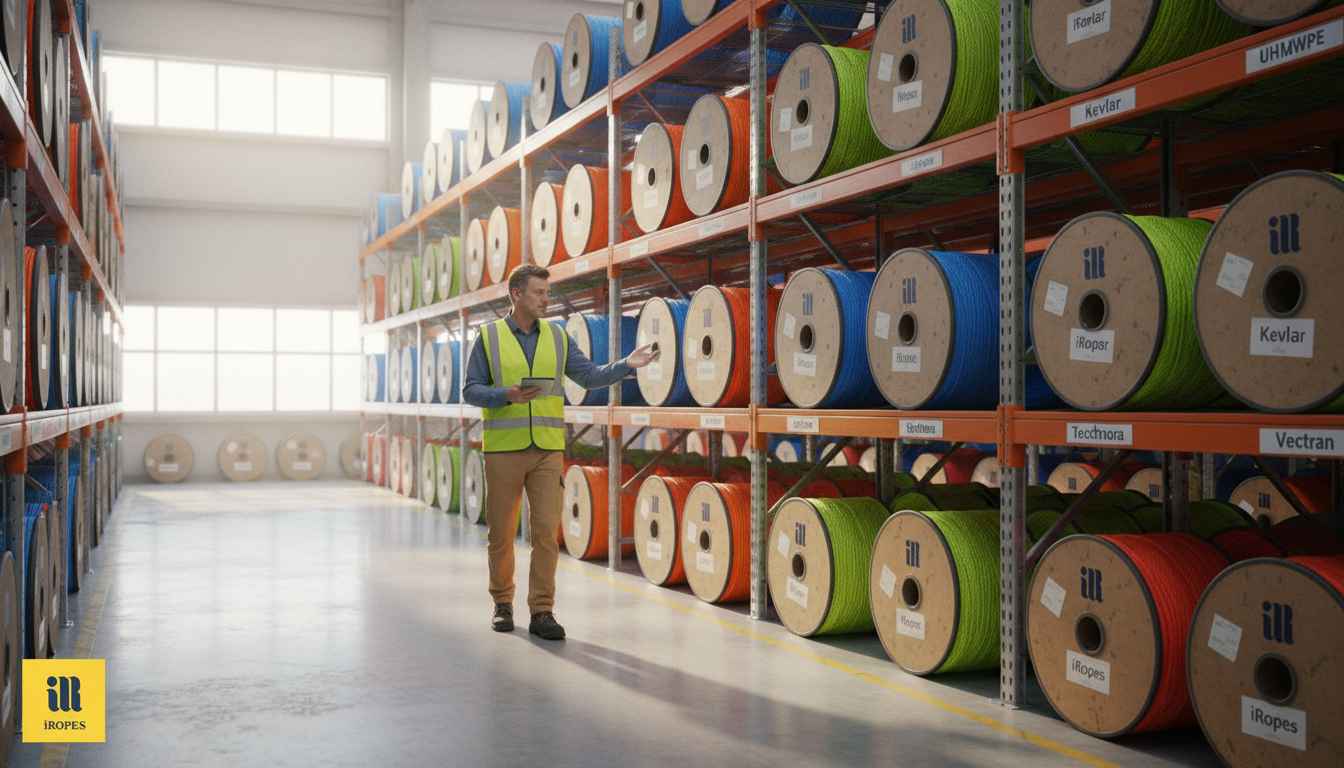
iRopes’ synthetic‑fibre portfolio
iRopes manufactures ropes from a selection of high‑tech polymers. With 15 years of experience in China and a catalogue of 2,348 cordages for marine, racing sports, industrial and safety uses, we tailor fibres and constructions to suit precise loads and environments.
- UHMWPE – ultra‑light, high‑strength fibre ideal for marine winch lines.
- Technora™ – high‑temperature resistance for heat‑exposed applications.
- Kevlar™ – excellent cut resistance where abrasion is a concern.
- Vectran™ – very low stretch for precision‑control applications.
- Polyamide & polyester – versatile, cost‑effective choices for general‑purpose rope.
Compared with cotton rope, the differences are stark. Cotton typically offers 300–600 lb tensile strength for a 3/16‑in strand and absorbs water—useful for decorative or low‑load marine uses. Synthetic fibres can deliver ten times the strength, minimal water uptake and greater UV resistance. That performance gap often justifies the higher material cost in demanding industrial or marine environments.
Cost, lead time and customisation flexibility
U.S. manufacturers usually quote a higher per‑foot price because domestic labour and compliance overheads are included. Lead times for standard stock are respectable (2–4 weeks), but bespoke OEM projects often extend to 6–12 weeks. iRopes, operating from a Chinese production hub, leverages economies of scale to keep unit prices competitive, and our streamlined supply chain frequently delivers custom‑spooled orders within 4–6 weeks. For projects requiring especially robust dimensions, our custom large‑diameter rope solutions provide industrial‑grade strength.
When you factor in shipping, duties and lead time, iRopes can often deliver a lower total cost of ownership than a domestic supplier for large‑volume orders.
IP protection and international shipping benefits
For wholesale customers who guard proprietary designs, iRopes offers formal IP‑confidentiality throughout the process. We also provide non‑branded or customer‑branded packaging, direct pallet shipping and full customs documentation, simplifying deliveries into North America, Europe and Australia. Our ISO 9001‑certified quality management underpins every order.
In short, if your project demands the highest strength‑to‑weight ratio, a tight production schedule or a bespoke colour‑code that would be cost‑prohibitive domestically, iRopes presents a compelling alternative to the traditional rope manufacturer USA while meeting rigorous quality standards.
Get a personalised rope solution
By now you’ve seen what defines a reputable rope manufacturer usa, how to confirm a genuine usa made rope claim, and the specific offerings of cotton rope manufacturers usa. You also understand when iRopes’ 15‑year expertise in UHMWPE, Technora™, Kevlar™, Vectran™ and polyester synthetic fibres—backed by ISO 9001, comprehensive OEM/ODM, and a catalogue of 2,348 cordages—can deliver stronger, faster and more cost‑effective solutions.
If you’d like a customised recommendation that matches your project’s load, colour or branding requirements, use the contact form above. Our specialists will review your specifications and propose the optimal rope solution, whether you prefer domestic production or an international partner like iRopes.
