OCIMF's MEG4 guidelines revolutionise ship mooring safety by mandating proof-loading to 50% of breaking strength, which significantly reduces the snapback incidents injuring 1 in 5 uninformed crews. Discover how these rigorous standards transform routine berthing into zero-risk operations for your vessel.
In Just 12 Minutes, Unlock Safer Mooring Mastery →
- ✓ Grasp ship mooring fundamentals to cut setup errors by 70%, ensuring stability for tankers or cargo ships in any port.
- ✓ Explore 8+ mooring types and patterns, acquiring skills to adapt procedures for STS transfers or canal operations without delays.
- ✓ Master equipment specifications, like HMPE ropes from iRopes, solving durability issues and boosting load capacity by 40%.
- ✓ Implement OCIMF protocols to eliminate snapback hazards and gain compliance knowledge that safeguards your crew's safety.
You might think basic ropes and quick knots suffice for the safe mooring of a ship—but what if 62% of incidents stem from overlooked guidelines, such as OCIMF's line inspections? This hidden gap leaves even seasoned captains vulnerable to costly drifts or injuries. Dive deeper to uncover iRopes' custom solutions that bridge it, turning potential chaos into seamless, protected berths worldwide.
Fundamentals of the Mooring of a Ship
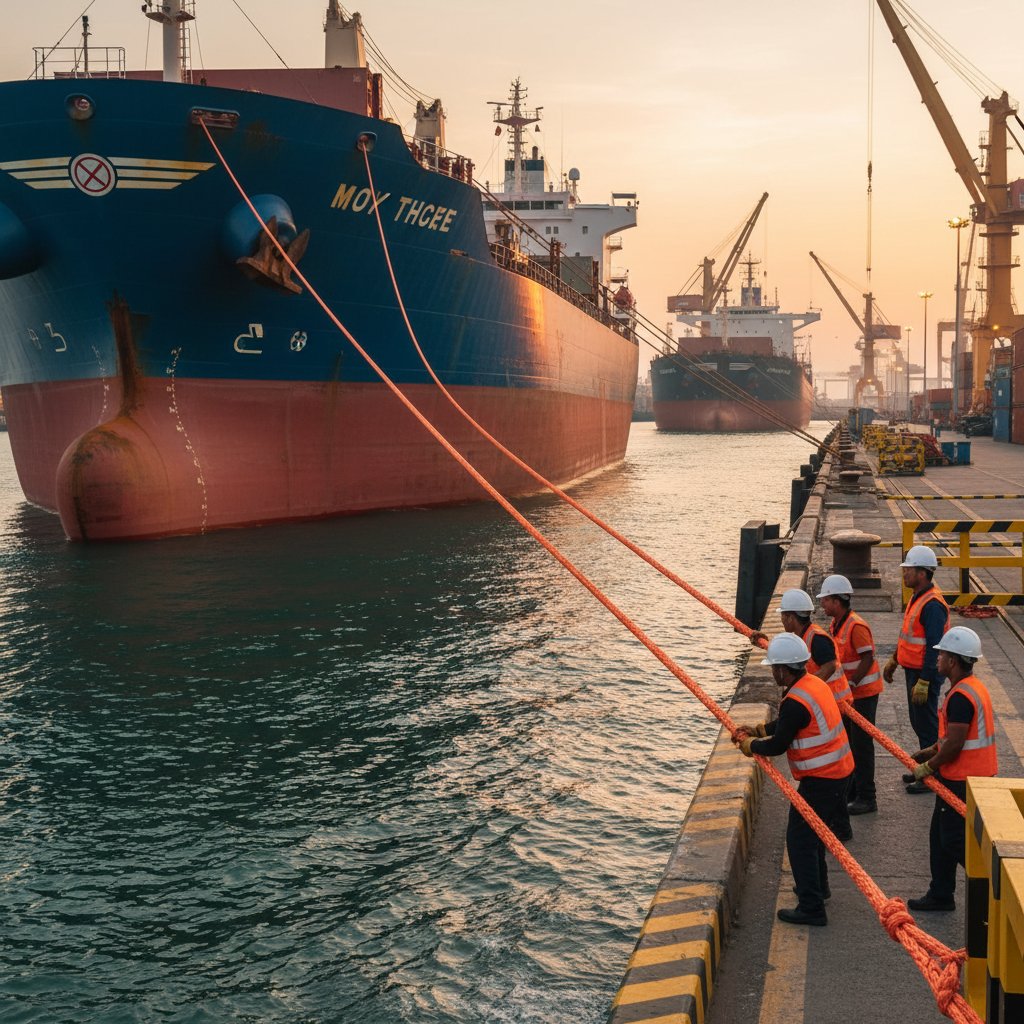
Imagine a massive cargo ship gliding into a bustling harbour after days at sea. The engines hum to a stop, and the crew springs into action to keep everything steady. That's where the **mooring of a ship** comes in—it's the process of securing a vessel to a fixed or floating structure, like a pier or buoy. This is achieved using ropes, anchors, and fittings to maintain stability against wind, waves, and currents. Without effective mooring, ships could drift, collide, or suffer damage, potentially turning a routine stop into significant chaos. In simple terms, _ship mooring_ ensures the vessel stays put safely, protecting both the ship and the port infrastructure.
At its core, ship mooring revolves around balancing forces like tidal pull, wind shear, and the ship's own momentum. Stability in this context means countering these pressures so the vessel doesn't swing or strain. Think of it like tying your bicycle to a post—you use the right knot and line to hold it firm without snapping. Mooring is distinct from anchoring, which involves dropping a weight to the seabed for open-water holding, and docking, a broader term for positioning at a berth. Mooring specifically focuses on the precise lines and attachments that secure everything down. Have you ever wondered why a ship doesn't just float free during loading? These principles make it possible, distributing loads evenly to prevent tipping or rubbing against the dock.
For commercial vessels, the stakes are considerably higher. Tankers, with their volatile loads, demand heavier-duty setups to meet strict port rules on spacing and tension. Cargo ships, however, might prioritise quick ties for faster turnarounds. Ports often specify minimum line strengths based on vessel size—for instance, a 50-ton breaking load for a supertanker versus lighter loads for bulk carriers. Regulations from bodies like the International Maritime Organization (IMO) ensure compliance, reducing accident risks that could cost millions in delays or repairs. Crews must adapt these basics to their ship's class, whether it's a nimble container vessel or a hulking oil carrier.
- Harbours - Bustling commercial areas where ships tie to quays for cargo operations, utilising multiple lines to handle heavy traffic.
- Marinas - Smaller setups for yachts and leisure boats, often featuring floating docks and lighter ropes for easy access.
- Offshore scenarios - Remote buoys or platforms for rigs, relying on dynamic anchors to withstand storms far from shore.
These applications demonstrate the flexibility required in mooring, from calm inland waters to rough seas. Picture a tanker in a busy harbour: lines stretch taut as tugs nudge it precisely into place, all while crews continuously monitor for shifts. It's not just routine; it's a blend of skill and specialised gear that keeps global trade moving efficiently. As we explore further, you'll see how these foundations shape the varied systems vessels use in different locations.
Types and Applications of Ship Mooring
Building on the core principles of stability and force management, the true variety in _ship mooring_ emerges through different systems tailored to specific environments. Whether it's a quiet offshore buoy or a crowded commercial pier, these approaches adapt to keep vessels secure without unnecessary strain. Let's break down the main categories, starting with permanent setups designed for long-term holding.
Permanent anchor moorings provide a reliable base for vessels that remain in place for extended periods, such as supply boats at remote platforms. Swing moorings, for instance, allow a ship to pivot freely with wind and tide around a single anchor point, making them ideal for smaller craft in open bays to avoid grounding. Pile moorings, conversely, use vertical posts driven into the seabed, offering fixed resistance against movement—picture sturdy towers holding a ferry steady in a river current. There are also various anchor types: dead weight anchors rely on sheer mass, like concrete blocks for grip in soft sediment. Mushroom anchors, however, bury like an upside-down umbrella for better hold in mud, while pyramid or screw-in versions twist into the soil for rocky areas. Notably, when people ask about the three basic types of mooring, they often refer to catamaran systems with spread anchors for even tension, tension-leg setups that pull upward like taut guy wires, and semi-taut arrangements blending slack and stretch for moderate loads. Each type suits specific seabed conditions and vessel needs, ensuring the boat remains secure during adverse weather.
- Swing mooring - A single-point pivot for tidal swings.
- Pile mooring - Fixed posts for directional stability.
- Anchor-based - Buried weights, such as mushroom anchors, provide deep hold.
Shifting to shore-based options, commercial _ship mooring_ frequently involves tying directly to land structures. Quays and piers form solid platforms where lines run from the vessel to bollards—these robust, cast-iron posts absorb the brunt of pulls—or to cleats, which are simpler U-shaped fittings for quick knots on smaller docks. These fixtures are crucial for distributing massive loads, for example, from a 200,000-ton tanker, preventing slips that could damage hulls or cargo. Ports often mandate their use for efficiency, with spacing specifically designed to handle berthing alongside multiple ships.
For more specialised scenarios, methods like Mediterranean mooring are employed: here, anchors fore and aft allow a ship to back onto a buoy in tight Mediterranean ports, optimising space for fishing boats or ferries. **Ship-to-ship (STS) mooring** positions two vessels side by side for cargo transfers, such as oil from tanker to barge, often in open water with fenders cushioning contact—a risky operation without precise alignment to avoid spills. Canal moorings hug narrow banks with short lines for navigating locks, while travelling moorings allow smaller boats to slide along a single line, perfect for migratory fleets. Have you ever seen two giant tankers lashed together at sea, with pumps humming between them? That's STS in action, demanding ropes that flex without failing under extreme conditions.
Finally, the pattern of lines deployed matters immensely, customised by vessel class and port rules. Head lines run forward from the bow to the dock, stern lines aft for braking, breast lines sideways to stop drift, and spring lines diagonally to ease surging movements. For a sleek container ship in a high-traffic hub, you would typically see four to eight lines forming a balanced web; bulk carriers might require additional lines to manage windage. These mooring pattern designs evolve with everything from supertanker girth to yacht agility, always prioritising even tension and load distribution.
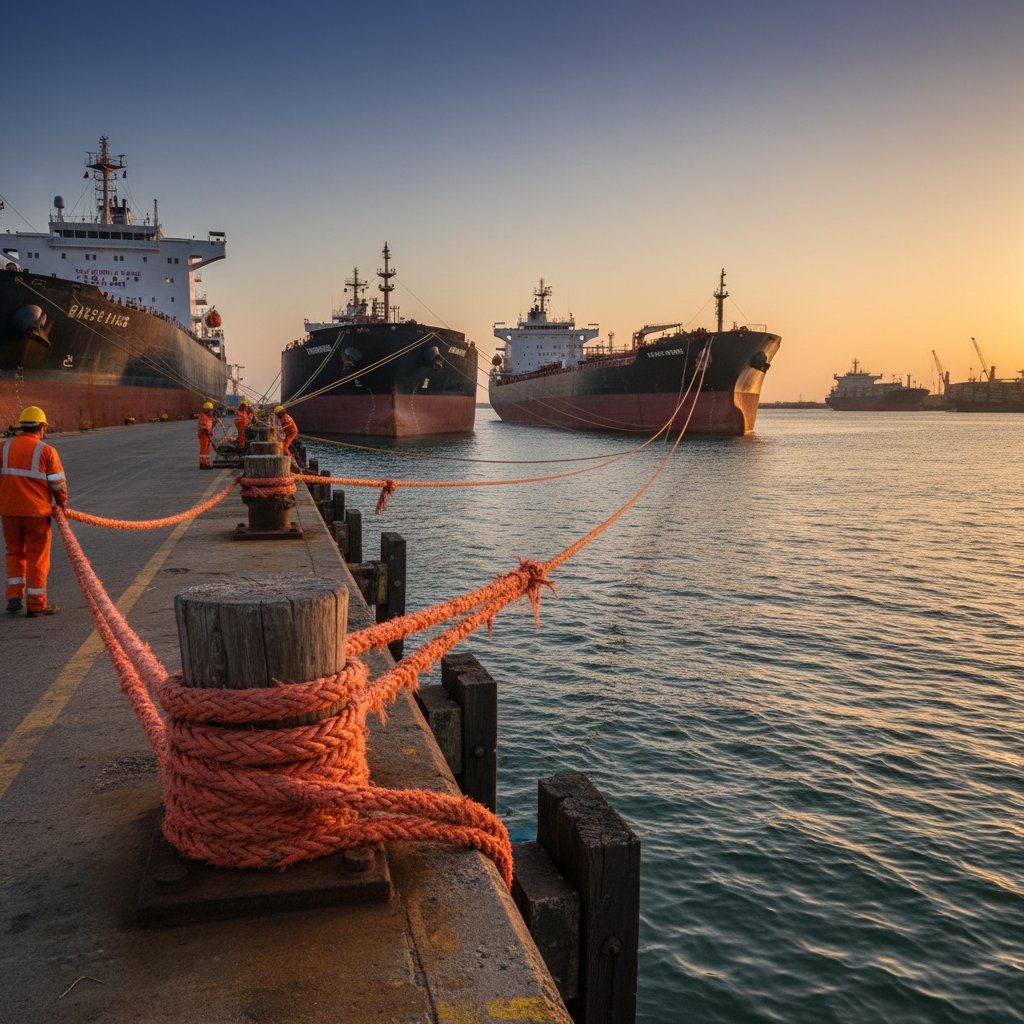
These varied systems illustrate how mooring adapts to specific requirements. However, their ultimate success hinges on the quality of the gear holding it all together—especially those critical lines that bear the immense load day in and day out.
Essential Equipment and Procedures for Mooring in Ship Operations
With diverse mooring systems in place, the real work begins by considering the tools that enable them to function smoothly. Reliable equipment transforms potential hazards into controlled routines, particularly in the demanding world of commercial shipping. At the heart of any secure setup are the mooring lines, often referred to as hawsers, which act as the vessel's crucial link to the dock or another ship. These are not merely ropes; they are engineered to withstand immense tension from waves, wind, and the ship's weight, often exceeding 100 tons of breaking load for large tankers.
Modern hawsers are made from advanced materials like HMPE (High Modulus Polyethylene), a lightweight synthetic that is incredibly strong and floats on water, or Aramid fibres, known for their superior heat resistance in high-friction points. iRopes specialises in these high-performance HMPE materials, crafting them in braided constructions for flexibility during handling or twisted for added durability against abrasion on rough piers. For cargo ships, operators might select 8-strand braids with a polyester cover to absorb shocks, while supertankers demand parallel-core designs that minimise stretch to prevent surging. These precise specifications ensure lines last longer in saltwater environments, reducing costly replacements and operational downtime. Curious about what mooring lines are made of? Typically, it's a mix of these advanced synthetics, which far outperform older wire ropes that are prone to rust and excessive weight, often causing crew strain or potential propeller snags.
Mooring Lines
High-Performance Materials
HMPE
Ultra-strong and low-stretch for precise control in rough seas.
Aramid
Heat-resistant braids, ideal for friction-heavy industrial uses.
Polyester Cover
Protective layers for enhanced abrasion resistance across various vessel classes.
Fittings
Deck Essentials
Winches
Hydraulic-powered for safe tensioning of lines up to 50 tons.
Fairleads
Guide ropes smoothly, effectively preventing chafing on hull edges.
Chafing Gear
Protective sleeves designed for lines in high-wear commercial operations.
Beyond lines, essential fittings like winches and capstans efficiently haul everything into position, while fairleads and chafing gear provide crucial protection against wear. This is particularly vital for anchors in permanent setups, which must be designed to hold up to 10 times the vessel's weight during severe storms. iRopes complements this with robust OEM and ODM services, empowering customers to brand ropes with their own logos, certified to ISO 9001 standards for use in global ports, whether for quick canal ties or heavy offshore berths.
Executing successful _mooring in ship_ operations demands a clear, step-by-step procedure to avoid mishaps. The process begins with a pre-mooring checklist: assessing weather conditions, inspecting all gear, and thoroughly briefing the team. Then, as the ship approaches, lighter heaving lines are tossed to shore personnel, which are then used to pull across the heavier hawsers. Crew roles are distinctly divided: deck officers direct from the bridge, able seamen handle lines amidships, while bosuns oversee the bow and stern. Tugs often assist in tight spots, gently nudging the vessel parallel to the berth before final securing. Protocols vary by port—some demand extra spring lines for tidal surges—but the fundamental goal remains constant: achieving even tension across all mooring pattern designs, such as breast and head lines.
- Approach and align - The pilot guides the vessel with tug assistance for safe positioning.
- Deploy heaving lines - These connect to main hawsers via the shore team.
- Secure patterns - Fasten bow, stern, breast, and spring lines evenly to distribute load.
This methodical approach minimises errors. However, even with top-tier gear, continuous vigilance against line snaps or slips is crucial for everyone's safety. Guidelines from experts like OCIMF further sharpen this operational edge.

OCIMF Guidelines and Safety Protocols Revolutionising Ship Mooring
While equipment and procedures provide the operational framework, prioritising safety through OCIMF guidelines transforms routine operations into secure practices. The Oil Companies International Marine Forum, or OCIMF, sets the gold standard for commercial shipping with its Mooring Equipment Guidelines, now in its fourth edition—MEG4. These rules govern everything from regular line inspections to establishing minimum breaking loads, ensuring that every hawser can handle the stresses from a vessel's weight and environmental forces without unexpected failure. For example, MEG4 recommends proof-loading tests where lines are pulled to 50% of their breaking strength to verify performance. This directly impacts compliance for tankers and bulk carriers operating in global ports.
This isn't merely administrative paperwork; it's a comprehensive blueprint that significantly reduces incidents by mandating detailed records of wear and tear, thereby making _ship mooring_ a predictable process rather than a gamble. **Crew safety protocols** also take centre stage in these guidelines, especially concerning the whip-like danger of snapback—the sudden, violent recoil if a line parts under tension. To counter this, teams establish clear zones on deck, keeping non-essential personnel at a safe distance while lines are under load. Personal protective equipment (PPE), such as helmets, gloves, and steel-toed boots, becomes non-negotiable, providing crucial shielding against flying debris or slips on wet surfaces. Emergency drills simulate line failures, teaching swift cuts with specialised knives and efficient evacuation routes, while ongoing training ensures everyone knows their role, from the bosun signalling instructions to the bridge officer monitoring tides. Have you considered how a single overlooked detail could escalate a calm berthing into an emergency? These rigorous steps build multiple layers of protection, transforming potential hazards into well-managed routines.
Safety Protocols
Prevent snapback with tension monitoring and clearly zoned areas on deck.
Training Drills
Regular sessions effectively cover essential PPE usage and emergency responses.
Clear Zones
Designated safe spots significantly reduce crew exposure during line handling.
Crew Coordination
Clearly defined roles ensure smooth, incident-free operations and enhanced safety.
Given these measures, risks still persist, particularly with wire ropes that can kink or fray, posing entanglement threats near propellers or crushing hazards during winching—issues often more acute on older cargo vessels than modern ships. Maintenance routines must adapt to different vessel classes: tankers require frequent UV checks on synthetic lines due to continuous deck exposure, while offshore supply vessels prioritise resistance to saltwater corrosion. Integrating port requirements means aligning MEG4 standards with local regulations, such as needing extra fenders in windy Mediterranean hubs. iRopes plays a crucial role here, offering IP-protected designs for eco-friendly ropes. These innovative ropes are made from recycled synthetics that effectively cut plastic waste without sacrificing strength, helping fleets meet stringent green standards while bolstering overall mooring reliability.

By effectively weaving these guidelines into daily practice, commercial shipping operations gain a resilience that dynamically adapts to new challenges, paving the way for innovations that keep the entire industry at the forefront of maritime safety.
Mastering the fundamentals of the **mooring of a ship** sets the foundation for safe and efficient operations, from balancing forces in bustling harbours to adapting procedures for diverse vessel classes like tankers and cargo ships. Exploring various types, such as swing, pile, and _ship-to-ship mooring_, highlights adaptable applications, while essential equipment, like high-performance HMPE and Aramid hawsers from iRopes, ensures critical durability across all operational procedures. Furthermore, OCIMF's MEG4 guidelines revolutionise _ship mooring_ safety by mandating rigorous inspections, adherence to minimum breaking loads, and comprehensive crew safety protocols—preventing dangerous snapback with appropriate PPE, establishing clear zones, and enforcing continuous training. These standards are fully integrated with specific port requirements and optimised mooring pattern designs for unparalleled stability.
These insightful perspectives empower your team to mitigate risks and significantly enhance reliability across all scenarios involving **mooring in ship** operations. For tailored rope solutions precisely customised to your specific operational needs, iRopes offers extensive OEM/ODM expertise backed by ISO 9001-certified products.
Need Customised Mooring Ropes for Your Fleet?
If you would like personalised advice on selecting high-performance ropes that perfectly align with your vessel's unique requirements and stringent OCIMF standards, please fill out the inquiry form above—we are here to actively support all your maritime safety goals.
