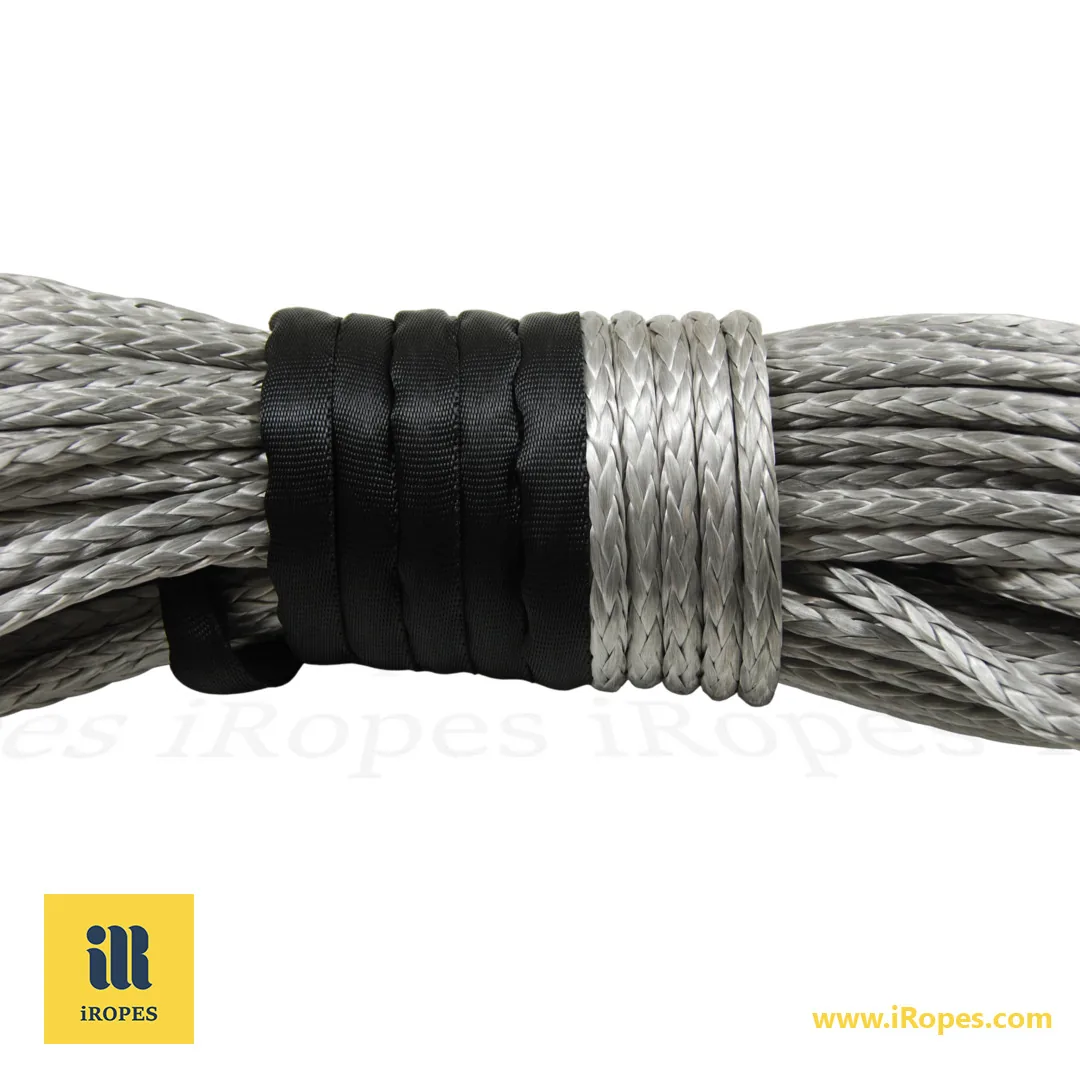
⚠️ Shocking flaw alert: Your 3/8 halyard line might stretch up to 8% under typical loads—dropping your sailing speed by 1-2 knots and risking sail flap. With just the right material swap, reclaim that lost velocity while boosting safety to 3,700+ lbs tensile strength.
In 6 minutes, unlock sailing speed gains:
- ✓ Grasp why polyester's 3,700 lbs strength in 3/8 lines fails high loads—master Dyneema for 90% less stretch and sharper luff control.
- ✓ Nail halyard sizing for your boat: avoid 3/8 mismatches that cut efficiency by 15%, ensuring seamless hoists for any sail plan.
- ✓ Learn eye splicing and UV checks to double halyard lifespan, preventing costly mid-voyage failures.
- ✓ Tap iRopes' OEM customisation for tailored low-stretch lines—elevate your setup with ISO-certified precision and global delivery.
You're clipping along in a perfect breeze, sails full. Yet, something drags. Your sails sag just enough to cost you the race. This hidden 3/8 stretch flaw isn't bad luck; it's a common mismatch stealing your edge, with gusts amplifying the loss into real safety risks. What if a simple material shift and custom tweak could sharpen your performance overnight? Dive in to uncover the exact fixes pros use to outpace the fleet.
Understanding the Essentials of Halyard Rope Selection
Imagine you're out on the water, the wind picking up just right, and your sails catch it perfectly. Except, something feels off, like the hoist isn't quite as crisp as it should be. That's where a solid halyard rope comes in. At its core, a halyard rope is the line that hoists and secures your sails, running from the deck up through blocks to the masthead. It's not just any rope; it's the unsung hero that keeps everything taut and responsive, directly influencing how smoothly your boat moves through the waves.
Choosing the right halyard rope isn't a small detail—it's what separates a frustrating sail from one that feels effortless. Get it wrong, and you might notice your speed dipping because of unwanted stretch, or worse, face safety issues if the halyard line fails under load. Consider this: a halyard that elongates too much under tension can make your sails bag out, robbing you of that precious forward momentum. On the flip side, the best type of line for halyards balances low stretch for quick response, enough strength to handle dynamic loads from gusts, and durability to withstand sun and salt without fraying prematurely. For most sailors, that means opting for lines designed with performance in mind, rather than generic options that might save a few dollars upfront but cost you in the long run.

Let's talk materials, because they're the foundation of any good halyard. Polyester, often called Dacron in sailing circles, is a go-to for its all-around reliability. It offers moderate stretch to absorb shocks from waves without snapping, plus excellent resistance to UV rays and abrasion from constant rubbing against hardware. I remember swapping out a worn polyester halyard on my own boat during a regatta prep; the difference in how cleanly the sails set was night and day. Then there's HMPE, short for high-modulus polyethylene, like Dyneema or Spectra. This material is a game-changer for serious racers, offering ultra-low stretch that keeps your luff razor-sharp even in heavy air, while being incredibly lightweight and strong. It's pricier, sure, but if you're chasing every knot of speed, it's worth it. Both materials shine in durability, but HMPE edges out for minimal elongation, which directly ties to better control and less fatigue on your rigging.
Construction matters just as much as the material itself. Core-dependent designs, such as double braid, pack the punch you need. They combine a strong inner core—often HMPE for low stretch—with a braided outer jacket of polyester for grip and protection. This setup delivers superior strength without bulk, making it easier to handle through masthead sheaves. Have you ever tried winching a stiff line that binds? Double braid avoids that, ensuring smooth operation that translates to faster, safer sails. It's why professionals swear by it for everything from cruising to competition.
With the basics of halyard rope covered, let's dive deeper into specific selection factors that ensure your setup matches your sail plan needs. These insights will help you choose the ideal halyard for your vessel.
Key Factors in Choosing the Right Halyard Line
Building on foundational elements like materials and basic construction, selecting the perfect halyard line means zeroing in on details that fine-tune your boat's response to the wind. It's about matching the line to your specific setup so every hoist feels precise and every tack efficient. Let's break down the choices that make a real difference.
When it comes to materials, polyester offers a sweet spot for most cruisers. Its balanced stretch cushions sudden gusts without letting the sail luff too much, keeping things stable on longer passages. But if you're pushing the boat in races where every second counts, Dyneema steps up with its near-zero elongation, holding the luff taut like a drum skin even in building pressure. I once helped a friend upgrade to a Dyneema line before a coastal series; the sails snapped into place faster, and we shaved minutes off our times without extra effort. The key? Polyester suits everyday sailing with its forgiving nature, while Dyneema demands precise handling but rewards you with unmatched control in high-performance scenarios.
Polyester Halyards
Balanced for Cruising
Moderate Stretch
Absorbs shock loads to prevent sudden jerks on fittings during choppy seas.
Strong UV Resistance
Withstands prolonged sun exposure without weakening, ideal for open-water voyages.
Affordable Durability
Provides a long service life at a price that fits most budgets without skimping on safety.
Dyneema Halyards
Precision for Racing
Ultra-Low Stretch
Maintains sail shape under heavy load, boosting speed in competitive conditions.
Lightweight Strength
Reduces overall rig weight, making hoists quicker and easier on winches.
High Abrasion Tolerance
Resists wear from mast sheaves, ensuring reliable performance over intense regattas.
Sizing your halyard line is straightforward once you factor in your boat's dimensions and sail setup. What size rope for halyards depends on balancing load capacity with ease of handling. For boats under 30 feet with standard mains and jibs, a 5/16-inch line often suffices, offering enough strength without excess bulk that could jam in blocks. Step up to 40-50 footers, and 3/8-inch becomes common for main halyards, handling the increased sail area while keeping weight down. Spinnaker lines might go slimmer at 1/4-inch for lighter loads, but always check your rig's specifications to avoid under- or over-sizing, which could lead to sluggish response or unnecessary strain.
- Small Boats (Under 30ft) - 5/16-inch for mains and jibs; prioritises easy winching.
- Medium Yachts (30-50ft) - 3/8-inch for primary halyards; supports heavier sails without drag.
- Large Vessels (Over 50ft) - 1/2-inch or more; ensures safety under extreme loads.
Once sized correctly, splicing seals the deal for longevity and function. An eye splice, where you weave the line's end back into itself to form a secure loop, maximises strength—retaining nearly 100% of the line's breaking point—while gliding smoothly through masthead blocks without snagging. It's a hands-on skill, but professional splicing prevents weak spots that could spell trouble mid-race.
Durability ties it all together. UV resistance in materials like polyester shields against sun degradation that stiffens lines over time. Abrasion protection, often from a robust cover, guards against chafe at turning points, extending your halyard's useful life far beyond a single season. Have you noticed your current line wearing unevenly? That's a cue to prioritise these traits next time around.

These elements—materials tuned to your style, spot-on sizing, solid splices, and built-in toughness—set the stage for reliable performance. Yet, even the best choices can falter if a particular dimension doesn't align with your demands, especially in something as common as a 3/8 halyard line setup.
Unveiling the Shocking Flaw in 3/8 Halyard Line
That 3/8 setup we touched on might seem like a safe middle ground for many boats, but here's where things get tricky. It often hides a flaw that can quietly drag your sailing performance down without you even realising it at first. Picture this: you're clipping along in a steady breeze, everything feels solid, but as the wind builds, your sails start to sag just a bit, and that extra knot of speed slips away. The culprit? Excessive stretch in a 3/8 halyard line under real-world loads, especially if it's not matched perfectly to your rig. This elongation isn't dramatic at low tensions, but when gusts hit, it allows the luff to loosen, turning potential velocity into wasted energy fluttering in the wind. Sailors chasing efficiency know this drag compounds over a race or long passage, making what should be a responsive boat feel sluggish instead.
One of the biggest questions around a 3/8 halyard line is its load capacity—how much weight can it really handle before you push the limits? For polyester versions, the tensile strength typically clocks in around 3,700 pounds, which sounds robust on paper for mid-sized yachts. But remember, that's the breaking point. In practice, you operate at a fraction of that as the safe working load to account for dynamic forces like sudden shifts or waves slamming the hull. Dyneema alternatives in the same diameter bump that up to over 5,000 pounds, offering a buffer for heavier setups. It's solid for boats around 40 feet, yet if your sails pull harder, this size can start to flex more than ideal, hinting at why mismatched choices lead to trouble.

For larger sail plans, such as those on 45-footers with big genoas or asymmetric spinnakers, opting for a 3/8 halyard line often means you're undersizing the job. The result? Reduced efficiency as the line works harder, heating up from friction and wearing faster at sheaves. Additionally, it poses real safety risks if it approaches its limits during a squall. I've seen crews switch after a close call where a stretched line let a sail flog uncontrollably—scary stuff that could've ended a trip early. Instead of that slim profile aiding quick handling, it becomes a liability, forcing conservative sailing to avoid overload.
Main Halyard
Handles constant heavy loads from the mainsail; 3/8 works for lighter boats but stretches under peak winds, dulling response.
Spinnaker Halyard
Sees intermittent pulls; low stretch is key here, yet 3/8 can elongate during gybes, risking twists or drops in lighter air.
Low-Stretch Needs
Emphasises why HMPE outperforms polyester in 3/8 for both, keeping sails powered without the flex that saps speed.
Performance Gap
Reveals how this flaw widens in demanding conditions, pushing sailors toward upsized or specialised lines.
Comparing applications drives home the low-stretch priority: in main halyards, the steady tension amplifies any give, while spinnaker lines need crisp hoists to avoid tangles. A 3/8 halyard line shines in calmer, smaller setups, but for anything pushing boundaries, that hidden stretch flaw demands attention to keep your adventures smooth and swift.
Custom Halyard Solutions and Maintenance Best Practices
Having exposed the pitfalls of a 3/8 halyard line, especially that sneaky stretch that can rob you of speed, it's clear we need ways to sidestep those issues altogether. That's where tailored options come into play, letting you build a halyard that fits your boat like a glove rather than settling for off-the-shelf compromises. At **iRopes**, our OEM and ODM services take the guesswork out by crafting halyard ropes precisely for your setup—think adjusting diameters from slim 5/16-inch for lighter jibs up to beefier profiles for mains on bigger yachts, all while picking materials that match your sailing style and drawing from our high-performance yachting ropes.
Customisation isn't just about size; it's about layering in what your rig truly needs. You could specify a Dyneema core wrapped in a polyester jacket for that ultra-low stretch without the premium price tag, or add accessories like stainless thimbles to reinforce splices and prevent chafe at masthead blocks. I once watched a yacht club buddy retrofit his halyards this way before a long offshore race—the custom thimbles kept everything gliding smoothly, with no binds or wear after weeks at sea. Our team works closely with you to incorporate extras like reflective tracers for night visibility or even branded colours that tie into your boat's look. It's all done in our state-of-the-art facilities, ensuring every inch meets your exact specifications for strength and handling.
Tailored Halyard Expertise
From selecting core types for minimal elongation to integrating secure terminations, **iRopes** delivers bespoke solutions that boost your on-water efficiency and safety.
Of course, even the finest custom halyard won't last forever without proper care. Start with routine inspections—every couple of months, run your hands along the line, feeling for rough spots where chafe might be starting from rubbing against spreaders or pins. UV damage shows up as fading colours or a brittle texture; if you're in sunny climes, rinse with fresh water after sails to wash off salt that accelerates breakdown. These simple checks can double your halyard's lifespan, keeping it supple and strong for those unexpected gusts.
- Examine ends for fuzzing or loose strands after heavy use.
- Hoist and lower slowly to spot any unusual stiffness or drag.
- Check splices monthly, tightening if needed to avoid slippage.
Knowing when to replace is just as vital for staying ahead of trouble. Watch for elongation beyond a couple of inches under full load—that's your cue the core's fatiguing and could let sails flap at the worst moment. Fraying around blocks or thimbles signals abrasion eating away at the cover, compromising the whole line. Don't wait for a full failure; swapping out proactively keeps your performance sharp and your crew safe. What signs have you noticed on your own gear lately?

Backed by our ISO 9001 certification, every **iRopes** halyard—custom or standard—promises the durable, low-stretch reliability you can count on, whether for a quick club race or crossing oceans. These practices not only extend gear life but also sharpen every aspect of your sailing, from hoist speed to overall control.
Armed with insights into halyard rope essentials—from polyester's balanced stretch to Dyneema's razor-sharp control—you're now equipped to sidestep the hidden flaws in a standard 3/8 halyard line that can quietly erode your sailing speed through excessive elongation under load. This article has covered sailing halyard selection, including material choices, stretch characteristics, and proper sizing for different sail plans. We detailed core-dependent constructions, cover materials for durability, and splicing techniques for maximum strength. Additionally, we provided halyard maintenance tips and replacement indicators for optimal sailing performance. Proper sizing for your sail plan, core-dependent constructions like double braid for strength, and techniques such as eye splices ensure smooth, durable performance, while maintenance checks for chafe and UV wear, plus timely replacements, keep your setup reliable. **iRopes**' custom solutions elevate this further, tailoring low-stretch halyard lines to your exact needs for peak efficiency and safety on the water.
Whether upgrading for racing precision or cruising comfort, these strategies transform potential pitfalls into seamless adventures, boosting your confidence every time you hoist sail.
Ready to Customise Your Ideal Halyard Line?
If you're keen on personalised guidance to match the perfect halyard rope to your boat and sailing style, fill out the inquiry form above—we'd love to help craft a solution that propels your performance forward. Partner with **iRopes** for custom OEM/ODM halyard solutions tailored to your wholesale needs.