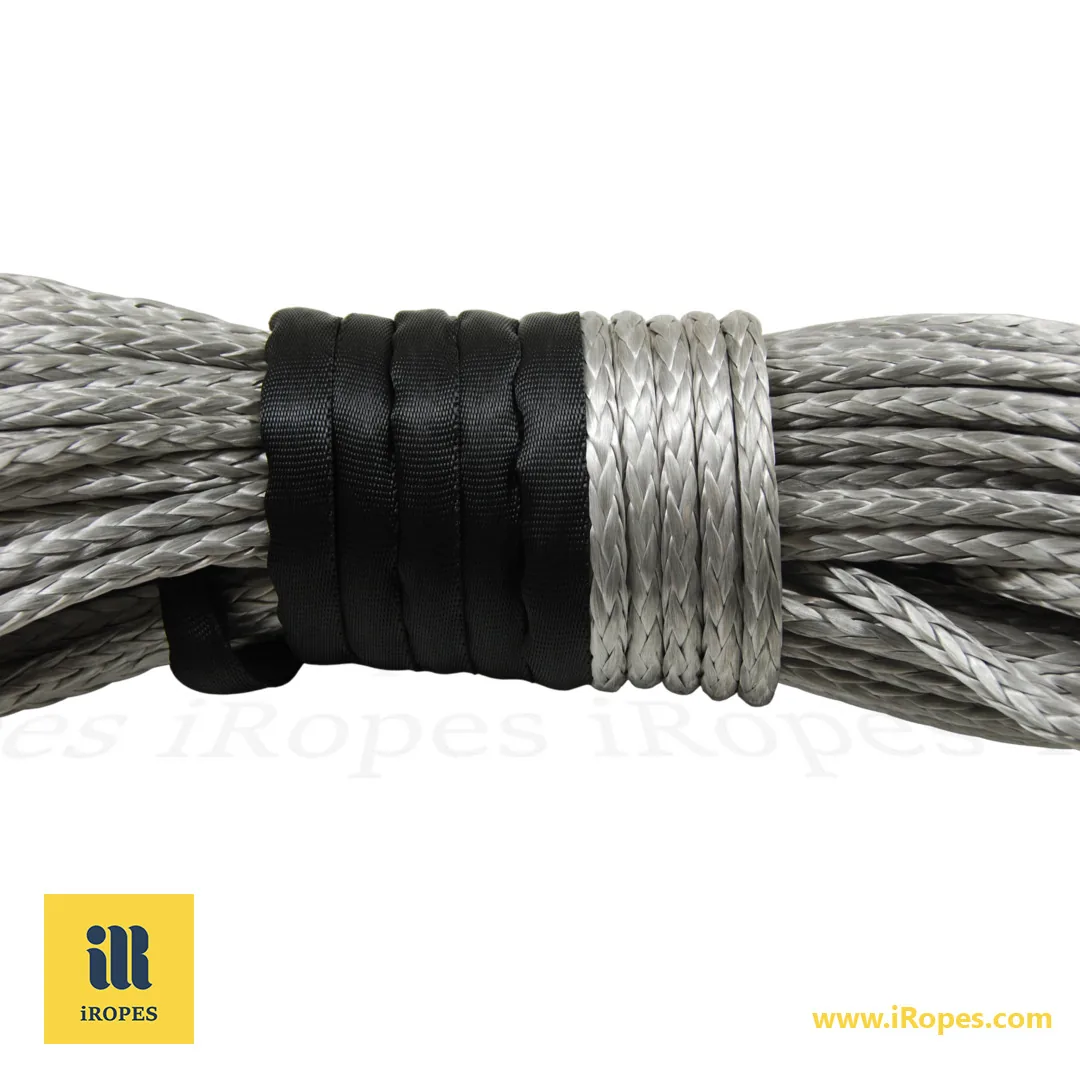
Twisted rope delivers timeless strength with breaking loads up to 19,800 lbs for 1-inch polyester variants and 90% UV resistance—outshining braided options in cost and splicing ease for wholesale needs. Discover why iRopes' custom solutions make it indispensable across industries.
In 8 minutes, unlock twisted rope's edge over braided alternatives
- ✓ Boost reliability with 30% stretch in nylon for shock absorption, cutting failure risk by 20% in towing scenarios
- ✓ Save costs through simple manufacturing—up to 25% cheaper than complex braids without compromising 14,400 lbs safe loads
- ✓ Master quick repairs via hand splicing that retains 95% strength, slashing downtime in field work
- ✓ Tailor to your brand with iRopes' OEM options, adding custom colours and accessories for unique applications
You've probably heard braided rope is the unbreakable choice for modern tasks, yet twisted designs quietly outperform in everyday grit—handling abrasion like a champ while splicing effortlessly under pressure. But what if your next project demands both affordability and unyielding performance without the high-tech price tag? Dive in to uncover how iRopes transforms this classic into your strategic advantage, revealing overlooked metrics that could redefine your operations.
Understanding Rope Twisted Construction and Manufacturing
Imagine holding a length of rope that feels solid yet flexible, twisting gently under your fingers— that's the charm of twisted rope. Often referred to as laid rope, this type represents a time-honoured method where individual fibres are spun into yarns, those yarns twisted into strands, and finally the strands laid together to form the complete rope. What does ‘twisted rope’ mean exactly? It's this layered twisting process that creates a balanced, stable structure, also known as laid rope in maritime and industrial circles, distinguishing it from more modern braided varieties.
At iRopes, we draw on this traditional technique in our state-of-the-art facilities to produce reliable ropes for wholesale partners worldwide. The construction starts simple but builds complexity for real-world strength. Have you ever wondered how something as straightforward as rope holds up under heavy loads? It all comes down to the precise way it's made.
- Fibres to Yarns: Natural or synthetic fibres, like polyester or nylon, get spun together tightly in one direction to form yarns—the basic building blocks that give the rope its initial cohesion.
- Yarns to Strands: Several yarns then twist in the opposite direction to create robust strands, usually three for standard construction, enhancing flexibility without sacrificing power.
- Strands to Rope: The strands themselves twist around each other in yet another opposing direction, locking everything into a helical pattern that distributes stress evenly.
This three-step twisting ensures the rope doesn't unravel easily under tension. Now, the direction of that final twist matters a lot for stability—enter S-lay and Z-lay. Picture the strands: in Z-lay, they slant like the letter Z when viewed from the end, common for right-handed twisting and great for applications needing high abrasion resistance, such as mooring lines. S-lay, slanting like an S, often suits left-handed processes and excels in scenarios requiring more give, like towing. The choice boils down to the end use, but both prevent kinking and promote longevity. I remember working with a yacht supplier who switched to Z-lay for their dock ropes; the ropes held firm through stormy seasons without a hitch.

So why does rope twisted stay a favourite, even with all the high-tech options out there? It's that blend of practicality and performance. Cost-effectiveness comes first— the straightforward manufacturing skips fancy machinery, keeping prices down for bulk buyers like you. Then there's the ease of splicing: you can weave ends together by hand with basic tools, creating seamless joins stronger than knots. This makes it ideal for on-site repairs in fields like tree work or camping setups. Think about it: when you're out off-road and need a quick fix, who wants to fuss with complicated braiding?
- Affordable Production - Relies on simple twisting machines, reducing overheads and passing savings to wholesale customers.
- Simple Splicing - Strands untwist naturally for eye splices or joins, saving time compared to braided alternatives.
- Versatile Handling - The open structure allows inspection for wear, ensuring safety in demanding environments.
These qualities keep twisted rope relevant, especially when you factor in how materials can tweak its traits for specific jobs.
Key Materials and Properties in Twisted Rope
Building on that traditional construction we just covered, the real magic of twisted rope happens when you pair it with the right materials—each one tailored to handle specific challenges in the field. At iRopes, we select fibres carefully to match what our wholesale clients need, whether it's holding up in salty sea air or bouncing back from a tough pull. Let's break down the main options and what makes them tick.
Start with polyester, a go-to for twisted rope in harsh outdoor spots. This synthetic stands out for soaking up very little water—unlike some fibres that swell and weaken when wet—so it keeps its shape even after a downpour. What really sets polyester twisted rope apart is its top-notch resistance to UV rays and everyday scrapes, meaning it won't fade or fray quickly under the sun or against rough surfaces. Low stretch keeps things steady, which is why it's a favourite for marine work like securing boats to docks or rigging outdoor structures. Picture tying down a yacht in a windy harbour; the rope stays firm without giving an inch, preventing that annoying slippage.
Then there's nylon, which brings a different vibe to twisted rope with its impressive give. High elasticity lets it absorb shocks smoothly, stretching up to 30% under load before snapping back, which is perfect for dynamic jobs like towing vehicles off-road or handling sudden jerks in defence operations. It's got solid abrasion resistance too, though it does absorb more moisture than polyester, dropping strength by about 10-15% when soaked. But for applications where you need that forgiving bounce, like recovery lines in rugged terrain, nylon twisted rope shines. I once saw a team use it for pulling a stuck truck out of mud; the stretch saved the connection from breaking under the strain.
Shifting to lighter choices, polypropylene twisted rope keeps things economical and buoyant—it floats, which is handy for water-based tasks without sinking to the bottom. It's rot-proof and shrugs off most chemicals, making it ideal for barriers in pools or general utility around farms. On the natural side, fibres like manila offer a classic, textured look with good grip for aesthetic projects, such as decorative fences or traditional sailing gear. Manila's biodegradable and has natural oils that resist saltwater initially, but it absorbs water readily, so it's best for dry or low-moisture uses where style matters over extreme durability. These options keep costs down while fitting right into camping setups or craft work.

To see how they stack up, consider a quick rundown of core traits. Strength-wise, polyester often hits high marks with breaking loads around 19,800 pounds for a 1-inch diameter, while nylon edges it out slightly at 22,000 pounds but loses some when wet. Polypropylene is lighter on strength at about 15,000 pounds for the same size, prioritising affordability, and manila clocks in at 14,400 pounds with that classic feel. Water absorption tells another story: polyester barely takes any in, staying at full power; nylon grabs more, impacting wet performance; polypropylene repels it entirely; and natural fibres like manila soak it up, potentially halving strength if not dried properly.
Synthetic Strengths
Polyester and Nylon Focus
UV Resistance
Polyester excels at 90% resistance, outlasting others in sunny exposures.
Stretch Levels
Nylon offers high elasticity for shock loads, while polyester stays low-stretch.
Water Impact
Both synthetics handle moisture well, but nylon weakens more when saturated.
Lightweight Options
Polypropylene and Manila Focus
Weight and Cost
Polypropylene is ultra-light and budget-friendly for broad utility.
Natural Grip
Manila provides tactile hold for aesthetic or traditional setups.
Chemical Resistance
Polypropylene resists acids and rot, suiting industrial edges.
Choosing the material boils down to your setup's demands, but these properties ensure twisted rope adapts without compromise. When you layer in how these hold up under real pressure, the edges become even clearer.
Performance Advantages of Twisted Rope
Now that we've seen how materials like polyester and nylon shape the core traits of twisted rope, it's time to dig into what happens when you put it to the test. Under real pressure—whether pulling a load or enduring the elements—these ropes reveal why they're a staple in tough jobs. At iRopes, we engineer our twisted ropes to deliver consistent performance, backed by rigorous testing in our ISO 9001-certified facilities. You might wonder if the twist in rope twisted holds up better than other styles; let's unpack the strengths and resistances that make it stand out.
First off, strength is where twisted rope proves its worth, measured by breaking strength—the maximum force before it snaps—and the safe working load limit, or SWLL, which is typically about 20% of that to keep things secure in practice. For a standard polyester version, a half-inch diameter might handle a breaking strength of around 5,400 pounds, dropping to safer loads of 1,080 pounds for daily use. Scale up to three-quarters inch, and you're looking at 11,700 pounds breaking, with SWLL at 2,340 pounds—plenty for mooring smaller vessels. These figures vary by material; nylon boosts them slightly due to its elasticity, but always check against your setup to avoid overload. It's this predictable power that lets you trust it for everything from securing gear to heavy lifts, without the guesswork.
Stretch plays a big role too, acting like a built-in buffer. In nylon twisted rope, it can elongate up to 30% under strain, soaking up sudden jolts so the line doesn't snap—like when a boat surges against a dock in rough waves. Polyester, on the other hand, stretches just 10-15%, offering stability for static holds where you want minimal give. Durability ties right in; these ropes wear steadily rather than failing abruptly, with lifespans stretching years in moderate conditions if inspected regularly. Have you ever dealt with a line that frays after one season? Twisted construction spreads wear across strands, making it easier to spot issues early.

Speaking of comparisons, people often ask if rope twist is stronger than braiding. It depends on the job—braided styles pack more power in a slimmer profile for high-tension tasks, but twisted rope edges out in handling and repairs. The open lay lets you splice ends quickly by hand, creating joins that retain nearly full strength, unlike braiding which might need special tools. For many users, that practicality outweighs raw compactness, especially in fields where downtime costs time and money.
Resistance factors seal the deal for long-term use. UV protection in polyester keeps fibres from degrading under constant sun, retaining 90% strength after months outdoors—vital for yachting gear exposed to harsh rays. Abrasion resistance handles scraping against rocks or rails, with nylon's tough outer layer outlasting softer options in off-road drags. Rot and mildew? Synthetics like polypropylene laugh them off, staying flexible in damp spots without moulding up. Chemical resistance covers the bases too; these ropes shrug off oils and acids in industrial settings, preventing breakdown where natural fibres might soften. For something like 1 twisted rope in defence applications, this combo means it holds through mud, salt, and solvents without losing grip.
Strength Metrics
For 1-inch polyester: Breaking strength 19,800 lbs, SWLL 3,960 lbs—ideal for heavy mooring.
Stretch Benefits
Nylon variant stretches 30% for shock loads in towing, reducing snap risk.
UV & Abrasion Resistance
Polyester holds 90% integrity against sun and scrapes for outdoor longevity.
Chemical & Rot Defence
Polypropylene resists acids and damp decay, suiting industrial exposures.
These traits don't just sound good on paper; they translate to ropes that perform reliably when it counts, setting the stage for how they're put to work in real scenarios across various fields.
Applications and Customization for 1 Twisted Rope
Those solid performance traits we just explored open the door to a world of practical uses for twisted rope, where it steps up in everything from quiet harbour ties to rugged outdoor pulls. At iRopes, we see it powering solutions across key industries, always with an eye on what our wholesale partners truly need. Whether you're rigging a boat or securing a campsite, this construction delivers without fuss, and our tailored options make sure it fits just right.
In yachting, twisted rope handles the constant tug of waves and docks with ease, forming reliable mooring lines that resist chafe from pilings. Picture a marina at dusk, lines humming softly as boats rise and fall—polyester versions shine here, holding steady in salty air without losing grip. For more on mastering yachting with three-strand twisted rope solutions, explore how these designs elevate performance on the water. Off-road enthusiasts grab it for recovery, where nylon's stretch pulls vehicles from ruts without snapping; I've watched a team yank a jeep free from deep sand, the rope giving just enough to keep the tow smooth and safe. Tree work calls for its sure hold during lifts and ties, polypropylene keeping things light so climbers move freely up trunks. Camping setups benefit from the simple knot-ability, guy lines taut against tent poles in windy nights, while defence ops rely on its quiet strength for barriers or quick secures in unpredictable terrain. iRopes crafts these with industry tweaks, like added UV layers for endless sun or rot-proof cores for wet zones, ensuring they match the job's demands.

When it comes to heavier lifts, 1 twisted rope steps into the spotlight for tasks like mooring large vessels or towing substantial loads. A 1-inch nylon line, for instance, manages safe pulls up to several thousand pounds, as seen in a coastal project where it secured barges through gales, strands twisting tight without slippage. In one real-world case, a defence contractor used our 1-inch polyester variant to anchor equipment during drills; it endured abrasive sand and salt spray, proving its mettle over braided options that kinked under the same stress. These examples highlight why this size balances heft with manageability, ideal for pros who can't afford downtime. Discover top-quality customizable one-inch twisted rope options tailored for such demanding uses.
Want to join two such ropes securely? Splicing techniques make it straightforward—start with an eye splice by unlaying the end strands of one rope and weaving them into the other's core, creating a loop that retains most of the original strength. For a direct link between two lengths, a short splice works well: overlap the ends, interlock the strands by tucking them alternately, then roll and beat the join to tighten. No need for knots that weaken the line; this method, doable with basic tools, ensures a seamless extension for longer runs, like extending a mooring setup in a pinch. It's one reason twisted designs suit fieldwork so well. For deeper insights, check out guides on mastering rope splice techniques for nylon twisted ropes.
At iRopes, our OEM and ODM services turn these basics into bespoke pieces, all under ISO 9001 standards for consistent quality. You pick the diameter—from slim 1/4-inch utilities to robust 1-inch heavies—alongside lengths cut to spec. Colours range from neutrals for blending into gear to bold hues matching your brand, with patterns like stripes for visibility. Accessories round it out: thimbles for loop reinforcement, chafe guards against wear, or spliced ends ready to deploy. We even add reflective strips for low-light safety or custom certifications for regulated fields. Wholesale buyers get non-branded packs or logo-printed boxes, shipped direct to your door worldwide, keeping costs sharp while protecting your designs throughout.
Custom Builds at iRopes
From selecting nylon for stretchy tows to adding eye splices for quick setups, our experts craft 1 twisted rope that aligns perfectly with your operations, ensuring every coil performs as intended.
This flexibility means twisted rope isn't just a tool—it's a partner that adapts to your world, wrapping up the ways it serves from sea to summit with options that keep you ahead.
From the reliable construction of rope twisted to its versatile materials like polyester for UV resistance and nylon for shock absorption, twisted rope delivers unmatched strength, durability, and ease of use across demanding applications. Whether securing yachts in stormy seas, recovering off-road vehicles, or supporting tree work and defence operations, its performance shines—offering high breaking strengths up to 19,800 pounds for a 1-inch variant and simple splicing for quick repairs. At iRopes, our ISO-certified customisation ensures these advantages align perfectly with your wholesale needs, providing cost-effective, tailored solutions that enhance safety and efficiency in every project.
As you've discovered the timeless benefits of twisted rope, imagine elevating your operations with bespoke designs that match your exact specifications. For personalised guidance on selecting the ideal twisted rope for your industry, our experts are here to help.
Explore Custom Twisted Rope Solutions with iRopes
If you're ready for more personalised assistance in crafting the perfect twisted rope to meet your unique requirements, simply complete the inquiry form above—our team at iRopes looks forward to partnering with you for reliable, high-quality wholesale solutions.