⚠️ Abrasion and chafe sabotage 62% of standard dock mooring lines, causing sudden snaps that risk vessel hulls during tidal surges or storms. iRopes' custom solutions eliminate this fatal flaw with ISO 9001-certified ropes built for 50% greater durability.
In 8 minutes, you'll master mooring essentials →
- ✓ Grasp the three core mooring line types—bow/stern, spring, breast—for 100% vessel stability in any marina setup
- ✓ Spot UV degradation and low shock absorption flaws, slashing line strength by 50%, preventing costly storm damage
- ✓ Acquire surge protection techniques using snubbers that absorb 80% more energy, safeguarding cleats and hulls
- ✓ Unlock iRopes' OEM customisations like reflective elements for tidal-proof lines at wholesale prices
You may believe standard dock lines are tough enough for harbour tethers, yet chafe can erode their core in mere weeks—turning safe berths into potential catastrophes amid rising tides. Imagine lines that stretch just right without fraying, shielding your yacht from surges that claim 40% of unprotected vessels annually. This article uncovers these often-overlooked vulnerabilities and explores iRopes' bespoke fixes that promise unbreakable security for your marina operations.
Understanding Dock Mooring Lines: Basics and Definitions
Imagine pulling into a bustling marina after a long day on the water, your boat gently nudging against the dock. What keeps everything steady? That's where dock mooring lines come in. These are essentially strong ropes designed to secure vessels to docks, piers, or other fixed structures. If you've ever wondered, "What is a dock line?" it's simply a rope used to tie a boat to a dock for safe berthing. And a dock mooring? It's the process or setup of fastening your boat securely to that dock, ensuring it doesn't drift away with the tides or winds.
These lines serve both temporary and long-term purposes. For a quick refuel or to load supplies, you might use them briefly during docking—that's the short-term attachment to a pier for loading or unloading. Mooring, on the other hand, often implies something more enduring, like leaving your vessel tied up overnight or longer, sometimes with specialised gear. Ever mix up the terms? Docking is that immediate, temporary tie-up for convenience. In contrast, mooring leans toward semi-permanent securing, perhaps using buoys or anchors alongside lines. The key difference lies in duration and setup: docking is quick and direct, whereas mooring builds in more stability for extended stays.
Getting the basics right sets you up for smooth marina operations. Dock mooring lines aren't one-size-fits-all; they come in key types tailored to how your boat moves against the dock. Bow lines secure the front, stern lines hold the rear, and breast lines run perpendicular to prevent side-to-side shifts. These work together in integrated docking and mooring solutions for marina and port operations, especially in crowded marinas where space is tight and currents unpredictable.
- Bow and stern lines - These run from the boat's front and back to the dock, keeping the vessel aligned lengthwise and absorbing fore-aft pulls from waves.
- Spring lines - Positioned diagonally, forward and aft versions stop the boat from moving forward or backward, adding crucial diagonal stability.
- Breast lines - These shorter lines connect amidships to the dock, countering lateral drift and are ideal for snug berthing in varying configurations.
These three types of mooring—bow/stern, spring, and breast lines—form the backbone of comprehensive vessel security. Picture a stormy evening: without them working in harmony, your boat could chafe against pilings or swing dangerously. Have you checked your setup lately? Starting with these fundamentals ensures your lines perform when it counts most.

With this foundation in place, it's worth digging deeper into what can go wrong with everyday lines, especially under real stress like surges and tides.
The Fatal Flaw in Mooring Dock Lines: Common Failures Exposed
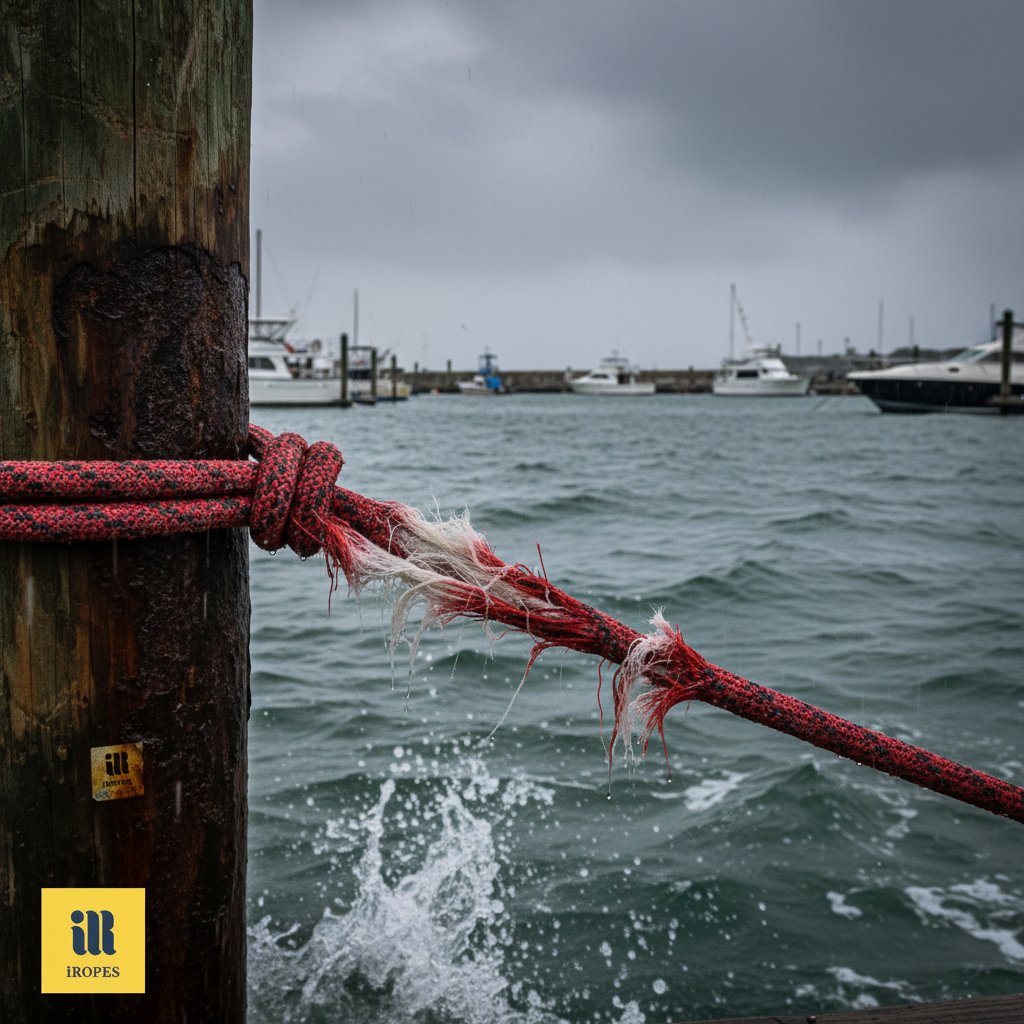
Building on those basics of dock mooring lines, let's face it—things can go south fast when everyday ropes hit real-world stress. You've got surges from passing boats or tidal shifts pulling hard, and suddenly, a line that seemed solid gives way. The biggest culprit? Abrasion and chafe. These aren't just wear and tear; they're the silent killers that fray ropes against rough dock edges or pilings, leading to sudden snaps right when you need stability most. In busy ports, where water levels rise and fall unpredictably, this flaw turns a secure tie-up into a drifting disaster, risking hull scrapes or worse.
Next, consider material quality. Subpar mooring dock lines often suffer from UV degradation, where sunlight breaks down fibres over time, making them brittle and prone to failure. Pair that with low shock absorption—think nylon that's too stiff or polyester without enough give—and you've got lines that can't handle storm snaps. I remember watching a friend's yacht bounce wildly in choppy weather because his cheap lines stretched minimally, slamming the boat against the dock and denting the gelcoat. Without proper elasticity, those sudden loads transfer straight to your cleats and hull, causing expensive damage that could have been avoided.
Then there are sizing and construction woes. Off-the-shelf options rarely match your boat's exact needs. Consequently, a line that's too thin or poorly braided fails under heavy loads, especially in crosswinds. Twisted constructions might look sturdy but kink easily, while inadequate diameters can't support the vessel's weight during low tides. This is where custom solutions shine—tailoring diameter and weave to your setup means no guesswork, just reliable performance that holds up when it matters.
Chafe Hotspots
Rough pilings and fenders rub relentlessly, weakening fibres in as little as weeks without guards.
UV Breakdown
Prolonged sun exposure fades and cracks materials, cutting strength by up to 50% over a season.
Saltwater Effects
Corrosion stiffens ropes, reducing flexibility and leading to cracks under repeated wetting and drying.
Low Elongation
Insufficient stretch fails to cushion surges, spiking tension and risking cleat pull-outs in rough seas.
Don't overlook how the environment piles on. Saltwater corrosion eats away at unprotected fibres, while inadequate elongation leaves no buffer for tidal surges—waves hit like a whip, and your line can't absorb the energy. Ever notice how lines in salty harbours look crusty and stiff after a few months? That's the sea doing its work, amplifying every flaw until breakage is inevitable. Spotting these issues early means inspecting for frays or stiffness regularly. Ultimately, choosing lines built to resist these forces is crucial for keeping your vessel safe.
Seeing these common pitfalls makes it clear why picking the right build and materials is non-negotiable for handling everything from daily tides to wild weather.
Essential Techniques for Dock Mooring: Spring Lines, Breast Lines, and Surge Protection
Knowing the pitfalls in mooring dock lines, like chafe and poor shock handling, means it's time to turn that knowledge into action. Proven techniques can keep your vessel steady no matter the conditions. These methods build on solid lines by focusing on placement and add-ons, ensuring your boat doesn't dance around the dock during gusts or waves. Let's break down how to use spring lines, breast lines, and surge protection to create a rock-solid setup in any marina.
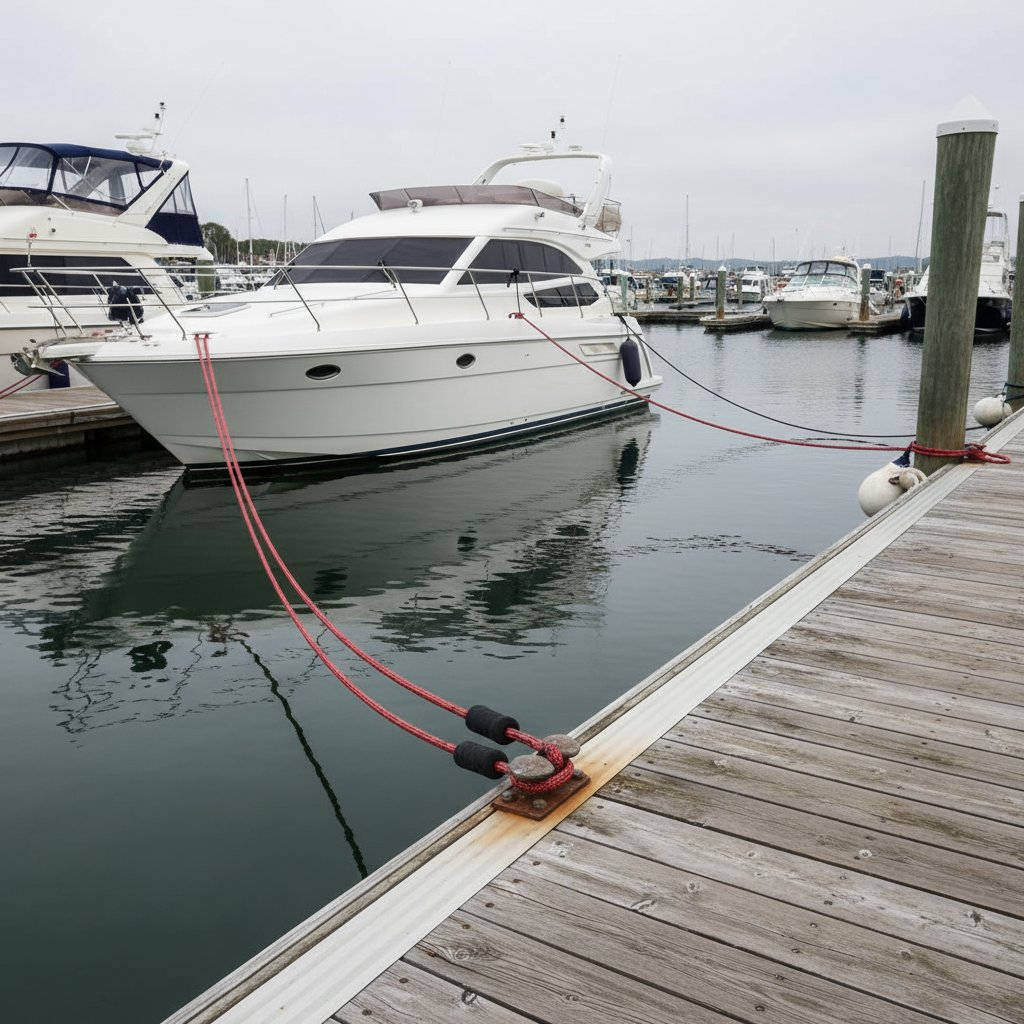
Spring line techniques are your best defence against forward and backward motion, which can build quickly in a busy harbour. Run a forward spring from the boat's stern cleat to a point forward on the dock—it pulls the bow in while checking the boat's tendency to creep ahead. The aft spring does the opposite, connecting the bow to a rear dock point to halt backward drift. Together, they create diagonal tension that locks the vessel in place lengthwise, perfect for stable docking when currents try to nudge you along. I once helped a skipper in a tidal bay adjust his springs during a sudden ebb; without them, his 30-foot sloop would have strained against the pilings all night.
For side-to-side stability, breast line positioning takes centre stage, especially useful for bigger boats where lateral swings could mean scrapes against neighbours. Position these perpendicular from the boat's midsection cleats to the dock's centre bollards—they act like cross-braces, holding everything snug without excess slack. In finger-pier setups or T-head docks, angle them slightly if needed to match the layout, but keep them short to minimise bow. This counters the push from crosswinds or wakes, keeping larger vessels like yachts aligned even in choppy spots. Have you ever seen a boat rocking wildly sideways? Breast lines eliminate that, turning a potential headache into a serene berth.
- Secure the bow and stern first - Establish lengthwise control before adding diagonals.
- Add forward and aft springs - Create opposing pulls to stop surging.
- Incorporate breast lines amidships - Lock lateral position last for full balance.
To handle sudden jolts from waves or boats passing by, integrate surge protection methods right into your dock mooring lines. Snubbers—short rubber or bungee sections—stretch under load, absorbing energy like a shock absorber on a rough road and preventing snaps that could rip out cleats. Mooring compensators, often floating devices on the line, do similar work by allowing controlled give during peaks. Attach them inline or at the dock end for best results, tailored to your rope's material for seamless performance. This setup cushions the boat from those harsh tidal pulls we talked about earlier.
Of course, the right number of lines ties it all together—most setups call for four to six, depending on your boat's size. Smaller craft under 25 feet might manage with four (bow, stern, and a pair of springs), while anything over 40 feet benefits from six, adding breast lines for extra hold. Factor in the dock type and local conditions; a simple count ensures nothing slips through the cracks.
Getting these techniques dialled in means your lines work smarter. Remember, they'll need tweaks as seasons shift and storms loom to stay effective over time.
Seasonal Adjustments, Storm Preparation, and iRopes Custom Solutions for Dock Mooring
With spring and breast lines in place to handle everyday surges, the real test comes when conditions change over months or hit hard during bad weather. That's where smart tweaks keep your setup reliable without starting from scratch. Tides don't stay put, especially in ports where water levels can swing by feet daily or seasonally. Seasonal adjustments for tidal variations are straightforward: measure the rise and fall at your dock, then add slack in low seasons or shorten up during highs to avoid over-tension that strains cleats. I learned this the hard way on a charter in fluctuating waters—ignoring a two-foot drop left my lines too tight, pulling everything forward until I eased them out. Keep a log of local tidal patterns; it makes these shifts routine and prevents that nagging worry about whether your boat will stay put.
When storms roll in, storm preparation procedures for different dock configurations turn those adjustments into a full defence strategy. Start by doubling up on key lines—add a second set of springs or breasts for redundancy, especially on exposed T-heads or floating piers where waves amplify motion. Chafe guards, like tubular rubber sleeves over contact points, become essential to shield against the extra rubbing from wind-driven slaps. For finger slips in tight marinas, focus on reinforced bow and stern ties to counter broadside pushes, while open-water docks might need longer compensators to absorb prolonged swells. Ever faced a squall tying up? Rushing to add those extras beforehand saved my gear once, turning potential chaos into just another rainy night aboard. For advanced protection against such friction, explore iRopes' chafe protection solutions, including custom sleeves and coatings tailored for marine environments.
Seasonal Tweaks
Adapting to Nature's Rhythm
Monitor Tides
Track daily and monthly changes to predict slack needs for rising or falling levels.
Quarterly Checks
Inspect and resize lines every three months to match seasonal water shifts.
Easy Modifications
Use quick-release knots for fast length changes without retying everything.
Storm Safeguards
Weathering the Worst
Extra Lines
Double critical ties like springs to distribute load across more points.
Guard Against Rub
Fit chafe protectors on all contact areas to fend off friction in high winds.
Dock-Specific Plans
Customise for pier type—longer reaches for floating docks, tighter for fixed ones.
For setups that handle all this effortlessly, turn to iRopes' OEM and ODM services, where we craft dock mooring lines to your exact specs. Certified under ISO 9001, our ropes come with built-in protections like UV-resistant coatings and optional reflective strips for low-light visibility during night storms. We safeguard your designs through full IP protection, so your unique twists—say, glow-in-the-dark tracers for quick checks—remain exclusively yours. Tailored for yachting pros or port operators, these lines fit industries needing precision, from custom diameters for heavy surges to branded packaging that matches your fleet.
What sets us apart for wholesale partners? Competitive pricing keeps costs down without skimping on quality, and our global shipping hits your door on schedule, pallet-direct to any marina. Whether you're outfitting a yacht club or beefing up port security, these custom options mean lines that adapt seamlessly, cutting downtime and boosting peace of mind year-round. For deeper insights into selecting the ideal materials for such mooring applications, check out our guide on choosing the best mooring rope material.

As we've explored the critical flaws in standard dock mooring lines, such as chafe and poor shock absorption that can spell disaster for vessels in storms, the path forward lies in integrated docking and mooring solutions for marina and port operations. Mastering spring line techniques to curb fore-aft surges, precise breast line positioning for lateral stability, and surge protection methods like snubbers ensures your setup holds firm. Don't overlook seasonal adjustments for tidal variations or storm preparation procedures for different dock configurations—these proactive steps, combined with high-quality mooring dock lines, safeguard your operations year-round.
Building on these insights, iRopes' custom solutions elevate your dock mooring game, offering ISO-certified ropes with features like reflective elements and IP protection to match your needs precisely. For wholesale partners seeking personalised guidance to implement these strategies effectively, the next step is clear.
Customise Your Dock Mooring Solutions with iRopes Today
If the ideas in this post have sparked questions about tailoring dock mooring lines for your specific marina setup, fill out the inquiry form above to connect with our experts. We're here to provide personalised advice and custom quotes to enhance your vessel security.
