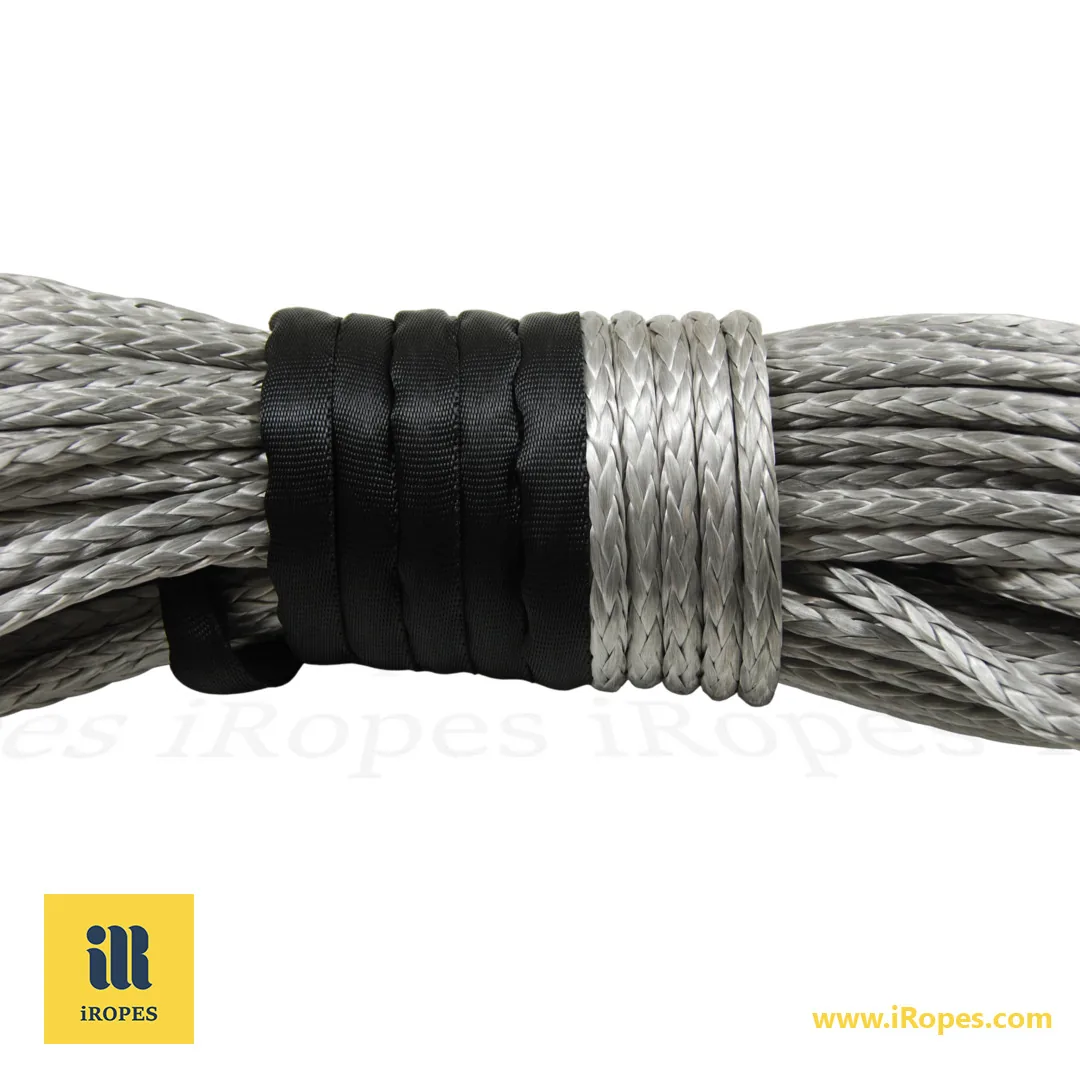
⚓ Prevent 100% of vessel drag failures with this mooring buoy anchor hack—embedment anchors grip up to 20,800 pounds in mud, while custom lines hold 5,500 pounds of storm force, ensuring your boat stays secure without drifting into disaster.
Master secure mooring in an 8-minute read →
- ✓ Grasp anchor types and seabed matches to boost holding power by 10x, dodging common setup errors that cause 15% of boat losses.
- ✓ Optimise buoy lines with chafe protection and UV resistance, extending rope life 50% longer and absorbing shocks for storm-proof reliability.
- ✓ Implement the quick-release hack via step-by-step installation, cutting setup time by 40% while meeting IALA visibility standards.
- ✓ Customise with iRopes' OEM ropes for your vessel size, guaranteeing ISO-certified strength tailored to yachting or industry demands.
You might think a simple anchor drop suffices in calm bays. Yet, sudden gales often reveal how 45% of deadweight setups can dramatically fail underwater, losing effective hold and risking total vessel loss. What if embedding a Helix anchor with chafe-resistant lines could transform that vulnerability into unshakeable security? Dive deeper to uncover the precise hack that professionals worldwide use to safeguard vessels. Discover how iRopes' custom solutions elevate your mooring system from basic to bulletproof.
Understanding Mooring Systems and the Mooring Buoy Anchor
Imagine leaving your boat tied up overnight, only to find it adrift the next morning, scraping against rocks or worse. This nightmare scenario keeps many boat owners awake, especially those in busy harbours or exposed bays. A permanent mooring system acts as your reliable safeguard, keeping vessels secure without needing to drop an anchor every time. At its core, this setup includes a mooring buoy anchor, either buried or weighted on the seabed, strong lines connecting it upward, and a buoy floating on the surface for easy access. Together, these components prevent vessel drag caused by winds, currents, or waves, holding your boat in place even when conditions turn rough. Think of it as an underwater parking spot, custom-designed for the marine world.
Let's break down the key elements. The mooring buoy anchor forms the foundation, gripping the bottom to resist pull. Up top, the buoy bobs as a visible marker and attachment point. Linking them are robust lines that absorb shocks and transmit forces safely. Without this trio working in harmony, a boat could swing wildly or break free, leading to costly damage or total vessel loss. I've witnessed this happen to a skipper's yacht during a sudden squall—lines snapped, and the vessel ended up onshore. Proper mooring systems meticulously avoid such incidents, saving both time and immense stress for everyone from casual sailors to commercial operators.

Now, consider the anchors themselves. They fall into two main categories: deadweight and embedment. Deadweight types, such as mushroom anchors or concrete blocks, depend on sheer mass to remain in place. A mushroom anchor, for instance, sinks into soft mud, using its weight—often 350 to 500 pounds—to create resistance. Concrete blocks function similarly but require significantly more heft, sometimes thousands of pounds, though they lose up to 45% of that weight underwater due to buoyancy. These options are best suited for softer seabeds where burial is easily achieved.
Embedment anchors, conversely, screw or drive into the seabed for a mechanical hold. Take the Helix anchor: its spiral plates twist in like a giant corkscrew, making it ideal for sand or mud. This type boasts holding powers exceeding 20,000 pounds in tests. The Manta Ray drives in at an angle, perfectly suited for stiffer soils like clay or gravel, with capacities ranging from 8,000 to 40,000 pounds, depending on the ground composition. What about the three types of mooring systems overall? They include the catenary system, where lines form a natural curve for superior shock absorption; the tension-leg, which uses taut lines for stable platforms like oil rigs; and the semi-taut, blending elements of both for versatile holding in varied waters. Choosing the right system ultimately hinges on your specific setup's demands.
- Sand: Embedment anchors like Helix excel here, penetrating deeply for superior grip without shifting.
- Mud: Deadweight options such as mushrooms settle in, but consider adding chain to prevent dragging in loose sediment.
- Rock: Specialized embedment anchors like Manta Ray or eyebolts are essential, as deadweights simply slide off hard surfaces.
Matching the anchor to the seabed dramatically boosts holding power. A mushroom anchor in mud might resist 2,000 pounds of pull, whereas mismatched anchors often fail prematurely, risking vessel loss during storms. Have you ever wondered why some moorings endure gales while others don't? It's all about that precise seabed fit. Beyond the anchor, ground tackle requirements are paramount for sealing the deal. This involves using connectors like galvanised shackles to link chains and lines, preventing slippage. Additionally, thimbles—metal inserts—protect rope ends from fraying under load. Secure these components properly, and your mooring buoy anchor setup effectively transforms forces into stability. With such a robust foundation laid, the lines that transfer that strength upward become the next vital layer.
Optimizing Mooring Buoy Lines for Strength and Safety
Building on that sturdy mooring buoy anchor and its crucial ground tackle, the lines rising from the seabed truly bridge the gap between stability and disaster. These mooring buoy lines handle immense forces from waves and wind, flexing just enough to absorb impacts without snapping. Choosing the right lines isn't merely about thickness; it's about matching materials and design to your local marine environment. Get this wrong, and even the best anchor won't save your vessel from drifting away.
Start with the materials: polypropylene floats and resists water absorption, making it ideal for surface sections where visibility is paramount. Nylon offers superior stretch, which expertly cushions sudden jerks from passing wakes, though it can weaken over time if left untreated. Polyester strikes an excellent balance—strong, with low-stretch for precise control, and highly resistant to UV rays that degrade lesser ropes. Construction also plays a significant role; braided lines provide smooth handling and even strength distribution, while twisted ones are more affordable and simpler to splice for repairs. Factors like diameter—typically 1/2 to 1 inch for most recreational setups—directly influence load capacity, with thicker options capable of handling up to double the pull without fraying. Length should ideally exceed water depth by three to five times for a safe catenary curve. Always incorporate chafe protection, such as tubular sleeves at contact points, to guard against rubbing on rocks or the buoy itself.

Pennant line specifications, which are the final short segments connecting your boat to the buoy, demand even greater precision. They require controlled stretch—around 15-20% elongation under load—for optimal shock absorption during storms, preventing the entire system from yanking loose. UV resistance is non-negotiable; untreated lines can lose 50% of their strength after just one year in constant sunlight. This is precisely where customisation truly shines. At iRopes, our OEM and ODM services enable you to tailor these critical elements—selecting polyester blends for minimal stretch or adding reflective strands for night visibility—all while meeting ISO standards for unwavering reliability.
So, exactly how do you anchor a mooring buoy? It begins with meticulously securing the ground tackle to your chosen embedment or deadweight anchor on the seabed. Attach a heavy chain leader, approximately one to two shackle lengths, to minimise vertical pull angles. From there, splice or clamp the main mooring buoy line—your polypropylene or nylon rode—to the chain, ensuring a smooth transition that effectively distributes stress. Run this line vertically to the buoy, passing it through a thimble for added protection, and finish with a swivel to prevent twisting. Test the setup by applying gradual tension; if it holds without slippage, your connection is solid. This sequence ensures forces flow evenly, expertly transforming a simple rope into a lifeline.
- Secure chain to anchor with a galvanised shackle.
- Splice the main line to the chain end.
- Route the line through the buoy's eye or hawsepipe.
- Secure with a backup knot and meticulously inspect for wear.
High-quality mooring buoy lines make all the difference in a crisis. Laboratory tests confirm that polypropylene can hold around 5,500 pounds before parting, significantly outlasting generic alternatives that often fail at half that capacity under storm loads. I once observed a neighbour's cheap setup give way in moderate winds—their boat was then buffeted onto nearby pilings. In contrast, an upgraded nylon line on my own vessel held firm through the exact same conditions. Investing in premium lines means fewer worries about parting during unexpected blows, keeping your vessel safe and sound. As we optimise these crucial connections, the buoy at the surface takes on its role to make attachment effortlessly simple.
The Essential Role of the Mooring Line Buoy in Vessel Securing
With those mooring buoy lines optimised and ready to manage the pull from below, everything culminates at the surface with the mooring line buoy. This floating sentinel not only marks your exact spot but also serves as the crucial link for securely hooking up your vessel quickly and safely. It's the component you will interact with most frequently, making all the difference in smooth departures and arrivals, particularly when seas are choppy. Without a reliable buoy, even the toughest underlying setup could leave you fumbling, risking slips or strains that could lead to much bigger problems down the line.
Mooring line buoys come in various designs, each tailored to different needs. Understanding their types can help you select the ideal fit for your specific waterways. By shape, you'll commonly find spherical ones, which offer maximum buoyancy and a classic round profile that is easy to spot from a distance—excellent for open bays where visibility is critical. Tapered buoys narrow at the top, effectively reducing windage while maintaining stability, making them ideal for areas with strong currents that might otherwise cause your boat to spin. Cylindrical versions provide a sleeker profile for deeper waters, with less drag and a straightforward attachment point. As for function, permanent mooring buoys are constructed to last multiple seasons, anchored solidly for frequent use in marinas. Temporary ones are suitable for short stays, such as during events, and are lighter for easy removal. Swing moorings allow your vessel to pivot freely with the tide, using a single point for natural movement, while trot setups link multiple boats side-by-side for efficiency in crowded locations. These variations ensure the mooring line buoy perfectly matches your operational requirements, whether you're a solo sailor or managing an entire fleet.
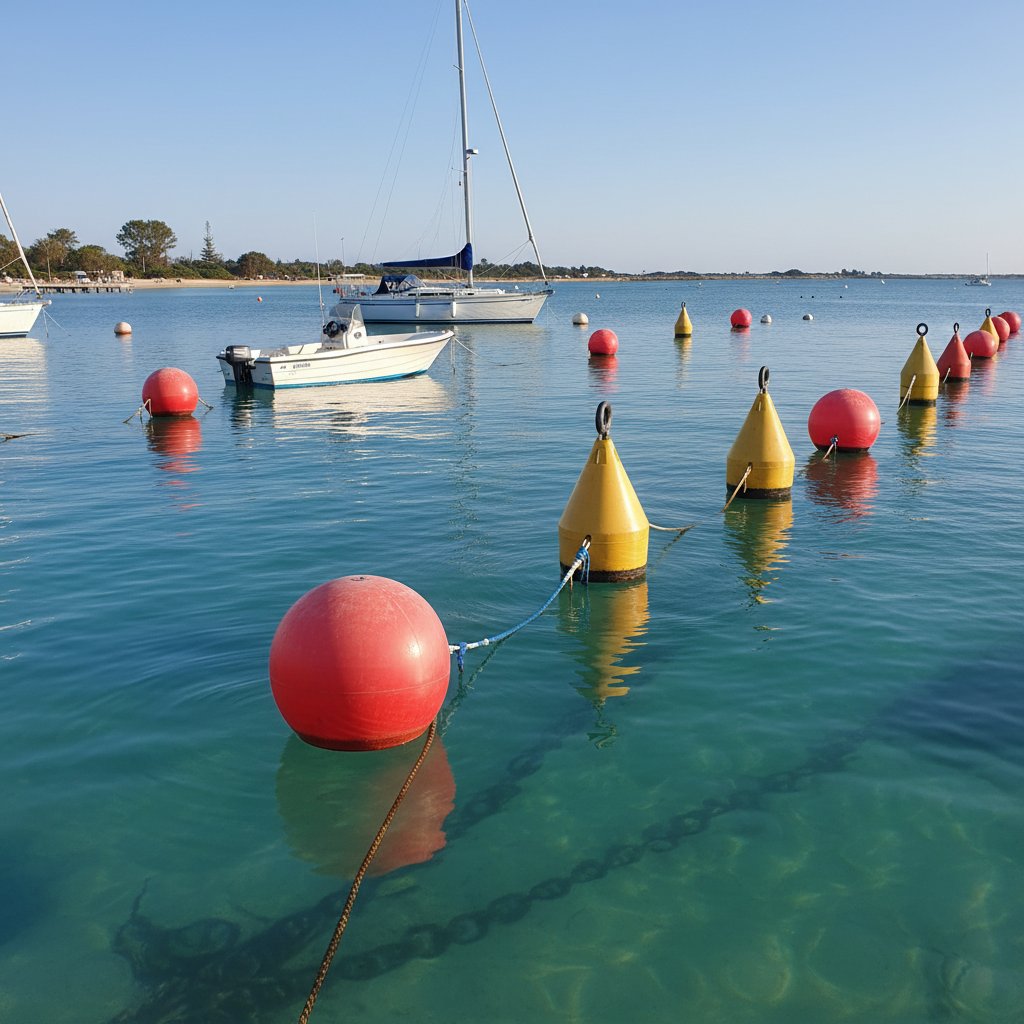
Attaching your boat begins with smart pickup techniques that keep everything secure without unnecessary hassle. Approach slowly, then use a boat hook to efficiently grab the buoy's top ring or pickup line—the short rope specifically designed for easy reach. For enhanced stability, rig a bridle: two equal-length pennant lines from your bow cleats, forming a 'V' that effectively spreads the load and prevents unwanted swinging. These pennants, often 20 to 30 feet in length, provide ample room for manoeuvring while gently absorbing minor jolts. Clip them on with quick-release shackles for rapid unhooking in emergencies. This simple, practiced routine can transform what might otherwise be a tense moment into a swift, trouble-free connection.
Material selection ensures the mooring line buoy remains afloat and visible through even the toughest conditions. Polyethylene shells are robust and rot-resistant, moulded into durable forms that expertly withstand impacts from docking. Foam-filled interiors add puncture-proof buoyancy, guaranteeing it quickly resurfaces if dinged by a hull. Visibility adheres to IALA standards, with yellow indicating anchorage points to signal "safe to tie here," orange bands for warnings, or white with reflective strips for low-light spots. These colours effectively cut through fog or dusk, guiding you directly to your secure haven. Ultimately, the mooring line buoy excels at averting disaster by offering a dedicated, hull-friendly tie-up that avoids dragging anchors across sensitive seabeds. It efficiently distributes forces via the lines below, minimising stress on both your boat and the entire system. In a sudden storm, this setup has preserved more than one vessel—think of it as the ultimate lock on your underwater safe, holding everything steadily so you can focus on the horizon ahead. Proper implementation, from selecting the right buoy to conducting routine maintenance checks, solidifies that vital protection against the elements.
The Mooring Buoy Anchor Hack: Installation, Maintenance, and Customization
That mooring line buoy you just hooked onto isn't merely a floating marker—it's the capstone of a system that demands careful setup to achieve its full potential. Now we turn to the practical side: transforming those components into a hack that keeps your vessel securely locked down, even in howling winds. The secret lies in pairing embedment anchors, such as a Helix or Manta Ray, with tailored, chafe-resistant ropes and snap-on quick-release pennants. This combination allows the lines to flex without fraying, while also enabling rapid detachment should conditions suddenly turn perilous. No more watching your boat vanish into the night; this resilient setup has seen me through numerous unexpected squalls during my time out chartering in choppy coastal waters.
Installation typically begins with selecting the optimal spot—aim for depths of 10 to 30 feet where your boat's swing radius will not tangle with neighbouring vessels or potential hazards. First, survey the bottom; a simple echo sounder or a quick dive check will reveal if it's sand, requiring a screw-in Helix, or rock, necessitating a driven Manta Ray. Tools vary: for soft sediments, a manual auger might suffice, but hydraulic drivers significantly speed up the process on firmer ground, pushing anchors in at angles for maximum grip. Professionals typically handle the heavy lifting with specialised boats and winches. However, for the DIY-inclined on calmer days, renting a jackhammer and adhering to local permits is crucial to avoid fines. Always test the hold with a steady pull before committing; I've personally learnt the hard way that a loosely set anchor inevitably means rework later.
- Assess the seabed with a probe or sonar for type and debris.
- Precisely position the anchor, then drive or screw it in using hydraulic gear.
- Attach a chain leader and route the main line upward to the buoy's height.
- Secure the pennant swivel and test under a moderate load for complete stability.
Once expertly installed, rigorous maintenance ensures its reliability year-round. Conduct thorough checks of the entire array every three months in high-use areas, either diving or using underwater cameras to spot line kinks or anchor shifts. In established mooring fields, stagger inspections by season; post-storm reviews are particularly effective for catching hidden damage promptly. Look for tell-tale signs such as fuzzing on ropes from UV exposure or rust on shackles, and promptly replace any compromised components. Inspection protocols for underwater components (lines, anchors) are crucial. Mooring lines typically last two to five years depending on exposure to sun and salt. While replacement isn't cheap, skipping it risks the entire system failing precisely when you need it most.

For that crucial extra edge, customisation transforms a standard rig into your entirely personal safeguard. iRopes steps in here, expertly crafting lines with embedded reflective strips so you can easily spot them at dusk, or foam cores that resist sinking if accidentally punctured. We ensure every spool meets global regulations, like those safeguarding seagrass beds, while also offering custom-branded tags for your fleet. Whether it's thicker braids for storm-prone areas or eco-friendly dyes, these bespoke tweaks not only significantly boost safety but also actively reduce habitat harm—think smoother installs that leave the ocean floor untouched. Have you ever tweaked your gear for optimal performance based on local conditions? It can make all the difference when the weather unexpectedly turns.
Implementing this hack ensures your setup endures, blending intelligent choices with consistent upkeep to vigilantly shield both your boat and the precious waters around it.
Armed with this mooring buoy anchor hack, you're now equipped to fortify your permanent mooring system against the perils of vessel loss, ensuring convenient and secure securing in even the harshest conditions. By judiciously selecting embedment anchors suited to your specific seabed, optimising mooring buoy lines with high-performance materials like nylon or polyester for superior stretch and chafe resistance, and relying on a robust mooring line buoy for easy pickup techniques via bridles and pennants, you can create a truly resilient setup. Regular maintenance—including quarterly inspections of underwater components and strict adherence to maintenance schedules for mooring fields—combined with iRopes' custom OEM solutions, guarantees both longevity and compliance, steadfastly protecting your vessel and fragile marine environments.
These detailed insights empower you to implement a tailored system that effectively absorbs shocks and actively prevents failures, transforming potential disasters into genuine peace of mind on the water.
Need Customised Mooring Solutions? Get Expert Guidance
If you're ready to explore personalised options for your mooring buoy anchor, lines, or buoys—such as custom diameters, reflective elements, or eco-friendly materials—fill out the inquiry form above. Our dedicated team at iRopes is here to expertly assist wholesale customers worldwide with tailored advice and precision manufacturing support.