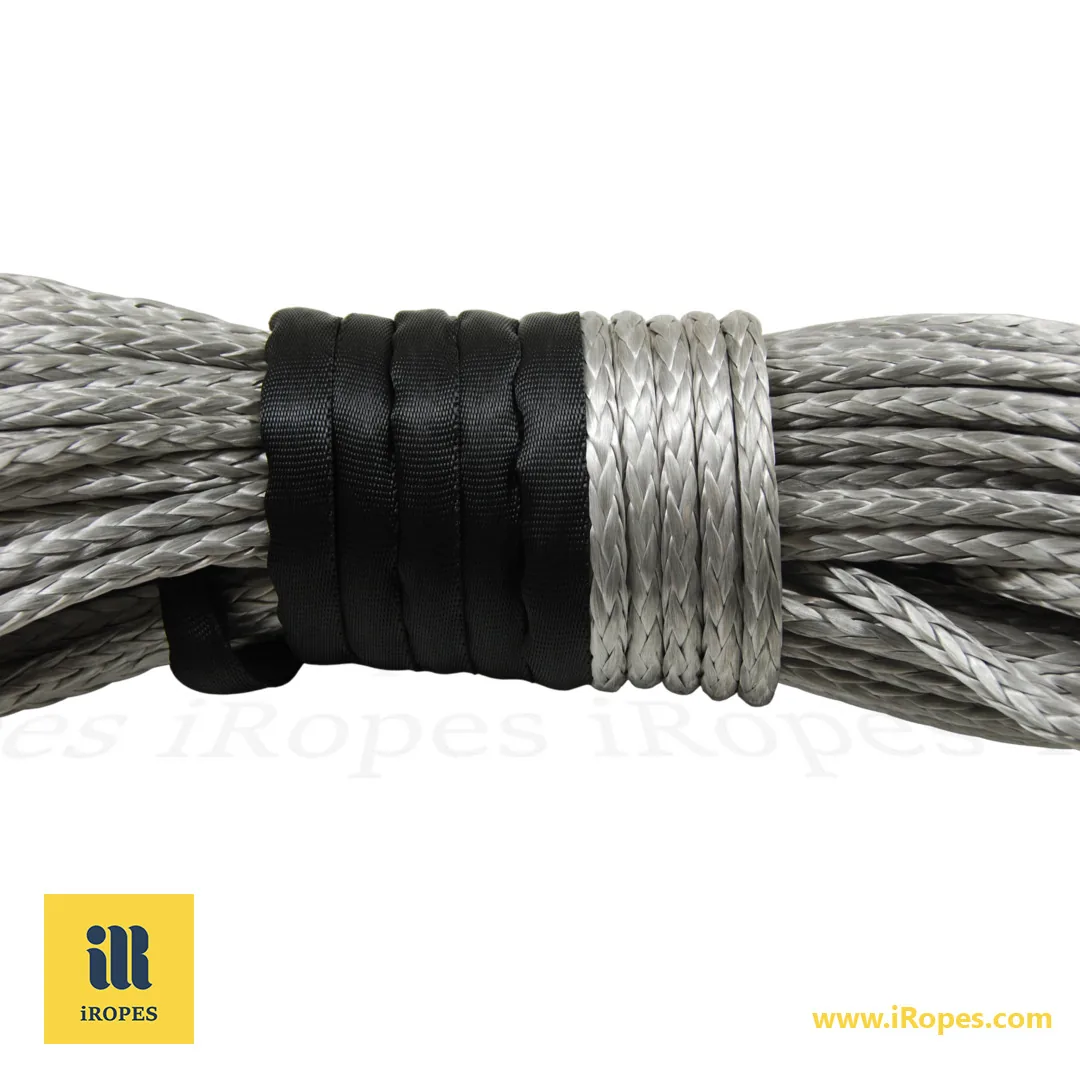
Polyester rope typically stretches about 2–3 % under working load — far less than nylon’s ≈ 6 %.
5‑minute read – Why polyester matters
- ✓ Excellent UV resistance helps retain strength and colour in sunlight.
- ✓ Low water absorption keeps weight and handling stable when wet.
- ✓ Low stretch (≈ 2–3 %) improves load control on halyards and lifts.
- ✓ Tensile strength ≈ 6 kN · mm⁻² delivers high break loads across diameters.
You probably think all polyester ropes behave the same, but subtle differences in fibre treatment, braid architecture and core composition can shift performance by a meaningful margin. In the sections ahead we dissect titan braid, braid‑on‑braid and solid braid, exposing the metrics that decide whether your line will hold steady in a gale or give under a sudden jerk. Keep reading to see which construction best delivers low‑stretch strength for your job.
Titan Braid
When you need a rope that feels solid in your hands yet offers barely any give, titan braid is a dependable choice. Its reputation comes from a refined core‑cover design that balances strength with control, making it a favourite on yachts, in rigs and across industrial lifting.

Core‑cover construction
The heart of titan braid is a braided nylon core that carries most of the load. Wrapped around it is a tightly braided polyester outer cover (often a 24‑plait), which stabilises the shape and shields the core. This two‑layer approach gives the rope a round, smooth feel while holding elongation to about 2–3 % at working load.
- UV resistance - polyester fibres resist ultraviolet degradation, keeping colour and strength on sun‑lit decks.
- Low water uptake - the material absorbs less water than nylon, reducing weight gain and maintaining handling when wet.
- Abrasion toughness - the outer braid spreads wear, extending service life in rough environments.
Strength and stretch numbers
Typical break loads range from 400 kg for a 3 mm diameter to 1 200 kg for a 6 mm line, while stretch stays under 3 % at working load. If you wonder whether braided polyester rope stretches, the answer is yes — but only about 2–3 % under load, far less than the ~6 % you’d see with a pure nylon line.
Our field engineers report that the low‑stretch characteristic of titan braid reduces the need for frequent sail‑trim adjustments in gusty conditions, improving both speed and crew comfort.
Where titan braid shines
Because it resists UV, absorbs little water and holds its shape, titan braid is ideal for marine halyards where stretch can ruin sail trim, and for industrial lifting and rigging that demand a predictable, low‑creep line. Polyester also sinks in water, helping lines stay clear of propellers and traffic around docks.
With the core‑cover concept clarified, the next section explores the double‑braid design that pairs a nylon core with a polyester cover, and how that combination tweaks elasticity and strength.
Braid‑on‑Braid Polyester Rope
After seeing how a nylon core and polyester cover give titan braid its low‑stretch feel, you might wonder how a double‑braid changes the equation. The difference lies in the way the two layers share load and wear, delivering a blend of elasticity and durability for specialised tasks.
Polyester fibres bring a suite of benefits: they resist UV fading, absorb little water, and keep their strength when exposed to the elements. Compared with nylon, polyester’s tensile strength hovers around 6 kN per square millimetre, while stretch stays under 3 % at working load. Those characteristics make an ideal outer shield for the braid‑on‑braid design.
The term braid‑on‑braid polyester rope describes a construction where a braided nylon core is encased by a 24‑plait polyester outer braid. The core handles the majority of tensile forces, while the outer skin protects against abrasion, sunlight and general wear.
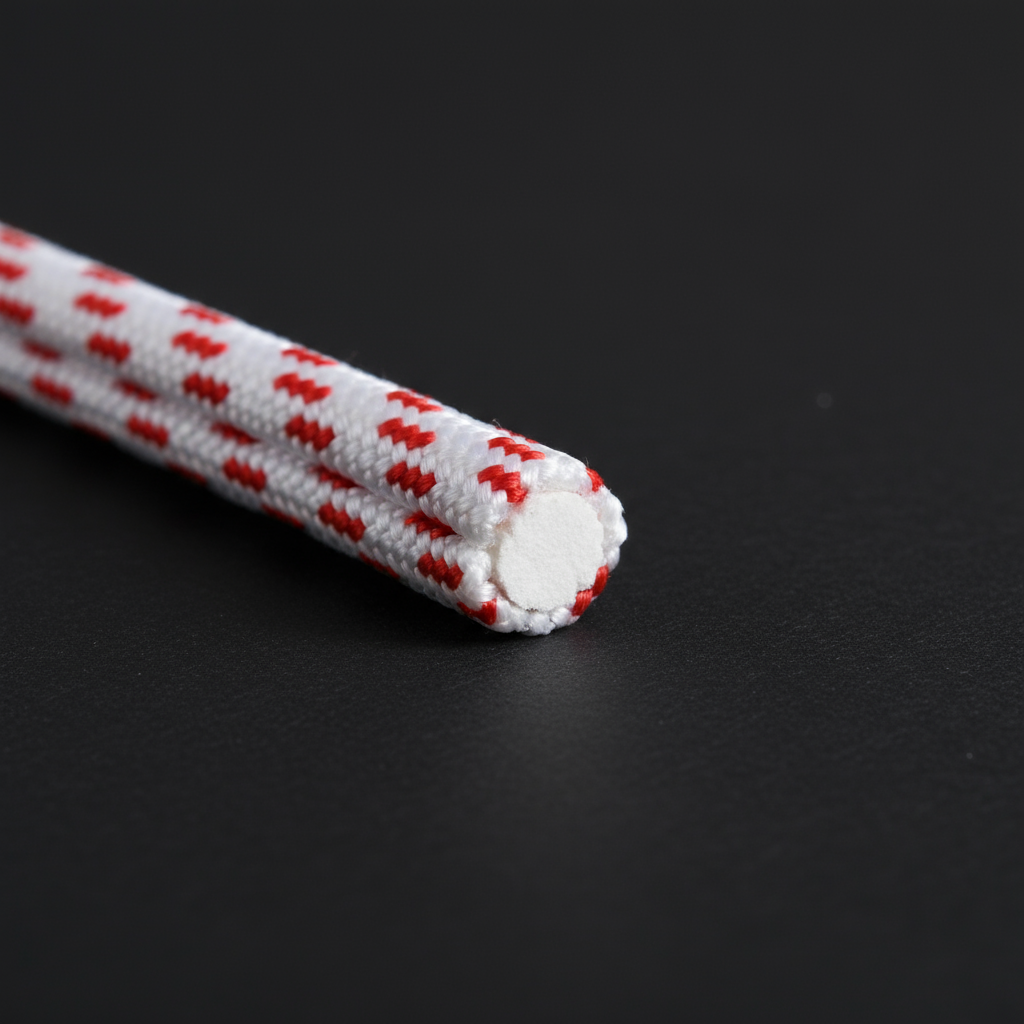
How does the nylon core influence the rope’s behaviour? Three key effects stand out:
- Core elasticity – nylon yields around 6 % stretch under load, moderating shock.
- Strength distribution – the core carries most of the tensile load.
- Abrasion shield – the polyester outer braid resists UV and surface wear.
When you compare performance, a 6 mm braid‑on‑braid rope typically breaks at about 1 200 kg and stretches roughly 2.5 % at its working load. That stretch is slightly higher than titan braid’s low‑stretch figure but still far below a solid nylon line. By contrast, solid braid polyester rope of the same diameter generally offers similar low stretch (~2 %) but a slightly lower ultimate break load than an equivalent double‑braid.
Arborist Line Example
A professional tree‑care crew chose braid‑on‑braid polyester rope for a 12‑metre ascent because the nylon core absorbed dynamic loads while the polyester skin withstood bark abrasion, reducing equipment wear noticeably over a season.
Beyond arborist work, rescue teams value the rope’s ability to elongate just enough to cushion a fall without sacrificing the pull needed for haul‑in operations. The same properties make it popular for industrial rigging where occasional shock loading occurs, yet a clean, low‑stretch line is still desired.
With the double‑braid construction explained, the next section examines solid braid polyester rope and its distinct advantages for projects that prioritise absolute low‑stretch performance.
Solid Braid
Building on the double‑braid insight, solid braid offers a single, uninterrupted 100 % polyester lock‑stitch that skips the inner core altogether. Because every strand interlaces in the same pattern, the line feels uniformly round and behaves predictably under load.

The lock‑stitch construction delivers a competitive strength‑to‑weight ratio and a firm, round grip. Stretch sits around 2 % at working load, so you’ll notice minimal elongation when you hoist a flag or tension a camp‑site tarp. Because polyester is denser than water, the rope naturally sinks — a practical trait when you need lines to stay below the surface and clear of propellers.
Note: Polyester fibres are denser than water, so a solid braid rope will submerge rather than float, which can be a safety advantage in marine settings.
Solid braid shines in environments where low stretch and ease of handling outweigh the need for maximum ultimate load. Flagpoles benefit from the rope’s ability to stay taut without sagging; campers appreciate the round, snag‑resistant braid that won’t noticeably stretch under modest load; and light‑duty lifting operations enjoy a rope that resists creep while staying easy to coil and manage. Compared with a titan braid or a braid‑on‑braid polyester rope, solid braid offers the most dimensional stability, albeit with a slightly lower ultimate break load.
Low‑Stretch Advantage
Solid braid’s lock‑stitch design delivers minimal elongation while keeping the rope easy to handle.
With the construction differences clarified, we can now compare performance data, pricing, and customisation options to help you make an informed purchase decision.
Choosing the Right Rope and Customisation Options
Now that the construction differences are clear, the next step is to match each rope type to the job that will deliver the best performance and value.
Titan & Braid‑on‑Braid
When performance matters
High Load
Ideal for applications that demand the greatest breaking strength, such as marine halyards or industrial lifting and rigging.
Elastic Core
The nylon core in braid‑on‑braid adds just enough stretch to cushion shock loads without sacrificing control.
UV Guard
Polyester outer braids resist sun‑induced fading, keeping colour and strength stable over years.
Solid Braid
When stability wins
Low Stretch
≈ 2 % elongation at working load makes it perfect for flagpoles, camp‑site rigs and light‑duty lifts.
Smooth Handling
The unified braid delivers a round, firm feel that coils neatly and runs cleanly through hardware.
Cost‑Effective
Its straightforward lock‑stitch design often translates to a lower price per foot without compromising durability.
When you line up the three options, ask yourself three quick questions: How much load will the rope see? Does the job need a little give to absorb spikes? And how important are UV exposure and colour‑matching to your brand? If the answer is “maximum strength with some elasticity,” titan braid or braid‑on‑braid polyester rope will usually win. If you need a rope that barely stretches and stays economical, solid braid is the logical pick. For a deeper dive into braiding methods, see our guide on different braiding techniques.

iRopes takes customisation a step further with a full OEM/ODM programme. You can pick colours from our Pantone‑matched palette, add branded accessories such as thimbles or sewn loops, and request non‑branded or customer‑branded packaging that arrives on a pallet ready for distribution worldwide. If you need an anchor solution, consider our double‑braid anchor rope options. Throughout the process, iRopes safeguards your IP and applies ISO 9001‑based quality controls, so your unique design stays yours and meets your standards.
“Our clients love that they can order a 4 mm solid braid in navy with a brushed‑metal logo, and receive a detailed PDF spec sheet that matches the performance data they need for certification.” – Maya Liu, iRopes Custom‑Design Lead
Pricing follows a clear band: basic polyester rope starts around $0.20 per foot, while premium titan braid with colour‑matching and accessories can reach $59.99 per foot. When you factor in the longer service life of UV‑resistant yarns, the total cost of ownership often favours the higher‑spec option for demanding projects.
Quick FAQ highlights: braided polyester rope does stretch, but only 2–3 % under load, far less than a pure nylon line. A safe lifting factor of ×5 against the listed break load is a common industry guideline. Compared with twisted rope, any braided design — titan, braid‑on‑braid or solid — offers higher tensile strength and more predictable handling. For formal testing, reference ASTM D2256 methods.
Armed with the decision points, custom‑design possibilities and a transparent cost picture, you can now choose the rope that aligns with your performance goals and budget. The next step is to download iRopes’ detailed spec sheet and start a conversation about a tailor‑made solution for your next project.
Understanding polyester’s innate UV resistance, low water absorption and low‑stretch behaviour helps you match the right construction to your application. Whether you need the predictable low‑creep of titan braid, the balanced elasticity of a braid‑on‑braid polyester rope, or the ultra‑stable performance of solid braid, this guide has highlighted break‑load ranges, stretch percentages and typical use‑cases to steer your decision. Learn more about the benefits of polyester braid rope for sailing to see how these properties translate to marine performance.
Our OEM/ODM team can fine‑tune colour, branding, accessories and packaging to your exact specifications. For a personalised recommendation that aligns with your project’s demands, use the form below.
Get a custom rope quote today
If you’d like personalised assistance choosing the right polyester rope or tailoring colours, simply complete the form above and our specialists will guide you.