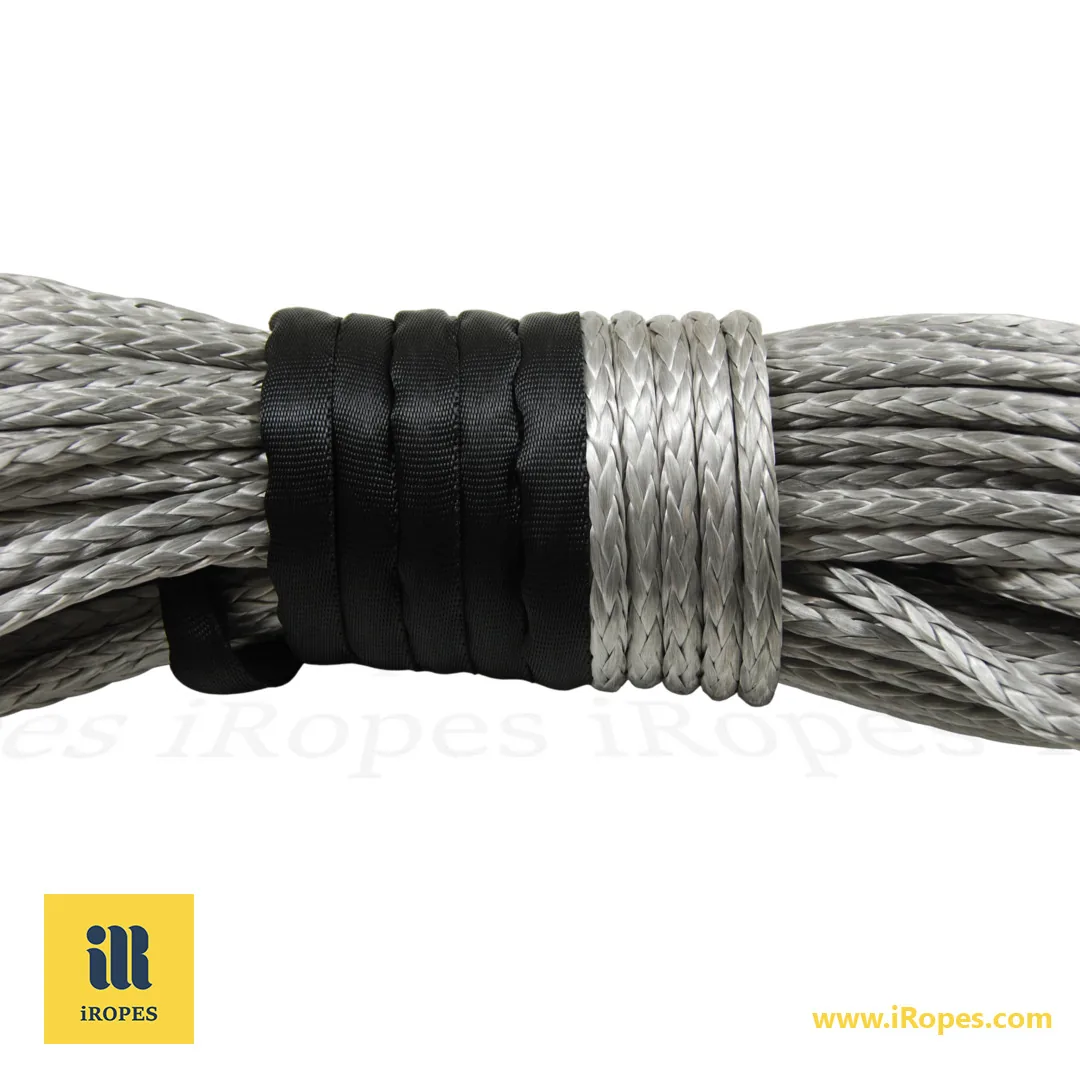
⚡ You might think any heavy rope will pull a tree, but a braided polyester arborist rope can deliver about 8,700 lb break strength (½‑in. class) with low stretch (typically < 5 %).
What you’ll gain – 1 min read
- ✓ About 8,700 lb break strength (½‑in. double‑braid class)
- ✓ Low‑stretch polyester for precise, predictable pulls
- ✓ UV‑stable, abrasion‑resistant fibres for longer service life
- ✓ Custom size and branding options from iRopes to match your required SWL
Imagine a rigging line that stays taut under load, shrugs off UV, and still packs neatly in your crew’s kit. Tree‑work ropes are engineered for high tensile strength and to withstand repetitive loading with minimal permanent stretch. We’ll show why a double‑braid polyester rope is often the best rope for tree rigging, how iRopes can custom‑size and brand it, and the inspection steps that keep it reliable for years.
Choosing the best rope for tree rigging
A tree‑rigging rope is a specialised line designed to transfer pulling forces safely while a tree is being positioned, removed or trimmed. Its core purpose is to hold steady under high tension, resist abrasion from bark and branches, and give you confidence that the load won’t slip or snap during a lift.

When you compare ropes, three performance metrics matter most: tensile strength (the force the rope can bear while staying intact), break strength (the absolute point of failure), and safe working load (SWL), often set at a fraction of the break rating. Many arborists use a conservative factor so SWL is roughly one‑third to one‑quarter of the break strength. Knowing these numbers lets you match a rope to the maximum pull you expect on a given tree.
If you’re hunting for the best rope for tree work, a braided polyester arborist rigging rope often tops the list. Polyester delivers low stretch, so the pull remains predictable, and its fibres resist UV‑induced degradation and the gritty abrasion of bark. The result is a rope that keeps its strength season after season, even with regular outdoor use.
Construction wise, the double‑braid design combines a high‑tenacity polyester cover with a tough nylon or polyester core. This arrangement offers a smooth exterior for efficient handling and splicing while the core carries the primary load. By contrast, multi‑strand ropes—such as 12‑strand bull rope or 3‑strand rigging rope—provide robust abrasion resistance and durability but can feel bulkier and may rotate more on the tree, which can affect control.
Since switching to a double‑braid polyester rope, our crew has seen a noticeable drop in rope wear and never had a break during a pull.
Low stretch
Polyester’s inherent low elongation keeps the load steady, reducing the risk of sudden jerks that could endanger the crew.
UV stability
The fibres retain strength even after prolonged exposure to sunlight, meaning the rope lasts longer on the job site.
Double‑braid
Combines a smooth outer cover with a strong core, delivering predictable performance and reliable splicing.
12‑strand option
Provides extra abrasion resistance for heavy‑pull scenarios but can be bulkier to handle.
In short, the combination of high tensile strength, a conservative SWL, polyester’s low stretch and UV resilience, plus a double‑braid construction, makes for the best rope for tree rigging. Understanding these factors will guide you to the right diameter, strand count and finish for any arboreal project, and sets the stage for selecting a rope that fits your budget without compromising safety.
Identifying the best rope for tree work
Building on the fundamentals of tensile strength and construction, the next decision is aligning rope characteristics with the actual tasks you perform in the canopy. Whether you are pulling a massive trunk or positioning a limb, the rope you choose must suit the specific load and movement patterns of the job.

One of the first distinctions to make is between static and dynamic ropes. A static line is engineered to stretch less than 5 %, keeping the pull predictable – the characteristic most arborists look for when rigging. Dynamic rope, by contrast, is designed to elongate under load, providing shock absorption that is valuable for climbing but can introduce unwanted movement during a pull. In short, a static rope is the answer to the common query “What type of rope is best for rigging?” because its low‑stretch behaviour delivers a steady, controllable force.
- Static rope – minimal stretch, ideal for precise pulls and load‑holding applications.
- Dynamic rope – higher elongation, suited to climbing where impact absorption matters.
- Hybrid blends – combine a static core with a slightly more elastic sheath for mixed‑use scenarios.
Diameter and load guidelines translate those material choices into real‑world safety margins. A ½‑inch (12 mm) static rope commonly offers break strength around 8,700 lb, with an SWL typically in the ~700–1,700 lb range depending on construction and safety factor. For larger trees and heavier limbs, stepping up in diameter increases break strength and SWL significantly; consult the manufacturer’s specifications to match the line to your expected maximum load and rigging method.
With the performance envelope defined, three rope types are widely chosen as the best rope for tree work:
- 24‑strand arborist bull rope – excels in abrasion resistance and bulk handling power; its larger diameter can be less flexible in tight spaces.
- 12‑strand arborist climbing rope – lighter and easier to splice; suitable for climbing and, when properly rated, moderate rigging tasks.
- Braided polyester rigging rope – low stretch, UV‑stable, and smooth for splicing; often the most predictable SWL for demanding rigging jobs.
Choosing among these options hinges on the balance between durability, handling comfort, and budget. If your crew regularly tackles high‑abrasion scenarios such as natural‑crotch lifts, the 24‑strand bull rope provides the grit you need. For teams that value lightweight gear and frequent climbing, the 12‑strand climbing rope delivers agility when rated appropriately. When precision and minimal elongation are non‑negotiable, the braided polyester rope stands out as the premium choice, embodying the qualities that make it the best rope for tree rigging.
Armed with a clear understanding of static versus dynamic behaviour, size‑to‑load matching, and the strengths of leading rope types, you can now evaluate which configuration aligns with your project’s demands – a crucial step before considering a fully custom solution from iRopes.
How to determine the best rope for your specific arborist needs
Now that you’ve scoped the main rope types, the next step is to match those options to the exact demands of your job site. A systematic checklist helps you avoid costly guesswork and ensures every line you haul meets safety standards while fitting your budget.

Start with a simple seven‑point checklist. First, decide the diameter that gives you the required safe working load for the size of trees you routinely handle. Next, pick a material that balances tensile strength with the environment you work in – for most outdoor jobs, a UV‑stabilised fibre is essential. Then consider the strand count; more strands usually mean higher abrasion resistance but add bulk. After that, verify the rope’s UV and abrasion resistance ratings, especially if you store lines in direct sunlight. Visibility is another practical factor – high‑visibility colours or reflective yarns make spotting the line on a busy site much easier. Finally, align the price range with your project budget; a modest upfront investment in durability often pays off in longer service life.
Custom Rope Benefits
iRopes can turn any of the checklist items into a single, brand‑aligned product. Choose OEM or ODM manufacturing, specify colour, add reflective stitching, and select a core type that matches your load profile. Every batch is produced under ISO 9001 quality control, protected by full IP safeguards, and shipped directly to your workshop anywhere in the world.
Keeping the rope in top condition is just as important as picking the right one. A practical inspection routine looks like this: a quick visual scan each morning for cuts or fraying, a light function test under a controlled load once a week to feel for stiffness, lumps, or sheath slippage, a thorough clean and dry at the end of each month, and retirement whenever you see glazing, core exposure, flattened sections, chemical contamination, or after any severe shock load. Always follow the manufacturer’s guidance and relevant standards such as ANSI A300‑4.
Buying Checklist
Core criteria for every arborist rope
Diameter & Load
Select a size that gives a safe working load at least three times your maximum pull.
Material & UV
Choose UV‑stable fibres such as polyester or a UV‑treated blend for outdoor durability.
Visibility & Price
High‑visibility colour or reflective yarns aid safety; balance these features against your budget.
Maintenance Tips
Simple steps to extend rope life
Daily Visual Check
Look for cuts, abrasions, glazing, or exposed fibres before each use.
Weekly Function Test
Load the rope in a controlled setup and check for stiffness, lumps, or sheath slip.
Monthly Cleaning
Wash with mild soap, rinse, and store dry and out of direct sun to reduce wear.
People also ask whether polyester or nylon is the superior material for rigging. In most tree‑work scenarios polyester wins because it offers low stretch, excellent abrasion resistance, and superior UV stability – the exact traits that keep a line reliable season after season. As for inspection frequency, aim for a daily visual check, a weekly function test, and a monthly clean‑up; retire the rope if you see damage, contamination, or after a severe shock load, in line with manufacturer guidance and ANSI A300‑4.
By now you understand that the braided polyester arborist rigging rope offers high tensile strength, low stretch and UV resilience, making it the best rope for tree rigging. The 24‑strand bull rope and 12‑strand arborist climbing rope round out the top three choices for tree work, each suited to different pull‑and‑climb scenarios. With iRopes’ ISO 9001‑certified OEM/ODM capabilities, you can fine‑tune diameter, colour, reflective stitching and core type to match your exact load and branding needs. When you’re after the best rope for your next project, let us help you select the best rope for tree work and achieve safer, more efficient lifts.
Request a personalised rope solution
For a custom quote or expert advice tailored to your arborist operations, simply complete the form above and our team will get in touch.