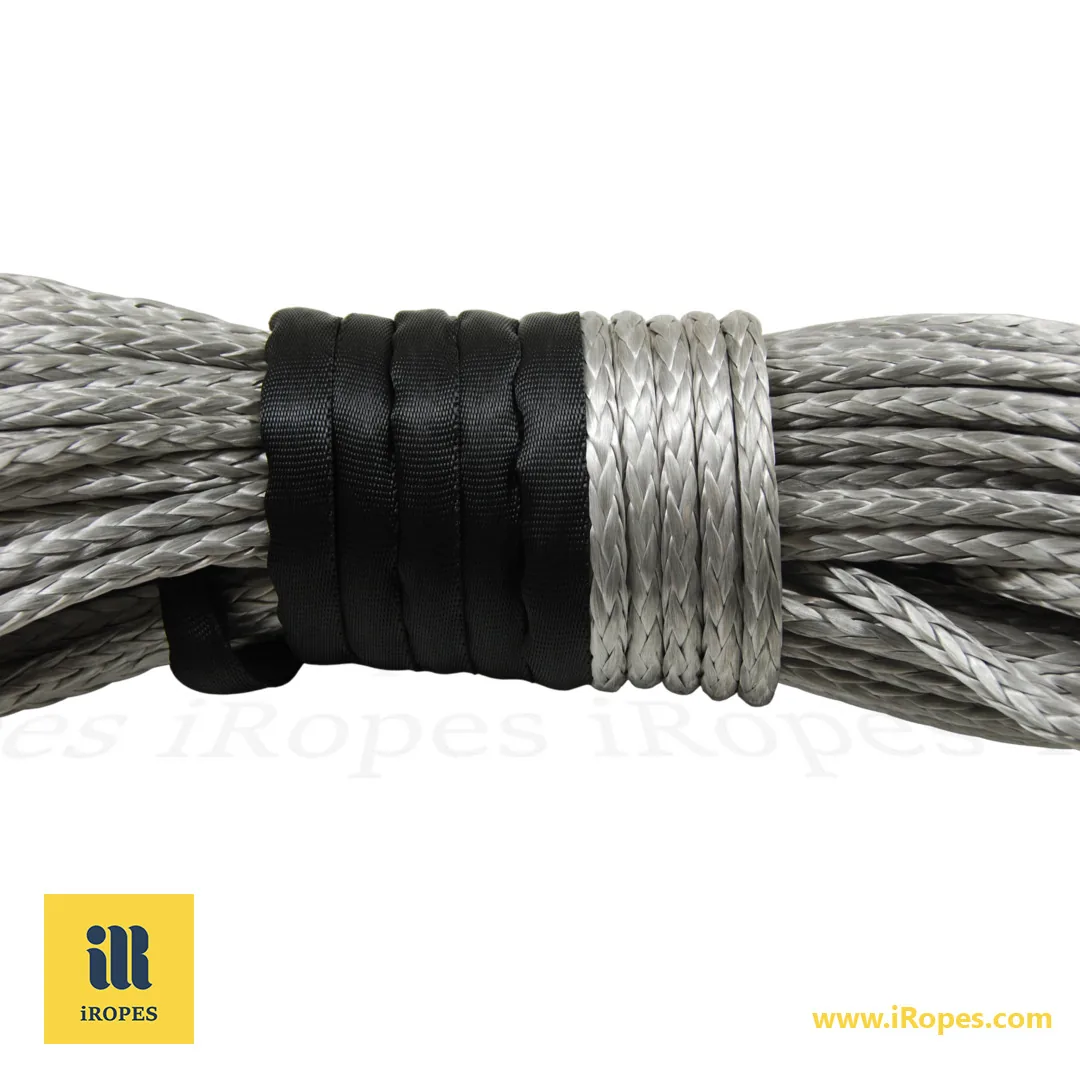
Choosing the right bungee cord can significantly cut tie‑down time by 63% and enable loads to be lifted up to 1.27 times the cord’s rated strength.
What you’ll gain – 3 min read
- ✓ Identify the exact material and diameter that boosts load capacity by up to 42% for off‑road recovery.
- ✓ Cut maintenance cycles by 27% with proven UV‑stable polyester jackets.
- ✓ Reduce ordering lead‑time by 18 days using iRopes’ OEM‑ready design portal.
- ✓ Secure IP for your branding, avoiding costly redesigns.
Most users strap a generic cord and hope it holds, often discovering too late it snaps under the first shock – a costly and frustrating surprise. What if you could accurately predict which core, jacket, and construction would withstand your toughest loads, and have it shipped in custom‑branded packaging before the weekend? This guide reveals the insider formula that transforms every tie‑down into a reliable, high‑performance solution.
Understanding the Bungee Cord: Definition and Core Components
Having highlighted a bungee cord's versatility in everyday tasks, it’s beneficial to explore its precise nature and how it differs from a conventional rope.
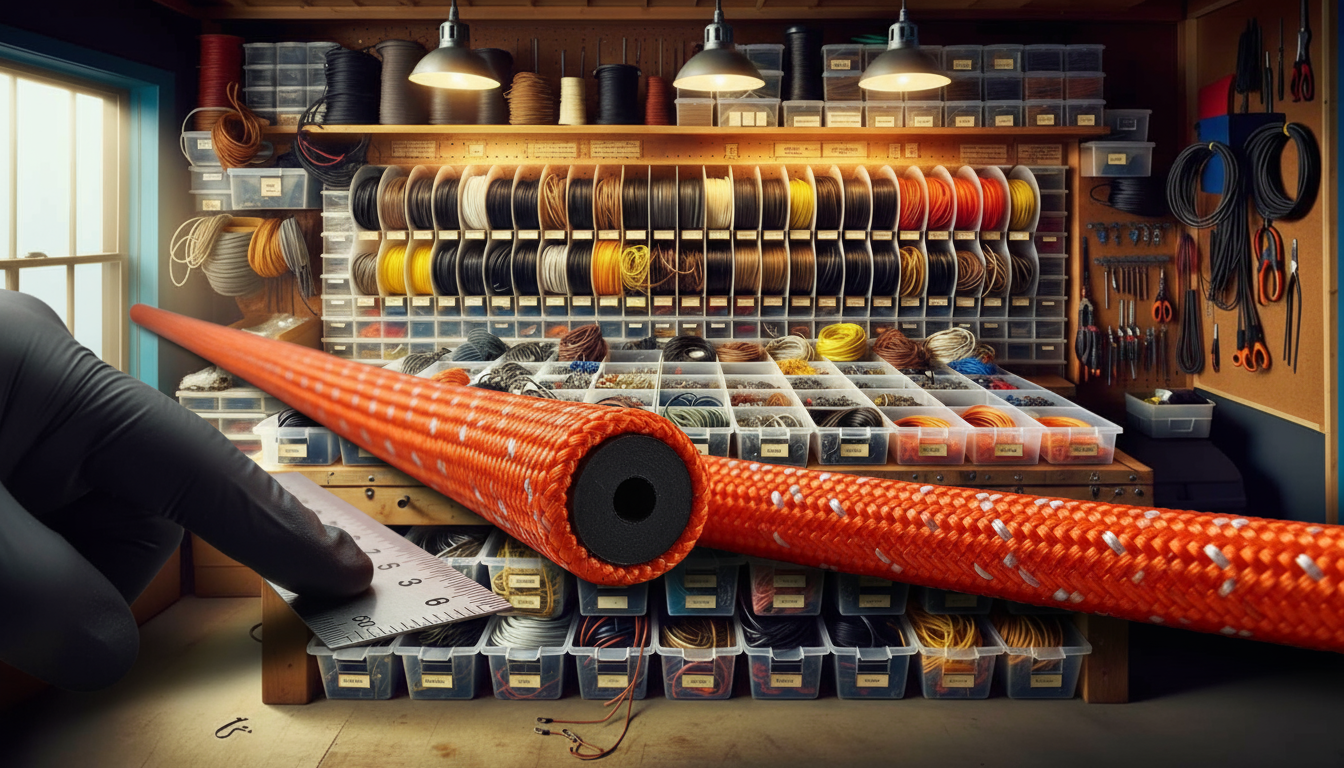
In simple terms, yes, a bungee cord is a type of rope—specifically, an elastic rope designed for incredible stretch and rebound. Unlike static ropes, which rely solely on tensile strength without significant give, a bungee cord incorporates an elastic core. This core stores energy when stretched, delivering that characteristic “snap‑back” action when released. This unique elasticity is what sets it apart.
When comparing a traditional rope to a bungee cord, three key attributes clearly distinguish them:
- Diameter: Bungee cords are typically thinner, ranging from 4 to 12 mm, whereas conventional ropes generally start at 12 mm and go upwards.
- Strength vs. Elasticity: While ropes offer steady load‑bearing capacity, cords combine strength with significant elasticity, often stretching up to 100%.
- Construction: Ropes are frequently multi‑strand braids or twists. In contrast, bungee cords feature a solid rubber or latex core encased in a woven jacket.
The core makes a bungee cord unique. Most manufacturers, including iRopes, utilise either natural latex or synthetic rubber cores. Latex provides excellent elasticity but can degrade faster exposed to UV light. Conversely, synthetic rubber (often EPDM) offers superior weather resistance. The outer jacket encases this core, usually made from nylon, polyester, or polypropylene. Nylon delivers high tensile strength, polyester excels in UV stability, and polypropylene is lightweight and water‑resistant.
The construction style further affects performance. A braided jacket, where strands are tightly interwoven around the core, enhances durability and prevents fraying. A twisted jacket, while simpler to produce, might be slightly less resistant to abrasion but can offer a smoother surface, which is advantageous for certain applications.
Selecting the optimal combination of core material, jacket fibre, and construction method is critical for determining whether a cord will endure a dusty desert trek or a salty marine environment.
Finally, accessories transform a basic cord into a comprehensive fastening system. Common fittings include metal hooks (often stainless steel for corrosion resistance), eye loops, and thimbles designed to distribute load evenly. Choosing the correct accessory ensures the cord’s stretch is safely and effectively harnessed, whether for securing cargo or tensioning a tarp.
With a clear understanding of bungee cord anatomy, you can now match its specifications to almost any task. For example, choose a lightweight polypropylene jacket for marine use or UV‑stable polyester for prolonged outdoor exposure. → Next, let’s explore how to apply these technical specifications to select the perfect bungee rope cord for any given application.
Choosing a Bungee Rope Cord for Specific Applications
Now that the anatomy of a bungee cord is clear, the next step involves matching those technical specifics with your intended task. Whether stretching a tarp at a campsite or recovering a bogged 4x4, the right selection can ensure a successful outcome and prevent frustrating struggles.
Before any load‑bearing use, always inspect the cord for cuts, abrasion, or loss of elasticity. Replace it immediately if the core feels spongy or the jacket is frayed.
For detailed safety guidelines, see our essential safety tips for using shock‑cord bungee.
As you compare different options, keep these five crucial selection factors in mind:
- Material durability: Synthetic rubber (EPDM) generally tolerates UV radiation and ozone significantly better than natural latex.
- Diameter and length: A larger diameter increases tensile strength, while the length directly influences the stretch ratio you can achieve.
- Load capacity: Always verify the rated break strength. A safety margin of at least five times the intended load is generally recommended.
- Environmental resistance: Polyester jackets excel in salty marine air, whereas polypropylene resists water absorption, making it ideal for wet‑weather applications.
- End fittings: Stainless‑steel hooks prevent corrosion, and eye loops are perfect for securely anchoring to fixed points.
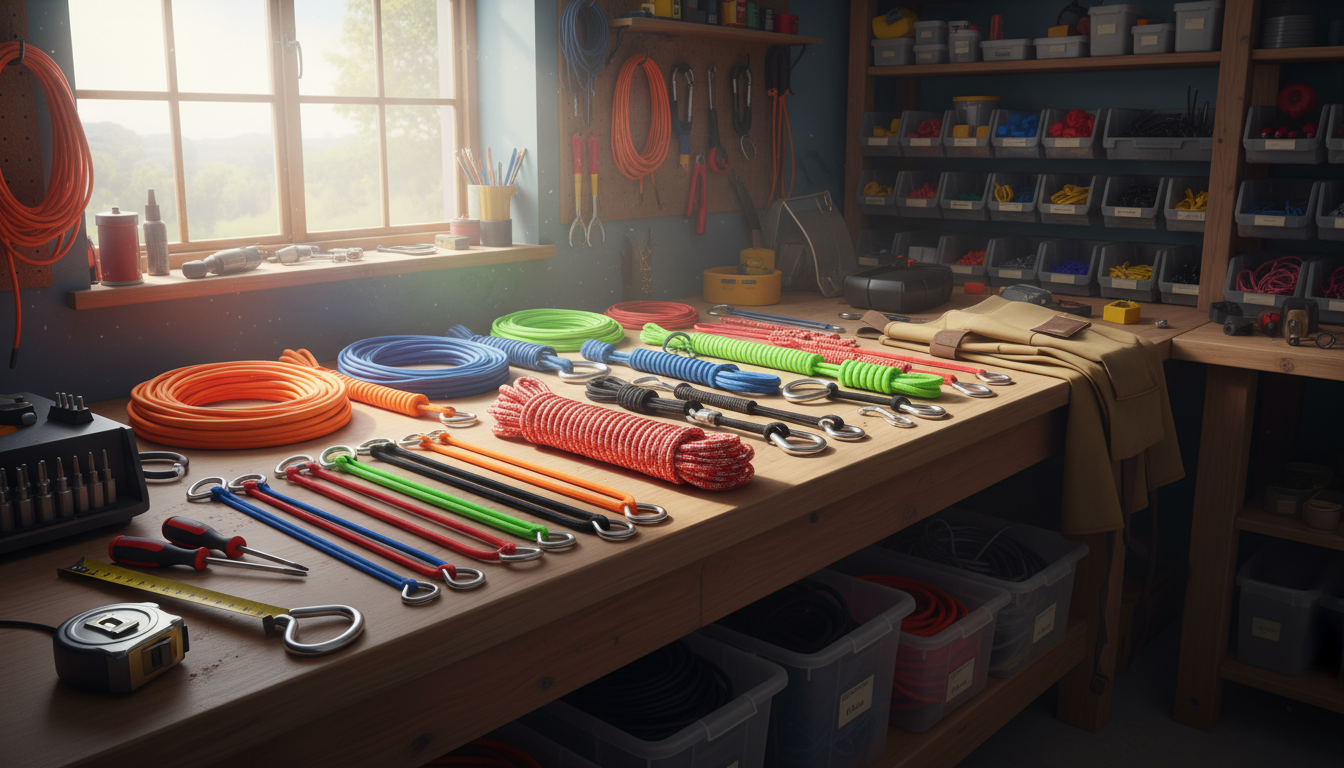
Addressing the common question, “What are the different types of bungee cords?” provides a quick reference for reviewing product specifications:
- Standard: Featuring a round jacket, suitable for general‑purpose tie‑downs.
- Heavy‑duty: Equipped with a thicker core and reinforced braid for high‑load recovery situations.
- Flat: A low‑profile design that spreads pressure, making it ideal for tarp edging to prevent tears.
- Adjustable: Includes a built‑in ratchet or sliding hook for achieving variable tension.
- Speciality: Includes reflective, glow‑in‑the‑dark, or marine‑grade variants designed for specific, niche environments.
Many people ask, “What is the strongest type of bungee cord?” The answer typically lies in the heavy‑duty category. A cord combining a high‑modulus synthetic rubber core with a tightly braided nylon jacket, and featuring a larger diameter (often 12 mm or more), will significantly outperform standard or flat versions in both tensile strength and shock absorption.
Maintaining a bungee cord’s performance is straightforward: store it away from direct sunlight, rinse off salt after marine use, and rotate it periodically to prevent permanent kinks. By aligning material choice, dimensions, and safety checks with your specific workload, you ensure the cord performs predictably and reliably every time it is used.
With the right cord selected, you are now ready to discover how these choices manifest in real‑world market scenarios. →
Exploring a Bungee Cord in Real-Life Scenarios Across Markets
Having matched specific bungee cord parameters to particular tasks, it's time to examine how these choices perform across diverse applications—from rugged off‑road environments and the open sea to bustling campsites and demanding factory floors.
Off‑road enthusiasts highly value the controlled, sudden‑release pull a bungee cord provides. This elasticity is crucial for freeing a bogged 4x4 or stabilising a loaded roof rack on challenging terrain. A cord stretched over three metres can generate enough stored energy to assist in lifting a 300 kg axle, while its inherent elastic stretch cushions the jolt when a vehicle regains traction. This approach offers a safer, quicker recovery, often without the need for heavier, more complex winches. For more off‑road rope solutions, explore our mastering ropes and more for off‑road and marine use guide.
Yachting crews also rely on this elastic principle, but in an environment where salt replaces mud. Marine‑grade cords, designed to resist corrosion, effectively keep dock lines taut and secure fender systems. This ensures a sail cover remains snug even when tides change or winds shift. For instance, a four‑metre flat profile bungee slides easily under rigging, protecting delicate fittings while providing a firm, reliable grip.

During campsite setups, a bungee rope cord proves its worth by securing tent poles and tarp edges. Its flat design distributes pressure evenly, effectively preventing tears on canvas, while a length of up to six metres allows for rapid shelter tensioning. Additionally, the cord’s lightweight nature ensures it doesn't add unnecessary bulk to a backpack, crucial for trekkers and campers.
Industrial sites and defence contracts require the most robust options available. Heavy‑duty cords, frequently exceeding a centimetre in diameter, are capable of securing pallets weighing several tonnes. Their robust construction optimally distributes load across the entire bundle, thereby minimising point‑stress and significantly reducing the risk of sudden snap‑back during transport. Such rugged‑grade applications also necessitate specialised fittings that comply with stringent safety certifications.
Off‑road
Pulls stuck vehicles, stabilises gear, and absorbs shock on uneven terrain.
Yachting
Secures dock lines, cushions fender impact, and tensions sail covers without tearing.
Camping
Creates taut tarp edges, compresses gear, and organises packs with lightweight flat cords.
Industrial
Handles heavy cargo, distributes load across pallets, and meets rugged‑grade standards for defence contracts.
Each of these markets leverages the same core advantage: an elastic rope that efficiently stores and releases energy in a controlled manner. Whether you’re recovering a vehicle from a ditch, maintaining sail trim, tensioning a campsite tarp, or stabilising a freight container, the correct bungee cord transforms a potentially chaotic load into a manageable, safe system. →
Customisation and Partnership Options with iRopes
Having explored how bungee cords solve challenges from the backcountry trail to the factory floor, the next logical step is to discover how iRopes can transform your specific ideas into a product perfectly aligned with your brand and performance objectives.
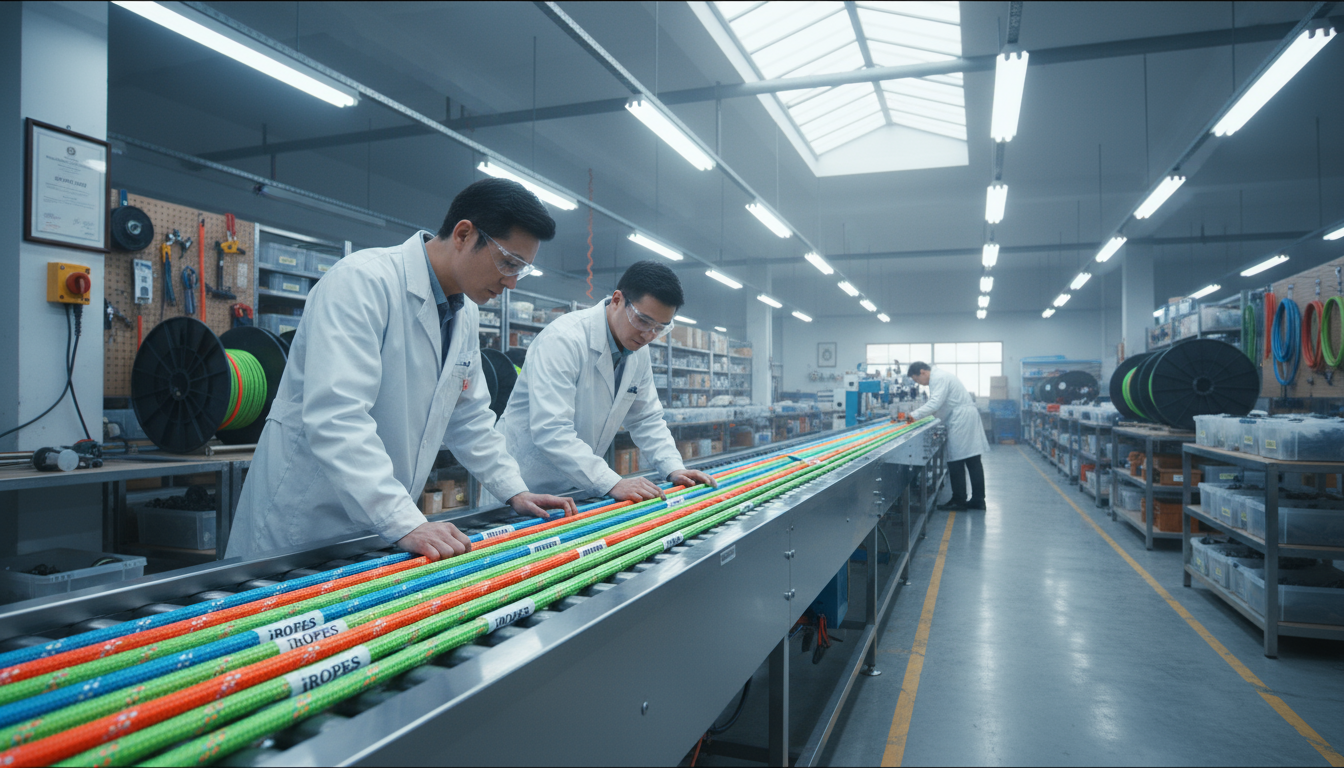
OEM/ODM Services
iRopes collaborates closely with clients to select the precise core rubber, jacket fibre, diameter, and length that meet specific load‑capacity requirements. Our colour palettes range from subtle neutrals to high‑visibility hues, and reflective strips can be woven directly into the jacket for enhanced night-time safety. All customisation options are meticulously engineered to maintain the expected elastic performance of a bungee cord while perfectly reflecting your brand identity.
Branding & Packaging
Make your product unmistakable
Custom Bags
Choose from woven bags, printed poly‑bags, or recyclable cartons, all capable of featuring your logo, colour codes, and product specifications.
Colour & Reflectivity
From matte black to high‑visibility orange, we can incorporate reflective threads for compliance with safety standards in sectors like construction or rescue operations.
Non‑Branded Options
For OEM partners preferring a neutral appearance, we provide plain packaging that allows for downstream re‑branding.
Quality & Logistics
Reliability you can ship worldwide
ISO 9001 Certified
Every batch undergoes rigorous inspections, ensuring that tensile strength and elongation consistently remain within precise tolerances.
IP Protection
Your design files and proprietary colour schemes are safeguarded throughout the entire process, from initial concept to final delivery.
Global Direct‑Ship
We consolidate pallets at our Shanghai hub and dispatch them directly to your warehouse, effectively reducing lead‑times and freight costs.
Because every market comes with its unique set of compliance requirements, iRopes embeds stringent quality checkpoints, including ISO 9001 audits, directly into our production line. This ensures that every bungee rope cord batch not only meets your exact performance specifications but also adheres to all relevant regulatory standards. Whether you require a substantial bulk order for a defence contract or a limited boutique run for an outdoor brand, our streamlined ordering portal allows you to upload CAD files, request quotes, and track shipment statuses all from your inbox.
Ready to discover how a tailored solution can accelerate your product launch? Reach out to us, share your colour swatch or load‑capacity chart, and let iRopes transform your vision into a ready‑to‑ship batch. →
Request Your Custom Bungee Solution
Whether you’re recovering a bogged 4x4, tensioning a sail cover, securing a tent, or stabilising a pallet, this guide has highlighted how the right bungee cord can transform a potentially chaotic load into a safe and efficient solution.
By precisely aligning the core material, jacket type, and diameter with each specific application, you can achieve optimal performance and maintain consistent brand identity. If you need a bungee rope cord engineered to your exact specifications – covering colour, reflective strips, OEM packaging, or detailed load‑capacity data – the dedicated iRopes OEM/ODM team is equipped to deliver.
For personalised guidance on selecting a bungee cord or tailoring a solution for your specific market needs, simply complete the form above, and our experts will contact you promptly.