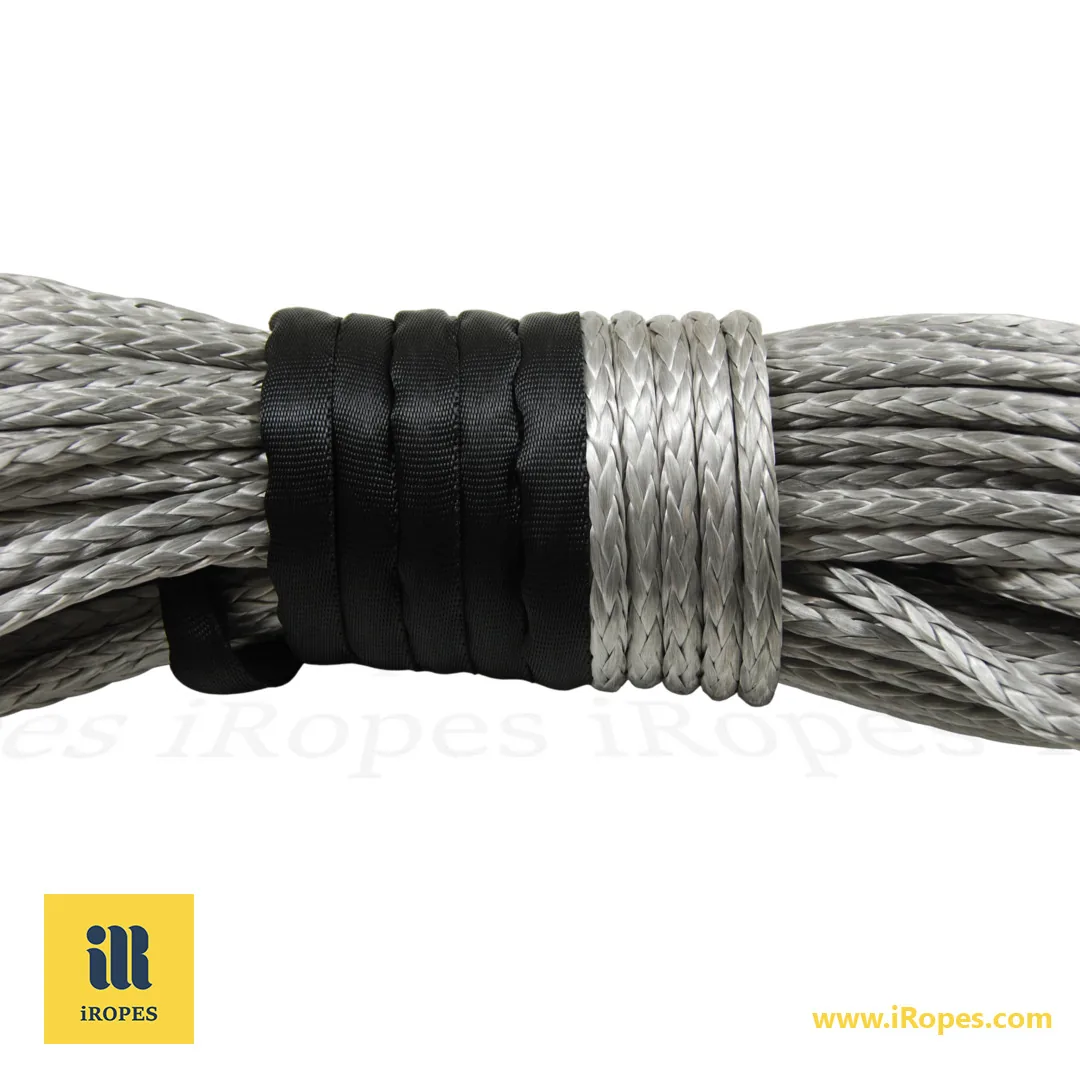
iRopes’ 3‑strand nylon rope delivers up to 5 750 lb breaking strength on a ½″ line—about 25 % more strength than typical polyester of the same diameter—so your anchors, moorings, and tow lines stay secure.
≈ 4 min read – What you’ll gain
- ✓ About 25 % higher breaking strength versus typical polyester at the same diameter.
- ✓ High elongation (around 20 % at break) to absorb shock and protect equipment.
- ✓ ISO 9001‑certified production with tightly controlled strand‑alignment tolerances.
- ✓ Custom colour, branding, and termination options shipped in 4–6 weeks.
Many teams assume any rope will hold, yet a standard polyester line can struggle with sudden shock loads, risking costly downtime. What if you could lift your anchor’s safety margin by roughly 25 % without changing the diameter? In the sections below, we outline the performance edge of iRopes’ high‑elongation 3‑strand nylon, set out the exact calculations behind well rope sizing, and show how a simple custom order locks in those gains for your next well‑head pull.
Understanding well rope: definition, role, and industry demand
After highlighting how crucial rope strength is for well‑head operations, the next step is to clarify exactly what a well rope is and why it commands attention across oil‑field and marine sectors.
A well rope is any cordage employed to secure, lift, or manoeuvre equipment attached to a drilling well, pump‑jack, or offshore platform. In practice, it spans everything from the anchor line that steadies a floating rig to the tow rope that pulls a drill pipe into place. The term isn’t tied to a single standard; rather, it serves as a generic label for ropes that meet the rigorous load‑holding and durability requirements of well‑head environments.
Typical load ranges for well‑head pulling can sit near 5 000 lb, with lighter onshore tasks around 3 000 lb and heavy offshore work exceeding 10 000 lb. Safety therefore rests on three pillars: selecting a rope with a breaking strength comfortably above the maximum expected load, applying an industry‑accepted safety factor (usually 5–8), and ensuring the rope’s material resists oil, saltwater, UV exposure, and abrasion against steel components.
Is “well rope” a specific industry term? In short, it is a descriptive phrase rather than a formal classification; engineers use it to refer to any rope—often 3‑strand nylon or polyester—suited to the demanding conditions of well operations.
- Reliability - Downtime on a rig can cost thousands per hour, so operators demand rope that consistently meets load specifications.
- Customisation - Diameter, colour, reflective elements, and termination types are often tailored to match branding and safety protocols.
- Specified testing - Many buyers request ISO 9001‑certified manufacturing and Cordage Institute test methods for verification.
Whether on a land‑based drilling site or a floating offshore platform, the demand drivers remain the same: a rope that behaves predictably under load, endures harsh environments, and can be inspected quickly for wear.
“Choosing the right well rope is a balance of strength, elongation, and environmental resistance – get any one wrong and the whole operation is at risk.” – Dr Laura M., well‑engineering specialist.

Understanding these fundamentals sets the stage for the next discussion: how the three‑strand construction translates into measurable strength and why those numbers matter when you’re planning a well‑head pull.
3 strand rope strength: breaking strength, safe working load, and calculations
Now that we know what a well rope does, the next question is how strong it really is. Understanding the numbers behind 3 strand rope strength lets you match a rope to the exact pull‑in force of a drilling rig without over‑designing or risking a failure.
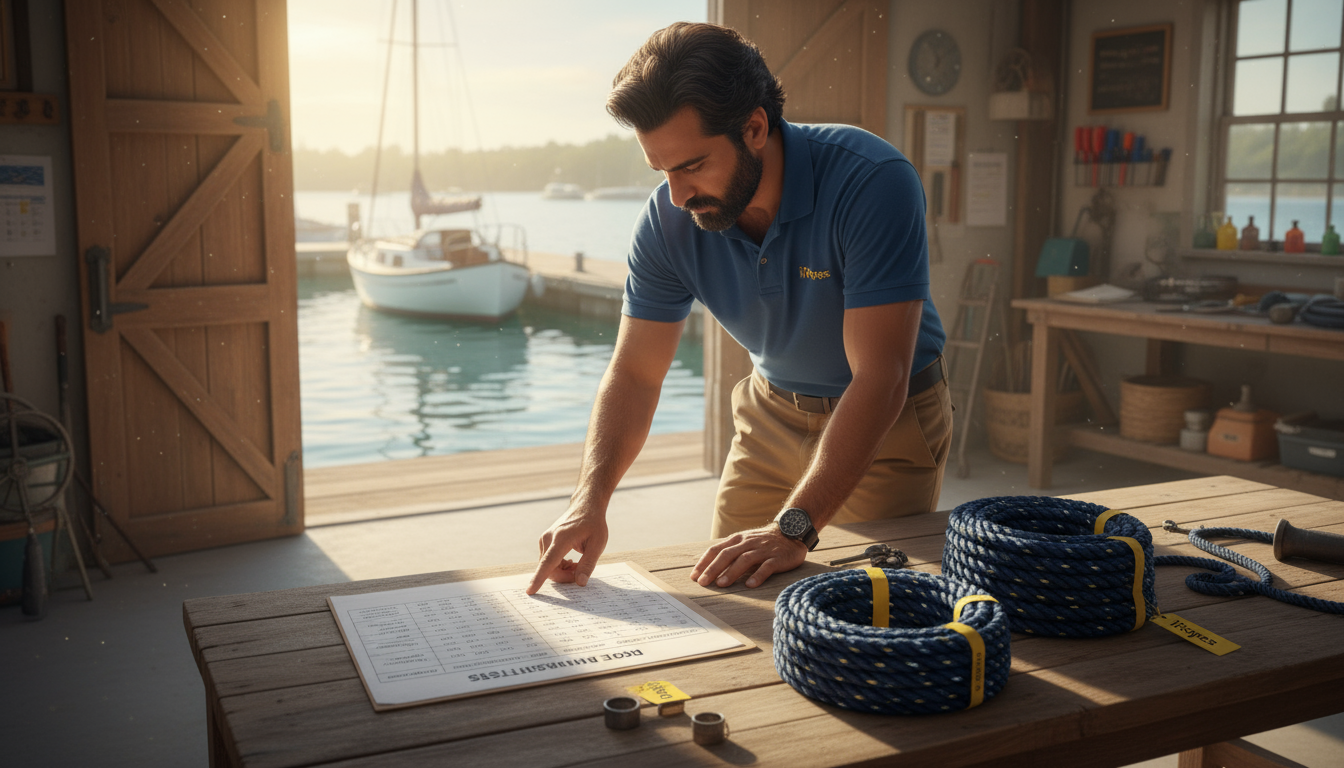
Strength & SWL
Breaking strength (lb) – typical examples
Nylon ½″ ≈ 5 750 Nylon ⅜″ ≈ 3 800 Poly‑combo ⅜″ ≈ 2 700 Manila ¾″ ≈ 4 860
Safe Working Load (SWL) = Breaking Strength ÷ Safety Factor. In oil‑field practice a factor of 5–8 is typical, so a ½″ nylon rope with 5 750 lb breakage yields an SWL of 720 lb (÷ 8) to 1 150 lb (÷ 5). Apply the same division to any diameter or material to stay within the industry‑accepted safety envelope.
With the figures above, you can see how a change in diameter or material shifts both breaking strength and the resulting safe working load. That quick reference is the backbone of any well‑rope spec sheet.
- Locate the breaking‑strength figure for your rope’s material and diameter.
- Choose a safety factor between 5 and 8, based on the rig’s risk profile.
- Divide the breaking strength by that factor; the result is your safe working load.
That three‑step method is the standard answer to “How do I calculate safe working load for a 3‑strand rope?” and it works whether you’re sizing a ¼″ nylon line for a light anchor or a ½″ nylon line for mooring duties.
Armed with these calculations, the next part of the guide walks you through the manufacturing steps that turn raw fibre into the exact rope you need for well‑head operations.
How rope is made: manufacturing process, materials, and iRopes customization
Building on the strength calculations, the next step is to understand how the rope is actually produced. From raw fibre to the finished line that secures a drilling rig, every stage adds the performance characteristics engineers rely on.
Fibre selection
High‑tenacity nylon, polyester, HMPE, or Kevlar fibres are inspected for uniform diameter and tensile consistency before any further processing.
Strand twisting
Three yarn bundles are twisted in opposite directions to create a balanced lay, improving load distribution and reducing torque under tension.
Materials
Nylon offers high elongation for shock absorption, polyester gives low stretch for precise positioning, HMPE delivers very high tensile strength, while Kevlar adds heat resistance.
Heat‑set
After the final lay‑up, the rope passes through a controlled heat‑set tunnel, locking fibre alignment and stabilising breaking strength for long‑term service.

For quick reference, ½″ 3‑strand nylon typically breaks at about 5 750 lb and ⅜″ 3‑strand nylon at about 3 800 lb. Using a safety factor of 5–8 converts those figures to safe working loads suitable for anchoring, mooring, and towing.
Quality assurance
ISO 9001 checkpoints
Fibre audit
Each batch of raw fibre receives a tensile‑test certificate before entering the spinning line.
Yarn inspection
Automated scanners verify diameter uniformity and identify any weak spots.
Final certification
Each finished roll is tested to Cordage Institute methods within an ISO 9001 quality system and tagged with a unique serial for traceability.
Intellectual property
Design security
Confidentiality
Client specifications are managed in secure systems and shared only with authorised staff under NDA.
Custom terminations
Loops, thimbles, and eye‑splices can be factory‑integrated and protected by your IP and confidentiality agreements.
Batch traceability
Each production lot carries a unique identifier linking back to the original design file and material certificates.
With these production insights covered, the guide now turns to real‑world applications and, for a deeper dive into nylon 3‑strand rope capabilities, see our Essential Features and Uses of Nylon 3 Strand Rope. The key buying considerations that help engineers select the right well rope for their projects follow.
Industry applications and buying guide for well‑rope solutions
Having explored how iRopes turns raw fibre into a high‑elongation product, you can now see where that strength matters most and what to check before you place an order.
Where the rope works best
- Oil & gas well‑head pulling – high‑elongation nylon absorbs shock when a rig lifts heavy pipe strings.
- Arborist tree‑rigging – low‑stretch polyester provides precise positioning for safe crown‑work.
- Marine mooring & towing – HMPE ropes resist saltwater and UV while handling dynamic loads.
- Construction and site tie‑down – sturdy 3‑strand designs secure scaffolding and equipment on uneven terrain.
For towing and recovery tasks, the best nylon double‑braid rope options are outlined in our Choosing the Best Nylon Double Braid Rope for Recovery guide.
What to look for when you buy
Choosing the right well rope is not just about diameter; a few key criteria keep your project within budget and safety limits.
- Diameter & load rating – match the breaking‑strength table to the maximum pull you expect.
- Material selection – nylon for shock absorption, polyester for low‑stretch accuracy, HMPE for very high tensile strength.
- Price per foot – compare quoted rates; a modest upgrade in material can reduce replacement costs.
- “Made in” origin – iRopes’ ISO 9001‑certified facilities in China deliver consistent quality with competitive lead‑times.
- Accessories – loops, thimbles, and eye‑splices can be integrated at the factory to avoid field‑termination errors.
If anchoring performance is a priority, consider why iRopes Double Braid Anchor Rope stands out for its strength and durability.
Tip: Always apply a safety factor of 5–8 to the listed breaking strength; this simple rule protects you from unexpected dynamic loads.
When you request a custom quote, iRopes will run the rope through its ISO 9001 checkpoints, verify the 3 strand rope strength you need, and lock the specifications in a secure design file.
Ready to order?
Download the full spec sheet, request a custom quote, or contact a rope‑design engineer – the next step is only a click away.
Need a personalised rope solution?
After exploring how a well rope’s material, diameter, and safety factor translate into reliable performance, you now have a clear method to calculate the 3 strand rope strength you need and understand the precise steps that turn raw fibre into a high‑elongation, nylon‑twisted product ideal for anchoring, mooring, and towing. iRopes can tailor the rope made to your specifications, adding colour, reflective elements, or custom terminations while protecting your IP.
If you’d like expert guidance to fine‑tune your specifications, simply use the enquiry form above and our design engineers will help you create the perfect solution. iRopes 3‑strand nylon twisted rope offers high elongation, making it a strong choice for anchor, mooring, and towing. For more ideas on tailoring your rope, see our Customization page.