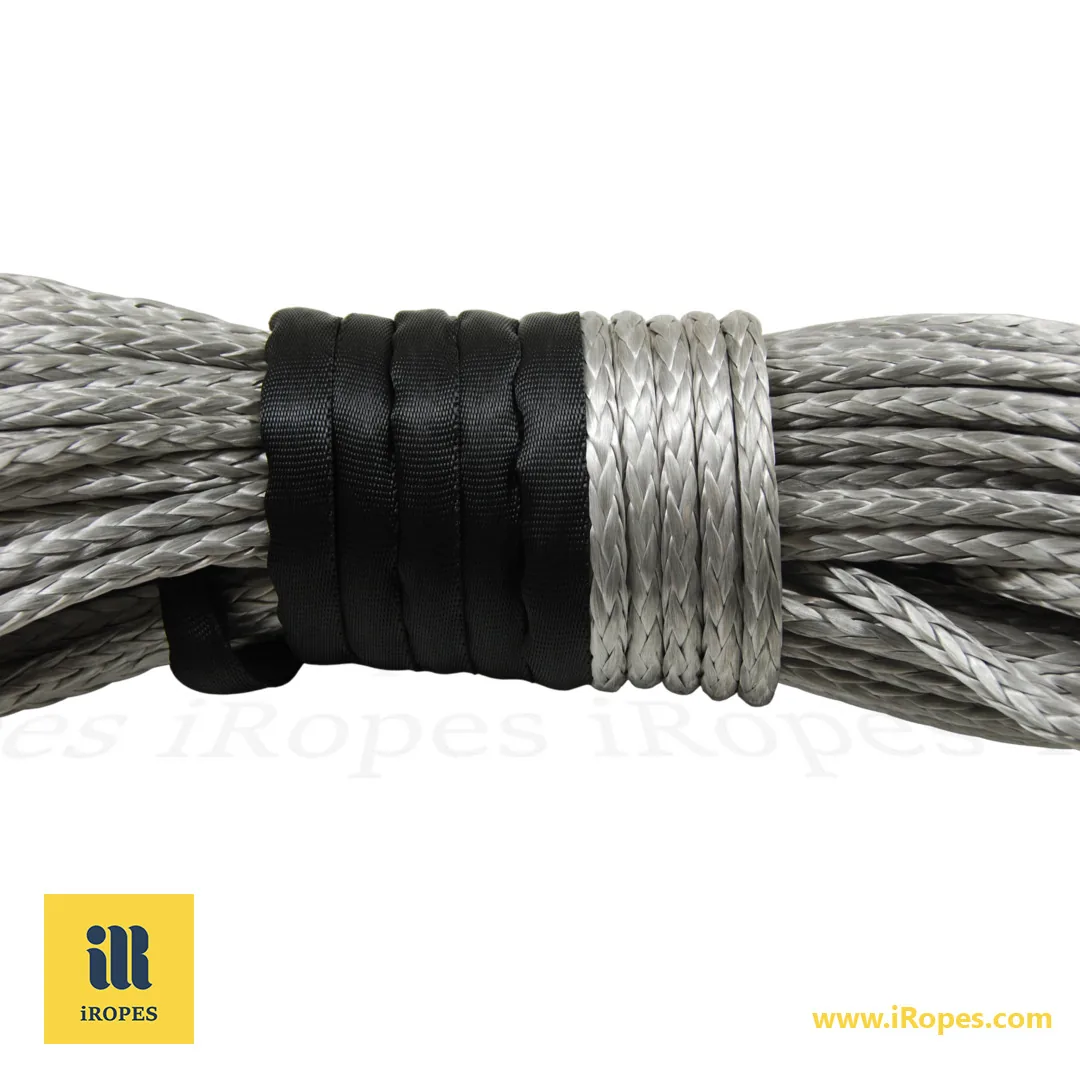
Hollow braided polypropylene rope provides an exceptional strength-to-weight ratio, bearing up to 998 kg (2,200 lb) on a 3/8-inch braid, all while comfortably floating (specific gravity 0.90). This makes it a top choice for light, yet robust applications.
What you'll master – ≈6 min read
- ✓ Cut splice time by ≈40% thanks to the rope's innovative, open-core design.
- ✓ Achieve effortless floatation in water; the rope’s density of 0.90 g cm⁻³ eliminates the need for buoyant additives.
- ✓ Carry loads up to 998 kg (2,200 lb) on a 3/8-inch line, while shedding up to 30% of the weight compared to similar nylon ropes.
- ✓ Customise diameter (0.25″–0.5″), colour (20+ shades), and accessories with a single OEM/ODM order.
You might associate hollow braid rope exclusively with marine applications, yet its lightweight strength and straightforward splicing make it a powerful asset across various sectors. Think industrial rigging, camping, and even defence. Below, we'll delve into the scientific principles behind its floatability, contrast its performance with solid-core alternatives, and reveal how iRopes can craft the ideal solution for your brand, ultimately saving you time, weight, and money.
Hollow Braided Polypropylene Rope: Definition and Core Characteristics
To fully appreciate its versatility, let’s begin with a clear definition. Hollow braided polypropylene rope is a synthetic rope crafted from polypropylene polymer. This plastic is prized for its low specific gravity, exceptional resistance to water and chemicals, and its cost-effectiveness. These material properties inherently enable the rope to float while keeping its overall weight remarkably low.

The standout feature of this rope is its hollow braid construction. Instead of a solid inner core, individual strands are woven around an empty centre, forming a tube-like profile. This design simplifies splicing significantly, as there's no core to remove when creating eye splices or custom lengths. Technicians can complete these tasks quickly and securely; the open braid allows for direct integration of the splice into the rope's interior, reducing labour time and maintaining optimal strength.
“The hollow braid makes splicing as simple as looping a cord around a nail – no core to remove, no extra tools required.” – Senior Rope Engineer, iRopes
Understanding the common uses of this rope is crucial for determining its suitability for your specific projects. The following sectors frequently benefit from its unique blend of floatability, lightweight handling, and straightforward splicing capabilities.
- Marine Docking – It is ideally suited for mooring lines and anchor ropes, as it remains afloat if accidentally dropped overboard.
- Camping & Outdoor – This rope is perfect for tent guylines, tarp tie-downs, and rescue lines where minimal weight is essential.
- Industrial Utility – It serves effectively as general-purpose tie-downs, barrier ropes, and for non-critical lifting applications requiring corrosion resistance.
- Tree Work – Arborists select it for rigging and branch-saving lines, appreciating how the hollow braid simplifies on-site eye splicing.
- Recreational Sports – It’s commonly employed in ski-trail markers and pool safety lines due to its floatability and resistance to UV degradation.
Across these diverse applications, the hollow polypropylene rope (a term frequently used interchangeably by suppliers) consistently delivers core benefits: buoyancy, resistance to rot and mildew, and an easy splicing process. By customising the diameter and colour, the rope can be further tailored to meet specific branding or visibility requirements, a versatility that iRopes expertly provides through its OEM and ODM services.
Now that we’ve covered the definition and core characteristics, our next section will investigate how the rope’s impressive strength-to-weight ratio and floatability translate into real‑world performance, especially in demanding environments worldwide.
Hollow Polypropylene Rope: Key Properties, Strength, and Floatability
The remarkable strength-to-weight advantage of hollow braided polypropylene rope becomes clear when examining its core performance metrics. The combination of its hollow braid structure and polypropylene’s inherently low density creates a material that feels incredibly light, yet can easily manage surprisingly heavy loads.

Let's consider tensile strength first. A 3/8-inch hollow braid typically achieves a minimum breaking load (MBL) between 816 kg (1,800 lb) and 998 kg (2,200 lb). This impressive strength-to-weight ratio often surpasses many solid-core alternatives, enabling you to manage tough utility tasks without the burden of a heavy, bulky line.
- Tensile Strength – Up to 998 kg (2,200 lb) for a 3/8 inch braid.
- Floatability – It floats because polypropylene’s density is less than water.
- Durability – UV-stabilised, resisting chemicals, rot, and mildew effectively.
Indeed, polypropylene rope floats because its polymer’s specific gravity (approximately 0.90) is lighter than water. This buoyancy ensures that any length of the rope will remain on the surface rather than sinking, explaining its common use in dock lines, pool safety barriers, and rescue tow ropes.
In terms of durability, the material is specifically engineered to withstand harsh sunlight, thanks to UV stabilisers integrated during the extrusion process. It also effectively repels oils, petrol, and most common household chemicals. Crucially, it resists rot and mildew, even after prolonged exposure to moisture. These characteristics combine to offer a long service life with minimal maintenance requirements.
Is a hollow braided polypropylene rope strong enough for utility tasks? For the majority of non-critical lifting, tie-downs, and general-purpose rigging, the answer is a resounding yes. While it may not offer the peak strength of high-modulus aramid ropes, its advantageous combination of dependable load capacity, lightweight handling, and resistance to environmental elements makes it a sensible and practical choice for everyday wholesale applications.
Polypropylene
Why it works
Light Weight
Its low density ensures the rope is easy to transport and handle on-site.
Floatability
It stays on water, significantly reducing the risk of loss in marine or rescue environments.
Chemical Resistance
It remains unaffected by oils, fuels, and most industrial cleaners.
Nylon
Common Rival
Higher Strength
Offers greater load capacity, making it suitable for heavy-duty lifting.
Heavier
Its greater mass can make handling more difficult and increase shipping costs.
Less UV Stable
It degrades more rapidly under prolonged exposure to sunlight.
Understanding these performance characteristics helps you pair the right rope with the right task. Next, we will examine the specific sectors where iRopes excels at tailoring hollow braid solutions for maximum impact and efficiency.
Hollow Braid Polypropylene Rope: Applications, Customisation & Splicing Guidance
Building on the performance profile we’ve already discussed, let’s explore how the rope’s lightweight floatability and open-braid core translate into tangible benefits across real-world scenarios. Imagine a bustling coastal marina: a 3/8-inch hollow braid line can be effortlessly tossed over a dock cleat, remaining on the surface and eliminating the risk of a submerged line during an unexpected gust of wind. Alternatively, at a remote campsite, the same rope functions as a robust guylines system, readily spliced on-site without needing to strip a core. This saves both time and crucial weight for backpackers. In a busy industrial warehouse, this rope forms resilient barrier lines that effectively resist oil splashes and UV exposure. Meanwhile, arborists depend on it for branch-saving rigging, where quick eye splices are paramount for safety.

iRopes transforms these general benefits into tailored solutions through its comprehensive OEM/ODM programme. With over a decade of experience in developing hollow core braided rope solutions, we enable customers to specify distinct requirements, including:
Colour & Pattern
Choose from high-visibility hues or custom-printed logos to meet specific safety standards or align with brand guidelines.
Diameter & Length
Order any diameter from 1/4″ to 1/2″ and lengths that cater to bulk-spooling or pre-cut packaging requirements.
Material Blends
Incorporate UV inhibitors, fire-retardant additives, or opt for a polyester woven hollow sheath for enhanced abrasion resistance.
Accessories
Integrate thimbles, eye splices, or loop terminations directly at the factory, thereby reducing on-site fitting time.
Splicing a hollow braid rope is designed to be intentionally straightforward. The typical sequence involves these simple steps:
- First, trim the rope ends cleanly to expose the rope's hollow interior.
- Next, form a loop with the standing part, then pass the working end smoothly through the hollow channel.
- Finally, secure the eye by forming a series of half-hitches, then tightening the splice by pulling the standing part firmly.
This method conveniently bypasses the need to strip a core, maintaining the rope’s rated strength and allowing completion with only basic hand tools.
When a particular project demands superior abrasion resistance, a polyester woven hollow sheath presents a highly viable alternative. This option retains the rope's floatable core while the durable polyester overlay withstands harsher rubbing against rough surfaces. Consequently, it becomes a preferred choice for off-road rigs or heavy-duty anchoring applications where polypropylene alone might otherwise experience premature wear.
Why Choose iRopes?
Our ISO-9001 certified facilities ensure precision braiding combined with flexible OEM/ODM services. This guarantees every roll of hollow braid polypropylene rope meets your exact specifications for load, colour, and accessories, all while ensuring punctual global delivery.
Explore our range of superior maritime ropes for additional applications.
Get a Personalised Rope Solution
This article has highlighted how hollow braided polypropylene rope provides an low-density, buoyant line that can be spliced effortlessly without stripping a core. These attributes make it exceptionally well-suited for marine, camping, and industrial applications. Whether you refer to it as hollow polypropylene rope, the same lightweight performance and UV-stable durability apply. Additionally, our expert OEM team can produce a **hollow braid polypropylene rope with a polyester woven hollow sheath** for enhanced abrasion resistance.
For expert advice on selecting the perfect diameter, colour, or custom accessories, simply use the form above. Our specialists are ready to help you design the ideal rope solution for your specific requirements.