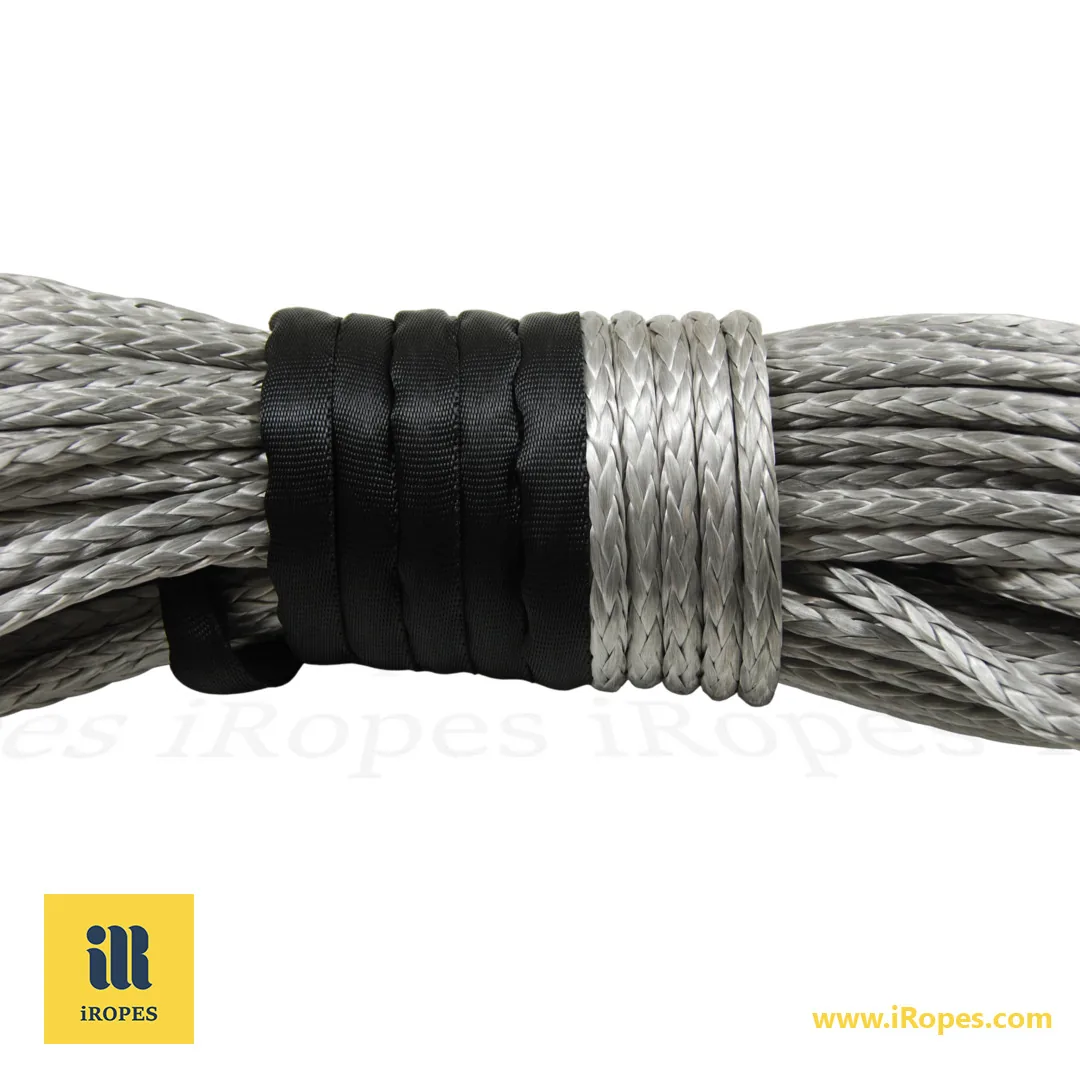
93% of marine teams overlook tag verification in round sling charts. They often assume colours convey true capacity, but in saltwater and UV exposure, this can lead to up to a 40% strength reduction from overlooked damage. Discover how to master polyester round sling charts to ensure safe lifts in yachting, defence, and spearfishing, eliminating guesswork and enhancing safety.
Unlock Safer Marine Lifts in Just 8 Minutes →
- ✓ Decode capacity charts for vertical, choker, and basket hitches at 30–90° angles, slashing overload risks by 70% in dynamic ocean conditions.
- ✓ Spot critical damage like exposed red core warning yarns during inspections, extending sling life by 2-3x through OSHA-compliant checks.
- ✓ Customise polyester slings via iRopes OEM services for UV-resistant, low-stretch designs tailored to your branding and load requirements.
- ✓ Access downloadable charts and checklists to verify tags over colours, boosting compliance and efficiency for wholesale teams.
You might assume your team's round slings are rated solely by their familiar colours – purple for light loads, green for mid-range. But what if fading jackets, battered by salty spray, conceal a 20% capacity drop you didn't spot? This critical oversight, unfortunately common among 93% of marine operations, can transform routine yacht hauls into hazardous situations amidst unpredictable waves and wind. Learn about the tag-first technique and iRopes customisation options that bridge these safety gaps, ensuring secure and reliable lifts that protect your crew and cargo every single time.
Understanding Polyester Round Sling Chart Fundamentals
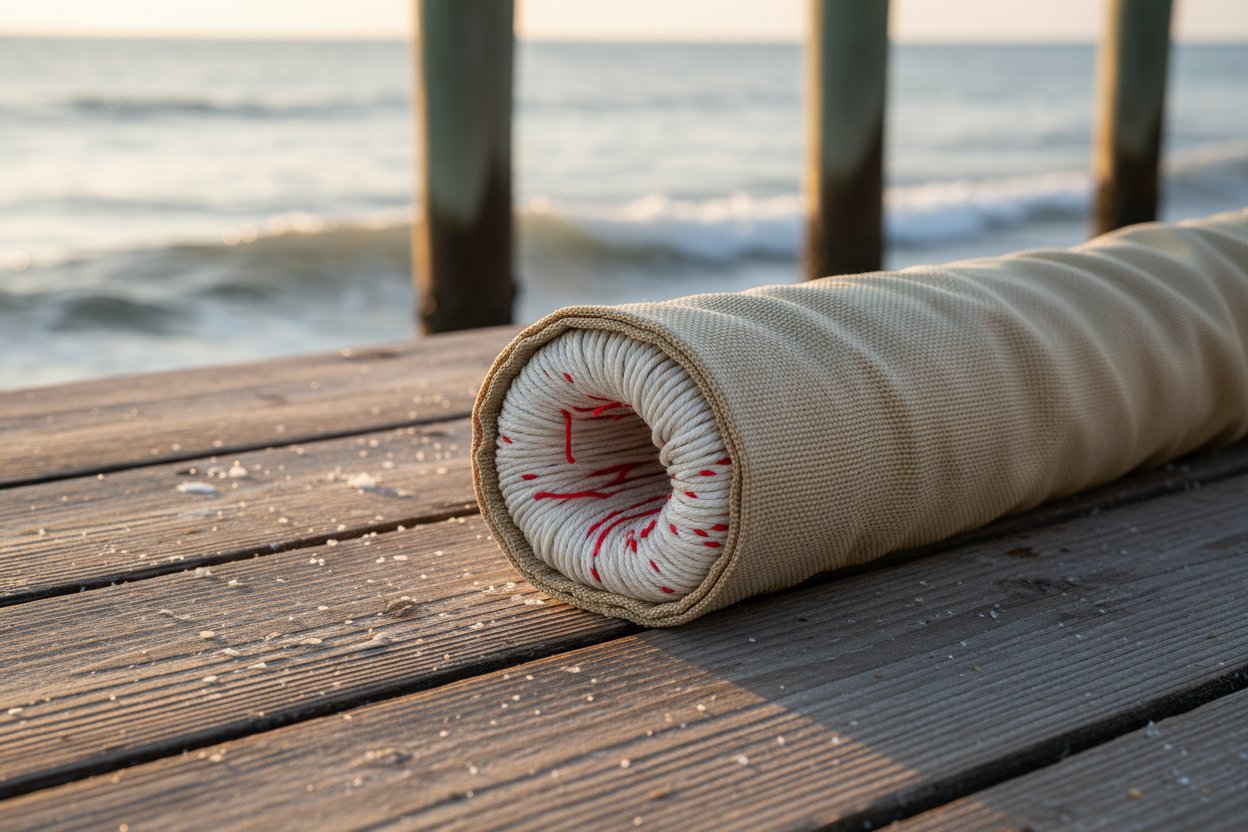
Imagine you're on the water, rigging gear for yacht maintenance or a defence operation, reaching for a crucial lifting tool. Polyester round slings are the unsung heroes in these marine settings, expertly designed to handle heavy loads without adding unnecessary weight to your setup. These slings fundamentally consist of strong polyester yarns, forming a robust load-bearing core, all encased within a resilient tubular jacket. This seamless and flexible jacket serves a vital purpose: it protects the inner fibres from the harsh realities of saltwater spray, relentless UV rays, and abrasive contact.
An integrated safety feature sets these slings apart: hidden red core warning yarns. Should damage ever expose these inner yarns, it provides a clear, unmistakable signal that the sling requires immediate attention and should be removed from service. This innovative construction ensures superior resistance to the corrosive and harsh marine environment, where conventional ropes might quickly fray or degrade.
Not all polyester round slings are identical; choosing the correct type is paramount for your specific marine task. For instance, endless slings feature a continuous loop, making them ideal for wrapping securely around loads without exposed ends. This design offers excellent reusability for repetitive lifting tasks, such as hauling equipment aboard a vessel. Eye-and-eye slings, in contrast, have reinforced loops at both ends, facilitating easy attachment to hooks or shackles, making them perfect for straightforward vertical pulls during yacht maintenance.
Beyond these, braided varieties, often featuring multiple strands, provide enhanced strength and flexibility. These are well-suited for dynamic applications like spearfishing gear recovery, where a highly adaptable and durable material is essential.
A key advantage in marine environments is their lightweight nature, allowing you to manage heavy cargo without excessive physical strain. Their robust chemical resistance also means they can withstand exposure to fuel spills or common cleaning agents often found on boats. Have you ever considered why marine teams favour polyester over alternatives like nylon or wire rope in wet conditions? Nylon, for example, absorbs water, stretching significantly (up to 40% under load) and losing strength. Wire rope, while strong, can rust and scratch delicate surfaces like boat hulls. Polyester, however, exhibits low stretch (around 3%), ensuring precise load control, while its soft cover prevents surface damage, keeping your valuable gear pristine.
- Endless Type: Loops seamlessly for versatile, damage-resistant use in repeated marine rigging tasks.
- Eye-and-Eye Type: Features strong eyes for quick connections, reducing setup time on deck.
- Braided Type: Multi-strand build enhances flexibility and load distribution in uneven pulls.
When consulting a polyester round sling chart, begin with the fundamentals: these guides typically employ colour coding to quickly indicate strength levels by size and diameter. For instance, purple indicates lighter loads with a vertical capacity of up to approximately 1,200 kg, while green signifies a step up to 2,400 kg. Available sizes generally range from 2 metres to 6 metres in length, with the diameter directly influencing safe load capacity. While the chart provides initial capacity indicators, it is crucial to always double-check the attached tag for the exact working load limit (WLL). Relying solely on colour can lead to misjudgments, particularly if manufacturing variations or sun exposure have altered the appearance. A solid understanding of these fundamentals will better equip you to interpret capacities accurately for real-world lifting scenarios.
Mastering the Round Sling Capacity Chart in Marine Contexts
Building on these polyester round sling fundamentals, let's explore the practical implications of these numbers when you're on deck. As waves cause movement and unpredictability, you need to hoist gear safely and efficiently. A round sling capacity chart is your essential roadmap for secure lifting, meticulously detailing working load limits based on your rigging method. Begin with the most basic: vertical hitches, where the sling hangs straight down, offer the full rated capacity. However, choker hitches, which wrap around the load, reduce capacity to about 80% due to the compression point. Basket hitches, conversely, cradle the load from below, potentially doubling capacity to 200% at a 90-degree angle. Yet, capacity changes significantly with varying angles.
In marine operations, where loads can shift with swells or tides, angles are critically important. Consider lifting a crate onto a yacht at a 60-degree angle from the horizontal: the sling's tension escalates, reducing its capacity to roughly 86.6% of its vertical rating. Dropping to a 45-degree angle reduces capacity to 70.7%, and at 30 degrees, it plummets to 50%. This phenomenon is known as the angle reduction factor; every degree off vertical increases the load tension on the fibres. For basket or bridle setups with multiple legs, such as double-leg bridles used in defence operations, the same principle applies: calculate capacity per leg based on the smallest angle to prevent overloading. Have you witnessed a lift go awry because the angle was misjudged? It's more common than you might imagine, transforming a routine task into a potential hazard. For deeper insights into hidden failures in marine lifting capacities, explore 10 ton slings hidden failures in marine lifting.
Vertical Hitch
Full rated capacity for straightforward pulls, ideal for simple marine hoists like engine parts.
Choker Hitch
80% capacity due to compression; use for secure grips but watch for edge contact on wet surfaces.
Basket Hitch (90°)
200% capacity for balanced loads, often used in spearfishing net recovery.
Bridle Configuration
Multi-leg setups distribute load; the angle per leg dictates total safe weight in uneven marine lifts.
To put this into perspective, consider a standard endless polyester round sling chart for vertical capacities: a purple sling (smaller diameter) might handle 1,200 kg; green slings increase to 2,400 kg; yellow to 3,800 kg; and red to 4,700 kg. For chokers, capacity drops to 80% – meaning a green sling's capacity becomes approximately 1,920 kg. While a basket hitch at 90 degrees can double the vertical capacity, a basket hitch at 60 degrees requires applying an 86.6% factor per side. Marine-specific challenges, such as saltwater-soaked edges or wave-induced vibrations, demand extra vigilance; always incorporate a 20% safety margin for environmental loads and use wear pads to prevent abrasion on boat rails.
This brings us back to the 93% statistic: most marine teams merely glance at the sling's colour and proceed, neglecting to check the tag that lists the true working load limit. In abrasive, wet conditions, colours can fade, or jackets can wear, leading to severe miscalculations. For example, assuming a green sling holds 2,400 kg vertically when the tag, after custom modifications, reveals a lower rating. I've observed crews overload slings by relying solely on visual cues, unknowingly stressing fibres beyond their limits. Verifying the tag first is essential; it's your lifeline in challenging marine environments.

Accurate understanding of these capacities ensures smooth operational flow; however, charts alone cannot detect hidden wear from constant exposure. That requires diligent, regular inspections to identify issues before they escalate.
Conducting Effective Round Sling Inspection for Marine Durability
The imperative to cross-reference the capacity chart with the sling's tag naturally leads us to the core practice of maintaining reliable gear: consistent, rigorous inspections. In the unpredictable realm of marine operations, where corrosive saltwater and intense sunlight hasten equipment degradation, neglecting these checks can transform minor issues into catastrophic failures. Consider this: a small abrasion overlooked before a critical lift could fatally compromise the entire sling under load. To maintain compliance and safety, adhere strictly to guidelines set by organisations such as OSHA and ASME B30.9, while addressing hidden flaws in lifting sling safety dooming marine ops through detailed visual criteria and retirement indicators.
These standards mandate two primary types of round sling inspection: frequent checks conducted before every use, involving a quick visual assessment for obvious damage, and periodic reviews, performed at least annually by a qualified individual and fully documented. In demanding marine environments, an annual check might be insufficient, necessitating more frequent evaluations to ensure slings withstand the elements without compromise.
Early problem detection hinges on knowing precisely what to look for during these reviews. Begin by thoroughly examining the sling's jacket for any cuts or gouges. If these penetrate deeply enough to expose the red core warning yarns, it signals an immediate red flag for retirement. Any exposure of the core indicates potential weakening of the load-bearing fibres. Abrasions, resulting from friction against boat edges or cargo, manifest as frayed or worn spots. Heat damage, possibly from proximity to an engine, can cause melted, stiffened, or discoloured areas that compromise flexibility. Chemical exposure, particularly from saltwater's corrosive properties or deck cleaning agents, may lead to brittleness or a powdery residue on the surface.
Furthermore, do not overlook UV degradation, which causes material fading and cracking after prolonged sun exposure on deck. Never tolerate knots, as they create critical weak points that drastically reduce a sling's strength. Crushed sections, typically from being pinched under loads, indicate hidden internal damage. These comprehensive visual cues are your definitive guide for determining whether a sling remains fit for service or must be permanently removed.
How to Inspect a Round Sling: A Step-by-Step Checklist
- Examine the entire length for cuts, abrasions, or punctures – feel along the jacket for irregularities and look for exposed red warning yarns indicating core damage.
- Check for signs of heat or chemical harm, such as stiffening, melting, or discoloration, particularly in areas susceptible to engine heat or saltwater splashes.
- Inspect for UV effects by noting any fading or brittleness, then test flexibility by gently bending the sling without forcing it.
- Look for knots, crushed zones, or broken stitching on eye ends – these flaws alone necessitate removal, as they compromise the entire structure.
- Finally, verify the tag is clear and securely attached; if it's illegible or missing, discard the sling immediately to prevent any capacity uncertainties.
Wondering how to implement this effectively on a busy marine deck? The step-by-step process outlined above serves as your essential guide for inspecting a round sling – simple yet thorough, requiring only minutes before a lift. Regarding when to discard a synthetic sling, the criteria are non-negotiable: any core exposure, an illegible or missing tag, or any of the previously listed damages mandate immediate removal from service, without exception. This preventative measure is crucial to avert failures that could endanger your team or vessel. In marine environments, enhance protective care by rinsing off salt residue post-use and diligently watching for subtle corrosion-like pitting, which can accelerate wear on the jacket from prolonged immersion.
For practical field use, maintain a readily accessible, laminated checklist – a quick-reference card that covers these inspection points and compliance notes. This practice allows for easy logging of findings and ensures accurate record-keeping, confirming adherence to OSHA standards. Such habits not only prolong the lifespan of your slings but also instill confidence and safety in every hoist.

Catching these issues through diligent checks establishes the foundation for smarter care routines, further safeguarding your investment, particularly when tailoring slings to your precise specifications.
Enhancing Marine Round Slings Through iRopes Customisation and Care
Once you've mastered inspections and identified potential wear early, the critical factor becomes how you manage your slings between operations: proper care is essential to combat the ocean's persistent challenges. I've frequently seen yacht teams prematurely lose slings because they were left coiled on deck overnight, only to discover UV radiation had made the jacket brittle by morning. Consider proper storage as providing your gear with a safe haven: keep them in a cool, dry location, shielded from direct sunlight. Ideally, hang them or coil them loosely to prevent kinks that compromise fibre integrity. Avoid stacking heavy items on top or placing them near harsh chemicals like battery acid, which can degrade the polyester over time.
After a salty haul, a gentle rinse with fresh water followed by air drying is highly effective – avoid abrasive detergents that could strip protective coatings. During use, always employ wear pads or corner guards when lifting over sharp rails or rough cargo edges; these simple barriers prevent abrasions that inspections would later deem critical, potentially doubling your sling's service life in challenging marine conditions.
- Store Dry and Shaded: Hang in a ventilated area to prevent moisture buildup and UV fading, extending usability through multiple seasons.
- Clean Gently Post-Use: Rinse off salt and debris with water only, then dry fully to maintain chemical resistance without added wear.
- Protect Sharp Contacts: Use pads on edges during lifts to shield the jacket from cuts, a must for longevity in yachting or defence rigging.
But why opt for off-the-shelf solutions when you can customise your slings to precisely meet the sea's demands? At iRopes, our comprehensive OEM and ODM services allow you to fine-tune every aspect of your slings. This includes customising diameter and length to match specific load requirements, or even selecting custom colours that align with your branding or enhance visibility on deck. You can also incorporate accessories like thimbles for improved shackle fit or reflective strips for low-light spearfishing operations. All our custom slings are built with a parallel core for minimal stretch, even under dynamic wave conditions, and outmuscle steel in marine mayhem for superior performance.
Backed by stringent ISO 9001 standards, we guarantee precision from yarn to finish, along with full intellectual property (IP) protection, ensuring your designs remain proprietary. This isn't merely customisation – it's about crafting slings that perform exactly as your marine team needs, enhancing safety and efficiency without any guesswork.
Rigging safely begins with selecting compatible hardware. Pair your sling with shackles that are at least as wide as the sling's diameter; for instance, a 25 mm bow shackle for a similarly sized round sling, to prevent pinching that could expose the core. In defence or yachting, where loads can swing with the tide, choose alloy steel hooks rated to the full working load. Ensure the D/d ratio (sling diameter over hook curve) remains above 1:1 for even pressure distribution. Adhering to these practical guidelines helps keep tensions balanced, thereby preventing overloads that can turn routine lifts into hazardous events.
Standard Slings
Off-the-Shelf Basics
Fixed Sizes
A one-size-fits-most approach limits adaptability for varied marine loads.
Basic Colours
Standard coding functions but misses branding or specific visibility needs.
Minimal Accessories
Fewer options for specialised terminations in harsh environments.
iRopes Custom
Tailored Excellence
Exact Dimensions
Adjust diameter and length precisely for your operation's scale.
Custom Features
Add reflectivity or glow elements for safer night-time marine work.
Certified Quality
ISO-backed with IP safeguards for wholesale peace of mind.
To ensure all this vital information is readily available, we offer free downloadable PDFs. These resources include comprehensive round sling capacity charts, detailed step-by-step inspection guides, and essential compliance checklists, all tailored specifically for wholesale teams. Keep a printed version in the wheelhouse, serving as your quick reference when weather conditions intensify or critical decisions need to be made on the fly.
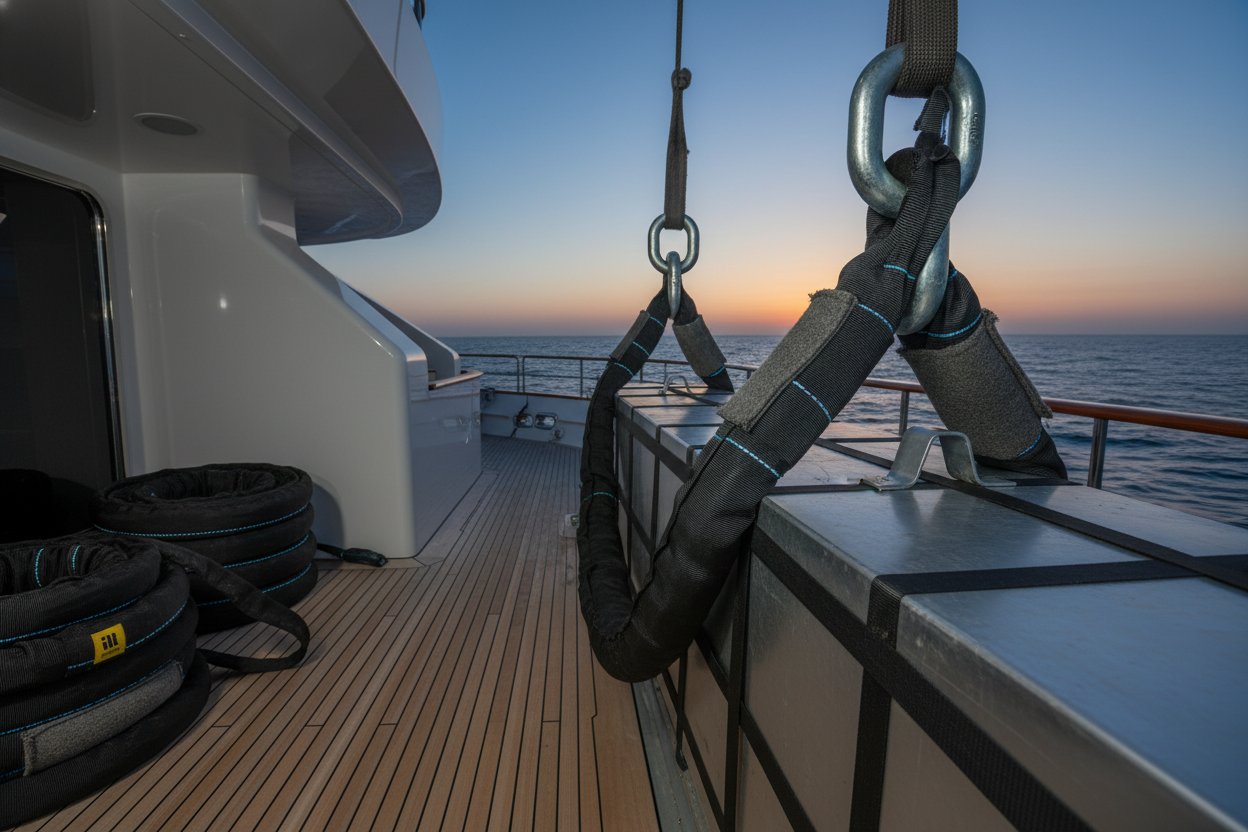
Mastering the polyester round sling chart fundamentals equips marine teams to avoid the 93% oversight, ensuring precise load handling in yachting, defence, and spearfishing operations. By accurately interpreting the round sling capacity chart for various hitches, angles, and environmental factors, and critically prioritising tag verification over colour alone, you effectively safeguard against overloads in challenging saltwater conditions. Rigorous round sling inspection protocols – which include immediately identifying cuts exposing red core warning yarns, abrasions, UV degradation, and illegible tags as definitive retirement indicators – extend durability, all underpinned by adherence to OSHA and ASME B30.9 compliance standards. iRopes' OEM/ODM customisation further enhances this approach, offering tailored diameters, reflective elements, and ISO 9001 certified quality, complemented by downloadable guides for field checks and essential documentation to optimise your marine operations safely and efficiently.
Need Tailored Advice for Your Marine Round Slings?
If you're seeking personalised guidance on round sling specifications, detailed inspection procedures, or custom solutions for your specific marine requirements, please complete the inquiry form above to connect directly with iRopes experts. We are dedicated to helping you elevate your lifting safety and operational efficiency.