⚠️ DIY marine rope splicing slashes strength by up to 50% in safety tests, mimicking knot failures and risking mooring disasters. Professional methods, backed by at least five precise tucks for synthetics, retain 100% tensile strength—essential for reliable yachting and defence applications.
In five minutes, master why DIY fails and gain professional insights for unbreakable mooring lines
- ✓ Spot three common DIY pitfalls that cut rope life by 40% in saltwater, saving you from costly repairs.
- ✓ Learn step-by-step eye splices for 3- and 8-strand ropes, boosting your skill to achieve full load-bearing compliance.
- ✓ Uncover certification secrets like ISO 9001 testing, ensuring your setups pass marine regulations without surprises.
- ✓ Access iRopes OEM customisation for pre-spliced solutions, cutting production time by 30% for wholesale needs.
You've probably tied a quick knot on your mooring line, convinced it's "good enough" for that casual dock job. But what if I told you it weakens your rope by half, turning a minor fix into a potential catastrophe during the next gale? Professional splicing flips this script, weaving strands with precision that holds 100% strength against relentless waves and salt. Curious how five simple tucks and iRopes' certified techniques can safeguard your vessel and business? The answers reveal why expertise trumps DIY every time—read on to secure your lines for good.
The Risks of DIY Marine Rope Splicing
Picture this: you're out on the water, securing your boat with a mooring line you've spliced yourself. A sudden storm hits, and that splice gives way under the strain. It's a nightmare scenario that's all too real for many boaters who attempt DIY fixes. While the urge to save a bit of time or money is understandable, attempting marine rope splicing without the right know-how often leads to disaster. These amateur efforts frequently fail safety tests because they compromise the very integrity of the rope itself.
One of the biggest issues with DIY approaches is the common mistakes that slash rope strength dramatically. Think about how a simple knot can weaken a line by up to 50%—poorly done splices are often just as ineffective. People rush through the process, skipping steps or pulling strands unevenly, which creates weak points reminiscent of those knot failures. It's like building a bridge with shaky supports; everything looks fine until the load hits, and then it's too late.
Then there's the matter of *tucks*, those crucial weaves that lock the splice in place. For synthetic ropes common in marine settings, how many tucks are acceptable to pass rigorous tests? Experts agree you need a minimum of five full tucks to ensure the connection holds without slipping. Skip that, and your splice might look tidy but won't withstand the constant pull of waves or wind. I've heard stories of "quick splice" jobs that frayed after only a few uses—a clear sign of insufficient securing.
- Uneven tension from bad tools: Without proper fids or marlinspikes, strands bunch up, causing premature wear that shortens the rope's lifespan.
- Material mismatches: Not understanding how nylon stretches differently from polyester leads to splices that loosen over time in saltwater, compromising their *integrity*.
- Rushed finishing: Failing to taper ends properly invites chafe, turning a small oversight into a major hazard during critical operations.
These errors don't just affect performance; they pose real dangers in harsh marine environments. Imagine your boat drifting free during mooring because the splice fails under load—that's not just inconvenient, it's a safety risk that could endanger lives and property. Have you ever wondered why professionals always stress thorough testing? It's because uneven DIY work often unravels when it matters most, leading to regulatory headaches or worse.

Grasping these pitfalls makes it clear why turning to expert methods for mooring rope splicing can make all the difference, helping your lines remain reliable even in tough conditions.
Why Mooring Rope Splicing Demands Expertise
Building on those DIY pitfalls we just explored, it's worth digging into why mooring rope splicing in particular calls for a skilled hand. Out on the open water, where conditions can turn rough without warning, a simple amateur splice just doesn't cut it. The marine environment throws unique challenges at your lines, amplifying even small errors into bigger problems.
Saltwater is one of the toughest foes here. It seeps into fibres, causing corrosion and weakening strands over time—especially if your splice isn't sealed just right. I’ve watched a buddy's homemade loop on his dock line start fraying after a single salty season; the exposure made those uneven tucks pull apart faster than expected. In mooring setups, where lines hold boats steady against tides and swells, this kind of degradation isn't optional. Professionals account for it by using techniques that shed water and resist UV rays, keeping the rope's core intact far longer.
Now, you might wonder if splicing mooring ropes is even permitted in the first place. Absolutely, it is allowed, provided it's done to established standards, preventing any regulatory slip-ups. Bodies like the International Maritime Organisation stress that splices must meet load-bearing specifications to avoid fines or worse during inspections. Skipping that precision? It could void warranties or insurance, turning a routine docking into a liability nightmare.
At the heart of it all is strength retention. Heavy mooring loads demand that your line holds onto its full tensile power—no compromises. Yet DIY efforts often fall short, dropping below the 100% mark needed for safety under strain. Think of it like this: a pro splice weaves strands so seamlessly they act as one continuous piece. In contrast, amateur work creates hidden stress points that give way when waves push hard, compromising safety and *reliability*.
DIY Failure Case
A boater's eye splice on nylon mooring line snapped during a gale, losing 40% strength due to loose tucks exposed to saltwater, leading to a drifting vessel.
Lab Test Outcome
Safety tests revealed the splice failed at half the rated load, contrasting sharply with certified methods that passed full simulations.
Pro Splice Success
Expert splicing on the same rope type retained full strength through repeated load cycles, even after saltwater immersion, securing the boat without issue.
Certified Results
Professional versions aced independent tests, holding 100% tensile force and earning approvals for commercial use in harsh conditions.
Real-world cases drive this home. Take a coastal marina incident where a DIY join on polyester lines parted during high winds, sending a yacht adrift—tests later showed the splice had bulged and weakened from poor tensioning. In contrast, lines handled by riggers nearby withstood the same storm, their splices smooth and unyielding. It shows how expert execution turns potential hazards into reliable performance.

These insights pave the way for learning the hands-on steps that make professional splicing methods so effective.
Professional Techniques for Splicing Mooring Lines
Now that we've seen how expertise turns potential disasters into dependable performance on the water, it's time to roll up our sleeves and look at the actual methods professionals use for splicing mooring lines. These techniques aren't just about getting the job done—they're designed to keep your boat secure through every tide and gust. We'll focus on practical steps that anyone with basic tools can follow, but with the precision that passes muster in real marine settings.
Start with the eye splice, a go-to for creating secure loops in mooring ropes. For a 3-strand rope, which you'll often find in straightforward dock lines, the process begins by measuring about twice the rope's diameter from the end and marking that spot—this becomes your eye size. Unlay the strands back to the mark, then insert the centre strand into the rope's standing part, followed by tucking the side strands over and under in sequence. Keep tension even as you work, smoothing everything out to avoid lumps. Finish by tapering the ends; trim and heat-seal them for a clean look that won't snag. It's a straightforward process, but that even pull makes all the difference. A buddy of mine once skipped tapering on a similar job, and the rough edge chafed through faster than expected during a windy night at anchor.
Switch to 8-strand ropes, common for heavier mooring duties due to their balance of strength and flexibility. Here, pair up opposite strands to treat them as units. Form the eye by passing the working end through the standing part, then tuck these pairs alternately—first under one pair, over the next—repeating for at least five full cycles to lock it in place. The key is maintaining the rope's natural lay so it doesn't twist under load. Professionals, like those at iRopes, swear by this for yachting lines, where the multi-strand setup handles chafe better than single-strand alternatives.
- Prepare the rope by taping ends to prevent fraying and marking your eye length based on application needs.
- Unlay strands carefully: three for basic ropes, pairing for multi-strand to keep the structure intact.
- Tuck sequentially, alternating over and under to bury ends smoothly without forcing.
- Taper by trimming shorter strands and sealing to reduce bulk for sheave passage.
If you're wondering how to join two mooring ropes, say for extending a dock line without losing strength, short or long splices are your best bet. A short splice interweaves the ends tightly for a permanent bond that's low on bulk but mighty under pull—ideal if you're not threading through tight spaces. The long version stretches the weave out over more length, keeping the diameter slim so it glides through blocks effortlessly. Both beat knots hands down for reliability in wet conditions.
Material matters too. Nylon ropes, with their characteristic stretch, need firmer tucks to counter elongation during surges, while polyester's lower give calls for precise alignment to maximise its snap-back resistance. For anchoring, a rope-to-chain splice merges the two seamlessly: bury the rope's tail into the chain's links, then whip it secure. This setup shines in rough bottoms where pure chain might drag, offering a robust *alternative*.
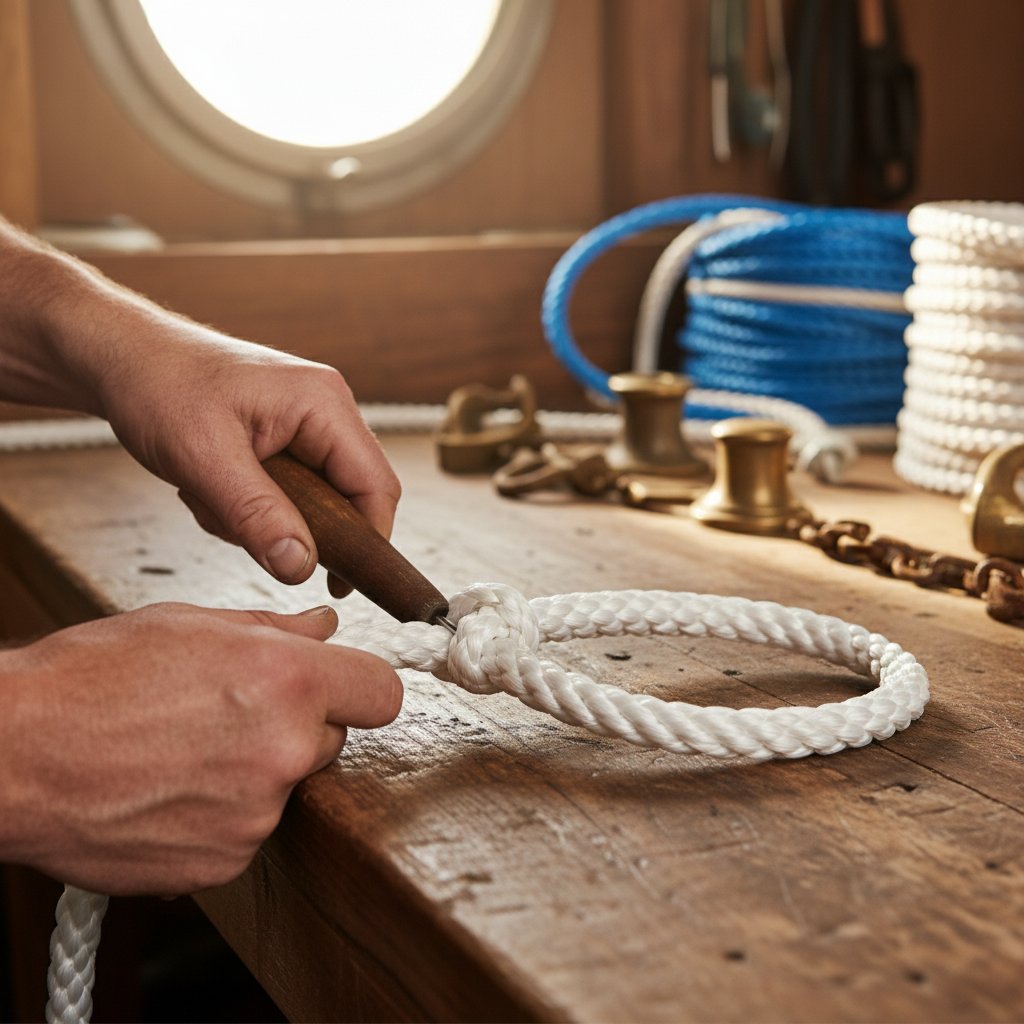
To wrap it up right, always finish with whipping or seizing. Whipping wraps twine tightly around ends to stop unravelling, while seizing uses smaller cordage for high-wear spots. Both guard against the constant rub from docks or waves. Ever noticed how a pro-finished line looks almost seamless? That's no accident—it lasts seasons longer. These details ensure your splices not only hold but stand up to scrutiny in any inspection.
Quality Control and Certification in Commercial Splicing
Those finishing touches like whipping and seizing we just covered are crucial, but in a commercial setting, they go hand in hand with rigorous checks to confirm everything holds up under real pressure. At facilities like those of iRopes, the focus shifts to systematic processes that turn a good splice into a certified one, ready for the demands of professional marine work. It's not just about technique anymore—it's about proving your mooring lines can take whatever the sea throws at them, time after time.
Take ISO 9001 certification, for instance. This international standard guides how iRopes tests every splice for both strength and longevity right in their workshops. They pull samples through machines that mimic storm-force loads, watching for any give in the fibres. Durability comes next, with cycles of saltwater dips and UV exposure to see how the weave weathers. This isn't guesswork; it’s data ensuring your custom ropes won't let go when it counts. iRopes’ ISO 9001 certification underscores its commitment to quality.
For marine applications, certification means meeting strict benchmarks that keep operations safe and legal. Think tuck counts: those weaves we mentioned earlier get counted meticulously, often exceeding the basic five to match the rope's full breaking strength. Load testing follows, where professionals apply progressive force until the limit, documenting how the splice performs without bulging or slipping. Bodies like the Coast Guard or yachting associations look for this proof before approving lines for commercial mooring or anchoring. Commercial checks eliminate that surprise by validating every joint against global norms.
Speaking of variety, the right splice type depends on your setup. There are four main types that cover most needs in marine rope work: the *eye splice* for loops that attach to cleats or rings; *short splices* for strong joins between two lines without much added bulk; *long splices* that keep the diameter slim for smooth passage through pulleys; and *rope-to-chain splices*, perfect for blending lines with anchors in rough waters. Each serves a specific purpose, like how a short splice might link dock lines quickly while a rope-to-chain setup secures ground tackle without snags.
Core Splice Types
Essential Joins for Marine Use
Eye Splice
Forms a secure loop for mooring attachments, retaining full strength in 3-strand or 8-strand ropes.
Rope-to-Chain
Connects lines to anchors smoothly, ideal for enduring tidal pulls without wear.
Short Splice
Joins ends tightly for extended lines, minimising bulk in high-load scenarios.
Advanced Options
Tailored for Durability
Long Splice
Creates slim connections for blocks and sheaves, preserving flexibility in yachting applications.
That's where iRopes' OEM and ODM services shine—they deliver pre-spliced, tailored ropes that already meet these global standards, saving you the hassle while protecting your brand's reputation. Whether it's a batch for yacht suppliers or custom defence lines, their specialists handle the certification, so your wholesale orders arrive ready to deploy.

Putting this level of oversight into practice not only sidesteps failures but fosters partnerships built on proven reliability for your marine projects. It builds *trust* and ensures *longevity*.
From the stark risks of DIY marine rope splicing that can slash strength by up to 50% to the expert techniques ensuring mooring rope splicing retains full tensile power, this exploration underscores why professional methods are essential for safety in saltwater environments. We've delved into precise eye, short, long, and rope-to-chain splices for 3-strand and 8-strand lines, alongside finishing touches like whipping and seizing to combat chafe. iRopes' ISO 9001-certified quality control, including rigorous load testing and tuck validations, guarantees compliance and durability for commercial applications, turning potential failures into reliable performance.
Building on these insights, partnering with specialists can tailor solutions to your exact marine needs, enhancing strength retention and certification readiness without the guesswork.
Need Customised Splicing for Your Marine Projects? Contact iRopes Today
If splicing mooring lines for your wholesale operations raises specific questions or requires bespoke OEM/ODM services, the inquiry form above is your direct line to iRopes' experts. They'll guide you towards certified, high-performance ropes designed for yachting and beyond.
