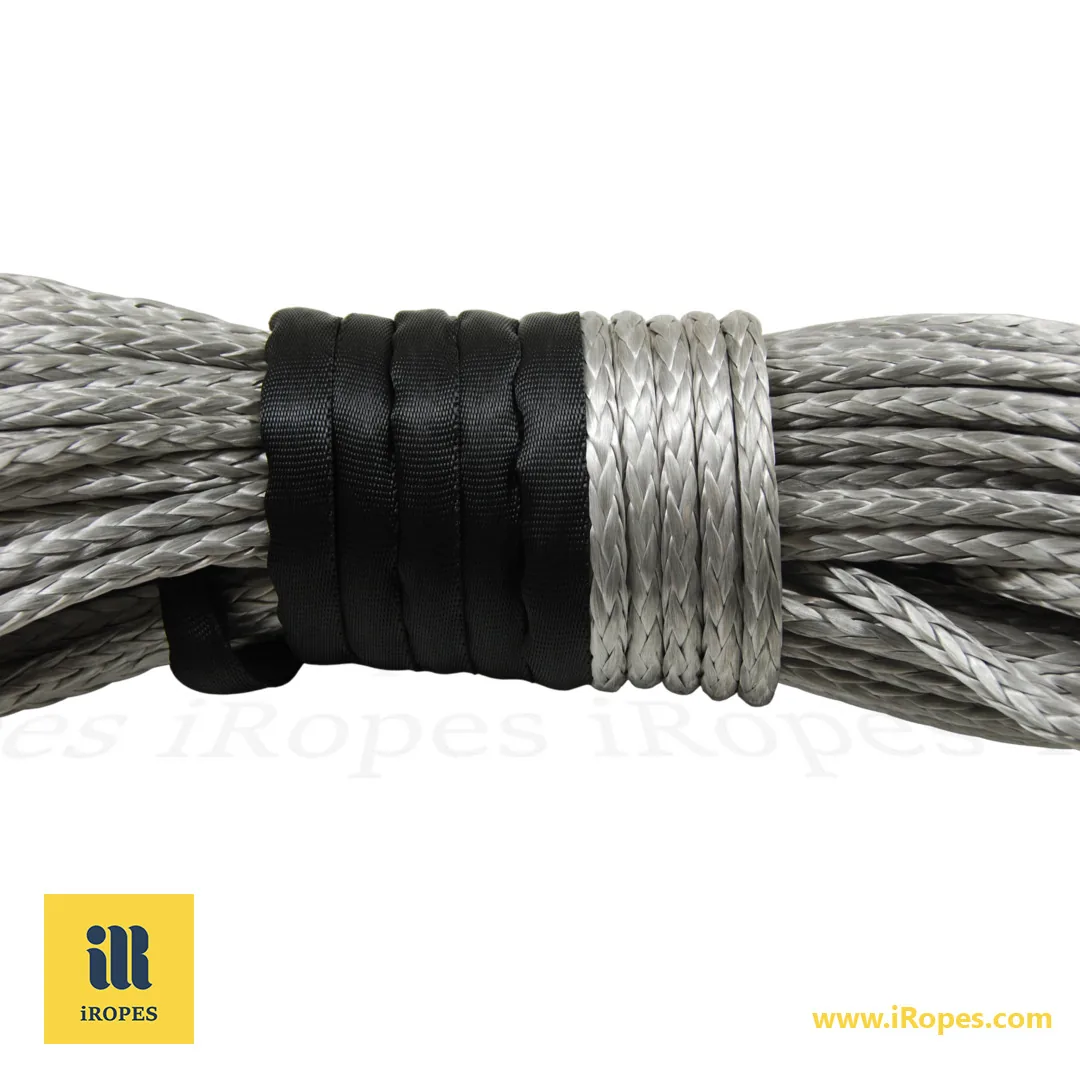
Double braid nylon anchor rope combines high breaking strength with excellent shock absorption, giving reliable holding power for scenarios such as a 27‑ft yacht facing a sudden gale.
What you’ll master in 8 min
- ✓ Higher breaking load versus many 3‑strand ropes, keeping your vessel secure for longer.
- ✓ Around 10–12% controlled stretch at working load to cushion shock without sacrificing holding power.
- ✓ ISO 9001‑certified manufacturing systems that support consistent strength per metre.
- ✓ Fully customisable length, colour, branding and reflective‑yarn options from iRopes.
Not every anchor line handles shock the same way. Under wave‑induced loads, rope construction and condition matter. Double braid distributes force across thousands of fibres, helping the rope maintain performance when seas turn steep. In the sections ahead, we’ll show how this construction works and how to size the perfect nylon anchor rope for your vessel.
Understanding nylon anchor rope: material benefits and applications
Before we dive into how double‑braid construction boosts performance, let’s clarify why nylon anchor rope is trusted on the water. Nylon anchor rope is a marine‑grade synthetic cord, typically made from nylon‑6 or nylon‑6,6 fibres. It combines high tensile strength with controlled stretch, and it offers excellent resistance to UV radiation, abrasion and rot while maintaining flexibility for smooth handling.

Both three‑strand and double‑braid nylon make excellent anchor ropes thanks to nylon’s high strength and useful elongation. When you compare one rope to another, three performance metrics usually guide the decision: breaking strength, elongation under load, and the safe working load (SWL) derived from the breaking figure. For a common 3/8″ diameter, typical breaking strength is about 4 400 lb, with around 10–12% stretch that cushions shock loads. A 1/2″ line jumps to roughly 7 800 lb, delivering a higher SWL for larger vessels while maintaining that controlled give to protect gear.
- UV resistance – UV‑stabilised nylon offers high resistance; many vendor spec sheets cite UV performance around 70% of the industry maximum.
- Abrasion resistance – a robust fibre and, in braided ropes, a tight outer cover create a hard‑wearing surface that endures rubbing against chain, rocks or deck fittings.
- Rot and chemical resistance – nylon’s low moisture uptake and synthetic polymer structure resist rotting in salty spray and generally withstand diesel and common cleaners (avoid strong acids or alkalis).
iRopes manufactures under an ISO 9001‑certified quality system. Each batch undergoes calibrated tension testing, colour‑fastness checks and a documented audit trail before it leaves the factory. The result is a consistent, reliable nylon anchor line produced to align with relevant industry standards and, where specified, Cordage Institute guidance.
“When the wind picks up, I trust the nylon anchor rope to hold the vessel without stretching too much, giving me peace of mind.” – seasoned mariner
So, whether you’re selecting a line for a 27‑ft cruiser or a modest fishing boat, the material itself already checks the boxes for durability, flexibility and safety. The next step is to see how the double‑braid design builds on these strengths to deliver even greater load‑bearing capacity.
Why double braid nylon anchor rope outperforms other constructions
Having seen how the material checks the durability boxes, the next question is how the rope’s architecture turns those qualities into anchoring power. The answer lies in the way the fibres are woven together.

The double‑braid construction pairs a tightly packed core—often a 24‑strand set—with an equally dense jacket of similar strand count braided in a reverse pattern (designs can vary). This layout distributes load across many fibres, reducing the torque that can twist a three‑strand line when pulled through hardware. The result is a rope that feels smooth in the hand and better resists wave‑induced shock.
- Strength – typically higher breaking loads than equivalent 3‑strand designs.
- Kink resistance – maintains shape under repeated bends, reducing wear and the need for frequent replacement.
- Price – often costs more upfront, but the extended service life can offset the difference.
When you compare a double braid nylon anchor rope with a polyester alternative, two differences stand out. Polyester offers lower stretch, which can feel firm, but it sacrifices the shock‑absorbing give that protects both anchor and hull in heavy seas. Nylon’s controlled elasticity, amplified by the braid’s uniform load path, smooths out load spikes without letting the line snatch under sudden tension.
Why it matters
High‑load anchoring demands a rope that can absorb shock while retaining strength. The double‑braid’s layered structure spreads impact across many fibres, giving you a smoother, safer anchor rode that protects hardware and reduces the risk of rope damage during sudden gusts.
In practice, this means a 1/2″ double‑braid line on a 30‑ft cruiser can absorb wave‑induced shocks that might cause a plain three‑strand rope to kink or wear prematurely. The torque‑free pull can also reduce windlass wear, extending service intervals. If you ever wondered whether the extra cost is justified, think of it as buying shoes that last longer because the sole disperses each step’s impact.
With the construction advantages clarified, the next logical step is to translate those details into a sizing rule‑of‑thumb that tells you exactly how much nylon anchor line you need for your vessel.
Choosing the right nylon anchor line: sizing, strength, and customization
Having seen how double‑braid construction lifts strength and shock absorption, the next step is to match the rope to your vessel’s dimensions and preferences.

For most recreational craft the rule‑of‑thumb is simple: allocate 1/8 inch of rope diameter for every 9 feet of boat length. A 30‑ft cruiser therefore starts with a 3/8‑inch line, while a 45‑ft yacht steps up to a 1/2‑inch rope. The formula provides enough diameter to handle expected loads while keeping handling easy.
Sizing Rule
Apply the 1/8‑inch per 9‑foot rule: a 27‑ft cruiser needs a minimum 3/8‑inch rope, providing reserve for scope and tide while keeping handling light.
Customization
iRopes can cut any length, add colour, logo, or reflective yarn, and ship in branded packaging – ideal for matching your boat’s identity.
Strength scales with diameter. Below is a quick reference linking common anchor rope sizes to typical breaking strength and safe working load (SWL). The SWL is roughly one‑third of the breaking figure, which aligns with Cordage Institute recommendations.
| Diameter | Breaking Strength (lb) | Safe Working Load (lb) |
|---|---|---|
| 3/8 " | 4 400 | 1 450 |
| 1/2 " | 7 800 | 2 600 |
| 5/8 " | 12 200 | 4 000 |
For a 30‑ft boat, the 3/8‑inch option offers an SWL near 1 450 lb, which suits many boats of that size in moderate conditions. If you want extra margin for heavy weather, stepping up to 1/2 inch adds roughly 1 150 lb of usable capacity. Always verify against your vessel’s displacement and expected anchoring conditions.
Check the windlass specifications – not all double braid nylon anchor ropes are approved for high‑load windlass use; a thimble eye splice may be required for safe operation.
Beyond size, iRopes offers a full OEM/ODM suite. You can specify the exact length—anything from 50 ft to 600 ft—choose a colour that stands out in low light, add your company logo, or request reflective or glow‑in‑the‑dark yarn for night‑time visibility. All custom runs still benefit from the ISO 9001‑certified quality system, supporting the same breaking strength and UV resistance as the standard catalogue.
When you ask, “What is the best nylon anchor rope for a 30‑ft boat?” the answer combines the 3/8‑inch diameter rule, the SWL reference above, and your branding or colour preferences. By following the sizing formula, checking the strength table, and leveraging iRopes’ customisation options, you’ll end up with a nylon anchor line that fits your boat and looks the part.
Installation, maintenance, and safety best practices for anchor ropes
After you’ve selected the right diameter and length, install the line so it behaves exactly as the specifications promise. A correctly spliced thimble transfers load evenly and shields the rope at the hardware interface, preventing premature wear.

Below is a compact guide that outlines essential tools, the general splice sequence, and the safety checks to run before you load the system.
Installation Essentials
Key steps for a secure splice
Tools
Use a fid and pusher, tape, a marker, whipping twine, a sharp knife, a stainless‑steel thimble, and a heat source to seal cut ends.
Procedure
Measure and mark buries per the manufacturer’s instructions. Form the eye with the thimble, then use the fid to bury core into cover (and cover into core for double braid). Taper, milk the cover smooth, and finish with whipping.
Safety
Wear gloves and eye protection, secure the work in a vice, seal trimmed ends only, and proof‑load the splice to confirm it holds before use.
Maintenance Checklist
Routine care to extend rope life
Cleaning
Rinse with fresh water after each outing, then spread out to dry before stowing.
Inspection
Look for frayed strands, UV‑bleached spots, flattened sections, or any core exposure before you set sail.
Storage
Keep the rope on a ventilated rack, out of direct sunlight and away from solvents.
If you wonder whether a nylon anchor rope can be used with a windlass, the answer hinges on two factors: the rope’s windlass rating and the presence of a correctly executed splice. When the splice follows the manufacturer’s method and the rope is approved for the unit, it feeds smoothly and reduces wear on the gears. If the line is not rated for windlass use, add a short steel chain segment between the rope and anchor.
Stay compliant
Ensure your rope is manufactured under ISO 9001 quality systems and, where required, conforms to Cordage Institute guidance. Always verify windlass compatibility before finalising the purchase.
By following the splice routine, keeping the rope clean, inspecting it regularly, and respecting relevant standards, you turn a high‑performance double braid nylon anchor rope into a reliable partner for every anchoring manoeuvre. The same disciplined approach will serve you well when you request a custom‑coloured, OEM‑finished line from iRopes, ready to face the next offshore challenge.
Ready for a personalised rope solution?
The double braid nylon anchor rope delivers the high strength and controlled stretch that every mariner needs, outperforming many 3‑strand alternatives in shock absorption and torque‑free handling. Combined with iRopes’ ISO 9001‑certified production, you get a nylon anchor rope that resists UV, abrasion and rot while offering reliable performance in harsh sea conditions.
When selecting the right nylon anchor line, apply the simple 1/8‑inch‑per‑9‑ft rule and consult the strength table to match your vessel’s size. If you’d like expert guidance on sizing, colour, branding or any custom specifications, use the form above – our team is happy to help you design the perfect solution.