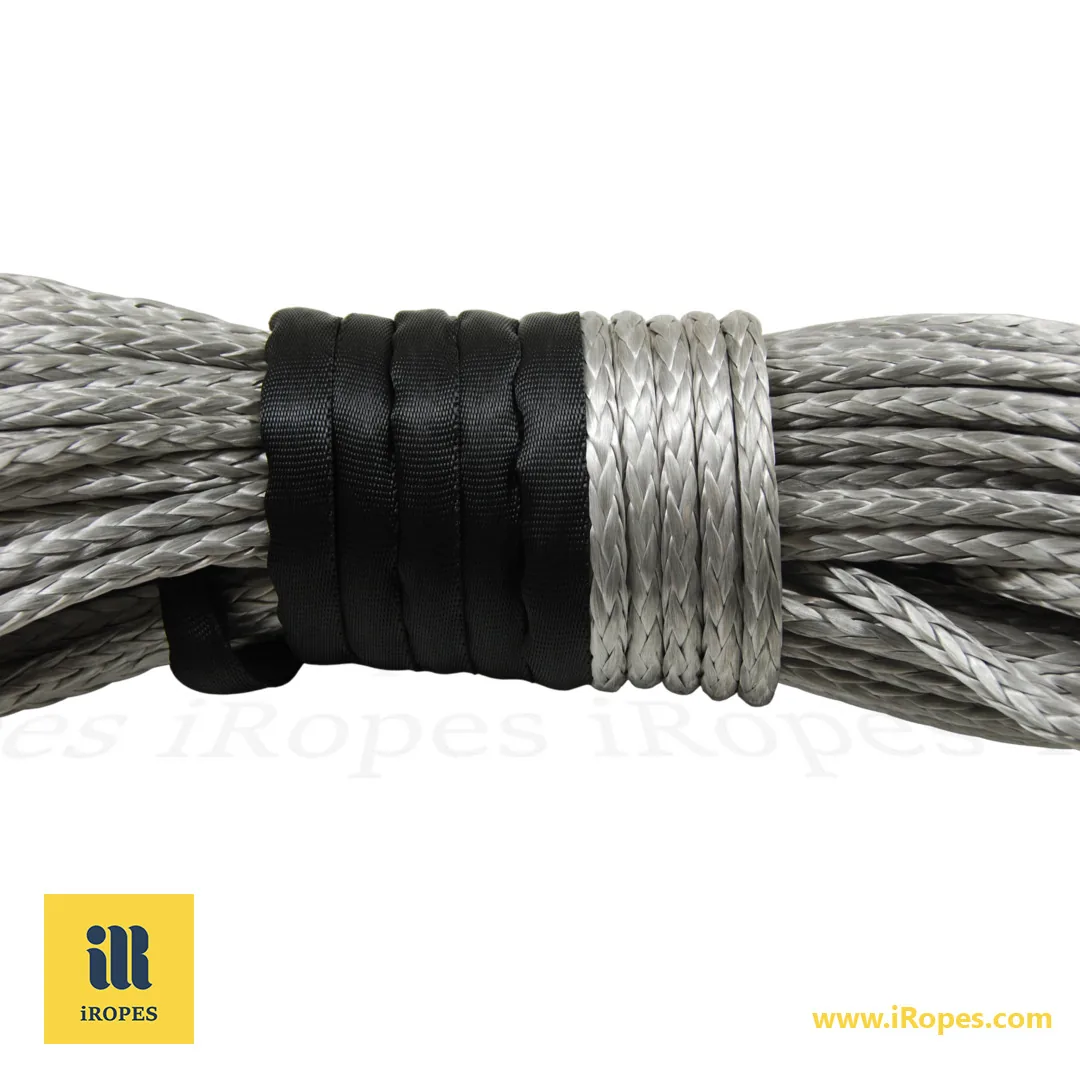
In harsh saltwater environments, synthetic lifting slings maintain 90% of their strength after exposure, crushing wire ropes that lose up to 50% to corrosion—boosting marine efficiency for ports, yachting, and boat maintenance.
Discover Marine Lifting Advantages in 8 Minutes →
- ✓ Slash replacement costs by 30% with corrosion-resistant synthetics that outlast wire in salty ports.
- ✓ Gain lightweight flexibility for low-headroom yacht lifts, reducing crew strain and setup time.
- ✓ Simplify inspections to spot wear instantly, enhancing safety compliance with OSHA and ASME standards.
- ✓ Unlock iRopes' custom OEM designs, like UV-protected strops, tailored to your branding and load needs.
Everyone assumes wire ropes are ideal for heavy marine lifts due to their raw power, but within saltwater's grip, they corrode swiftly, concealing dangers that lead to costly downtime and substantial risks. Synthetics, however, completely change this scenario. They offer non-rusting resilience and even feature glow elements for foggy seas. Yet, selecting the right synthetic solution depends on nuanced factors such as stretch and hitch types, which are often overlooked. What hidden advantage could truly transform your rigging operations? Explore how iRopes crafts compliant, customised solutions that safeguard your team and valuable cargo worldwide.
Lifting Slings in Marine Environments: Understanding the Basics and Terminology
In the demanding world of marine operations, where waves crash and salt adheres to practically everything, choosing appropriate lifting equipment isn't just about raw strength; it's about operational longevity. Imagine hoisting heavy cargo at a bustling port or carefully securing a yacht during maintenance. The tools you select must withstand more than just weight. They need to endure the relentless assault of saltwater and harsh sunlight. This is precisely where lifting slings become indispensable, serving as the often-overlooked heroes of rigging in these challenging settings.
Let's clarify some commonly interchanged terms. "Lifting slings," "rigging straps," and "lifting strops" are frequently used synonymously, particularly in diverse rigging applications. Fundamentally, they all describe flexible devices engineered to safely lift, hoist, or secure loads. A lifting sling represents the broad category, typically comprising an assembly of rope, chain, or webbing, often with fittings like eyes or hooks. Rigging straps generally refer to flat or web-based versions, which are excellent for wrapping around irregularly shaped objects without causing damage to the load. Lifting strops, a slightly older term, usually denotes a shorter sling or strap primarily used for specific hitches, such as those requiring precision in boat maintenance.
So, why is this distinction relevant for your operations? In practice, these terms often merge because their core function remains consistent: providing support for loads during lifting. For example, what one marine crew calls a rigging strap might be termed a lifting strop by another, both serving to prevent slips or shifts during critical cargo handling at ports. The crucial takeaway lies in focusing on functionality over nomenclature; select equipment based on the task at hand, not merely the jargon. In marine environments, synthetics truly excel. Unlike metallic options, they actively resist corrosion from saltwater spray, making them ideal for continuous boat upkeep without the need for constant replacements.
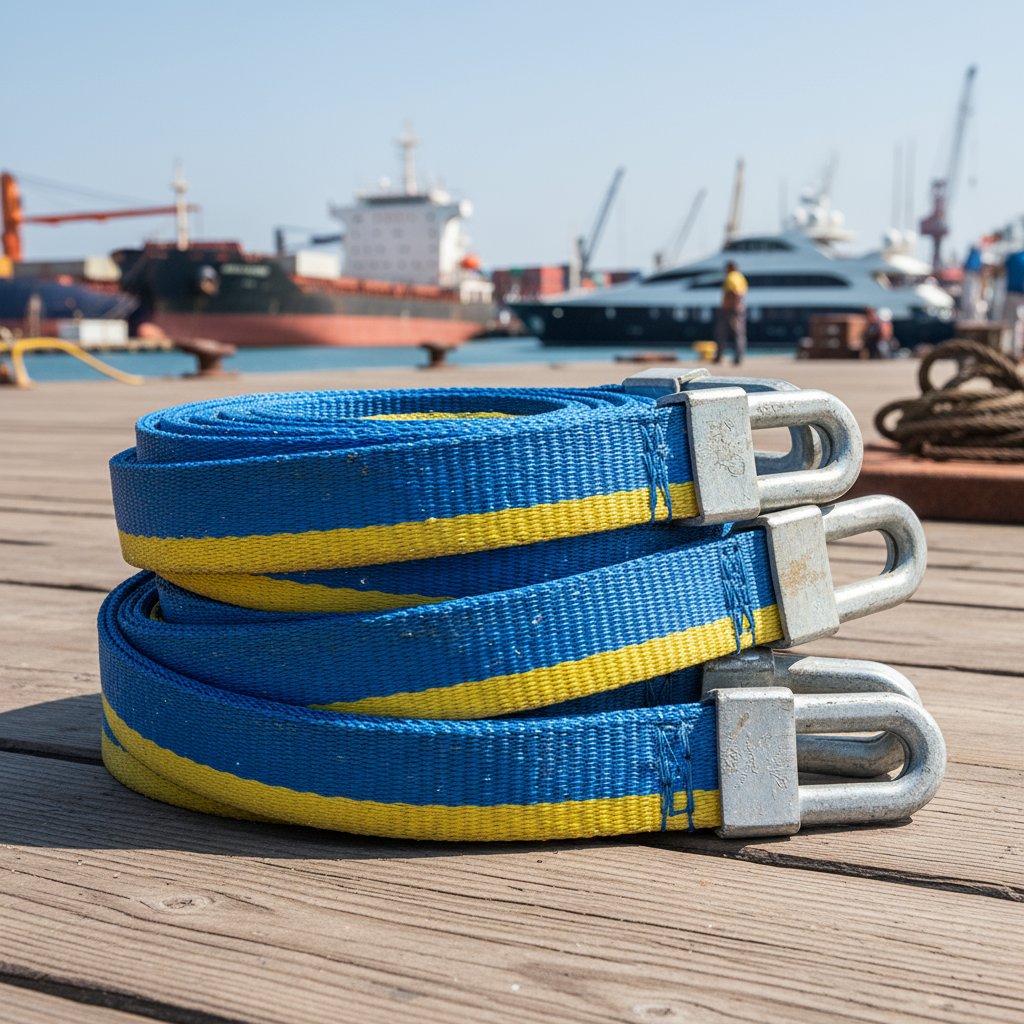
When considering types of lifting slings suitable for harsh conditions, marine environments specifically demand options that actively resist corrosion and UV degradation. Wire rope slings, typically constructed from steel strands (such as the common 6x37 configuration), offer immense strength for heavy port cargo. However, they rapidly deteriorate in saltwater, rusting quickly and concealing damage within their twisted wires. Synthetic alternatives, on the other hand, provide a superior solution. Nylon versions offer beneficial stretch for shock absorption during yacht lifts, while polyester maintains its form with minimal elongation, making it ideal for stable boat maintenance.
Advanced high-performance fibres, including UHMWPE, push these capabilities even further. They deliver strength comparable to wire rope yet at a fraction of the weight, which is perfect for low-headroom areas in confined harbours. These aren't merely substitutes; they represent significant upgrades that enhance safety in foggy conditions or during continuous cycles of loading and unloading. Ever wondered why a seemingly simple lift can become chaotic? It often stems from using mismatched or inadequate gear. Synthetics mitigate this risk by remaining flexible and clearly visible, even after prolonged exposure to marine elements.
At iRopes, we specialise in OEM services to custom-craft these compliant, high-performance lifting slings. Our UV-protected products meet stringent OSHA and ASME B30.9 standards, ensuring that every specification—from customised diameters to thimbled ends—precisely aligns with your operational needs. We manage all aspects of production in-house, from initial material selection to final branding, guaranteeing that your wholesale orders arrive perfectly prepared for immediate deployment. Whether you require a batch for extensive port rigging or bespoke strops for specialist yacht yards, our ISO 9001-certified process assures reliability without any guesswork.
Having established these foundational terms and their critical importance, let's now examine precisely why traditional wire ropes struggle significantly in typical saltwater conditions.
Why Wire Ropes Underperform in Saltwater Compared to Synthetic Alternatives
Now that we've established the fundamental concepts of lifting slings and their vital roles in marine operations, it's essential to address a significant problem: the consistent underperformance of wire ropes in saltwater environments. Imagine a busy port, with waves gently lapping against the dock, and your crane operator already noticing signs of wear on an existing sling after just a few shifts. This scenario highlights the common reality with wire ropes, and recognising their limitations can prevent costly future issues for your team.
Wire ropes are typically constructed from multiple steel strands twisted around a central core, like the well-known 6x37 configuration, where six bundles of 37 wires each provide robust strength for heavy loads. In dry conditions, they offer impressive tensile strength. However, introduce them to a marine environment, and the problems quickly begin. Saltwater dramatically accelerates corrosion, relentlessly eating away at the metal from the inside out. Their significant weight also presents a challenge; wire ropes can be 7 to 10 times heavier than synthetic equivalents, making them considerably harder to handle, particularly on smaller vessels or during yacht lifts where space is often constrained. Furthermore, inspections become a nightmare. Hidden rust between the strands means crucial damage can be easily missed until it’s too late, especially when salt crystals embed themselves, obscuring visual inspection points.
When directly comparing wire ropes with synthetic options, the performance gap in harsh oceanic settings becomes starkly apparent. Prolonged immersion in saltwater can reduce a wire rope's strength by up to 50% over time, transforming a previously safe tool into a major liability for yacht lifting or port operations. Synthetics, conversely, are manufactured from materials such as nylon or polyester, completely avoiding this corrosive pathway. They remain flexible and easy to manoeuvre even after repeated exposure to marine elements. Nylon, for example, effectively absorbs some shock through its natural elasticity, while polyester demonstrates superior chemical resistance, maintaining its structural integrity without significant elongation that could foul boat edges.
Wire Rope Challenges
In Saltwater Exposure
Rapid Corrosion
Salt attacks steel, weakening its internal structure and requiring constant monitoring.
Heavy Burden
Excessive weight complicates lifts in confined or delicate yacht and boat areas.
Inspection Hurdles
Intertwined strands can hide damage, significantly delaying detection in salty, humid conditions.
Synthetic Strengths
Versus Wire in Marine Use
No Rust Risk
Materials like nylon and polyester are unaffected by saltwater, preserving their full capacity.
Lightweight Flexibility
Easier to rig around delicate yacht components without imposing additional strain.
Clear Visibility
Surface wear is immediately apparent, simplifying essential checks before each lift.
When considering the diverse types of lifting slings, beyond wire ropes, one might look at chain slings for extreme heat resistance, though they present similar weight challenges. However, it's the synthetics—nylon, with its pliability for absorbing impacts from waves, and polyester, offering steady, low-stretch performance against ocean acids—that truly stand out. In brutal conditions, such as open-sea cargo transportation, wire's limitations become critically apparent: it kinks under pressure and cannot conform to irregular loads as effectively as a web sling. For continuous port cargo handling, this often necessitates frequent replacements—sometimes every few months if salt exposure is constant—leading to amplified costs and heightened risks of accidents from unaddressed flaws. Have you ever experienced a sudden equipment failure mid-lift? With the right gear that actively resists the elements, such incidents are entirely avoidable.
These inherent vulnerabilities increasingly compel operations to adopt rigging straps made from advanced synthetics, where unparalleled durability meets the rigorous demands of real-world marine environments head-on.
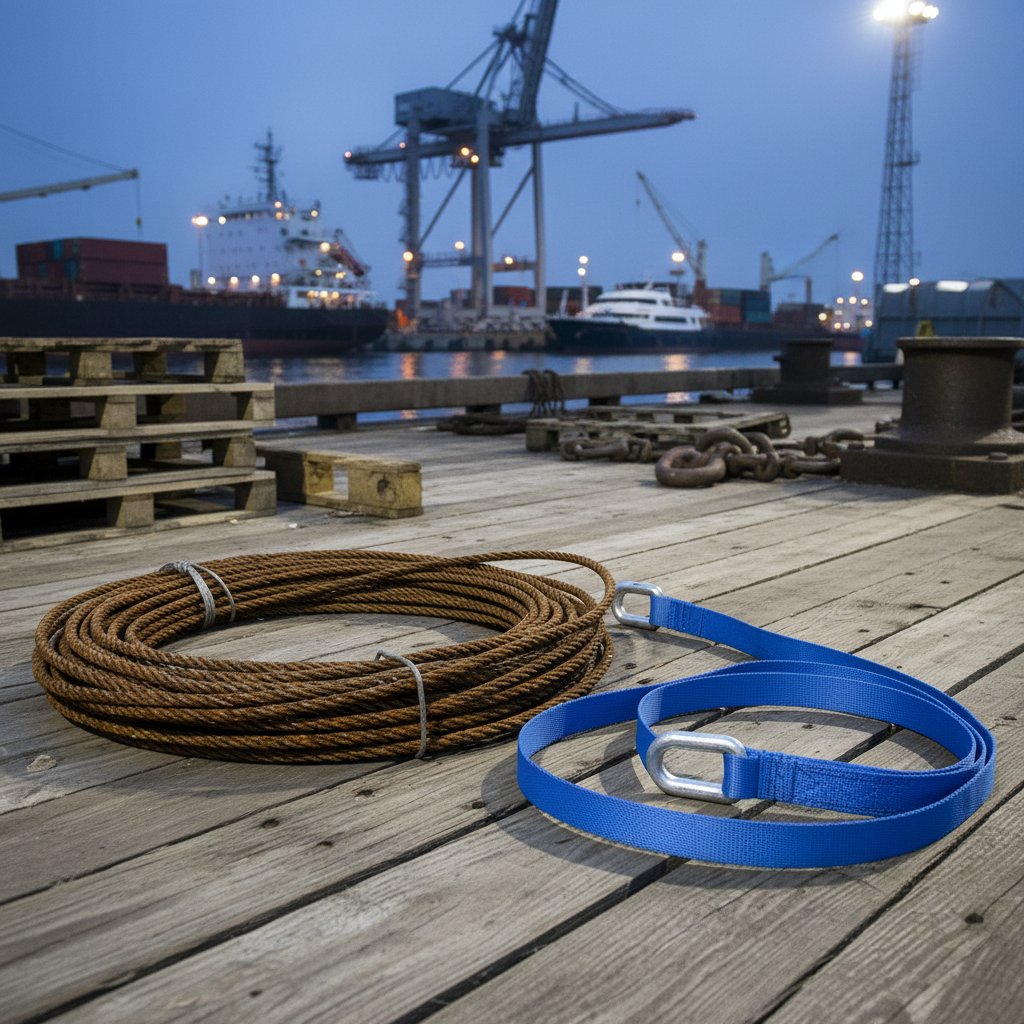
Rigging Straps: Synthetic Materials That Excel in Saltwater Durability and UV Resistance
Building on the known pitfalls of wire ropes, it becomes clear that operations constantly exposed to saltwater need lifting gear that doesn't just withstand; it actively thrives. This is precisely where rigging straps, crafted from advanced synthetic materials, come into their own. They are specifically engineered to tackle the sea's most formidable challenges without succumbing to wear. These are far from basic straps; they are meticulously designed powerhouses ensuring your lifts remain smooth and secure, even when salt crystals and relentless sunlight attempt to degrade them.
At the core of superior rigging straps are materials such as polyester and ultra-high-molecular-weight polyethylene, or UHMWPE for short. Explore marine rope options like braided polyester and Spectra line that boast a remarkably low stretch factor of just 3%, meaning they securely grip loads without noticeable sagging under pressure. Consider it the steadfast hand during potentially turbulent lifts. Furthermore, it exhibits excellent chemical resistance, easily shrugging off the acids and bleaches commonly found in marine cleaning routines. UHMWPE elevates durability even further, offering exceptional strength-to-weight ratios that surprisingly rival steel but without any of its corrosion issues. These fibres are inherently non-corrosive, preventing pitting or weakening when continually splashed with saltwater during numerous port shifts. Have you ever observed a strap fray after merely one wet season? With synthetics like these, that particular concern quickly fades.
In marine applications, these intrinsic properties translate into tangible benefits. Saltwater corrosion? Synthetics easily resist it, maintaining their integrity where metals would inevitably crumble. UV degradation also becomes largely irrelevant. These advanced straps retain their colour and strength through months of direct sunlight exposure on open decks, significantly extending their operational lifespan within yacht systems or during routine boat maintenance. Imagine rigging a sleek vessel for haul-out without the frustration of brittle gear failing mid-job. For port workers managing cargo in low-headroom spaces, this means fewer operational interruptions and enhanced confidence with every single hoist.
Low Stretch Grip
Polyester's 3% elongation ensures stable, precise lifts in tight yacht bays.
Saltwater Immunity
No corrosion means a significantly longer service life for demanding boat maintenance tasks.
UV Endurance
Resists sun fading, keeping straps reliable through endless exposures to harsh sunlight.
Chemical Toughness
Handles common marine cleaners without degrading, making it ideal for continuous port cargo operations.
Therefore, which type of lifting sling should you genuinely consider? Ultimately, it comes down to your specific operational setup. If low-headroom lifts in ports constitute your daily routine, rigging straps made from these advanced synthetics are the unequivocal choice. They are lightweight yet exceptionally robust, conforming to irregular loads while consistently meeting rigorous WSTDA standards for both safety and performance. This means no more wrestling with heavy, rust-prone alternatives that inevitably hinder your efficiency.
At iRopes, we provide truly personalised solutions through our bespoke customisation options, ensuring they fit your operation perfectly. Our expert team tailors every detail, from the exact diameter and length to essential accessories like thimbles, all while seamlessly integrating your branding. Backed by our ISO 9001 certification, these comprehensive solutions ensure compliance and offer complete peace of mind, whether you're outfitting an entire fleet or scaling up wholesale orders. Envision straps that not only deliver superior performance but also proudly feature your company's logo through every challenging marine venture.
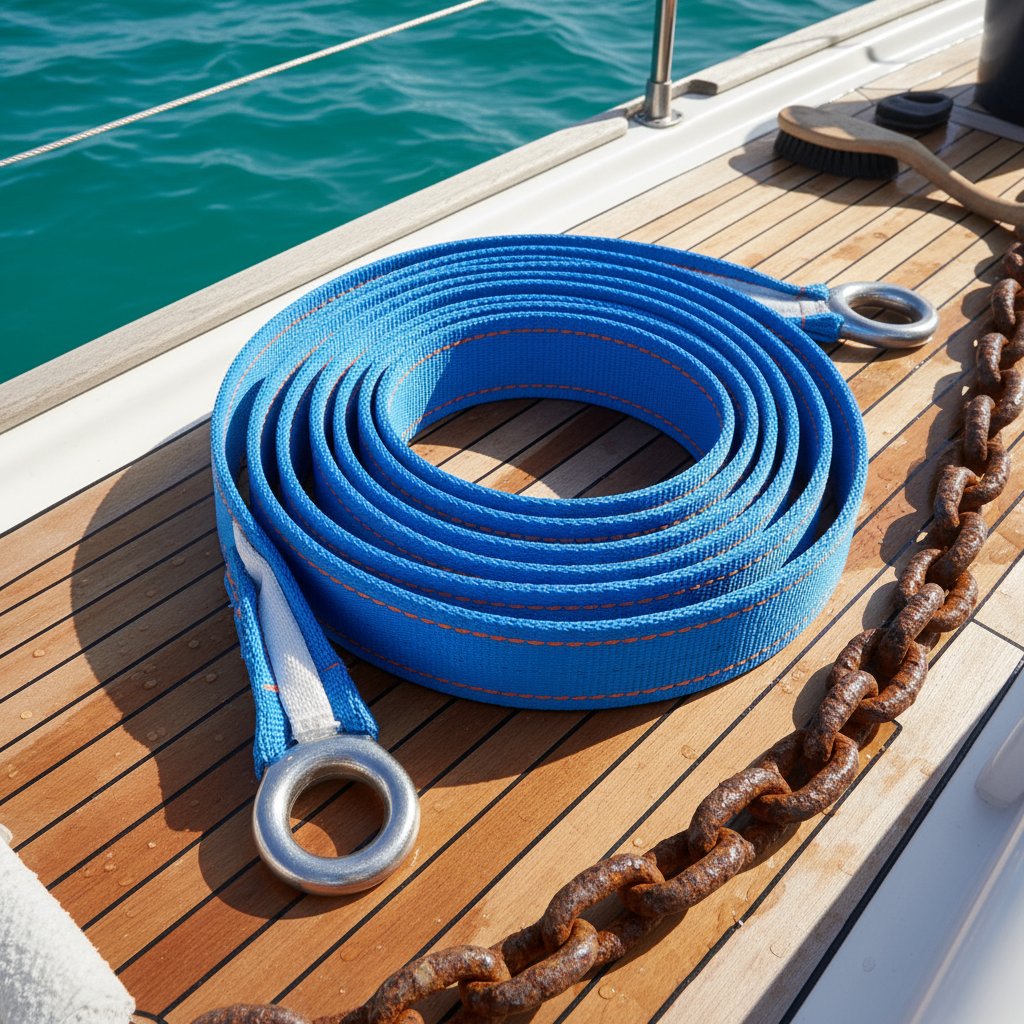
This inherent advantage in everyday rigging naturally paves the way for even more specialised synthetic designs, such as lifting strops that significantly enhance versatility, especially in foggy or challenging offshore conditions.
Lifting Strops: Customised Synthetic Solutions for Optimal Marine Safety and Efficiency
Taking the versatility offered by rigging straps even further, lifting strops introduce specialised enhancements that make them indispensable for more intricate marine tasks. Think about navigating foggy seas or setting up in challenging offshore locations. These synthetic designs—often available in round or flat web configurations—are not simply another variant of a sling. Instead, they are meticulously engineered for environments where visibility and grip can spell the critical difference between seamless operations and significant complications. Round strops, with their endless loop construction, effortlessly conform around loads without creating sharp edges, while web versions provide broad, flat contact points for even weight distribution, safeguarding delicate surfaces on boats or cargo.
What truly distinguishes these lifting strops are thoughtful additions like glow-in-the-dark elements, which become luminous in low-light conditions. This ensures your team can quickly locate them during early morning patrols or misty harbour work. Furthermore, edge guards—reinforced sleeves along the sides—effectively prevent cuts from abrasive deck fittings or jagged cargo. These features keep the equipment intact through repeated use. From personal experience with port crews, I've observed how these enhancements transform what could otherwise be a cumbersome lift into a precise and rapid operation. Have you ever experienced a project delay because the rigging wasn't clearly visible? It's frustrating, but well-designed strops mitigate this specific challenge.

When directly comparing synthetic lifting strops against traditional wire ropes in saltwater, the results are overwhelmingly in favour of synthetics. These materials reliably retain approximately 90% of their original strength, even after extensive exposure. This resilience is due to their non-metallic composition, which remains unaffected by saltwater's corrosive effects. Wire ropes, as previously discussed, deteriorate rapidly and frequently require replacement, causing workflow disruptions. For offshore compliance, synthetic strops align seamlessly with regulations, such as those stipulated by the Coast Guard, providing peace of mind by eliminating the constant concern of hidden flaws.
Choosing the correct lifting sling for marine applications begins with precisely matching the equipment to your specific setup. Prioritise load capacity first, ensuring it exceeds your heaviest anticipated loads by a significant safety factor—typically 5:1 for synthetics. Hitch types are also critically important; a choker hitch, for example, securely tightens around irregularly shaped objects like engine blocks during boat maintenance, while a basket hitch effectively distributes the load for stable cargo stacking at busy ports. At iRopes, our IP-protected designs offer the flexibility to incorporate unique customisations, such as branded patterns or specialised cores, all while ensuring compliance and seamless integration into your fleet’s operational rhythm. Discover cost-effective sling and rigging solutions versus wire rope to see how these outperform traditional options in marine settings.
- Load Capacity Match - Calculate based on the total weight and the chosen hitch style to proactively prevent overloads in dynamic, wavy conditions.
- Hitch Compatibility - Opt for a vertical hitch for straightforward pulls or a bridle hitch for stable, multi-angle yacht lifts.
- Environmental Fit - Prioritise robust UV and salt resistance, alongside any custom features specifically needed for your unique operation’s demands.
Consider a recent example involving a wholesale buyer managing container ships. Our custom-designed strops, integrated with thimbles and glow tracers, reduced downtime by an impressive 40% during seasons prone to fog. This eliminated the need for lengthy search-and-rescue operations for misplaced gear. Another client, engaged in yacht repair, received branded round strops shipped directly to their European yard, arriving precisely on schedule and significantly boosting their efficiency without encountering typical import complications. These real-world instances demonstrate how precisely targeted solutions ensure operations remain efficient, facilitating broader strategic advancements in safer marine workflows.
In the challenging saltwater environments of ports, yacht lifting systems, and vital boat maintenance, synthetic lifting slings unequivocally outperform wire ropes. They adeptly resist corrosion, which can reduce steel strength by up to half, while simultaneously offering lightweight flexibility and robust UV resistance for extended, safer service. As we’ve explored, rigging straps made from polyester or UHMWPE offer a superior low-stretch grip and chemical toughness, making them ideal for low-headroom cargo handling. Custom lifting strops, featuring elements like glow indicators and edge guards, ensure enhanced visibility and compliance even in foggy offshore conditions. These advanced solutions consistently meet stringent OSHA, ASME, and WSTDA standards, eliminating the rust-induced downtime commonly associated with traditional options.
These crucial insights empower your operations with durable, highly efficient choices that consistently prioritise safety and effectively reduce costs. Now, imagine precisely tailoring these solutions to meet your fleet's exact demands through expert guidance.
Need Tailored Synthetic Slings for Your Marine Operations?
If you're ready for personalised advice on selecting or customising lifting solutions specifically designed to meet your saltwater challenges, please complete the inquiry form above to speak directly with our iRopes specialists. We are genuinely here to help you optimise your rigging setup and enhance overall operational safety and efficiency.