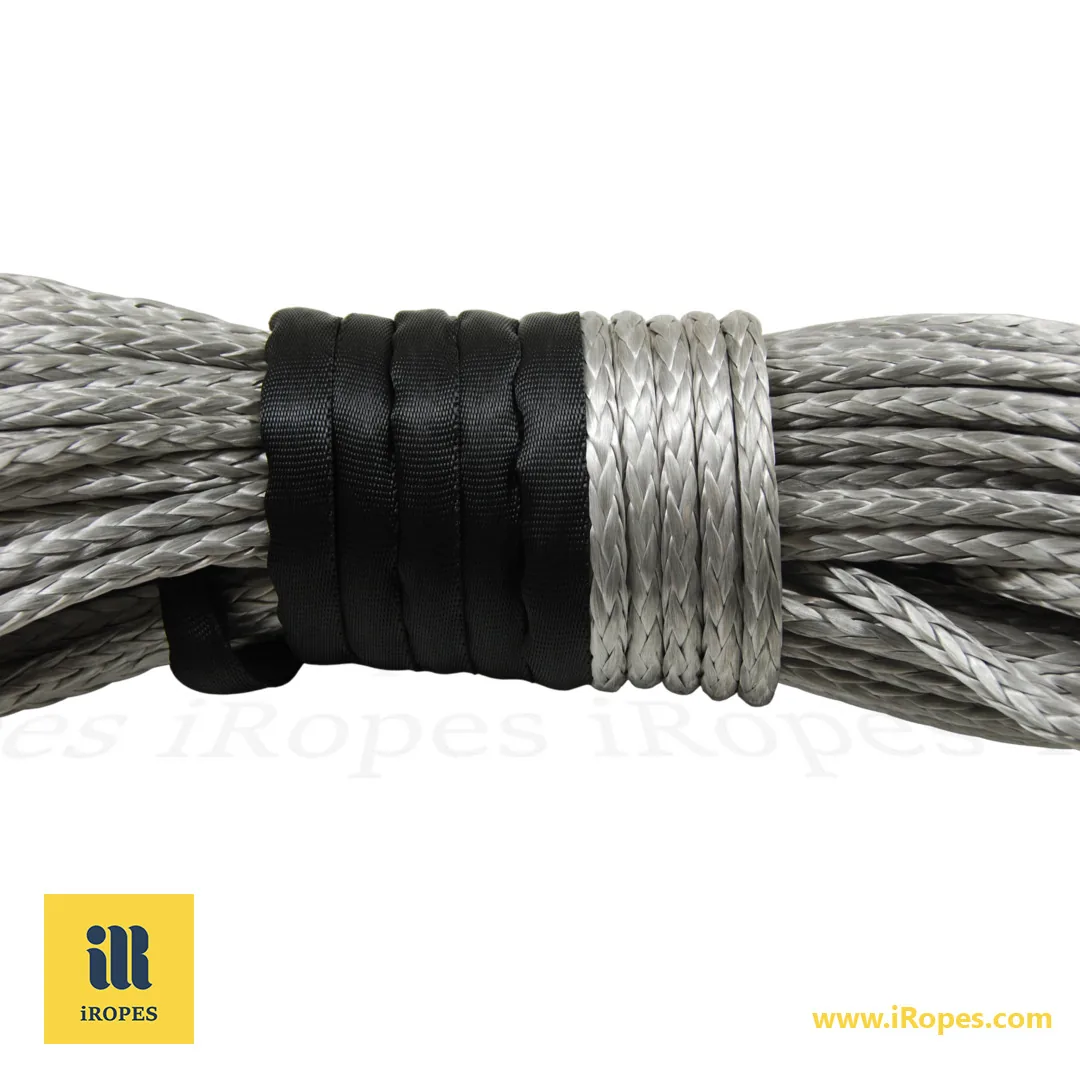
Synthetics consistently outperform wire ropes in marine crane heavy lifts by slashing weight by up to 80% at equivalent strength—delivering precise control with under 1% stretch while effectively resisting the saltwater corrosion that plagues steel.
Unlock marine lifting advantages in just 5 minutes →
- ✓ Boost efficiency by up to 30% with lighter ropes that ease handling and significantly cut fuel consumption on wave-tossed vessels.
- ✓ Extend rope life by up to 2x through superior UV and abrasion resistance, thereby minimising downtime in harsh marine environments.
- ✓ Enhance safety standards via better shock absorption, which actively prevents snaps during dynamic heavy loads.
- ✓ Simplify customisation for your specific crane specifications, ensuring an ISO 9001-certified fit for offshore precision.
For decades, you've likely relied on wire ropes in marine cranes, confident that their steel strength was unbeatable for heavy lifts. However, synthetics are now revolutionising the industry with a featherlight power that traditional wire cannot match. What if switching to these advanced materials could halve your maintenance headaches and significantly boost load control amidst challenging rogue waves? *Dive in* to uncover the counter-intuitive specifications that make this shift not just smarter, but absolutely essential for optimising your marine operations.
Understanding Rope for Crane: Traditional Wire vs. Emerging Synthetics in Marine Applications
Picture yourself on the open water, orchestrating a massive lift with a marine crane—a scenario where every decision is critical, especially when contending with the relentless pull of waves and wind. Choosing the right rope for crane applications isn't merely about raw strength; it’s about enduring the brutal marine environment. While operators have traditionally depended on steel wire ropes, advanced synthetics are now transforming this field, offering lighter, more resilient options specifically engineered for these harsh conditions.
Let's begin by examining common wire rope constructions, often denoted by figures like 6 x 36 or 6 x 37. These numbers describe the rope's internal structure: six strands twisted around a core, with each strand containing 36 or 37 individual wires. For instance, the 6 x 36 configuration uses fewer wires per strand, making it more economical and often providing a longer service life in steady, less demanding pulls. Conversely, the 6 x 37, with its additional wire, offers enhanced strength and flexibility, alongside improved fatigue resistance. This makes it ideal for situations where the load twists and turns under stress. Did you know that the extra wire in 6 x 37 helps distribute wear more evenly, significantly reducing the likelihood of premature breakage during repeated operational cycles in a salty spray?
Shifting our focus to synthetic alternatives, materials such as HMPE (high-modulus polyethylene, widely known as Dyneema), Nylon, and Polyester introduce compelling advantages in marine setups. HMPE stands out due to its extraordinary strength-to-weight ratio—up to seven times stronger than steel, pound for pound. This characteristic makes it exceptionally well-suited for handling heavy loads without the associated bulk. Nylon, on the other hand, excels at absorbing shocks from sudden jerks, a frequent occurrence in rough seas. Meanwhile, Polyester maintains its strength even when saturated, effectively resisting the degradation that saltwater inflicts upon metals. These *synthetics aren't just tough*; they are specifically engineered to withstand the marine world's constant assault from UV radiation and corrosive elements, thereby extending their usability in conditions where traditional wire might corrode and fail.
- Key Marine Crane Applications - Tower cranes at docks perform precise port lifts, offshore rigs operate in deep-sea currents, and mobile units adapt to shifting platforms. All these applications demand ropes capable of resisting saltwater and intense UV exposure.
- Environmental Edge - Over time, saltwater significantly corrodes wire rope, accelerating rust, whereas synthetics like Polyester maintain their integrity longer in wet, sun-drenched conditions.
- Weight Savings - Synthetics can reduce rope weight by up to 80% compared to equivalent wire, simplifying crane operations and substantially boosting fuel efficiency on vessels.
When comparing core properties, wire ropes excel in heat resistance, capable of handling temperatures up to 1000°C without melting—making them suitable for scenarios near engines or friction-heavy drums. Synthetics, however, trade this for superior corrosion immunity and a remarkably light weight. This translates to easier handling and reduced strain on your equipment during those demanding marine heavy lifts. In fact, for cranes, the transition to synthetics often results in superior control and fewer accidents, precisely because their *low stretch offers pinpoint accuracy* when it matters most.
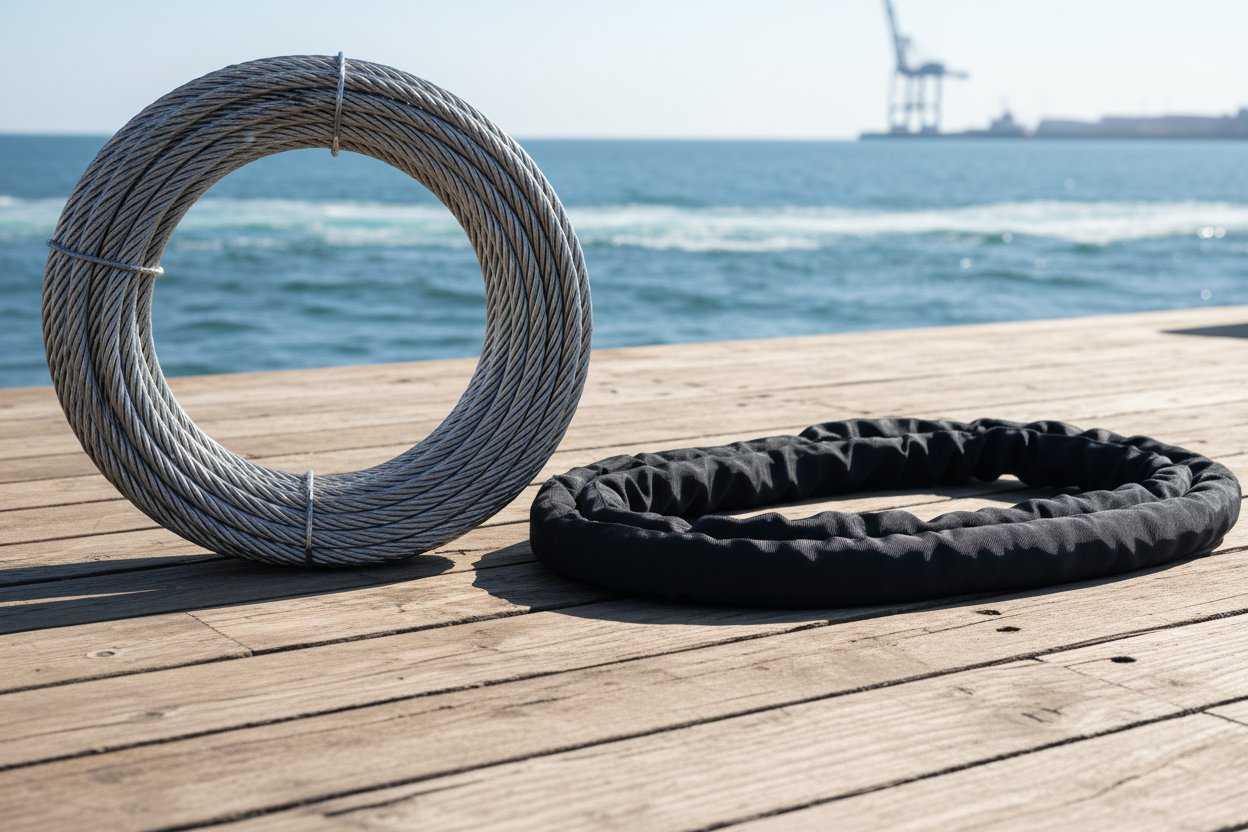
These foundational choices clearly demonstrate why synthetics consistently outperform traditional wire in the high-stakes realm of heavy lifting at sea.
Why Synthetic Rope for Heavy Lifting Beats Wire in Marine Crane Operations
Building upon the foundational differences between wire and synthetic options for rope for crane, it becomes clear that synthetics truly shine during intense marine operations. When you're managing exceptionally heavy lifts—such as hoisting massive cargo onto an offshore platform amidst churning waves—synthetics offer advantages that wire simply cannot match, providing enhanced control and reliability precisely where it's needed most.
A significant advantage of synthetics is their remarkable resistance to stretch. Unlike some materials that elongate excessively under load, advanced synthetics like Dyneema or Polyester exhibit minimal elongation, often less than 1% at working loads. This characteristic ensures *precise positioning of your load*, even when swells are rocking the vessel. Imagine lowering a turbine component into place: the rope's inherent stability prevents unwanted swings that could quickly escalate a routine task into a hazardous situation. Furthermore, their superior abrasion resistance is invaluable in gritty marine environments; specialised coatings and braided designs effectively resist contact with rough deck edges or cargo surfaces. Integrated UV blockers also protect against sun damage, which can degrade lesser ropes within months at sea. For operators constantly battling saltwater spray and intense sunlight, this translates to ropes that last significantly longer, reducing the need for frequent replacements.
Despite their perceived toughness, wire ropes present several drawbacks that are particularly pronounced in these challenging conditions. Their considerable weight not only increases fuel consumption for crane hydraulics but also makes manual handling extremely difficult and hazardous, especially on slippery, wet decks. Moreover, saltwater relentlessly accelerates corrosion, leading to internal rust that progressively weakens the wire's core over time, demanding increasingly frequent and thorough inspections. This susceptibility often results in unplanned operational stoppages, directly impacting your schedule and budget.
Synthetic Pros
Edge in Marine Lifts
Low Stretch
Offers precise load control, effectively reducing sway in dynamic sea conditions for safer handling.
Abrasion Resistance
Withstands deck friction and cargo rubs far better than wire, significantly reducing wear in harsh marine environments.
UV Durability
Integrated protections actively maintain strength throughout prolonged sun exposure at sea.
Wire Cons
Challenges at Sea
Weight Burden
Increases operational costs and contributes to higher injury risks during setup on moving platforms.
Corrosion Risk
Saltwater accelerates internal breakdown, thereby shortening the usable life of wire ropes in wet conditions.
Maintenance Demands
Requires more frequent inspections for rust and fatigue, inevitably leading to increased downtime.
When selecting the best rope for heavy lifting, especially in crane operations, synthetics like Dyneema are increasingly favoured for dynamic marine work. They are significantly better at absorbing shocks from sudden movements—such as a load encountering a rogue wave—compared to wire, which can snap under similar stress. Additionally, their enhanced longevity means fewer replacements. So, what type of rope do cranes predominantly use today? Many modern installations, particularly in offshore environments, are transitioning to these high-performance fibres over traditional steel precisely because they offer superior performance in unpredictable waters. For a deeper comparison between steel cables and fiber ropes, explore how fiber options deliver better strength, safety, and cost-efficiency in marine settings.
In practical terms, this shift yields tangible benefits. Downtime is reduced because installation is quicker, eliminating the struggle of wrestling heavy coils into position. Crews also experience less fatigue when handling lighter gear. Moreover, lighter materials align perfectly with OSHA guidelines, which emphasise reducing physical strain and hazards in lifting operations, ultimately contributing to a safer and more efficient setup. Have you ever encountered a wire rope inspection that consumed an entire day? Synthetics simplify this process, allowing you to concentrate on the lift itself rather than the logistical complexities.
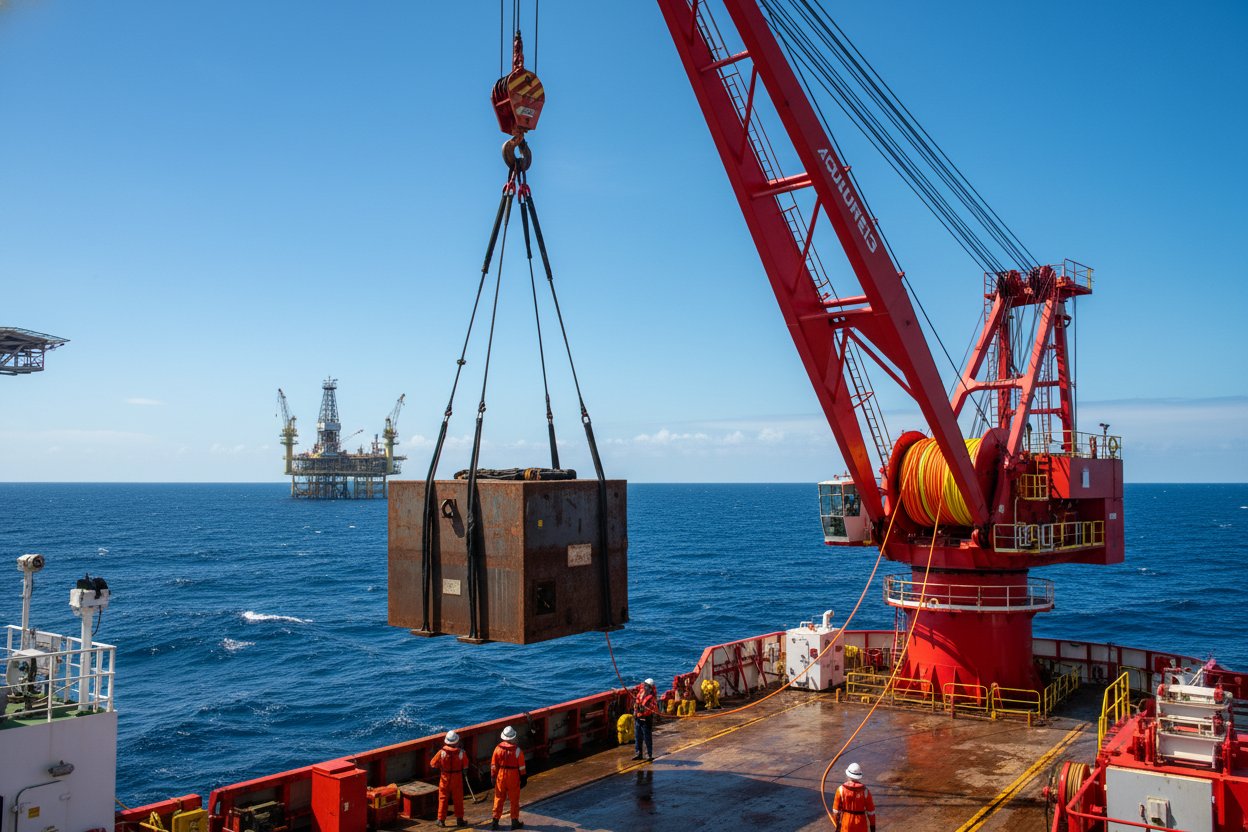
All these advantages make synthetics a highly intelligent choice. However, optimising their performance often depends on meticulously dialling in the exact specifications for your unique application.
Customising Loading Rope Specifications for Optimal Marine Crane Performance
Given the clear advantages of synthetic rope for heavy lifting, precisely tailoring these ropes to your specific marine environment becomes paramount. This is akin to fitting a custom-made glove for a demanding task—everything operates more effectively when perfectly matched to the job. For marine cranes, where loads sway with the tide and saltwater relentlessly attacks every component, correctly specifying the loading rope ensures significantly smoother operations and minimises unexpected issues.
Begin with material selection, a critical element of any loading rope setup. Polyester excels in wet conditions because it retains its strength even after prolonged exposure to moisture, unlike some fibres that weaken when saturated. Complement this with diameter and length choices driven by your precise load capacity requirements; thicker ropes are needed for heavier hauls, and longer runs are essential for extended reaches on offshore rigs. Next, consider the rope's construction: a double braid, for instance, features an outer sheath over an inner core. This design provides remarkable flexibility, allowing the rope to bend smoothly around pulleys without kinking, much like a well-woven basket flexes under pressure without snapping.
Once the materials are determined, consider the reeving patterns—the specific way the rope threads through the crane's blocks and sheaves. Synthetics perform exceptionally well here because their slimmer profile, compared to bulky wire, facilitates tighter, more efficient spooling on drums. This translates directly into higher capacities; you can accommodate more wraps without crushing underlying layers, thereby increasing the amount of line available for extensive lifts. While calculating drum capacity involves standard mathematics—dividing the drum's circumference by the rope diameter and then multiplying by the number of layers—synthetics frequently allow for a 20-30% increase in line storage compared to steel equivalents, freeing up crucial space for larger operations.
Material Factors
Polyester for wet marine resilience; HMPE for ultra-low stretch in precise hoists.
Diameter & Length
Scale to match breaking strength requirements, ensuring safe working loads.
Braid Constructions
Double braid enhances flexibility for reeving; parallel core adds stability.
Drum Efficiency
Synthetics spool tighter, significantly increasing capacity for extended marine operations.
At iRopes, we elevate this customisation through our comprehensive OEM and ODM services, expertly crafting terminations such as spliced eyes or specified fittings that secure maximum strength. To ensure the perfect fit, explore our rope customization options, which cover factors like material, diameter, and accessories tailored to marine crane needs. Additionally, we provide critical accessories like thimbles to prevent chafing at bends. Our ISO 9001-certified process guarantees precision, ensuring that every metre meets your specific marine demands, from custom lengths to bespoke packaging options. What type of rope do cranes primarily utilise for hoisting these days? Modern setups increasingly favour synthetics for their superior control in dynamic lifts, generally reserving wire only for niche high-heat applications, such as near exhausts, where synthetics might soften.
Have you ever witnessed a poorly specified rope jam a drum mid-lift? Customisation effectively prevents such occurrences, but its efficacy is maximised only when paired with diligent, ongoing care to detect premature wear.
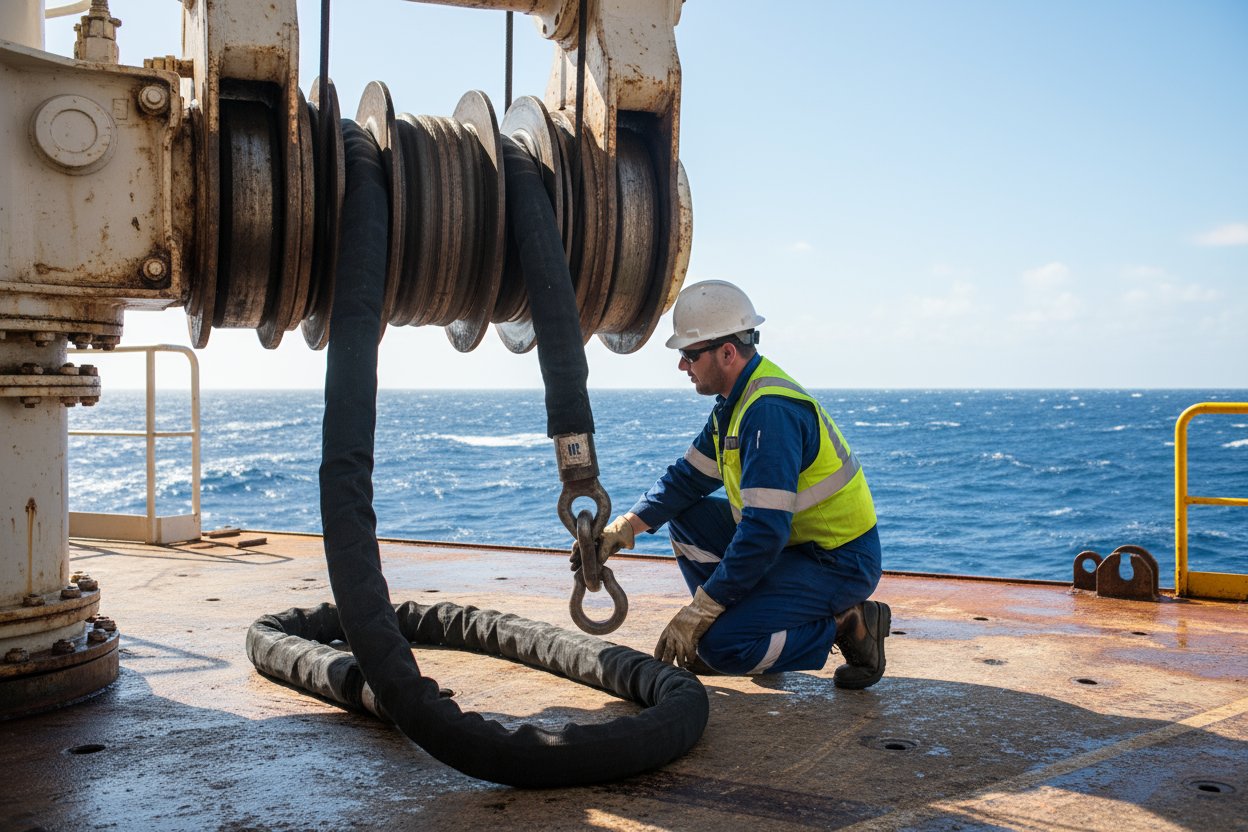
Maintenance Schedules and Safety Protocols for Synthetic Ropes in Marine Cranes
While customising your loading rope sets the foundation for success, maintaining its optimal condition amidst relentless salt spray and constant motion demands a rigorous maintenance routine. Consider it akin to regular health check-ups for a workhorse—neglecting them can swiftly transform a reliable tool into a major liability. For synthetic ropes used in marine cranes, which are perpetually exposed to waves, sun, and grit, these established protocols not only help identify issues early but also significantly extend the rope's operational life. Often, this means doubling its lifespan compared to heavier wire options that are prone to quicker corrosion.
Begin with comprehensive inspections, which form the cornerstone of any effective safety plan. Tailor your inspection schedule to the unique demands of the marine environment: conduct daily visual checks before every lift, weekly in-depth examinations, and full professional assessments every three months or after 500 operating hours, whichever occurs first. Focus intently on identifying signs of damage, such as external wear from rubbing against sharp edges, fraying where fibres begin to separate under tension, or fading colours that indicate UV degradation. In the persistently salty air, be vigilant for any stiffness that might signal chemical absorption from spills or seawater. I recall an instance where an alert rig operator detected a minor abrasion early; had it been overlooked, it could have resulted in a catastrophic snap during a critical hoist. These meticulous checks ensure the rope consistently operates within its working load limit, making heavy lifts predictable and safeguarding crew members.
- Visual Scan - Run your hands along the rope's entire length, feeling for any irregularities like lumps or soft spots, whilst visually inspecting for cuts or damage exceeding 10% of the diameter.
- Tension Test - Perform a controlled pull at 50% of the rope's capacity, carefully noting if any unusual stretch beyond the expected 1% occurs.
- Environmental Audit - Accurately document the rope's exposure hours to sun or water, and retire it if degradation indicates a 20% loss in strength.
Appropriate storage and handling are crucial for preventing damage before it even begins. Coil synthetics loosely and store them in shaded, dry locations, well away from deck areas where corrosive chemicals or fuels might spill. Prolonged exposure to UV rays can diminish strength by up to 30% over a year, but proper covering extends usability far beyond the corrosion-prone lifespan of wire ropes. When handling, always wear gloves to prevent skin oils from weakening the fibres, and meticulously avoid dragging the rope across rough surfaces. These preventative measures significantly highlight synthetics' inherent longevity, as they effectively resist the environmental stressors that compromise steel ropes, all without requiring constant greasing.
Adherence to safety standards further solidifies the case for synthetics. OSHA mandates documented inspections and load ratings, which synthetics readily meet due to their resilient nature—they won't 'bird-cage' like wire under shock loads, offering superior shock absorption during sudden sea surges. Certifications, such as our ISO 9001 at iRopes, reinforce this commitment, ensuring that every custom, IP-protected rope we ship worldwide provides robust reliability for wholesale marine fleets. Furthermore, their lighter weight inherently leads to fewer handling mishaps, thereby substantially reducing injury risks in ways that traditional setups simply cannot match. For more on enhancing safety through proper rope handling and inspections, check out our guide on ensuring safety with high-quality nylon line rope, which emphasizes certified solutions for marine applications.
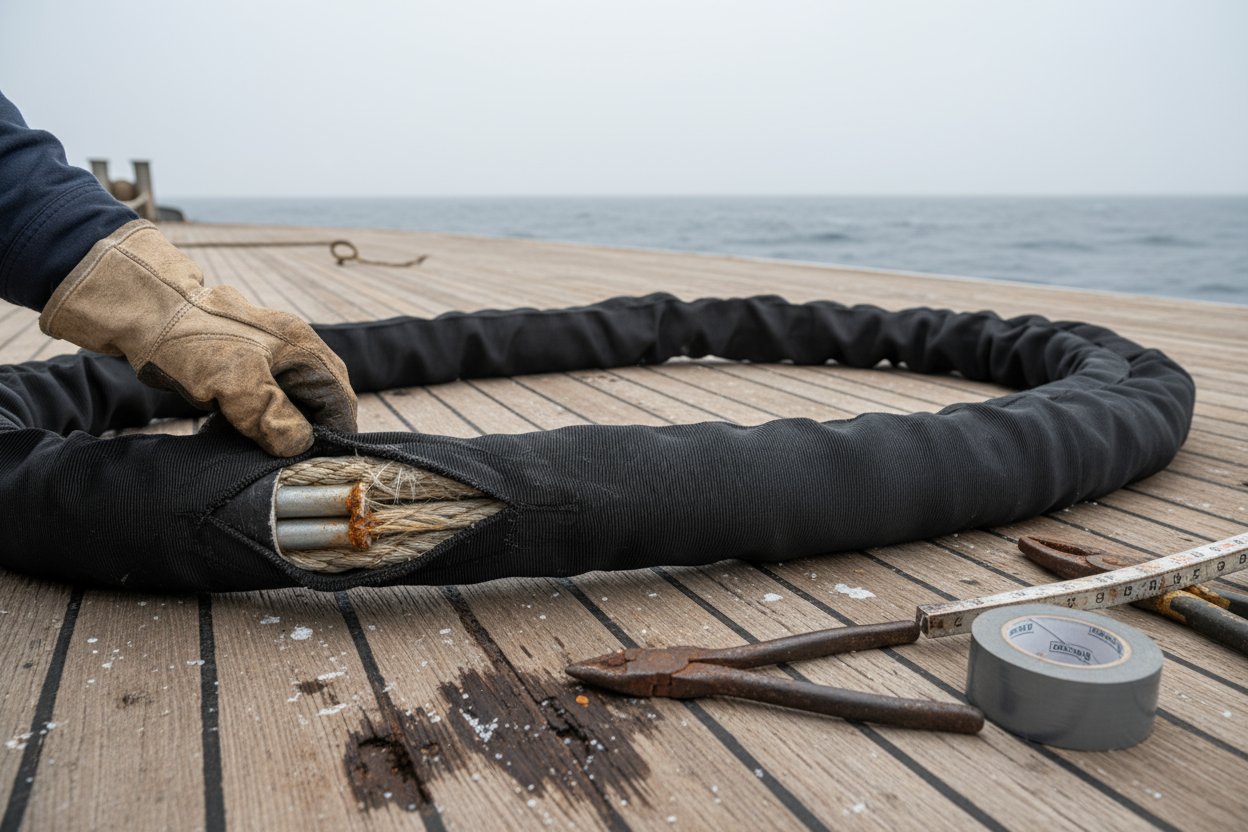
Teams that diligently adhere to these practices experience significantly fewer surprises. However, partnering with expert manufacturers can elevate reliability to an even greater level.
In the relentlessly demanding world of marine crane operations, synthetic ropes—such as HMPE and Polyester—consistently outperform traditional wire alternatives. They achieve this by offering up to 80% weight reduction, superior corrosion resistance, and minimal stretch for precise heavy lifts. As thoroughly explored, selecting the right rope for crane applications—considering specific constructions like double braid, appropriate reeving patterns, and drum capacity—is crucial for ensuring both efficiency and safety. Furthermore, iRopes' customised loading rope specifications, available through our OEM/ODM services, align perfectly with the unique challenges of the marine environment. Consistent maintenance, including tailored inspections and robust UV protection, significantly extends rope longevity, thereby minimising downtime and reducing risks in corrosive saltwater conditions.
Building upon these insights, partnering with experienced specialists can further optimise your rope setup for enhanced performance and unwavering compliance. To learn why comparing steel ropes to UHMWPE can lighten your projects by up to 80%, dive into our detailed analysis tailored for leading manufacturers.
Need Custom Rope for Crane Solutions? Connect with iRopes Today
Should you require personalised guidance on selecting the ideal rope for heavy lifting or a bespoke loading rope specifically tailored to your marine needs, please complete the inquiry form above. Our dedicated team at iRopes is ready to assist you with ISO-certified, innovative solutions.