Webbing sling tags secretly certify marine survival by embedding ASME B30.9-mandated data like rated capacities—delivering full vertical strength or up to 2x in basket hitches—ensuring your gear withstands saltwater strain and prevents failures that claim 73% of rigging accidents.
In 12 minutes, master webbing slings for unbreakable marine safety
- ✓ Explore iRopes' catalogue to pick nylon slings with 7% average stretch, absorbing 20% more wave shocks than polyester for yachting reliability.
- ✓ Decode certificates proving 1.25x proof-tested loads, slashing compliance risks by 40% under OSHA and ISO 9001 in harsh seas.
- ✓ Unpack tag details like choker capacity reductions up to 50%, enabling on-deck decisions that cut inspection time by 30% during spearfishing dives.
- ✓ Apply custom protocols to extend sling life 25% against UV and abrasion, turning routine checks into survival guarantees.
You might assume webbing slings endure marine chaos through brute material strength alone. Yet, hidden tags contradict that, encoding precise capacities that halve loads in tight chokers, potentially dooming a lift in swelling waves. What if ignoring this subtle certification turns your lifeline into a liability? Dive deeper to uncover how iRopes' traceable tags and certificates transform everyday rigging into a foolproof survival strategy.
Exploring the Webbing Sling Catalogue for Marine Applications
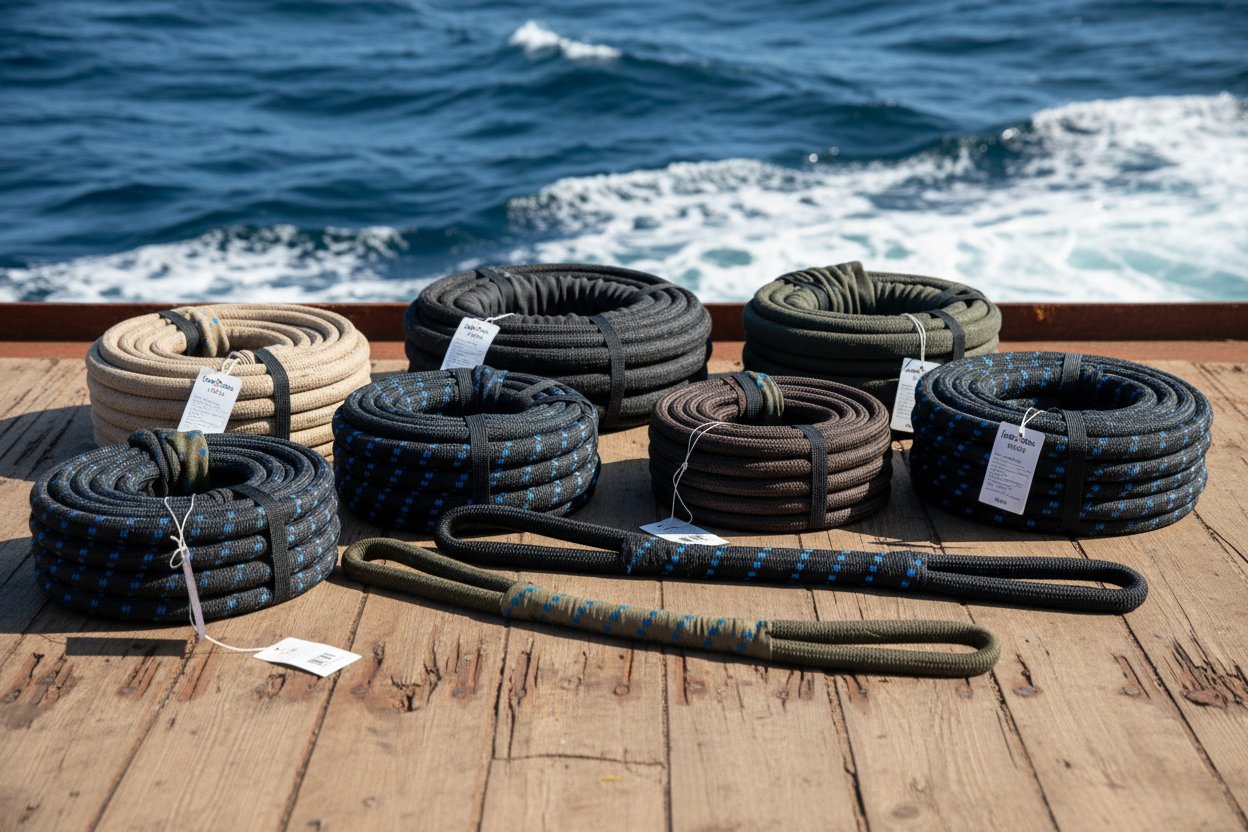
Imagine you're out on the open water, rigging your yacht for a long voyage or preparing gear for a spearfishing dive. Reliable equipment isn't just convenient; it's a lifeline. At iRopes, our webbing sling catalogue reflects years of fine-tuning products to handle the relentless demands of marine environments. We've curated a selection that goes beyond standard industrial needs, focusing on slings that withstand saltwater corrosion, UV exposure, and constant motion. Whether you're securing loads on a boat or lifting heavy anchors, these slings are designed to perform without fail.
Let's dive into what makes our catalogue stand out. It features specialised webbing slings tailored for yachting and spearfishing, where flexibility and strength meet the unpredictable sea. For instance, eye & eye slings offer secure attachment points for docking lines, while endless slings loop seamlessly around irregular loads like buoys. Reverse eye designs provide extra protection against chafing on sharp edges, common in marine hardware. Have you ever struggled with a sling that slips under wet conditions? Our catalogue addresses that with options that grip reliably, ensuring your operations run smoothly.
Nylon Webbing Slings
Flexible for Dynamic Loads
Stretch Properties
Nylon stretches 6-10% at working loads, absorbing shocks from waves.
Temperature Range
Handles up to 82°C (180°F), ideal for engine room tasks.
Chemical Resistance
Resists most acids but avoid alkalis; great for bilge cleaning.
Polyester Webbing Slings
Durable in Harsh Conditions
UV Resistance
Minimal degradation outdoors, perfect for deck exposure.
Low Stretch
Only 3-4% elongation, ensuring precise load control.
Abrasion Durability
Superior wear resistance against ropes and hulls.
Materials and Construction Details
Choosing the right material often boils down to your specific marine needs. Nylon slings, with their natural elasticity, excel in absorbing impacts from rough seas, much like a shock absorber on a bumpy road. Polyester, on the other hand, offers less stretch and better resistance to UV rays, making it a go-to for prolonged sun exposure. Our catalogue details ply counts—from single-ply for lightweight tasks to multi-ply for heavy lifts—each boosting strength without adding bulk. Custom options include abrasion-resistant coatings, essential for dragging along wet decks or rocky shores. Ply count directly influences capacity; for example, a double-ply sling might handle twice the load of a single, but always check the rated limits to stay safe.
Hardware and Accessories
No sling works in isolation; our catalogue pairs them with robust hardware like carbon steel hooks that resist rust in saltwater, or alloy thimbles that reinforce eyes against fraying. Protective sleeves and edge guards prevent cuts from barnacle-covered props, tailor-made for water operations. Think of these as the unsung heroes: a simple thimble can extend a sling's life by distributing stress evenly.
Traceability in Cataloguing
Every entry in the iRopes webbing sling catalogue includes serial numbers and batch codes, allowing you to trace a product's journey from our state-of-the-art facility to your vessel. This commitment ensures quality assurance, especially vital in marine use where a single fault could lead to disaster. By logging these details, you not only comply with standards but also track performance over time.
With such a varied selection at your fingertips, it's clear how the right sling can make all the difference on the water. To truly trust these tools in life-or-death moments, however, you need proof they meet the highest standards. That's where certification steps in.
Understanding the Webbing Sling Certificate: Assurance of Quality and Compliance
Building on the diverse options in our webbing sling catalogue, certification takes that trust to the next level, especially when you're out on the water where every piece of gear counts. A webbing sling certificate is essentially a detailed document that verifies your sling has undergone rigorous testing and meets industry benchmarks, acting as official proof that it's safe for use. What makes it so crucial? It provides evidence of compliance and testing to prevent potential failures that could turn disastrous at sea, giving you peace of mind in unpredictable marine settings.
Think of it like a passport for your equipment – it stamps approval from key regulatory bodies. Standards such as OSHA 1910.184 set broad guidelines for safe handling, while ASME B30.9 dives into specifics for synthetic slings, outlining load limits and inspection rules. ISO 9001, which iRopes proudly holds, ensures our entire manufacturing process emphasises consistent quality. These aren't just acronyms; they're frameworks born from real incidents, designed to protect workers and operators alike. In marine operations, where slings face constant moisture and strain, adhering to these standards means your gear won't let you down during a storm or heavy lift.
- Manufacturer Details — Includes iRopes' name, address, and contact info, so you know exactly who's accountable for the product's integrity.
- Proof Testing Records — Documents the sling's proof load test, typically at 1.25 to 2 times the working load limit, confirming it can handle stresses beyond normal use.
- Serial Numbers — Unique identifiers linking back to the production batch, enabling full traceability from raw materials to your deck.
- Material Specifications — Lists the exact composition, like polyester's low elongation for precise control, tailored for marine durability against saltwater and UV.
Verifying your webbing sling certificate isn't merely a box-ticking exercise; it's about slashing risks in environments where a single snap could mean losing gear overboard or worse. Harsh marine conditions accelerate wear—think relentless waves pounding against hulls or corrosive spray eating at fibres. By cross-checking the certificate against the sling's serial number, you confirm it's not a knockoff or outdated model. At iRopes, we prioritise transparent documentation, supplying certificates with every shipment and offering digital access for easy validation. This openness builds partnerships, letting you focus on the job rather than second-guessing your tools.
I've seen teams hesitate during dive prep because their paperwork was murky, wasting time that could have been spent safely rigging. Clear certification cuts through that fog, ensuring everything aligns with global standards. As vital as these documents are for overarching compliance, they pair perfectly with on-the-spot checks that keep operations running smoothly.

Decoding the Webbing Sling Tag: Instant Safety Information for Marine Survival
Now that you understand how certificates provide big-picture assurance, let's zoom in on the webbing sling tag – your go-to for split-second decisions when you're knee-deep in a rigging job on a rocking deck. These tags aren't just stickers; they're like a quick-reference lifeline stitched right onto the sling, delivering vital stats at a glance to keep you safe amid crashing waves and slippery surfaces. In marine work, where conditions can change rapidly, knowing your sling's limits without flipping through papers could save the day.
Picture this: you're prepping for a yacht lift at dawn, spray from the sea already soaking everything. A quick peek at the tag tells you if it's up to the task. But what exactly should you find there? The answer lies in standards like ASME B30.9, which mandate clear, durable labelling to prevent guesswork. This setup ensures every sling handles the unique stresses of water operations, from saltwater exposure to sudden jerks from swells.
- Manufacturer Name — Identifies iRopes or the maker, holding them accountable for the build quality in tough marine settings.
- Rated Capacities — Breaks down working load limits for vertical lifts (full strength), choker hitches (reduced by up to 50% for tight grips around loads like anchors), and basket configurations (doubled for cradling bulky gear but adjusted for angles).
- Material Type — Specifies nylon or polyester, helping you match it to conditions like UV-heavy decks or chemical-laden bilges.
- Serial Number — A unique code tying back to production records, crucial for tracing issues in a fleet of slings used across voyages.
Beyond the basics, colour coding makes identification foolproof, even when tags get battered by salt and sun. Systems often use stripes—say, yellow for 1-tonne capacity or green for 2 tonnes—aligned with WSTDA guidelines, so you spot the right sling quickly without deciphering faded print. Warnings etched nearby flag inspection needs or sling angles, a must in wet environments where ink might run, but laser-etched tags from iRopes hold firm. Ever had to squint at a blurry label mid-lift? These features cut that risk, boosting visibility for safer handling on the water.
But what happens if a tag fades or goes missing? The rule is simple and strict: remove that sling from service immediately. There are no exceptions, especially in survival scenarios where a failed lift could mean gear lost overboard or worse during a storm. Illegible tags signal potential hidden damage, turning a routine task into a hazard. Think of it as your first line of defence failing, forcing a full certificate review or replacement to avoid catastrophe.
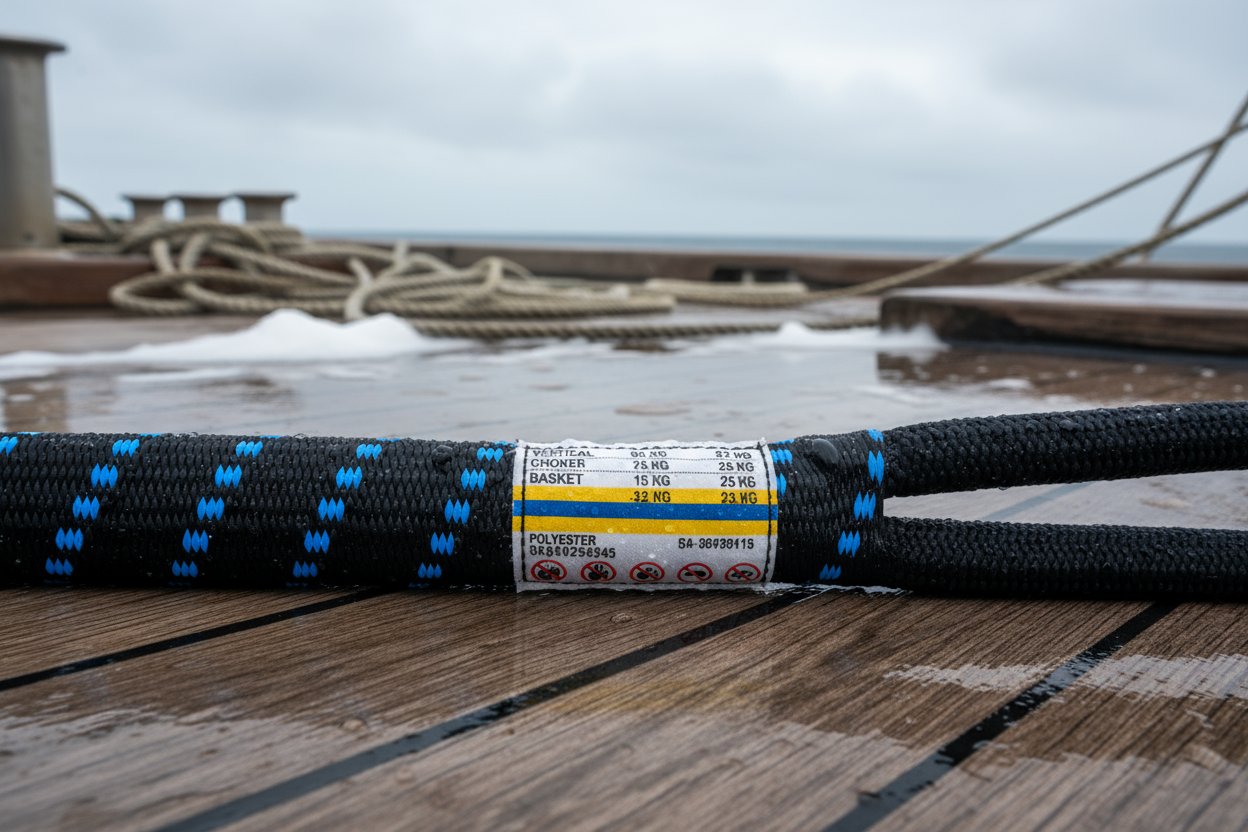
Grasping these webbing sling tag details empowers you to verify compliance on the fly. However, pairing them with routine checks and tailored designs takes reliability even further in the relentless marine world.
Safety Protocols and iRopes Customisation for Marine Webbing Slings
With tags giving you that quick safety snapshot on deck, it's time to layer on the habits that keep your slings battle-ready against the sea's constant assault. Routine inspections aren't optional in marine work; they're the backbone of preventing small issues from becoming big problems, like a frayed edge turning into a full failure mid-lift. At iRopes, we design our protocols around real-world marine challenges, ensuring your gear holds up when it matters most.
Inspection Frequencies and Criteria
Start simply: before every use, give your sling a once-over for obvious red flags, like cuts or knots that could weaken it under load. For frequent checks, aim for daily or after each heavy job, focusing on wear from repeated rigging. Periodic inspections, handled by a qualified expert every one to twelve months depending on usage intensity, dig deeper into hidden flaws. In marine settings, this means scanning for abrasion from barnacles or ropes rubbing against hulls, UV fading that stiffens fibres after long sun exposure, and chemical pitting from fuel spills or cleaning agents. Spot any of these? Remove the sling immediately—no second chances when lives and loads are on the line.
- Abrasion Marks — Frayed edges or shiny spots from dragging over wet surfaces, common in yacht mooring.
- UV Degradation — Faded colours or brittle texture after months on deck, potentially reducing strength.
- Chemical Exposure — Stains or softening from saltwater mixed with oils, signalling potential core damage.
Ever pulled a sling mid-operation because a quick check caught a hidden tear? It happened to me once during a spearfishing charter. Better safe than scrambling in a swell!
Environmental Factors and Protective Features
The ocean throws everything at your slings: biting cold below deck or scorching sun above, with saltwater accelerating rust on fittings if unprotected. Most slings hold steady from -40°C to 93°C (-40°F to 200°F), but prolonged heat above 82°C (180°F) can melt synthetics, while freezing temperatures make them stiff and prone to cracking. Saltwater demands coatings or sleeves to fend off corrosion; think of it as armour against the sea's slow grind. And don't overlook hitch angles, as they slash capacity dramatically. A vertical lift gets full strength, but choke it too tight (under 120 degrees), and you're down 50% or more. Basket hitches double up nicely for cradling gear, yet angles below 60 degrees from horizontal cut that advantage in half. Proper rigging keeps you compliant and safe, turning potential pitfalls into predictable performance.

iRopes OEM/ODM Services for Enhanced Marine Survival
Why settle for off-the-shelf when you can get slings built just for your vessel? Our OEM and ODM teams craft custom designs, weaving in reflective strips for low-light dives or glow elements for night operations, all while locking down your intellectual property (IP) from concept to shipment. We bake in certifications like ASME B30.9 right from the start, so your tailored sling arrives ready for the water's worst.
Best Practices for Storage and Maintenance
Keep slings coiled loosely in a dry, shaded spot away from direct sunlight or chemicals; hanging them prevents kinks that invite early wear. Rinse off salt after use with fresh water, then air-dry flat to avoid mildew. Traceability ties it all together: match your sling's serial from the webbing sling tag to the webbing sling certificate for logs that prove everything's up to spec, closing the loop on quality from factory to fleet.
Layering these steps with smart customisation not only extends your slings' life but fortifies the documentation that keeps operations compliant across every voyage.
In the demanding world of marine operations, the webbing sling catalogue from iRopes offers versatile options like eye & eye and endless designs in nylon and polyester, built for yachting and spearfishing with superior abrasion and UV resistance. Paired with a comprehensive webbing sling certificate, these slings meet OSHA, ASME B30.9, and ISO 9001 standards, detailing proof tests and traceability for uncompromised quality. The webbing sling tag delivers instant insights—rated capacities, material specs, and warnings—ensuring on-the-spot safety checks amid saltwater and swells. Through custom OEM/ODM services, rigorous inspections, and IP protection, iRopes fortifies traceability, turning these elements into lifelines for survival at sea. To avoid common pitfalls, explore marine slings failures that doom rigging ops and learn how to prevent them.
Armed with these insights, tailoring slings to your vessel's needs can elevate your operations further. For personalised guidance on cataloguing, certification, or custom designs, explore the inquiry form below.
Need Expert Advice on Custom Marine Slings?
If you're ready for bespoke solutions with full traceability and compliance, fill out the form above to connect with iRopes specialists who can refine your marine rigging setup.
