You can pinpoint the safe working load for any double‑braid or bungee cord in seconds: a 6 mm line → 260 kg WLL, 8 mm → 440 kg, and a 10 mm bungee cord safely carries 416 kg.
What you’ll gain – 4 min read
- ✓ Instantly calculate the Working Load Limit for any rope diameter without guessing.
- ✓ Reduce safety‑factor mistakes with our dynamic‑load adjustment guide.
- ✓ Choose the right Singapore supplier and shorten lead times.
- ✓ Customise colour, branding, and reflective features to match your exact project needs.
Most users simply apply a 1⁄5 safety factor to any rope spec, assuming it covers every scenario; however, dynamic loads can demand a more conservative approach. In this guide we reveal a clear, two‑step rating method that helps you right‑size rope selection and set safer margins. Keep reading for the exact tables, dynamic‑load adjustments, and how iRopes’ Singapore‑friendly custom service turns that insight into a ready‑to‑ship solution.
Understanding doublebraid nylon rope – Construction & Benefits
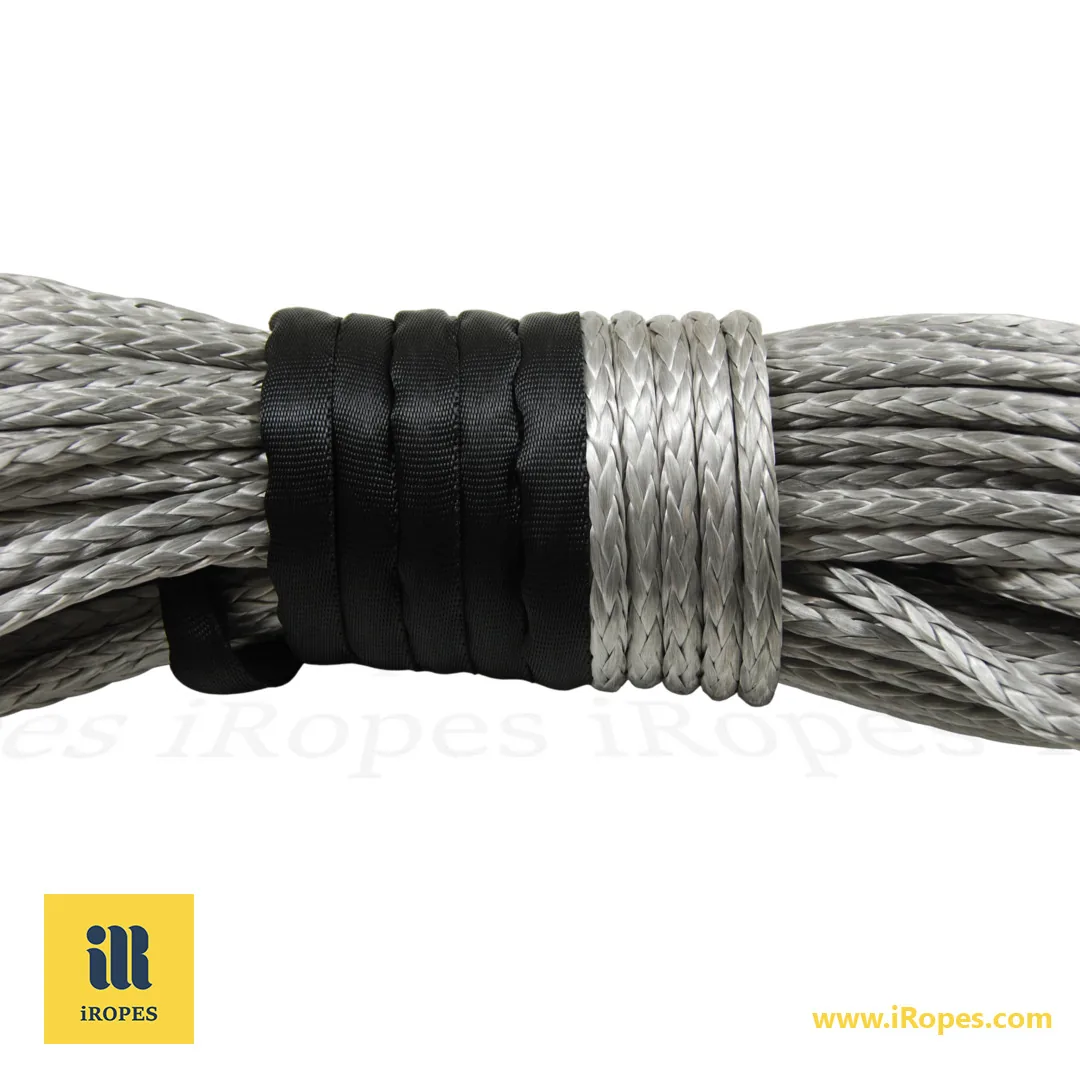
Before we dive into load calculations, it helps to know exactly what sets double‑braid rope apart from older twisted varieties. A double‑braid has a braided core (inner rope) covered by a braided sheath (outer cover). This core‑and‑cover architecture resists torque, so the line stays stable without the spiral twist you often feel when a twisted rope is hauled.

One of the most common questions on search engines is “what’s the difference between double‑braid and twisted rope?” The short answer: double‑braid shares load between a braided cover and a braided core for stable, torque‑free handling, while a twisted rope’s helical lay can tighten or unwind under sudden tension.
“When you need a rope that won’t twist during a winch pull, double‑braid is the only sensible choice.”
The practical benefits flow directly from that construction:
- Torque‑free handling – the braided cover and core resist rotation and help prevent twist under load.
- Enhanced shock absorption – the braided system spreads impact more evenly than a simple twisted lay.
- Efficient strength‑to‑diameter – the core‑and‑cover design achieves high tensile performance for its size.
These traits make double‑braid nylon rope a favourite across demanding sectors. In marine environments, the rope’s resistance to torsion keeps mooring lines steady despite wave action. Arborists rely on its shock‑absorbing nature when rigging, knowing the rope won’t snap back violently. Off‑road enthusiasts appreciate the smooth winch pull when recovering a stuck vehicle on a steep incline.
iRopes leverages this construction in its OEM and ODM programmes. Customers can specify material, diameter, colour, core type, accessories, or reflective elements, and our precision facilities produce a rope that matches those parameters. Because every batch is produced under ISO 9001 quality controls, you receive a product that meets performance expectations with consistent manufacturing standards.
Understanding how the braided core‑and‑cover design eliminates twist and improves shock absorption sets the stage for the next step: translating those specifications into safe, real‑world load capacities.
Load Capacity & Safety Factors for Nylon Ropes
Now that we understand why a double‑braid construction matters, the next logical step is to convert those physical characteristics into numbers you can rely on. Whether you are rigging a sailboat or setting up a rescue line, knowing the rope’s breaking strength and the safe working load is non‑negotiable.

The Minimum Breaking Strength (MBS) rises with diameter. Indicatively, a 6 mm double‑braid nylon rope offers around 1 300 kg of MBS, while a 20 mm line can approach 9 800 kg. Use these benchmarks to guide selection, then confirm final values against the manufacturer’s spec sheet for your exact product.
- Identify the rope diameter you plan to use.
- Locate the corresponding MBS in the spec sheet or table.
- Apply the standard safety factor: divide MBS by 5 to obtain the Working Load Limit (WLL).
| Diameter (mm) | Minimum Breaking Strength (kg) | Recommended Working Load Limit (kg) |
|---|---|---|
| 6 | 1 300 | 260 |
| 8 | 2 200 | 440 |
| 10 | 3 200 | 640 |
| 12 | 4 500 | 900 |
| 16 | 7 500 | 1 500 |
| 20 | 9 800 | 1 960 |
These numbers answer a common query: how much weight can a nylon rope hold? By applying the 1/5 safety factor, the table shows the maximum recommended working load for each size. For dynamic applications—such as with shock‑absorbing systems—the industry often halves that figure again because the rope experiences rapid load spikes. Always verify final ratings against the certified data for the exact rope you purchase.
Safety Factor Reminder
A 20 % rule of thumb (MBS ÷ 5) is widely used for static loads. When the rope must absorb shocks or sudden pulls, many guidelines advise a more conservative 10 % factor (MBS ÷ 10) to protect against impact overload.
Understanding the distinction between static and dynamic scenarios helps you choose the right rating for a bungee cord load rating later on. With these calculations in hand, you are ready to evaluate specific cord sizes and move toward selecting a trusted Singapore supplier who can deliver the exact specifications you need.
Bungee Cord Load Rating – How to Calculate Safe Working Loads
Armed with the basic rope calculations, it’s time to focus on cords that stretch and rebound – bungee cords. Their ability to absorb shock means the numbers you use for a static line don’t translate directly; a few extra variables come into play.

Four key factors dictate the bungee cord load rating you can safely rely on:
- Material – natural rubber, latex, or synthetic elastomers each have distinct elongation limits.
- Core type – a single‑strand elastic core versus a multi‑strand core changes tensile strength.
- Diameter – thicker cords carry more load, but the relationship isn’t linear.
- Construction – a braided outer sheath distributes stress more evenly than a simple wrap.
Common use cases include cargo restraint, marine lashings, canopy tensioning, and rescue shock attenuation – in short, the application of bungee rope anywhere controlled stretch improves safety and stability.
The calculation itself stays straightforward: take the cord’s Minimum Breaking Strength (MBS) and divide by 5 for a 20 % safety factor. That yields the Working Load Limit (WLL) for static conditions. For truly dynamic applications – where the cord snaps back quickly – many teams halve that figure again, effectively applying a 10 % factor (MBS ÷ 10).
| Diameter (mm) | Minimum Breaking Strength (kg) | WLL (static) (kg) | WLL (dynamic) (kg) |
|---|---|---|---|
| 8 | 1 300 | 260 | 130 |
| 10 | 2 080 | 416 | 208 |
| 12 | 3 100 | 620 | 310 |
| 15 | 4 800 | 960 | 480 |
These values are illustrative. Always check your specific cord’s certified MBS and apply the appropriate safety factor for the way it will be used. For a deeper comparison of bungee rope versus soft rope materials, see our Bungee vs Soft Rope Material guide.
Static Loads
When a cord holds a weight without rapid movement, the 1/5 safety factor (MBS ÷ 5) helps prevent permanent deformation.
Dynamic Loads
For jumps, drops or shock‑absorbing applications, halve the static WLL (MBS ÷ 10) to accommodate the extra impact energy.
Material Choice
Natural rubber offers higher elasticity but can degrade faster under UV; synthetic blends retain strength longer.
Core Design
Multi‑strand cores distribute stress and can raise the MBS compared with a single‑strand core of the same diameter.
Always verify the manufacturer’s certified MBS and apply the appropriate safety factor before installing a bungee cord in a high‑impact system.
With the rating chart in hand and a clear picture of static versus dynamic considerations, you can now match the right cord to the job. The next logical step is to partner with a trusted provider – a nylon rope supplier Singapore buyers can rely on for customised cores, colours and packaging, including specialized bungee elastic rope solutions that meet your project needs.
Choosing a nylon rope supplier Singapore – Why iRopes Stands Out
After you’ve worked out the exact load you need, the next decision is where to source the rope. Selecting a dependable partner reduces guess‑work around overseas shipping, documentation and lead times. iRopes pairs factory‑level quality with export‑ready logistics to Singapore, so you get the rope you designed, delivered on time.

We prepare complete customs paperwork and coordinate with established freight partners to keep orders moving. Our rope engineers provide prompt technical support via video, email or phone and can advise on the best core, cover and accessories for your application—without the delays of back‑and‑forth uncertainty.
Local Edge
Why Singapore matters
Rapid delivery
Expedited dispatch and reliable carriers shorten lead times for standard reels and custom builds to Singapore.
Streamlined customs
We handle export documentation and provide transparent landed‑cost quotes to simplify importation.
Technical support
Engineers offer remote consultations, test reports and installation guidance tailored to your site conditions.
iRopes Assurance
Quality you can trust
ISO 9001 certified
Every production stage follows audited processes, delivering repeatable tensile performance.
IP protection
Your colour schemes, logos and design nuances stay confidential throughout manufacturing.
Custom branding & finish
Choose colour, reflective or glow‑in‑the‑dark yarns, plus non‑branded or branded bags, boxes or cartons.
Ordering is straightforward: share your brief on diameter, core type and any special finishes, receive a detailed quote (typically within 24 hours), and confirm the batch size. Minimum order quantities start from about 100 m for bespoke colours and around 1 000 m for standard reels, giving you flexibility for prototypes or production runs. Lead times are clear—about 7‑10 business days for stock items and roughly 2‑3 weeks for custom builds, with express options available for urgent projects. After‑sales, our dedicated team supports warranty questions, replacements and performance queries promptly.
Tailored for You
From core selection to packaging, iRopes turns your specifications into a ready‑to‑ship rope solution that arrives on time and aligns with applicable standards.
With these advantages in place, the next logical step is to see how the same precision translates into real‑world applications, from marine moorings to high‑impact bungee systems.
Ready for a custom rope solution? Get expert advice below
You've seen how a doublebraid design delivers torque‑free handling and superior shock absorption, and how applying a 1/5 safety factor turns breaking strength into a reliable working load. With those calculations in hand, the bungee cord load rating becomes clear, letting you select the right size for dynamic applications such as the application of bungee rope in rescue or off‑road recovery. For more on bungee rope applications, refer to our Bungee vs Soft Rope guide. Pairing this knowledge with a trusted nylon rope supplier singapore like iRopes ensures timely delivery, ISO‑certified quality, and fully customised options to match your project.
For personalised guidance tailored to your exact requirements, simply complete the enquiry form above and our rope engineers will help you design the perfect solution.