Polypropylene rope is lightweight, buoyant, and water‑resistant – a practical solution construction teams trust for outdoor work worldwide.
≈ 4‑minute read – What you’ll gain
- ✓ Reduce material waste with custom‑cut lengths that match scaffold spans.
- ✓ Lower crew fatigue: its low density (≈0.91 g/cm³) makes handling easier than many alternatives.
- ✓ Extend outdoor service life – UV‑treated options can last up to 10 years with proper care.
- ✓ Rely on quality – ISO 9001‑certified manufacturing underpins consistent, traceable production.
You’ve probably been using generic, heavy‑duty ropes on every site, assuming they’re the safest bet. What most foremen don’t realise is that a purpose‑built polypropylene rope, tailored to your project’s load and visibility needs, can reduce handling time and cut replacement costs – all while floating if it drops into a trench. In the sections ahead we’ll reveal the specifications and custom‑branding options that turn this modest line into a reliable productivity boost.
Polypropylene Rope Outdoors: Essential Overview for Construction Applications
When you step onto a bustling construction site, the first thing you might notice is the humble rope stretched between scaffolding beams or coiled beside a temporary barrier. That rope is often polypropylene, a synthetic material prized for its lightweight nature and resistance to water. In outdoor construction, polypropylene rope outdoors offers a balance of durability and ease of handling that makes it a go‑to choice for many contractors.

Understanding why this material matters starts with its composition. Polypropylene fibres are extruded from a thermoplastic polymer, then twisted or braided into a rope that resists rot, mildew and most chemicals you might encounter on a job‑site. Its density is lower than water (≈0.91 g/cm³), so the rope floats – a handy trait when work takes place near ponds, drainage channels or marine docks.
- Definition & composition – Made from extruded polypropylene filaments, the rope can be twisted or braided to suit load and handling requirements.
- Key physical properties – Low density, natural buoyancy, excellent water resistance, and a non‑absorbent surface that discourages rot and mildew.
- Typical construction scenarios – Used for temporary scaffolding ties, site hoisting lines, safety barriers, and securing materials on uneven terrain.
So, is polypropylene rope good for outdoor use? The short answer is yes, provided the task isn’t a critical load‑bearing operation. Its water‑resistant nature keeps the line reliable during rainstorms, while the floating quality prevents sinking if it slips into a drainage ditch. For tasks like anchoring tarps, marking site boundaries, or creating temporary hoist lines, the material’s cost‑effectiveness and ease of handling often outweigh its lower abrasion resistance compared with nylon or polyester.
For lines that won’t absorb moisture and can be deployed quickly on wet sites, polypropylene is a smart choice. Its light weight reduces crew fatigue, and its buoyancy adds a margin of safety in low‑lying work zones.
Armed with this basic understanding, you can now evaluate whether the rope’s strengths align with your project’s demands before moving on to the specific advantages that make polypropylene a favourite on construction sites.
Top Benefits of Using Polypropylene Rope in Outdoor Construction
Having established what makes polypropylene rope a sensible choice for site work, let’s now look at the concrete advantages that keep contractors reaching for it day after day.
Is polypropylene rope good for outdoor use? Yes, for many non‑critical tasks. It resists water, won’t rot in damp conditions, and stays buoyant if it drops into a trench or drainage channel. The material’s light weight also means crews can handle it with less fatigue, while the low cost keeps project budgets in check.
- Water resistance – the rope stays dry, resists mildew and can be left in rain without losing strength.
- Lightweight and floating – its density is lower than water, so it floats and is easy to transport around the site.
- Cost‑effectiveness and customisation – bulk pricing is economical and iRopes can tailor diameter, colour and length or add reflective elements to match project branding.

UV‑treated polypropylene can last up to 10 years outdoors, but untreated rope may degrade noticeably within months of direct sunlight.
While these benefits address most routine tasks, the next section will explore the material’s limitations—such as UV degradation and lower abrasion resistance—so you can decide when a different rope type might be safer.
Limitations and Safety Considerations
While the advantages of polypropylene rope outdoors have shown why many contractors reach for it, the material also carries constraints that dictate safe handling on a construction site.
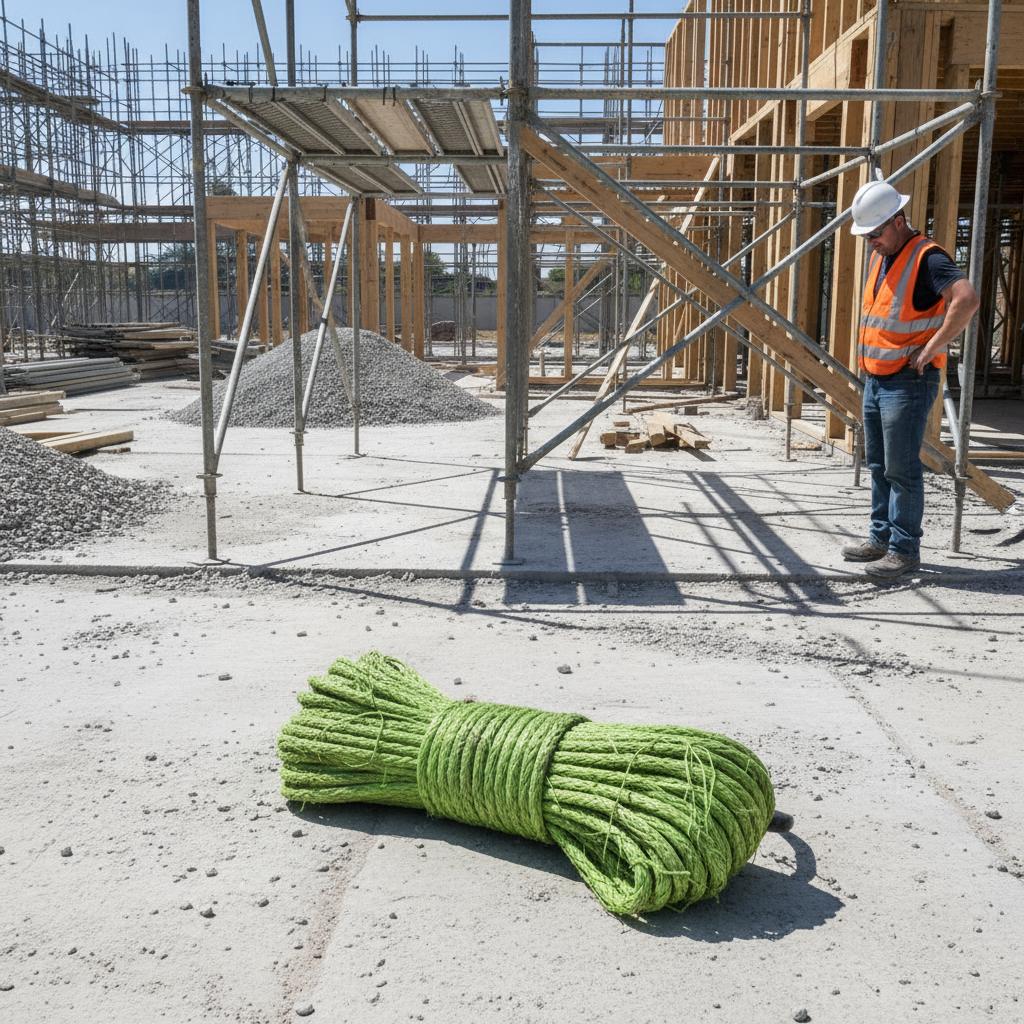
Does polypropylene rope degrade in sunlight? Yes – the polymer chains break down faster than those in polyester or nylon, so a rope left in direct sun can lose a noticeable portion of its strength within a few months. If you choose a UV‑treated variant, the outdoor lifespan can extend to around ten years, whereas untreated rope may become unsuitable for demanding use after a season of exposure.
Strength and abrasion limits are the next practical hurdle. A 1/4‑inch (6 mm) polypropylene line typically offers a breaking strength of roughly 1 250 lb, which is adequate for light‑duty hoisting but lower than comparable nylon or polyester ropes. Moreover, the material’s surface resists abrasion less effectively, making it unsuitable for rough edges, sharp‑edged scaffolding, or continuous rubbing against concrete.
Temperature sensitivity also shapes safe use. In very cold conditions the rope can stiffen and become brittle, increasing the risk of sudden failure under load. Conversely, extreme heat softens the fibres, reducing the Working Load Limit (WLL) and demanding a larger safety factor.
Safety Checklist
• Inspect the rope before each use – look for fading, fraying or stiff sections.
• Prefer UV‑treated rope for any installation expected to stay outdoors longer than three months.
• Match the rope’s diameter to the required Working Load Limit; as a guide, never exceed 20 % of the breaking strength when a 5:1 safety factor applies.
• Store coils in a shaded, dry area to minimise sunlight and moisture exposure.
• Avoid using polypropylene on high‑abrasion surfaces or in very cold conditions unless a more suitable material is selected.
Key Takeaway
UV protection, proper load rating, and temperature‑aware storage are essential for keeping polypropylene rope safe on outdoor construction sites.
Understanding these limitations equips you to select the right construction‑type rope, diameter and colour while also deciding whether UV‑treated or alternative fibres are a better fit. The next step is to explore how customised solutions can bridge the gap between performance needs and safety requirements.
Choosing the Right Polypropylene Rope and Custom Solutions for Construction Projects
Now that you understand the material’s limits, the next decision is selecting the construction type that fits your site workflow. A twisted rope is essentially three‑strand yarn wrapped together; it’s inexpensive, easy to splice, and works well for temporary hoist lines or barrier ties. Braided rope—whether diamond, solid or hollow braid—offers a smoother surface, often higher tensile strength and lower stretch than nylon, making it the go‑to choice for longer spans or applications where the line will be moved repeatedly.

Beyond the basic construction, diameter, length and colour directly affect safety and site efficiency. A 10 mm (3/8‑inch) line typically delivers a breaking strength around 2 500 lb, giving a safe working load limit (WLL) of roughly 500 lb when a 5‑factor safety is applied. For high‑visibility zones—such as around machinery or pedestrian traffic—bright orange or neon yellow improves visual detection, while darker hues can blend with architectural aesthetics when branding is required.
Twisted
Three‑strand twist, cost‑effective, easy to splice, suitable for light‑duty hoisting and barriers.
Advantages
Quick to unwind, lower bulk, works well with standard eye splices.
Braided
Diamond or solid braid, higher tensile strength, smoother surface reduces chafe.
Advantages
Better load distribution, low stretch compared with nylon, ideal for longer spans or repeated cycles.
iRopes turns these choices into a tailor‑made solution. Our OEM/ODM platform lets you add UV‑stabilising compounds that extend the outdoor lifespan to ten years, embed reflective elements for night‑site visibility, and attach accessories such as thimbles, eye splices or chafe guards. We offer custom colours and tracers, non‑branded or customer‑branded packaging (bags, colour boxes, or cartons), and dedicated IP protection throughout development. Backed by ISO 9001‑certified manufacturing, competitive pricing, and timely palletised shipping worldwide, we help wholesale partners align performance, safety and brand identity.
Specification Checklist
Key steps before ordering
Certification
Confirm ISO 9001 compliance and any required certifications or compliance standards for your market.
WLL Calculation
Divide the rope’s breaking strength by a safety factor (typically 5) to derive the safe working load.
Custom Length
Order coils that match the exact span of your scaffold or hoist line to minimise waste.
Maintenance Tips
Extending rope life on site
Coil on Pallets
Store rope on flat pallets to keep it off the ground and protect it from moisture.
Shade & Ventilation
Place coils under a canopy or in a ventilated shed to limit UV exposure.
Avoid Harsh Chemicals
Rinse off contaminants. Polypropylene resists most common chemicals and petroleum products, but avoid harsh solvents and strong oxidisers.
By matching the construction style, sizing and colour to your project’s demands, and then leveraging iRopes’ custom‑treatment options, you create a rope system that is both safe and recognisable on any construction site.
Need a customised rope solution for your construction site?
If you’d like personalised advice on selecting the right rope for your project, simply fill out the form above and our iRopes specialists will get back to you.
The article has shown how polypropylene rope outdoors combines water resistance, buoyancy and low weight to simplify temporary scaffolding, hoist lines and site barriers, while also highlighting UV degradation, strength limits and temperature sensitivity that demand careful selection. By choosing the appropriate construction type, diameter, colour and optional UV‑treated or reflective finishes, contractors can achieve a safe, cost‑effective solution that aligns with branding and ISO 9001 quality standards. iRopes’ OEM/ODM capabilities let you customise length, core, accessories and packaging to fit any wholesale construction project, with dedicated IP protection and timely global delivery.
