Get ropes up to 15× stronger than steel per kilogram while retaining a soft hand feel—backed by ISO 9001 quality and prompt, worldwide delivery.
What you’ll gain – 2 min read
- ✓ Up to 15× strength‑to‑weight with UHMWPE, significantly reducing system weight.
- ✓ Soft‑hand nylon or polyester options help reduce handling fatigue.
- ✓ OEM/ODM workflow streamlines development while protecting your IP.
- ✓ ISO 9001 quality management underpins consistent, reliable production.
Everyone assumes steel is the ultimate strong material, but synthetic fibres like UHMWPE deliver up to 15 times the strength‑to‑weight ratio while staying feather‑light. As a leading rope maker in China, iRopes engineers strong types of rope from UHMWPE, Technora™, Kevlar™, Vectran™, polyamide (nylon), and polyester, along with advanced coating options—showcasing the quality of ‘Made in China’. This guide explains how to keep that power soft enough for a comfortable grip, and how to trade bulk for performance without sacrificing safety. Keep reading to discover the fibre families that deliver ‘strong yet gentle’ performance and how to customise them for your niche.
strong types of rope – exploring high‑performance synthetic fibres
Building on the demand for ropes that can bear extreme loads, we now dive into the fibres that make such performance possible. Understanding these strong types of rope starts with the material itself, because the fibre determines everything from tensile strength to handling characteristics.

Among the premium fibres, UHMWPE (marketed as Dyneema® or Spectra®) tops the chart with a tensile strength that can reach ≈ 15 times that of steel when compared weight‑for‑weight. Kevlar™ follows, offering very high tensile strength and minimal stretch, making it ideal for cut‑resistant, heat‑tolerant lines. Technora™ adds superior heat resistance while retaining high strength, and Vectran™ brings excellent creep resistance and low elongation. These fibres are markedly lighter than steel; notably, UHMWPE’s specific gravity is below 1.0, so it can float.
According to Marlow Ropes, UHMWPE (Dyneema) offers the highest strength‑to‑weight ratio of any commercial fibre, delivering up to 15 times the strength of steel at a fraction of the mass.
When we compare these fibres side by side, a few patterns emerge. UHMWPE and Kevlar both exhibit breaking loads that dwarf traditional nylon or polyester, yet UHMWPE is substantially lighter than Kevlar, giving it the best weight‑to‑strength ratio. Technora’s heat resistance makes it a favourite in hot, abrasive environments, while Vectran’s low creep is prized for long‑term, precision load holding in sailing and industrial control lines. Industry usage typically aligns with these traits: Dyneema for offshore winches and lightweight moorings, Kevlar for heat‑ and cut‑resistant rescue lines, Technora for high‑temperature environments, and Vectran for continuous‑load applications such as sailing rigs.
- Natural fibres – Manila, cotton, sisal – low cost, limited tensile strength.
- Classic synthetics – Nylon, polyester, polypropylene – versatile, moderate strength.
- UHMWPE (Dyneema/Spectra) – Highest strength‑to‑weight, excellent overall performance.
- Kevlar™ – Very high tensile strength, low stretch, used in heat‑ and cut‑resistant ropes.
- Technora™ – High heat tolerance, strong fatigue performance, suited for demanding industrial use.
- Vectran™ – Low creep, high modulus, ideal for long‑duration, precision‑load applications.
iRopes sources each fibre from vetted manufacturers, and our ISO 9001‑backed quality checks span raw‑material inspection through to final tensile‑strength testing. The result is a rope that matches its specification and stands up to the environments you work in.
With the fibre fundamentals covered, the next step is to explore how these high‑strength materials can be engineered for a softer hand feel without compromising load capacity.
soft strong rope – balancing durability with a gentle hand feel
After examining the ultra‑light fibres, the next question is how those high‑strength materials can feel pleasant in the hand. The answer lies in pairing nylon or polyester with the right construction, so you get a rope that pulls hard when needed but still slides smoothly through gloves.
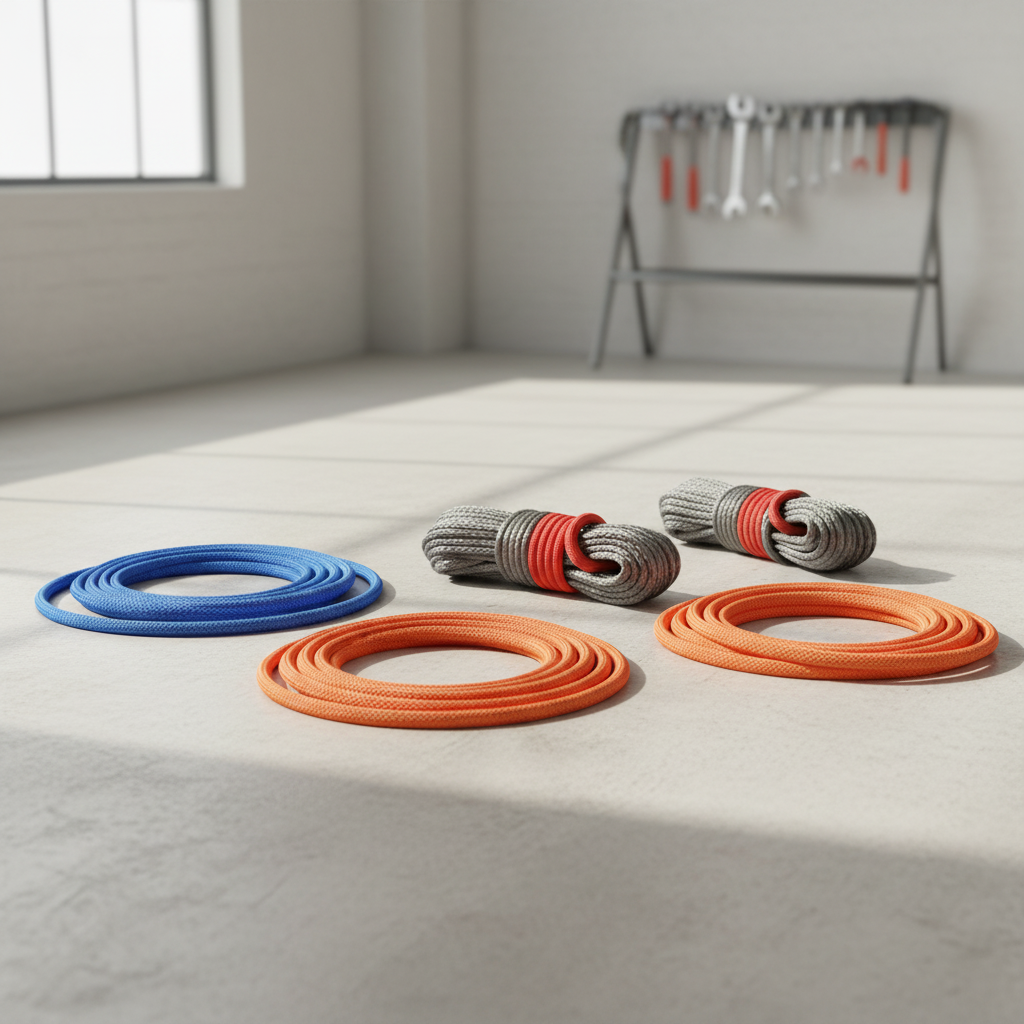
Both nylon and polyester are classic synthetic ropes, yet they behave differently. Nylon typically stretches around 18–25 % under load (depending on construction), which absorbs shock and gives that “cushy” sensation climbers value. Polyester, on the other hand, elongates roughly 12–15 %, offering a firmer line that still feels smooth because the fibres can be tightly braided. Neither material sacrifices capability; each delivers high performance when correctly specified for the job.
When users ask, “What is a soft strong rope?” the short answer is a rope that combines high tensile capacity with controlled elongation—either shock‑absorbing for dynamic use (like climbing) or low‑stretch for static tasks (like decorative rigging). The key points are:
- Dynamic performance – higher stretch (nylon) to cushion sudden loads.
- Static performance – lower stretch (polyester) for precise positioning.
- Wet performance – nylon retains about 85–90 % of dry strength; polyester retains ~100 %.
Those characteristics translate into clear use cases. In climbing, the forgiving give of nylon reduces impact forces during a fall. Rescue teams often prefer low‑stretch polyester when they need predictable lifting distances. Even interior designers choose soft strong rope for decorative lighting or art installations, where a gentle hand feel matters as much as visual appeal.
Coating options
A protective sheath can enhance softness while shielding the rope from abrasion, UV, and chemicals. PVC or polyurethane jackets provide a cushioned, water‑resistant barrier. Woven polyester covers add a sleek finish that feels smooth in the hand. Reflective or glow‑in‑the‑dark tracers improve visibility in low‑light environments and add a slight padding effect, making the rope even more pleasant to handle.
Choosing the right combination of fibre and coating is straightforward: if you need shock absorption, reach for nylon with a PVC or polyurethane jacket; for a firm, low‑stretch line, pair polyester with a durable polyester cover; and when visibility matters, add reflective or glow‑in‑the‑dark tracers to either base material. iRopes can tailor the exact mix to your branding, colour palette, and performance targets, ensuring the final product feels as soft as it is strong.
fiber rope types – custom solutions and OEM/ODM advantages
After learning how high‑performance fibres can be softened for a pleasant hand feel, the next logical step is to see how those fibres are turned into a rope that matches your exact requirements. iRopes treats every specification as a design brief, guiding you from raw material to finished coil.

Our workflow starts with material selection—you pick the fibre that best fits load, stretch, and environmental needs. Next, you define the diameter and length, which influence handling and storage. We then decide on a core type (solid, hollow or parallel‑core) and strand count, tailoring flexibility and redundancy. Finally, branding elements such as colour, logo imprint, or custom packaging are applied, ensuring the rope arrives as a true extension of your brand.
The most common query at this stage is “Which rope is strongest?” In short, the answer depends on what “strongest” means for you, but three fibre families consistently lead the pack:
Customization workflow
From fibre to finished rope
Material selection
Choose UHMWPE, Kevlar, Technora, Vectran, polyamide (nylon) or polyester based on tensile strength and environment.
Diameter & length
Specify exact dimensions to balance weight, handling and required working load limit.
Core & strand count
Decide between solid, hollow or parallel‑core constructions and the number of strands for redundancy.
Strongest rope options
Top performers by fibre
UHMWPE (Dyneema)
Highest strength‑to‑weight ratio; up to 15 × steel when compared weight‑for‑weight.
Kevlar™
Very high tensile strength with minimal stretch; suitable for heat‑and cut‑resistant lines.
Nylon
Strongest common synthetic for dynamic loads, offering excellent shock absorption.
Beyond the core fibre, iRopes can add specialised features that turn a functional rope into a safety or branding asset. Reflective or glow‑in‑the‑dark strands increase visibility for night‑time work, while chemical‑and UV‑resistant coatings extend service life. If you prefer a discreet look, we offer non‑branded or customer‑branded packaging options ranging from plain bags to custom‑printed cartons, with IP protection throughout the process.
Case study – UHMWPE mooring lines can reduce installation weight and speed set‑up compared with steel chain on offshore projects, while maintaining high breaking loads at small diameters.
These examples illustrate how iRopes blends fibre science with flexible engineering, delivering a rope that feels right in your hand while meeting tough performance criteria. If you’re ready to translate a specification into a tangible product, the next step is to explore how our OEM/ODM services can bring your concept to life.
Ready for a custom rope solution? Get expert advice below
Our team is ready to tailor a solution—just use the contact form above.
For anyone seeking a deeper dive into the strong types of rope covered here—from ultra‑light UHMWPE to heat‑resistant Technora—our ISO 9001‑backed sourcing and manufacturing in China deliver performance you can rely on.
If you’re after a soft strong rope that feels pleasant in the hand while delivering high load capacity, or need specialised fiber rope types with branding, coatings and IP‑protected finishes, simply fill out the form above and our specialists will help translate your specs into a perfect product.
