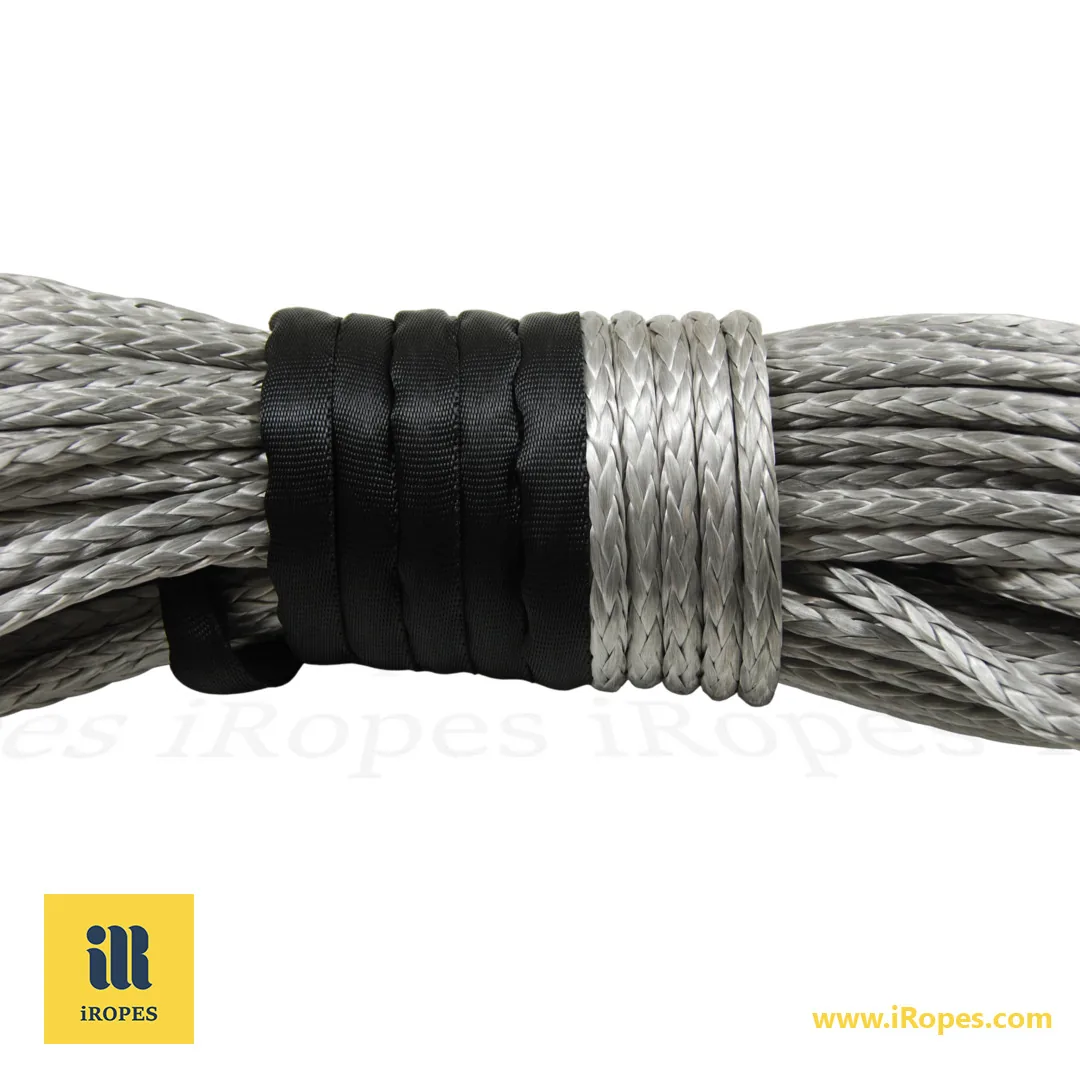
A 5/8‑in double‑braid arborist rope delivers ~11 000 lb breaking strength, giving a safe Working Load Limit of ≈2 200 lb — suitable for many large‑tree pulls when rigged correctly.
What you’ll gain in a 4‑minute skim
- ✓ Pinpoint the right rope diameter for your tree’s weight and avoid over‑spec spend.
- ✓ Speed up rig‑up using our quick Working Load Limit formula.
- ✓ Save money by matching the most cost‑effective strength tier without compromising safety.
- ✓ Unlock iRopes’ custom‑design workflow—colour, branding and IP protection—all to your specifications.
Many arborists assume any heavy‑duty rope will hold; however, low‑stretch lines provide far better control than dynamic ropes during pulling. If you keep using the wrong rope, you’re betting on stretch instead of safety, and the cost of a failure far outweighs the modest price difference. This guide walks you through rope types, strength calculations, top products, and custom solutions from iRopes to help you choose the strongest, most reliable arborist rope for pulling trees.
Understanding the arborist rope for pulling trees
After recognising that the right rope can mean the difference between a clean pull and a hazardous failure, it’s time to sort out the terminology. Knowing whether you need an arborist rope, a climbing rope or a rigging rope is the first step toward selecting a strong rope for pulling trees that matches the job’s demands.
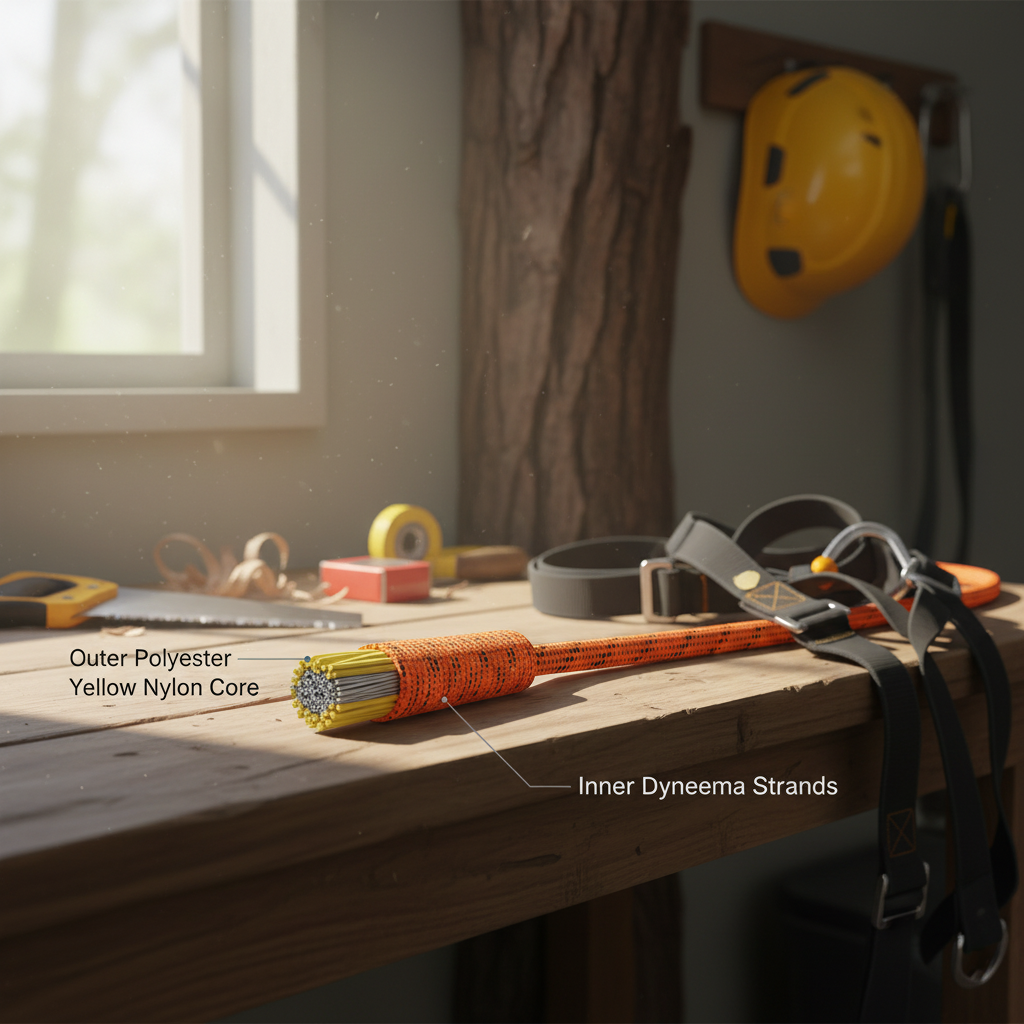
Here’s a quick rundown of the three most common categories you’ll encounter in a hardware catalogue:
- Arborist rope – a static, low‑stretch rope built for rigging and pulling, typically double‑braided with a tough outer mantle.
- Climbing rope – a dynamic rope that elongates up to 10 % to absorb a fall; ideal for personal ascent but not for heavy‑load pulling.
- Rigging rope – a generic term covering both static and semi‑static ropes used in industrial hoisting, often with a polished sheath for abrasion resistance.
What is the difference between climbing rope and arborist rope? In plain language, climbing rope is designed to stretch when you fall, protecting the climber, whereas arborist rope is engineered to stay almost the same length under load, giving you precise control when you’re hauling a trunk.
The material composition drives those behaviours. A polyester cover shields the rope from UV rays and bark abrasion, while a nylon core adds a modest amount of elasticity that softens shock loads. For the ultimate strength‑to‑weight ratio, some manufacturers blend Dyneema (UHMWPE) strands into the core; Dyneema is exceptionally light with a very high strength‑to‑weight ratio, but it can be more expensive.
“Switching from a dynamic climbing line to a double‑braid arborist rope made pulls smoother and reduced bark wear. A small change can save time on the job.” – Field note from a senior arborist
Why does the jargon matter? The term you choose guides the specifications you’ll check – diameter, Minimum Breaking Strength, and stretch percentage. If you search for a “strong rope for pulling trees” and end up on a dynamic climbing line, you risk exceeding the rope’s Working Load Limit because the stretch factor isn’t accounted for. By keeping the vocabulary straight, you can quickly filter for static, low‑stretch ropes that meet the required safety factor.
Now that the vocabulary is clear, you can move on to calculating the exact load capacity and comparing the market’s top‑rated options.
How to evaluate a strong rope for pulling trees
With the terminology sorted, the next step is to translate those names into numbers you can trust on the job. Knowing a rope’s breaking strength and the appropriate diameter lets you match the line to the tree’s weight without guessing.
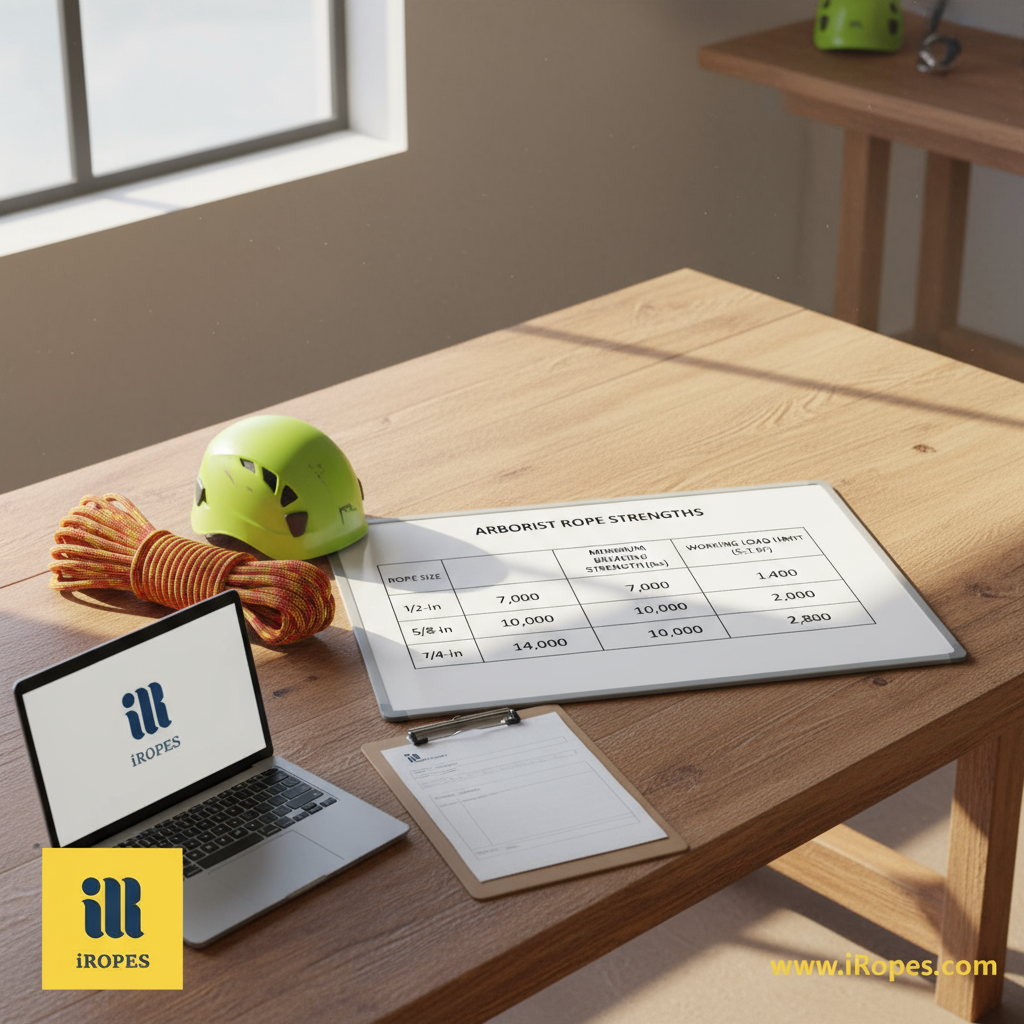
First, grab the rope’s Minimum Breaking Strength (MBS) – the load at which the fibres would snap. Then apply the industry‑standard 5 : 1 safety factor to arrive at the Working Load Limit (WLL). The formula is simple:
- Find the MBS for the chosen diameter (e.g., 7 300 lb for ½‑in).
- Divide that number by 5 to get the WLL (≈ 1 460 lb for ½‑in).
- Compare the WLL with the estimated tree weight plus a margin for dynamic forces.
How much weight can arborist rope hold? A ½‑in line offers an MBS of roughly 7 300 lb, a 5/8‑in line about 11 000 lb, and a ¾‑in line reaches 18 000 lb. After the 5 : 1 safety factor, their Working Load Limits are approximately 1 460 lb, 2 200 lb and 3 600 lb respectively.
What diameter rope should I use for tree pulling? For most medium‑to‑large trees, a 5/8‑in or ¾‑in double‑braid provides the best balance of strength and handling. A ½‑in line is suitable only for lighter loads under 2 000 lb.
Never rely on the rope’s MBS alone; always calculate the Working Load Limit using a minimum 5 : 1 safety factor to protect people and property, in line with ANSI A300.1 guidance and EN 1891‑1 where applicable.
Once you’ve matched diameter to load, the next logical step is to see how the leading commercial options stack up against those figures. The upcoming comparison table will highlight which brands actually deliver the numbers you just calculated, so you can pick the strongest rope for pulling without second‑guessing.
Finding the strongest rope for pulling large trees
Now that the safety calculations are clear, the next step is to see which products on the market actually meet those numbers. Below you’ll find a side‑by‑side look at the most popular commercial lines, followed by a quick guide to budgeting and a glimpse of how iRopes can tailor a solution just for you.

The table‑style grid below summarises three best‑selling models that consistently rank above 4.5 stars on major retailers. Each entry lists the nominal diameter, Minimum Breaking Strength, stretch percentage, typical price range, and overall rating.
Top rope models
What professionals buy
Samson Stable Braid
5/8‑in, MBS ≈ 11 000 lb, stretch ≈ 1.5 %, price US$120‑$150, rating 4.7.
Right Rope V‑HEX
¾‑in, MBS ≈ 18 000 lb, stretch ≈ 2 %, price US$220‑$260, rating 4.8.
Teufelberger Sirius
½‑in, MBS ≈ 7 300 lb, stretch ≈ 1 %, price US$45‑$55, rating 4.5.
Performance snapshot
Key specs at a glance
Strength
All three exceed the 5 : 1 safety factor for medium‑to‑large tree pulls.
Durability
Polyester mantles protect against UV and bark abrasion; nylon cores add shock absorption.
Value
Higher‑diameter models cost more and deliver higher MBS; stretch remains low depending on construction.
If none of the off‑the‑shelf options match your exact colour scheme or branding, iRopes can create a bespoke line. Their OEM/ODM service lets you pick the material blend, specify a diameter from ½‑in to 1‑in, choose high‑visibility hues, and add your logo or safety markings. All custom ropes are produced under ISO 9001 quality control and come with full IP protection, so your design stays exclusive. You can request custom‑coloured, branded ropes that meet the same tensile standards as commercial models. iRopes also offers non‑branded or customer‑branded packaging and can ship pallets directly to your location worldwide.
Custom colour & branding
Yes – iRopes offers custom‑coloured, branded ropes that meet the same tensile standards as commercial models. You can request a sample, approve the colour match, and have the finished roll shipped directly to your job site.
Budget tiers help you balance cost against performance. A budget‑grade ½‑in polyester bull rope typically sits under US$50 and delivers a Working Load Limit around 1 500 lb – suitable for small removals. Mid‑range 5/8‑in lines cost between US$120 and US$180 and give you a safe pull capacity of roughly 2 200 lb. Premium ¾‑in or custom‑diameter ropes start at US$250 and can handle over 3 500 lb WLL while offering low stretch and long service life.
When budgeting, remember that a higher price can include longer warranty periods and more robust construction, which reduces total cost of ownership for heavy‑duty tree‑pulling work.
Armed with the spec sheet, the custom‑rope option, and a clear sense of how price maps to performance, you can now choose the strongest rope for pulling large trees without guessing.
Safety checklist, accessories, and FAQs for tree pulling
Now that you’ve identified the strongest rope for pulling large trees, the next step is to make sure every piece of equipment and every routine check is ready for the job. Even the best arborist rope for pulling trees can fail if the rigging hardware is missing or the line has hidden wear.
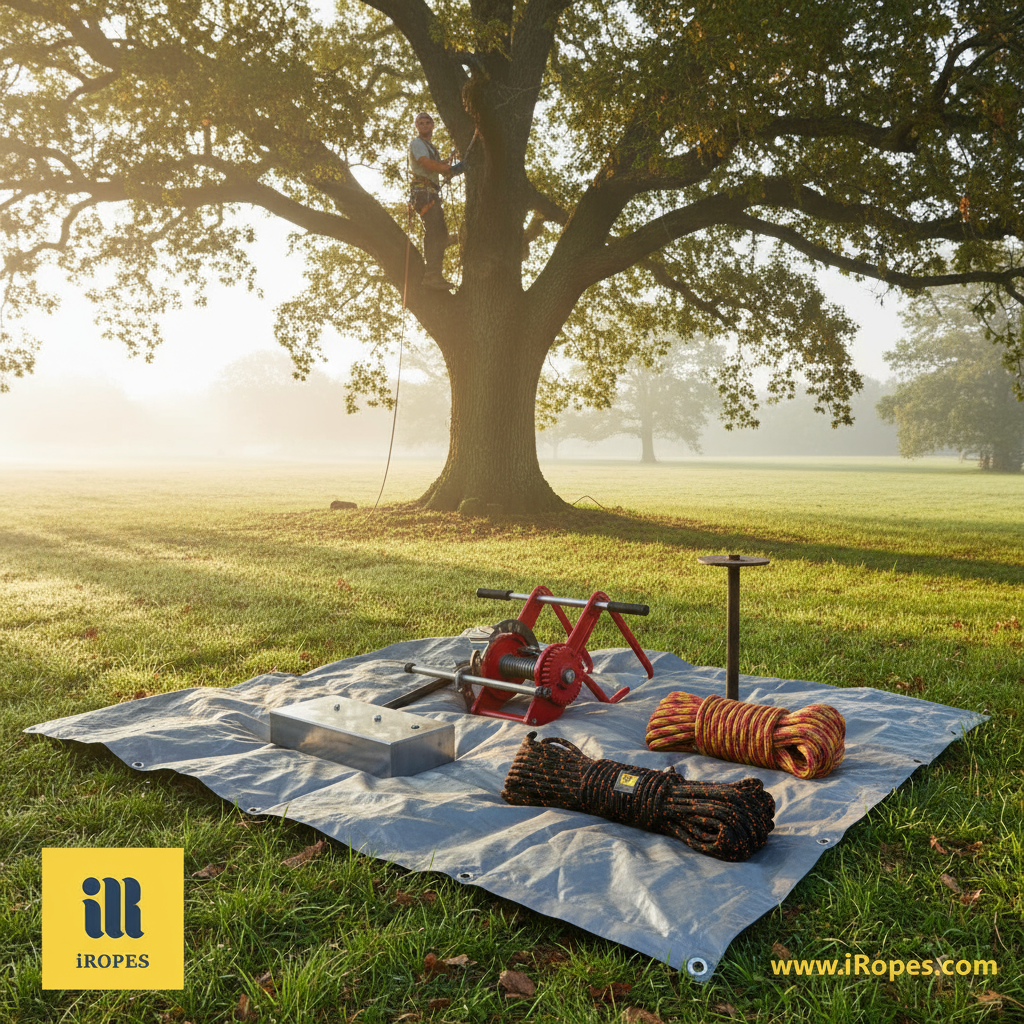
Below is a quick checklist of the hardware you’ll need before you even start un‑coiling the line.
- Rigging block – a heavy‑duty pulley that redirects force, reduces line friction and lets you change the pull angle without extra strain.
- Come‑along winch – a hand‑operated mechanical puller that gives precise control over tension, especially useful when the tree is still rooted.
- Anchor system – a secure ground stake, vehicle‑tie‑down, or tree‑anchor that can bear the calculated Working Load Limit plus a safety margin.
High‑visibility rope (bright yellow, orange or lime) should be part of the same kit; it makes the line easy to track through dense canopy and reduces the risk of accidental snagging.
Inspection and maintenance are just as critical as picking the right line. Before each job, run through these routine checks:
- Run your fingers along the entire length to feel for abrasions, cuts or broken strands.
- Verify that any splices or eye‑terminations are neat, tight and free of fraying.
- Look for UV‑induced fading or stiffening; a rope that has lost its original colour is often a sign of hidden degradation.
- Store the rope on a dry rack away from direct sunlight; a cool, dark environment preserves performance and tensile strength.
“A disciplined safety routine — from checking the block’s pin to feeling the rope for soft spots — can prevent near‑misses on heavy pulls. The gear matters, but habits matter most.” – Senior arborist, field note
Frequently asked questions
What is the best rope for pulling trees? The best choice is a low‑stretch, double‑braid polyester bull rope with a nylon core, sized between 5/8‑in and ¾‑in for most large‑tree pulls.
How much weight can arborist rope hold? A ½‑in line breaks around 7 300 lb, a 5/8‑in line near 11 000 lb and a ¾‑in line about 18 000 lb; applying a 5:1 safety factor gives safe working limits of roughly 1 460 lb, 2 200 lb and 3 600 lb respectively.
What is the difference between climbing rope and arborist rope? Climbing rope is dynamic and stretches up to 10 % to absorb falls, whereas arborist rope is static, stretching no more than 2 % for precise pulling and lowering.
What diameter rope should I use for tree pulling? For medium‑to‑large trees, a 5/8‑in or ¾‑in double‑braid offers the optimal mix of strength, handling and durability.
Can arborist rope be spliced? Some double‑braid and 12‑strand ropes can be eye‑spliced, while others are not splice‑friendly. Check the manufacturer’s specification or purchase pre‑spliced ends.
Does rope colour matter? Bright colours improve line‑of‑sight in dense foliage and help crew members avoid accidental contact, based on field experience.
What is the cheapest strong rope for pulling trees? Budget‑grade ½‑in polyester bull rope (around US$30‑$45) handles up to ~1 500 lb WLL; for larger loads, a mid‑range 5/8‑in line (US$120‑$150) is the most economical safe option.
Can I get a custom‑coloured, branded rope for my company? Yes – iRopes’ OEM/ODM service lets you specify diameter, material blend, high‑visibility colour and your logo while maintaining the same tensile standards as off‑the‑shelf models.
By now you’ve seen why choosing the right arborist rope for pulling trees matters, how to calculate the working load limit, and which commercial lines deliver the numbers you need. The guide also showed that a strong rope for pulling trees must combine low stretch, high MBS and the right diameter to stay safe on any job.
If you need the strongest rope for pulling large trunks or a bespoke solution, iRopes can design it to your exact specifications – from material blend to colour and branding. At iRopes, you'll find the best range of tree climbing rope for arborist and height safety. Use the form above to get a free quote and personalised advice.
Need a customised rope solution? Request a free quote
Fill out the form above and our rope specialists will provide you with tailored recommendations and pricing for the perfect rope for your arborist projects.