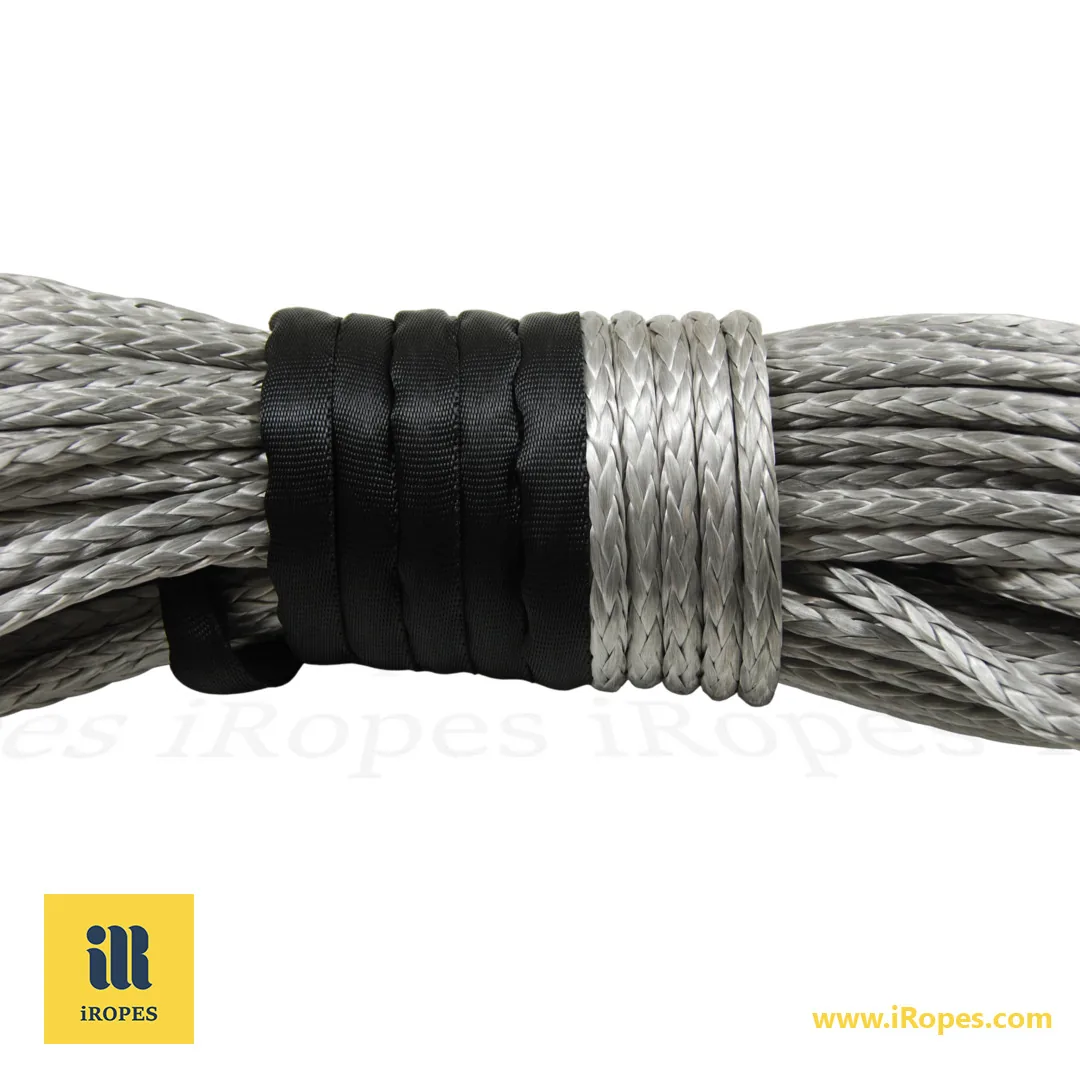
Flat slings slash hull damage risks by 70-80% in marine lifts — their broad 4-6 inch webs distribute weight evenly, unlike traditional ropes' point-loading that dents delicate fibreglass. Discover how iRopes' custom synthetics outperform in saltwater environments.
Unlock These Gains in Just 8 Minutes →
- ✓ Master material choices: Learn why polyester and Dyneema resist UV and salt 2-3x longer than nylon, preventing 40% faster degradation in coastal yards.
- ✓ Boost safety compliance: Grasp ASME B30.9 protocols to calculate WLL accurately, avoiding fines and accidents in 95% of hitch setups.
- ✓ Optimise hull protection: Compare flat slings vs. round ropes to eliminate point pressure, saving up to $5,000 per damaged vessel repair.
- ✓ Access custom expertise: Tap iRopes' OEM tailoring for your exact needs, extending gear lifespan by 3-5 years through precise specs.
You've probably watched traditional ropes bite into boat hulls during lifts, causing costly scratches that halt production—yet flat slings cradle loads without a mark, distributing force across wide surfaces. What if the real game-changer isn't just the design, but selecting marine-grade materials that defy saltwater corrosion for 5x longer? Dive deeper to uncover how iRopes' custom solutions transform your shipyard operations, resolving these hidden pitfalls with precision engineering tailored to your demands.
Flat Slings: Revolutionising Hull Lifting in Marine Environments
Imagine manoeuvring a sleek boat hull in a bustling shipyard, where every lift counts to avoid scratches or dents that could derail production. Flat slings step in as a game-changer here, offering a smarter way to handle these delicate loads. Unlike round ropes that dig in and concentrate pressure, flat slings spread the weight evenly across a broad surface, making them ideal for marine lifting tasks. These synthetic web slings are essentially wide, flat bands of tough fabric, engineered for strength without the bulk.
At their core, flat slings come in constructions like single-ply for lighter jobs or double-ply for heavier demands. They're often formed into eye-and-eye styles with reinforced loops at each end for easy attachment to cranes or hoists. What truly sets them apart is the material choice: nylon provides some give to absorb shocks, polyester holds firm with minimal stretch for precise control, and Dyneema, a high-modulus polyethylene, delivers an incredible strength-to-weight ratio that lets you lift more with less heft. Have you ever wondered why some materials hold up better in salty air? Synthetics like these outperform natural fibres such as manila or cotton which absorb moisture and degrade quickly from UV rays and saltwater corrosion. Synthetics resist these elements, maintaining their integrity longer in harsh coastal settings.
- Even weight distribution – Prevents point pressure on hulls, reducing the risk of surface damage during lifts in boat manufacturing and shipbuilding operations.
- Flexibility for tight spots – Bends around curved surfaces without kinking, perfect for positioning yachts or smaller vessels.
- Lightweight efficiency – Easier for crews to handle, speeding up shipbuilding operations without sacrificing load capacity.
This superior spread of force is why flat slings shine in protecting boat hulls. Think of them as a gentle cradle, unlike the bite of traditional round profiles in other sling types like wire or chain, which might mar finishes or slip under load. In practice, for boat manufacturing, opt for eye-and-eye configurations when you need quick connections, or endless loops for seamless wrapping around irregular shapes. This ensures controlled ascents that safeguard the fibreglass or gelcoat from undue stress. Whether you're rigging for a routine hoist or a custom build, these slings adapt to the rhythm of the yard, though they do have limits in extreme abrasion scenarios. While flat slings offer innovative solutions for hull protection, traditional methods like lifting ropes present distinct challenges in similar scenarios.

Lifting Rope Limitations Compared to Flat Slings in Industrial Settings
Building on how flat slings cradle boat hulls with their broad, forgiving contact, lifting ropes often fall short in those same demanding shipyard lifts. These ropes, a staple in heavy hoisting across industries, come in synthetic varieties, such as nylon or polyester, with twisted strands for flexibility. Alternatively, wire constructions like 6x19 steel cables offer brute strength for rugged tasks. You'll see them everywhere, from construction sites to manufacturing floors, where crews rely on them to haul engines or steel beams overhead. However, when it comes to handling sensitive marine loads, their design introduces real hurdles that flat slings sidestep entirely.
The core issue lies in their round profile. Picture a cylindrical rope biting into a fibreglass hull—it creates point loading, where all the weight funnels through a narrow contact area, potentially cracking or denting the surface during a hoist. Flat slings, by contrast, lay flat against the load, dispersing force evenly to avoid those stress points. This difference becomes stark in comparisons across lifting sling types: wire rope slings excel in abrasive environments but can gouge delicate finishes. Chain slings offer adjustability for high-heat jobs yet weigh a tonne and risk marring surfaces. While synthetic round slings provide some cushioning, they still concentrate pressure compared to the wide web of flat versions. In boat manufacturing, where precision matters, this even distribution from flat slings means fewer repairs and smoother workflows.
Abrasion Risk
Ropes chafe against hull edges in saltwater, accelerating wear that flat slings resist with smoother webbing.
Slippage Issues
Wet conditions make round ropes slide unpredictably, unlike the grippy stability of flat designs under load.
Saltwater Damage
Corrosion eats at wire cores faster than synthetics, leading to hidden weaknesses not as prevalent in flat slings.
Load Instability
Twisting under tension compromises control, heightening accident risks in marine hoists versus flat slings' steady hold.
Out on the water or in coastal yards, these ropes face amplified threats. Saltwater accelerates abrasion on synthetic lifting ropes, causing fibres to fray quicker than the robust weave of flat slings, while wire types suffer galvanic corrosion that weakens them over time. Slippage ramps up in wet hitches, turning a routine lift into a hazard, and overall damage potential climbs without that protective spread. I remember watching a team struggle with a slick nylon rope during a hull transfer—the near-miss underscored how these elements compound in marine settings.
Safety hinges on understanding Working Load Limit, or WLL, which is the maximum safe load under ideal conditions, typically a fraction of the breaking strength to build in a safety factor of five or more. For lifting ropes, this shifts with hitch types: a vertical hitch allows full WLL (e.g., 10 tonnes for a given diameter); basket hitches double it by cradling the load from below; but chokers, which pinch around the load, slash it to about 75% due to the bend's stress, demanding thicker ropes to compensate. Always calculate based on your setup to stay compliant and keep crews safe.

These constraints push users towards broader tools that handle towing or winching alongside lifts, where industrial ropes step up with their adaptable builds.
Industrial Rope: Versatile Alternatives for Shipbuilding and Beyond
These adaptable builds in industrial ropes open up a world of possibilities beyond just hoisting, especially when your operations demand tools that switch seamlessly between tasks like towing and securing loads in a busy shipyard. Think of industrial ropes as the multi-tool of rigging—they're engineered for toughness across a range of demanding fields; from pulling vehicles over rough terrain to securing lines on high-speed vessels, or even in military setups where reliability can't be compromised.
What makes these ropes so reliable starts with their construction. Braided versions weave multiple strands into a flexible yet strong sheath, ideal for dynamic pulls where you need some give without losing control. Twisted constructions, on the other hand, lock fibres in a helical pattern for added grip and resistance to unravelling under constant strain. Materials often include high-performance synthetics like HMPE for that unbeatable strength without extra weight, or robust polyester blends that shrug off the daily grind. In yachting, for instance, a braided industrial rope might handle the twist of docking lines during a stormy approach, its design absorbing shocks that a stiffer option couldn't.
In marine industrial settings, these ropes play a starring role in towing lines that guide massive hull sections across water or land, ensuring steady movement without snags. Safety features ramp up their value too—many incorporate reflective strips or glow-in-the-dark tracers that catch the eye in low-light conditions around a night shift in boat manufacturing, helping crews spot potential hazards before they become problems. This visibility isn't just a nice touch; it directly boosts efficiency by cutting down on pauses for checks, letting teams focus on assembly rather than worry.
Strengths in Multi-Purpose Use
Excels where versatility matters
Towing Efficiency
Handles dynamic loads in shipbuilding towing, outperforming rigid options for smooth hull manoeuvres.
Enhanced Visibility
Reflective elements aid safe operations in foggy marine yards, reducing accident risks during lifts.
Durability Boost
Resists wear in defence applications, maintaining integrity longer than basic lifting lines.
Versus Specialised Tools
Where it shines and falls short
Multi-Task Edge
Outpaces flat slings in towing versatility but offers less broad support for fragile hulls.
Adaptability Win
Swaps easily between winching and securing, unlike lifting ropes fixed for hoist-only jobs.
Protection Gap
Lacks the cushioning of web slings for direct hull contact; better for ancillary tasks.
Now, stacking industrial ropes against flat slings or traditional lifting ropes reveals their sweet spot. They thrive in scenarios demanding all-around utility—say, rigging a yacht for sea trials where you might tow, tie off, and even use as a backup line. They offer the flexibility that round lifting ropes provide, but with better handling for varied pulls. Yet, for those precision hull lifts we discussed earlier, their narrower profile doesn't match the protective embrace of a flat sling, potentially leading to more surface contact issues on delicate finishes. It's about picking the right fit for the job at hand.
As for longevity, how long these ropes and slings hold up depends heavily on care in salty marine spots. With regular rinsing to clear salt buildup, drying in shaded areas to dodge UV fade, and storing coiled loosely away from direct sun or chemicals, you can stretch their life to several years of heavy use—often 3 to 5 years or more under moderate conditions. Neglect that, though, and abrasion or moisture can halve it, turning a solid investment into frequent replacements. I've seen yards extend rope service by simple habits like these, saving time and hassle in the long run.

Choosing between these options wisely means weighing not just the task but also the rules that keep everyone safe on site.
Safety Standards, Selection Criteria, and iRopes Custom Solutions
That emphasis on smart choices brings us right to the heart of keeping operations running smoothly and safely—starting with the rules that govern how you handle these tools in the shipyard. In the world of rigging for boat manufacturing, compliance isn't optional; it's what stands between a productive day and a serious incident. Take ASME B30.9, the go-to standard for slings, which lays out everything from design-load capacities to rigorous testing protocols to ensure equipment holds up under real-world stress. Paired with OSHA's 1910.184, it mandates clear markings on gear for easy identification of safe loads and requires employers to train workers on proper use. These aren't just paperwork hurdles—they save lives by enforcing consistent practices across sites.
But standards only go so far without hands-on checks. Inspection protocols demand a close look before every lift for telltale signs of trouble: cuts that slice through fibres, abrasions from repeated contact with rough edges, or that subtle fading from UV exposure that weakens the core over time. In a marine setup, where salt spray and sun beat down relentlessly, these checks become daily rituals. Spot a damaged flat sling or industrial rope? Remove it from service immediately to avoid catastrophic failure during a hull hoist. It's straightforward: visual scans for external wear, plus feeling for internal soft spots in ropes that might signal deeper issues.
Remember, even minor UV degradation can drop a sling's strength by up to 20% over months of coastal exposure—always inspect under good light and retire suspect gear without hesitation.
Now, with those basics covered, how do you actually pick the right piece for your next job? It boils down to a practical walkthrough that matches gear to your setup. First, assess the load: weigh it precisely and consider its shape—delicate curves on a yacht hull scream for a broad-contact flat sling to avoid dents, while a bulky engine might need the grip of an industrial rope. Next, factor in the environment; saltwater means prioritising synthetics like polyester over anything prone to rust or swelling. Then, think about the hitch: a simple vertical lift maximises capacity, but a choker around an awkward angle cuts it down, so scale up thickness accordingly. Finally, double-check against your WLL needs and local regs. This step-by-step approach ensures you're not just compliant but optimised for efficiency in shipbuilding tasks.
- Evaluate load weight and shape for the best contact method.
- Review site conditions like moisture or heat exposure.
- Select hitch style and adjust for reduced capacities.
- Verify against safety standards and get certified gear.
That's where iRopes shines, turning these decisions into seamless custom fits through our OEM and ODM services. We tailor flat slings or lifting ropes to exact specs—say, a Dyneema blend for superior saltwater hold, cut to precise lengths for your crane reach, or braided industrial ropes with embedded reflective strands for dawn patrols in foggy yards. And with full IP protection, your unique designs stay yours, no worries. It's all backed by our ISO 9001 setup, delivering wholesale-ready solutions that slot right into your marine workflow.
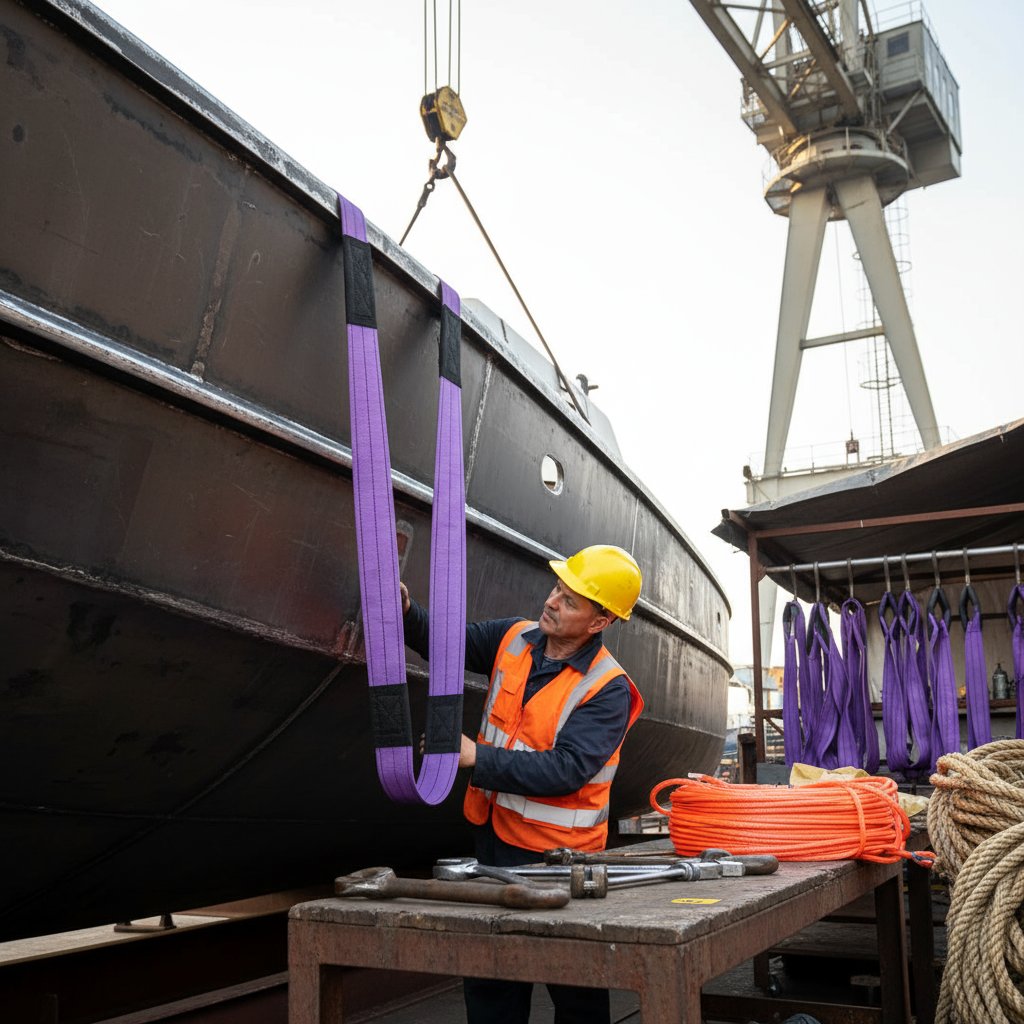
To keep that custom gear performing, storage matters as much as selection, especially in humid marine spots. Hang slings vertically in dry, shaded sheds to let air circulate and fend off mildew, or coil ropes loosely on ventilated racks away from deck moisture. Rinse off salt after use, and avoid piling them in direct sun where UV can creep in unnoticed—this simple routine wards off absorption issues and keeps your investment viable for seasons of reliable service. For deeper insights into synthetic versus natural fiber options for saltwater resistance, explore how materials like nylon and polyester excel in these conditions.
In the demanding world of shipbuilding and boat manufacturing, flat slings emerge as a superior choice for hull lifting, providing even weight distribution that safeguards delicate surfaces from the point loading common with lifting rope. Synthetic options like polyester and Dyneema excel in marine environments, offering robust saltwater and UV resistance compared to natural fibres that degrade quickly from moisture absorption. While industrial rope provides versatile solutions for towing and multi-purpose tasks, it lacks the protective breadth of flat slings for precision lifts. Proper storage in dry, shaded areas extends their lifespan, ensuring reliable performance in coastal operations.
Armed with these insights, selecting the right gear becomes straightforward, but tailoring it to your specific needs can elevate efficiency further. iRopes' custom OEM solutions, backed by ISO 9001 certification, make this accessible for wholesale marine applications.
Need Tailored Flat Slings for Your Shipyard?
If you're ready to explore personalised recommendations for flat slings, lifting ropes, or industrial ropes suited to your boat manufacturing processes, fill out the inquiry form above—our experts at iRopes are here to help craft the perfect solution.