Sailing thimbles prevent up to 70% of rope chafe failures that lead to mooring disasters, safeguarding your boat's lines with a simple protective ring inside the splice. This *essential hardware* distributes loads evenly, ensuring your rigging holds firm even in challenging storms.
Discover in ~12 minutes: Boost your mooring safety with these gains →
- ✓ Slash replacement costs by 50% through doubled rope lifespan via chafe protection.
- ✓ Master material choices like 316 stainless steel for optimal corrosion resistance in saltwater.
- ✓ Learn precise splicing to secure thimbles, avoiding common failures in dynamic loads.
- ✓ Access iRopes' custom solutions for branded, ISO-certified thimbles tailored to your yacht or vessel.
Picture your yacht straining against a sudden gale, its mooring line fraying silently at the dock's edge until—*snap*—it's adrift in the chaos. You might have dismissed that weak splice as minor wear, but what if a simple, often-overlooked thimble could have redirected the friction, saving thousands in repairs? Dive deeper to uncover the exact types, proper installations, and custom solutions from iRopes that transform vulnerable rope eyes into unbreakable anchors. Discover why seasoned professionals never set sail without them.
The Essential Role of Thimble Sailing in Marine Applications
Imagine you're out on the water, the wind picking up as you secure your boat to the dock after a long day of sailing. Suddenly, a sharp snap echoes—your mooring line has chafed through at the eye, leaving your vessel adrift in rough conditions. It's a nightmare no skipper wants to face, yet it's all too common without the right protections. This is precisely where thimble sailing comes into its own, transforming potential disasters into seamless routines. As we delve into this vital piece of marine hardware, you'll see why it's a game-changer for anyone handling ropes on the water.
In nautical terms, a *thimble* is essentially a protective ring—often crafted from robust metal or durable synthetics—designed to fit snugly inside the eye of a rope splice. It acts as a shield, reinforcing the loop against the relentless abrasion (or chafe) caused by dock edges, pulleys, or constant motion. By seating precisely within the rope’s eye, it distributes loads evenly, preventing the fibres from compressing or fraying under tension. Consider it the unsung hero that keeps your rigging intact, particularly in high-stakes sailing or mooring setups where every connection counts.
Why bother with these unassuming rings? They prevent accelerated wear, which can halve a rope's lifespan overnight, while simultaneously spreading out the pulling force to avoid localised weak points. In practice, this means your lines last considerably longer, reducing the need for frequent replacements and keeping operational costs down. Have you ever considered the immense strain those mooring points endure in a storm? A well-placed sailing thimble absorbs that stress, ensuring the rope maintains its original shape and inherent strength over time.
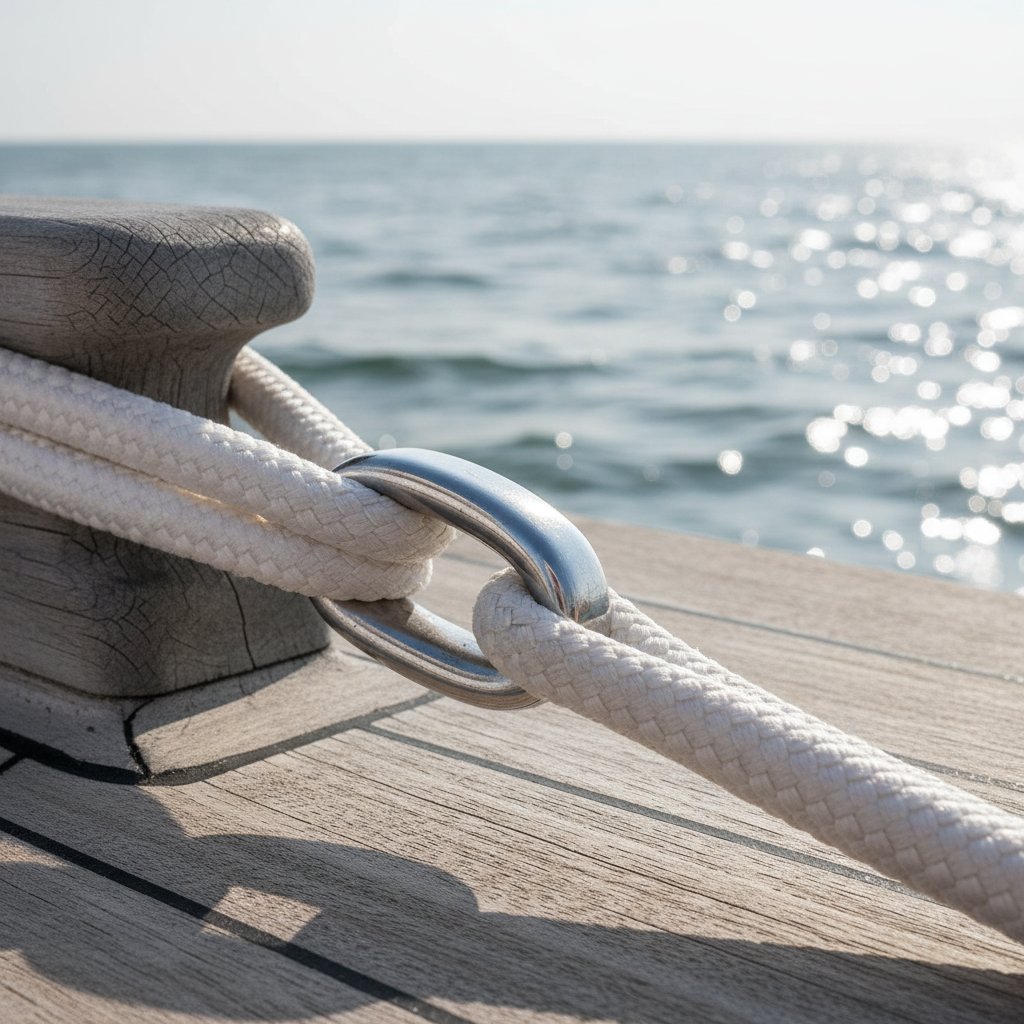
The name "thimble" itself carries a fascinating seafaring history, tracing back to the Old English "thumb-bell." Sailors originally used small metal caps to shield their thumbs from needle pricks while hand-stitching sails—a clever nod to protection against sharp implements. Over centuries, this concept evolved into the robust fittings we rely on today for rigging and mooring, adapting from personal tools to *essential boat hardware*. It serves as a reminder of how simple innovations have consistently stood the test of time on the waves.
When it comes to averting mooring mishaps, the real value of a thimble shines through in everyday scenarios. Picture a yacht club during a sudden gale: lines without thimbles rub relentlessly against cleats, leading to snaps that could send boats crashing into pilings or each other. However, with a mooring thimble securely in place, that destructive friction is redirected, and the rope eye remains open and strong. I’ve heard countless tales from fellow sailors about narrow escapes—one friend avoided a $5,000 repair after his thimble-held line outlasted a severe storm, while another’s bare splice failed, costing him significant downtime and stress. These examples powerfully underscore how thimble sailing not only safeguards your valuable gear but can literally keep your vessel from drifting into serious trouble.
Understanding these fundamental principles sets the stage for selecting the right options, where different designs and materials come into focus to match your specific needs on the water.
- Prevents chafe effectively: Shields rope fibres from rubbing against hard surfaces like docks or hardware.
- Distributes loads evenly: Ensures no single point bears excessive stress during pulls or waves.
- Extends rope life significantly: Can double the durability of splices in harsh marine conditions.
Decoding Sailing Thimble Types and Materials for Optimal Performance
Building on the foundational protection that sailing thimbles offer, the real magic happens when you select the type and material that perfectly fit your setup. Just like choosing the right jacket for a stormy day, getting this selection right ensures your ropes handle the sea's relentless demands without protest. Let's break down the options so you can make informed choices for your next mooring or sailing venture.
Firstly, sailing thimbles come in two main styles: *open* and *closed*. Open thimbles feature a gap that allows for easy insertion of the rope eye, making them ideal for traditional materials like polyester that exhibit less compression under load. They are straightforward, widely used in everyday yachting, and excel where flexibility is paramount. Conversely, closed thimbles form a solid, continuous loop without any opening, specifically designed to prevent high-tech fibres such as Dyneema from crushing or deforming the ring during intense pulls. If you’re rigging a performance boat, this design maintains rigidity and reliability, eliminating unexpected weak points that could compromise safety during a race.
Open Thimbles
Best for polyester ropes in standard mooring; allows quick splicing but may flex under extreme dynamic loads.
Closed Thimbles
Essential for Dyneema in high-performance sailing; provides unyielding support to resist crushing and maintain shape.
Mooring Focus
Handles static ties to docks; prioritise corrosion resistance for saltwater exposure.
Sailing Rigging
Suits dynamic halyards and sheets; opt for lightweight options to reduce overall boat weight.
Material choice elevates this decision, tailoring the thimble to your specific environmental challenges. Stainless steel, particularly the **316 marine grade**, stands out for its *unbeatable resistance to rust and saltwater corrosion*—perfect if your boat frequently navigates coastal waters. It's tough enough to handle heavy mooring duties without pitting over seasons of exposure. Aluminium offers a lighter alternative, ideal for deflecting lines in rigging where every gram counts, though it demands more care against galvanic reactions with other metals. Beyond these, *soft thimbles*, typically made from Dyneema or similar high-modulus fibres, flex with the rope for minimal added weight and chafe in advanced setups. These are a boon for racing sailors who seek seamless integration without the bulk of metal.
Of course, strength is an absolute non-negotiable. Always match the thimble's breaking load to your rope's capacity—for instance, ensuring a 10-tonne rope pairs with a thimble rated *at least* that high—to maintain solid safety margins in choppy waters. This isn't just about adhering to specifications; it's about securing your peace of mind when waves hit with full force.
Speaking of ropes, **nylon and polyester** dominate the scene in mooring systems. Nylon stretches to absorb shocks from surges, pairing effectively with open stainless thimbles due to its elasticity. Polyester, with its low-stretch profile, often works best with closed aluminium versions to maintain tension without slippage. Selecting based on these compatibilities ensures your entire setup performs cohesively, rather than inadvertently creating conflicting stresses.

Ever found yourself staring at your gear, questioning if it's truly up to the task? Paying attention to these intricate details makes all the difference when assessing the best options for your ropes and the loads they’re expected to bear.
Selecting the Perfect Mooring Thimble: Key Criteria and Considerations
The details on types and materials we just covered set you up nicely to pinpoint what matters most when selecting a mooring thimble—ensuring it fits your setup like a glove. It's more than simply grabbing something off the shelf; it's about tailoring the choice to your boat's specific demands so everything holds steady when the sea turns unpredictable. Let's walk through the key factors that will help you nail this choice, starting with the fundamentals of getting the size right.
Sizing a mooring thimble correctly to your rope's diameter is crucial to avoid slippage that could compromise your entire mooring line or overload the connection under tension. The rule of thumb involves selecting one where the rope's eye slides snugly into the groove without excessive play. If it's too loose, it will shift around, accelerating wear; if too tight, you risk damaging the fibres during splicing. For instance, a 12mm rope typically pairs with a thimble having an internal width of approximately 14-16mm, but it’s always best to *check manufacturer charts* for precise matches. Adhering to these guidelines prevents the kind of overload that transforms a simple dock tie into a significant headache.
- Measure your rope's diameter accurately with calipers for the best fit.
- Choose a thimble groove at least 1.2 times wider than the rope diameter to allow for the splice.
- Consult load charts to ensure the thimble's safe working load exceeds your expected pulls by a 5:1 ratio for optimal safety.
Once the size is sorted, consider your specific application—whether you're dealing with static loads from a calm overnight berth or dynamic ones from yachting in choppy swells. In mooring systems, static setups like permanent dock lines benefit from robust, closed designs that handle steady pulls without much give. Dynamic scenarios, such as during a coastal sail where waves yank unpredictably, call for thimbles that can flex just enough to absorb shocks without deforming. I’ve observed many yacht owners who swear by *aluminium options* for these dynamic conditions, as they keep things light while effectively enduring constant motion—a far superior choice than a mismatched, heavy steel piece that merely adds unnecessary drag.
Environmental factors also play a massive role, particularly in salty marine air where corrosion can develop rapidly. Therefore, opt for materials with strong resistance, such as 316-grade stainless steel, which shrugs off rust more effectively than basic alloys but comes at a higher upfront cost. Aluminium excels due to its low weight and decent resistance against UV rays, though it might pit if not correctly anodised—offering significant pros for portability, but beware of its cons in prolonged submersion. And those soft Dyneema versions? They provide *superior UV protection* without the heft of metal, making them ideal for long exposures, though they inherently lack the rigidity of harder options in extreme impact scenarios. Base your selection on your local conditions, whether you're navigating foggy harbours or sun-drenched tropics, to ensure longevity without unpleasant surprises.
Interestingly, the name "thimble" itself pays homage to its bell-like shape that cups and protects, much like the old thumb guards sailors used—a clever evolution that guides us toward durable choices today. What about your specific setup? Does it face more salt spray or sunlight? Factoring these elements into your decision-making ensures you build a reliable system that transitions seamlessly into how you actually fit all the components together.
Stainless Steel
Top Corrosion Fighter
High Durability
Resists rust in saltwater, lasting seasons longer than alternatives.
Balanced Weight
Strong without excessive heft, suitable for most yacht moorings.
Premium Cost
Higher price but justified by extended service life.
Aluminium
Lightweight Option
Easy Handling
Reduces overall rigging weight for better boat performance.
UV Tolerant
Anodised versions hold up well in sunny exposures.
Potential Pitting
Needs protection against galvanic corrosion in wet conditions.

With the right thimble selected, the next critical step is ensuring it's installed correctly to fully harness all that protection—avoiding any shortcuts that could quickly undo your careful choices.
Installation, Maintenance, and iRopes' Custom Mooring Thimble Solutions
Now that you've carefully selected the mooring thimble that perfectly suits your rigging needs, getting it properly into place is what truly translates theory into reliable performance on the water. Skip this crucial step, and even the best hardware can falter under pressure. Eye-splicing, the proven method for securing a thimble, involves expertly weaving the rope's end back through itself to form a secure loop around the ring. For detailed guidance on mastering the art of the 3 strand rope eye splice, explore proven techniques that retain near-full rope strength. It's a skill that yields significant dividends in marine settings, where loose connections can quickly invite trouble from unexpected waves or sudden wind shifts.
To begin, gather a few essential tools: a sharp marlinspike or fid for prying strands apart, whipping twine to secure ends, and electrical tape to mark your working length. Commence by forming the eye precisely around the thimble's groove, ensuring it seats flat without any twists. For a braided line, taper the end, insert the fid through the standing part, and carefully pull the tail through—then tug steadily to bury it deep, scrupulously avoiding any bulges that could snag. In the case of twisted ropes, unlay the strands partially before reinserting them around the thimble. The best practice? Complete this work on a flat surface away from the boat first, then meticulously test the splice under a *light load* before its full deployment. I’ve personally done this on my own yacht before a coastal trip, and it made all the difference when a squall unexpectedly hit—the connection held without a hint of compromise.
Once installed, maintaining your sailing thimble in top shape requires regular checks to spot potential issues early. Look out for any surface scratches that might indicate the onset of corrosion, particularly on metal types routinely exposed to saltwater spray. Deformation from overloads or embedded debris signifies that it's time for immediate replacement, as weakened spots could easily fail during a surge. For synthetic thimbles, monitor for UV fading or fibre separation. These meticulous inspections, performed monthly or after particularly rough outings, can significantly extend your setup's life—think years instead of mere months in harsh marine conditions. Simple rinses with fresh water after saltwater exposure keep things clean, and storing spares in a dry locker actively prevents premature wear.
- Check for corrosion: Wipe down and thoroughly inspect for pitting, particularly on stainless steel or aluminium in coastal areas.
- Assess deformation: Feel for bends or cracks that indicate past overloads, necessitating an immediate swap.
- Examine rope integration: Ensure the splice remains tight and free of slippage around the thimble for continuous protection.
It's important not to confuse a mooring thimble with chafe guards or snubbers, even though they all play crucial roles in line protection. A thimble primarily reinforces the rope eye *internally*, focusing on effective load distribution and preventing internal fibre grind. Conversely, chafe guards are external wraps positioned over vulnerable spots like dock edges to block surface abrasion. Snubbers, on the other hand, are short, stretchy lines designed to absorb shock in nylon moorings, often used in conjunction with thimbles but never as direct substitutes. Together, they form a robust, layered defence system; however, confusing their distinct roles could leave dangerous gaps in your system's overall strength and reliability.

For those seeking more than standard off-the-shelf options, *iRopes* provides bespoke mooring thimble solutions through our comprehensive OEM and ODM services. We meticulously craft custom designs in premium materials like 316 stainless steel or advanced lightweight composites, precisely matched to your rope specifications and even branded with your logo for that essential professional touch. Backed by stringent ISO 9001 standards, every single piece undergoes rigorous testing for both load capacity and corrosion resistance. We also provide direct pallet shipping worldwide to ensure your wholesale orders remain consistently on schedule. Whether your needs are for a vast fleet of yachts or highly specialised industrial rigging, our dedicated team handles every detail, allowing you to focus on smooth sailing ahead. To further fortify your marine rigging against failures, learn why thimble eye slings prevent marine catastrophes.
Custom Thimble Perks
From unique sizes to full branding integration, iRopes delivers precision-crafted thimbles that fit your exact marine demands, ensuring safety and style on the water.
This hands-on, meticulous approach not only fortifies your gear but also instils vital confidence for those longer voyages where every single link in the chain contributes to safer, more enjoyable times at sea.
From preventing catastrophic chafe-induced mooring disasters to ensuring robust performance in dynamic sailing conditions, thimble sailing emerges as an indispensable cornerstone of marine safety. By reinforcing rope eyes with expertly chosen options—such as open stainless steel for traditional polyester lines or closed Dyneema for high-tech fibres—these *sailing thimbles* effectively distribute loads, meticulously matching breaking strengths to your setup's precise demands. Moreover, proper eye-splicing installation, utilising tools like fids for a perfectly snug fit, when combined with diligent, regular inspections for corrosion, deformation, and splice integrity in unforgiving saltwater environments, dramatically extends rope life and actively averts costly failures. Recognising these critical needs, iRopes' OEM solutions offer fully customisable mooring thimbles meticulously tailored to your specific branding and operational requirements, all backed by our unwavering ISO 9001 quality assurance for truly worry-free voyages.
Ready to Customise Your Sailing Thimbles?
If you're seeking personalised guidance on selecting or crafting the ideal thimble for your yacht, commercial vessel, or mooring system, simply fill out the inquiry form above—our iRopes experts are readily available to help elevate your marine rigging with precision-engineered solutions tailored for performance and peace of mind.