⚠️ High UV degradation can cause cheap ropes to lose up to 80% strength, leading to deadly snaps under marine loads. This article unmasks hidden flaws in winch and anchor lines, revealing how iRopes' custom HMPE and nylon solutions—certified to ISO 9001—deliver **unbreakable reliability** for your wholesale needs.
Unlock Marine Safety Secrets in Just 8 Minutes →
- ✓ Master **HMPE/Dyneema** for winches, with less than 5% stretch, slashing recoil risks by 90% versus steel cables.
- ✓ Grasp nylon's 15-20% elasticity for anchors, preventing drift in storms through superior shock absorption.
- ✓ Spot substandard flaws, like impurity fillers causing sudden failures, arming you to choose certified quality.
- ✓ Access iRopes' OEM customisation for precise diameters and IP-protected designs, ensuring 5:1 safety margins.
You might think a sturdy-looking rope will hold in a squall, but what if its sneaky material impurities cause it to snap mid-pull, endangering crew and cargo? This overlooked flaw can turn routine anchoring into a catastrophe. However, iRopes' tailored constructions, with their proven elasticity and UV guards, offer a reliable alternative. Dive deeper to uncover the exact criteria that transform your selections from risky gambles into foolproof safeguards, backed by **real-world metrics** you'll wish you'd known sooner.
Defining Quality Rope: The Foundation Against Hidden Flaws
Imagine being out on the water, relying on a rope to secure your boat during a sudden squall. That moment of trust hinges on one critical factor: the rope's quality. For marine settings, where loads can spike unpredictably, quality is not merely a buzzword; it’s the essential barrier between smooth sailing and disaster. Fundamentally, a high-quality rope begins with **pure materials and solid construction**, ensuring it performs when it truly matters.
Let's break down what this means. Material purity implies using top-grade fibres like nylon or HMPE, free from fillers or impurities that could weaken the strand. These pure components guarantee consistent performance, resisting degradation from saltwater or sunlight. Construction integrity is equally vital, featuring tight braiding or twisting that distributes stress evenly, thereby preventing weak spots. Breaking strength, often measured in thousands of pounds, indicates the maximum load before failure. A safety factor of at least 5:1 should be applied, maintaining security under real-world strain. Furthermore, certifications like ISO 9001, which iRopes proudly holds, guarantee rigorous testing and **ethical manufacturing** from beginning to end.
- UV resistance: Protects against sun damage, which is vital since unprotected ropes can lose up to 80% strength after a year of exposure.
- Abrasion protection: Features like outer coatings or double layers shield against rubbing on rocks or hardware, significantly extending life in rough conditions.
- Elasticity percentages: These vary by type; for instance, nylon stretches 15-20% to absorb shocks, while low-stretch options like Dyneema typically maintain under 5% for precise control.
These indicators are not abstract concepts; they are paramount in preventing the premature failure that can turn a routine outing into a nightmare. What truly defines 'quality' in ropes? It's this precise blend of attributes that ensures reliability. Inferior materials, often riddled with cheap additives, frequently lead to the deadly flaw of sudden snapping under load. Imagine a rope that performs adequately in calm waters but shreds when confronted with harsh waves—this is often the consequence of omitting proper UV stabilisers or abrasion guards. I once witnessed a subpar line fray overnight on a charter trip, which forced an early return. Selecting quality means recognising these red flags early, such as inconsistent diameter or fuzzy fibres, and consistently opting for **certified options** instead.
Why settle for the basics when you can demand more? In demanding marine environments, elasticity is not merely a number; it serves as your critical buffer against jerks from wind or currents. A rope with the correct stretch cushions impacts, much like a car’s suspension smooths out potholes. For wholesale buyers, this translates directly into products that **last longer and reduce claims**. iRopes integrates this philosophy from the outset, employing precision techniques to meet these exact specifications.
With these foundational principles established, it becomes clear how overlooked details can **amplify risks** in specific applications, particularly when powering a winch through heavy pulls.
The Deadly Flaw in Rope for a Winch: Low Stretch and Recoil Risks Exposed
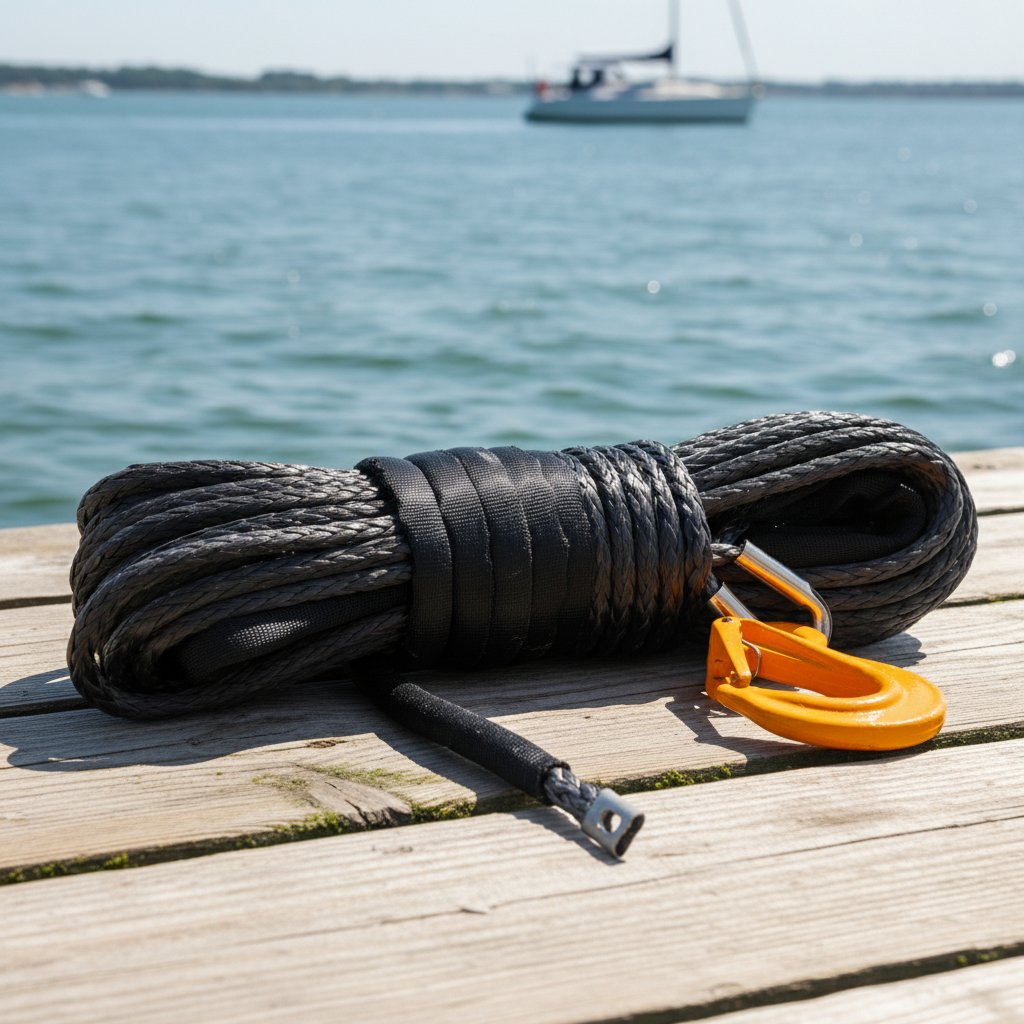
Building on the quality basics we've just covered, picture this scenario: you're winching a heavy load up a steep incline, the motor humming, and suddenly the rope bunches up or snaps back with dangerous force. This isn't theoretical; it's a very real hazard when the wrong line is subjected to high stress. For winch applications, where precision and power converge, the choice of rope is paramount. Enter synthetic HMPE, commonly branded as Dyneema, which stands out as the **material of choice**. Its advantage lies in an incredible strength-to-weight ratio—up to 15 times stronger than steel of the same weight—while remaining lightweight and easy to handle. Its low stretch, typically under 5%, ensures consistent tension without sagging and, crucially, minimises recoil risks if something goes wrong, unlike metal cables that can whip back violently.
Consider the contrast: while steel may appear robust, it is prone to rust, weighs considerably more, and its snap-back potential can cause serious injury. Synthetics, on the other hand, float, which aids in water recoveries, and offer superior resistance to chemicals. I recall upgrading a friend's off-road rig's winch line to Dyneema after a close call with an old steel cable; it completely transformed the setup, making pulls smoother and significantly safer. So, what makes this the optimal rope for an anchor winch? **Safety is the primary driver**: Dyneema’s abrasion resistance and low elongation prevent jams in the drum, ensuring reliable operation even in salty, gritty conditions. For windlasses on boats, this translates to fewer breakdowns during anchoring in rough seas.
- Match diameter to winch capacity: Aim for 8-12mm for most marine winches; too thin overloads the motor, while too thick prevents proper spooling.
- Prioritise heat dissipation: Synthetics like HMPE shed heat faster than nylon, preventing melting risks during prolonged pulls.
- Build in chafe resistance: Add protective sleeves or coatings to guard against fairlead friction, which can extend useful life by years.
Achieving these specifications correctly requires careful consideration. Begin by assessing your winch's pull rating and boat size, then size up to establish a crucial safety margin. However, this is where the deadly flaw often emerges: many individuals opt for stretchy nylon due to its affordability, mistakenly believing it will suffice. This is a critical error. Nylon's 15-20% elongation causes dangerous bunching on the spool, leading to overloads that can damage the winch or result in sudden failures. In a severe storm, this could mean completely losing control of your anchor or tow line. Instead, iRopes crafts **certified HMPE alternatives** with OEM precision, ensuring they meet your exact specifications without these inherent pitfalls.

Avoiding these issues ensures smooth operations, but similar oversights in anchor setups can transform a secure hold into a **drifting nightmare**.
Unveiling the Flaw in Rope for Anchor Line: Inadequate Shock Absorption
That drifting nightmare? It often begins with an anchor line unable to withstand the sea's unpredictable forces. When you drop anchor, expecting it to hold through the night, the last thing you want is a rope that fails under pressure. For anchor lines—often referred to as the rode—**shock absorption is paramount**. Nylon excels here, with its ability to elongate by 15-20%, acting as a built-in spring that effectively absorbs sudden jerks from waves or wind gusts. Without this elasticity, your boat could surge, stressing the cleats or even dislodging the anchor.
However, it's not solely about the material; the entire setup is crucial. A robust anchor rode typically combines rope with chain—for instance, 10-20 feet of galvanised chain ahead of the nylon line. This chain rests on the seabed, adding weight to help the anchor set firmly and shielding the rope from abrasion against rocks or coral. Then there's the
Nylon Advantages
Ideal for Shock Loads
Superior Elasticity
Stretches to absorb impacts, reducing strain on your boat and gear during rough seas.
UV and Wet Strength
Performs better than alternatives in sunlight and saltwater, losing minimal strength when soaked.
Proven for Anchors
The preferred choice for secure holds, significantly outperforming polypropylene which degrades quickly under UV rays.
Alternatives' Limits
Why They Fall Short
Polypropylene Weakness
Suitable for temporary tasks but deteriorates rapidly in sunlight and loses strength in water—for reliability, opt for nylon.
Dyneema's Drawback
Incredibly strong and lightweight, but its minimal stretch transfers shocks directly to your hull—making it less ideal for anchors when used alone.
Pair for Best Results
Dyneema can be effective in hybrid setups with chain, but nylon alone manages dynamic loads efficiently without complex configurations.
Now, consider the inherent danger of substandard ropes lacking certifications like ISO 9001. They may appear acceptable until a storm breaks, at which point inadequate shock absorption could lead to drift or worse. I've heard from several charter captains who lost valuable gear due to cheap imported lines fraying in high winds—certification ensures **consistent performance**. For selection, match the diameter to your boat: approximately 1/8 inch of line diameter per 8-10 feet of boat length. For example, a 30-foot vessel typically requires a 3/8-inch line. Incorporating thimbles at the ends facilitates smooth chain connections and enhances windlass compatibility, preventing chafe precisely where vulnerabilities are highest. To master these essentials, explore the anchor rope guide that details nylon sizing, scope ratios, and custom solutions for unbeatable seabed security.
These informed choices establish a dependable setup you can trust. However, what if off-the-shelf options don't fully meet your vessel's unique requirements? Custom tweaks can prove **decisive**.

Overcoming Flaws with iRopes' Customized Quality Rope Solutions
Those custom tweaks I hinted at earlier? They are precisely what transforms potential liabilities into dependable gear, particularly when standard ropes prove insufficient for your specific setup. At iRopes, we transcend typical off-the-shelf options by offering comprehensive **OEM and ODM services**, empowering wholesale partners like you to design ropes tailored to your exact demands. Whether it involves blending HMPE fibres for a winch's robust pull or engineering nylon with the precise twist for anchor shock loads, our process commences with your specific vision. We meticulously consider every aspect, from core construction—such as sturdy 3-strand for simplified splicing or flexible double-braid for smoother handling—to supplementary features, including reflective strips that glow in low light, significantly enhancing visibility during night operations. Throughout this process, our precise manufacturing in **state-of-the-art facilities** ensures every inch adheres to your specifications, all while safeguarding your proprietary designs with robust IP protection. This eliminates the need to compromise on fit, delivering ropes that seamlessly integrate with your branding, potentially even packaged in custom cartons bearing your logo. For detailed guidance on personalization, check our customization options, covering everything from materials and diameters to certifications and packaging.
Custom Constructions
Choose 3-strand for durability in basic tugs or double-braid for reduced rotation in dynamic pulls, adapting seamlessly to winch drums or windlass gears without slippage.
Enhanced Features
Integrate reflective elements for safety or glow-in-the-dark tracers, ensuring ropes are visible in fog or darkness while maintaining core strength.
IP Safeguards
Comprehensive IP protection from concept to delivery ensures your unique designs remain exclusive, fostering a foundation of trust in every partnership.
Precision Builds
Skilled teams meticulously craft each order with tolerances under 1%, delivering consistent performance that surpasses generic alternatives in demanding marine conditions.
Of course, customisation is meaningless without **rock-solid quality assurance**. iRopes' ISO 9001 certification encompasses every stage, from meticulous raw material checks to rigorous final load tests. This ensures that your rope for a winch or anchor line will not falter, particularly when lives depend on it. To maintain these valuable investments, adopting simple habits is crucial: rinse ropes with fresh water after each use to remove salt crystals, inspect them monthly for frays or stiff spots, and store them loosely coiled in a dry area away from direct sunlight. For those prioritising sustainability, we offer eco-options, such as ropes with recycled polyester cores, which reduce environmental impact without sacrificing grip or flexibility. These lines are designed to endure longer, resulting in fewer replacements and less waste overall. Have you ever retrieved a rope from storage only to find it brittle from neglect? Proper care proactively prevents this, potentially doubling its lifespan in harsh marine environments.
Ultimately, application-specific adjustments solidify the solution. For winches, we integrate spliced terminations that securely lock into drums without slipping, paired with robust chafe guards for friction-heavy pulls. Anchor setups benefit from pre-made rodes with thimbles and chain-ready ends, all compliant with international safety standards to prevent unwanted drifts in swells. These are not mere add-ons; they are engineered for **wholesale reliability**, guaranteeing that your clients receive gear that safeguards every voyage. As demands evolve, so too do our solutions, paving the way for confident and informed choices in rope selection.

Armed with these insights into the deadly flaws plaguing substandard marine ropes, you've seen how choosing the right **quality rope** can prevent catastrophic failures at sea. For high-stakes winching, HMPE like Dyneema offers unmatched low-stretch performance and recoil resistance, while nylon's elasticity excels in **rope for anchor line** applications to absorb shocks effectively. iRopes' ISO 9001-certified custom solutions address stringent construction standards, material purity, and crucial features like chafe guards and thimbles. This ensures compliance and longevity through rigorous quality assurance protocols tailored to your vessel's demands.
These selection criteria—including appropriate diameter matching, robust UV resistance, and correct scope ratios—empower safer voyages, but personalised modifications can further optimise your operations. Building on the safety and durability we've explored, partnering with experts elevates your wholesale sourcing to **unprecedented heights**. Dive deeper into winch-specific recommendations with our ultimate guide to choosing the best winch line, featuring strength ratings, stretch details, and abrasion resistance tips for marine use.
Need Tailored Advice for Your Winch or Anchor Ropes?
If you're ready to discuss custom **rope for a winch** or anchor solutions that fit your exact specifications, use the inquiry form above to connect with iRopes' specialists. We're here to guide you towards reliable, certified options that **safeguard your marine adventures**.
