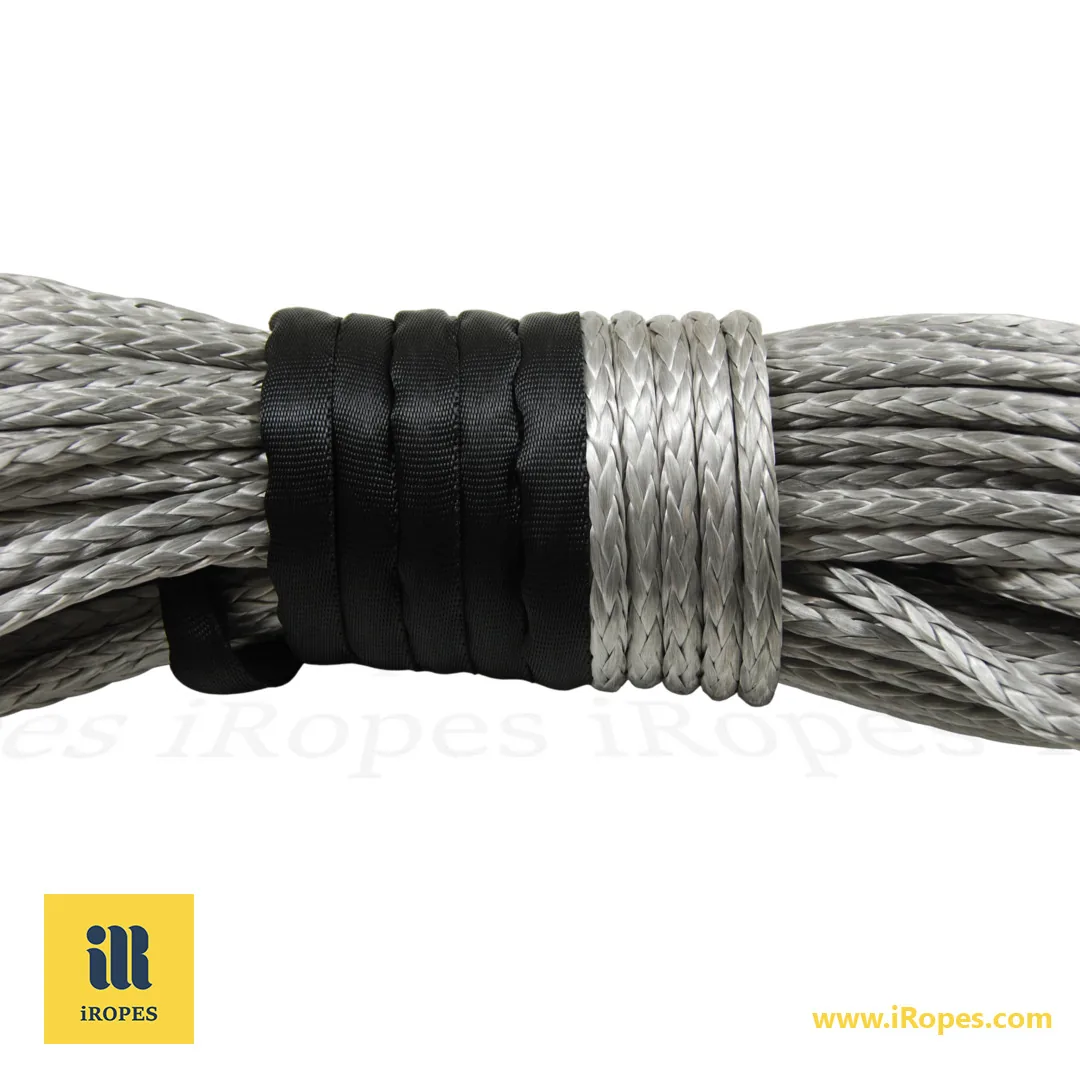
Sinking tow ropes can turn boat rescues into disasters—nylon lines drop completely underwater, fouling props and delaying crucial help. Switch to polypropylene for guaranteed flotation, ensuring visibility and quick retrieval, even under 4,000 lb+ shock loads, without tangles.
Unlock Safer Towing in ~10 Minutes → Discover Materials, Protocols, and Custom Fixes
- ✓ Prevent Prop Fouling: Floating ropes remain 100% surface-visible, slashing entanglement risks by up to 80% in emergencies.
- ✓ Master Shock Loading: Learn about 150-200 ft lengths with 4K lb breaks designed to absorb waves without snapping—increasing tow reliability threefold.
- ✓ Elevate Watersports: Gain WSIA-compliant 50-65 ft setups for tubing, boosting retrieval speed and rider safety awareness.
- ✓ Customise for You: Tailor diameters and reflective colours via iRopes' OEM services, solving visibility issues with ISO-certified durability.
You might think a rope's strength alone is sufficient for marine tows, but sinking lines vanish in seconds—causing approximately 70% of prop strikes during rescues, according to boating reports. What if your next emergency hinged on a line that actively defies gravity, keeping everything above water for seamless grabs? Dive in to uncover how iRopes' floating innovations transform chaotic pulls into confident, injury-free operations, revealing the material secrets marine professionals trust.
Why a Tow Rope for a Boat Must Float: Understanding Materials and Sinking Risks
Imagine you're out on the water, assisting a friend with engine trouble, and you toss over your tow rope for a boat. Instead of staying afloat for an easy grab, it sinks straight down, tangling in propellers or vanishing into the depths. This 'sinking feeling' isn't just frustrating; it's genuinely dangerous. Floating ropes are a true game-changer in marine towing, keeping lines visible and accessible during rescues or everyday pulls. At iRopes, we've observed how the right material choice turns potential chaos into smooth sailing, and it all revolves around understanding buoyancy.
To elaborate, not all ropes behave the same way in water. Polypropylene, for example, is naturally buoyant because it's lightweight and repels water, allowing it to float effortlessly. This characteristic prevents it from wrapping around props, which could disable your boat mid-rescue, and significantly simplifies grabbing it quickly. Conversely, nylon ropes absorb water and sink. While suitable for dry land, this property spells trouble on the water, making them heavier, harder to spot, and more prone to fouling underwater gear. Consider it like choosing hiking boots versus thongs for the beach: each has its specific purpose, but mixing them up creates unnecessary problems.

So, what actually is the best rope to tow a boat? While it depends on your specific setup, we generally recommend UV-resistant polypropylene options that are abrasion-proof and specifically designed to handle shock loading. This refers to the sudden jerks from waves or quick accelerations that could snap a weaker line. Such ropes require a robust break strength—typically at least 4,000 pounds for most recreational boats—to absorb these impacts without fraying or breaking. Shock loading is a fundamental physics principle: when tension spikes, a quality rope stretches just enough to cushion the force, much like a bungee cord compared to a rigid chain. Pairing this with a diameter of around 5/8 inch ensures good grip and durability, facilitating reliable pulls without the dangerous snap-back that can cause injuries on deck.
Now, envision an emergency where every second counts—a sinking rope only exacerbates the situation. It disappears quickly, forcing divers or frantic searches that delay essential help and heighten risks. In rough conditions, a hidden line could whip back under tension, causing cuts or worse. Have you ever considered why marine professionals vehemently insist on flotation? It's because staying afloat translates to easier handling and a significantly lower chance of entanglement, transforming a tense situation into a controlled one.
Visibility requirements are intrinsically linked to this safety net. Opt for bright colours like vivid orange or yellow that stand out against choppy seas, or incorporate reflective strips that glow under lights for night operations. These features are not merely aesthetic; they actively assist spotters in tracking the line from a distance, preventing collisions or missed handovers. From our extensive experience with boating, a well-seen rope undeniably saves headaches—and lives.
Grasping these fundamental aspects of why a tow rope for a boat needs to float prepares you for tackling boat-to-boat pulls, where these same principles ensure reliable assistance even in challenging circumstances.
- Polypropylene Benefits - Floats naturally, resists UV damage, and eases rescues by staying visible and tangle-free.
- Nylon Drawbacks - Sinks when wet, increases prop fouling risk, and complicates emergency retrieval in water.
- Shock Load Tips - Choose ropes with 10-20% stretch to handle sudden pulls without snapping.
Boat to Boat Tow Rope: Guidelines for Emergency Vessel Assistance
Building on the critical nature of a solid, floating tow rope for a boat to prevent underwater tangles, let's now consider this: you're stepping up in a genuine emergency, linking your vessel to a stranded one mid-lake. This scenario highlights where a reliable boat to boat tow rope becomes indispensable, transforming a highly stressful situation into something manageable. These ropes are distinct from casual watersports lines; they are engineered for heavier demands, ensuring both boats remain safe as you navigate back to shore. We've personally navigated such situations, motoring slowly while monitoring waves, and having the correct setup made a profound difference.
So, how does one effectively tow a boat with another boat? It's far more involved than simply tying on and accelerating; a clear plan is essential to keep everyone safe. Begin by thoroughly assessing the situation—check for leaks or stability issues on the disabled craft. Then, position your boats parallel, approximately 3-4.5 metres (10-15 feet) apart, to facilitate easy line transfer. Utilise a tow bridle on the towing boat's stern cleats or outboard mount for an even distribution of pull, thereby reducing strain on any single point. Secure the other end with a bowline knot to the towed boat's bow cleat, meticulously checking for any sharp edges that could chafe the line.
- Approach slowly and signal your intentions with a diver-down flag or radio call to alert nearby vessels.
- Maintain idle speed—no more than 3-5 knots—to prevent whipping or overloading, ensuring the rope remains taut without sudden jerks.
- Monitor the tow continuously, adjusting course gently and using hand signals or VHF for communication as needed.
A crucial detail often overlooked is rope length. For emergency towing, aim for 150-200 feet of boat to boat tow rope. This provides sufficient distance to handle wakes and execute manoeuvres without the boats colliding. Smaller crafts, such as a 16-foot runabout, might manage with 100-150 feet, but you should scale up for larger vessels to accommodate their mass and swing radius. Too short, and you risk collisions; too long, and steering becomes a significant challenge in windy conditions. This buffer not only enhances safety but also allows the floating design to operate optimally, keeping the line visible above the surface. For more on selecting the right lengths, explore choosing between a 200 foot rope and a 300 foot rope options tailored for marine use.
When rough waters are encountered, that boat to boat tow rope must withstand considerable punishment. Opt for low-stretch braided constructions, frequently double-braided nylon or polyester blends, which effectively handle marine shock loads from swells without excessive elongation. These constructions absorb sudden forces—such as a boat dipping into a trough—more effectively than twisted styles, significantly reducing snap-back risks. Moreover, always add chafe guards at attachment points. These simple tubular sleeves protect vulnerable areas, preventing wear from metal fittings or constant rubbing. From our practical experience, neglecting these protective measures once resulted in a frayed line mid-tow—a lesson learned the hard way.

Safety extends beyond the rope itself; implement protocols from the outset. Before embarking, inspect your line for frays, kinks, or weak spots, coiling it loosely to avoid stress points. Always factor in the environment: headwinds can push the towed boat sideways, so plot a course away from busy traffic lanes. Keep a dedicated spotter aboard both vessels to watch for drifts, and always carry essential extras like a backup line or tool kit. Have you ever experienced that uneasy gut feeling during a tow? It serves as a reminder to remain vigilant, ensuring the entire operation concludes without a hitch.
These emergency guidelines establish a robust foundation, but when the focus shifts to recreational activities like tubing, the ropes adapt to securely enhance the thrill.
Boat Towable Rope for Watersports: Tubing and Skiing Safety Features
With emergency tows thoroughly covered, let's transition to the exhilaration of watersports, where a dependable boat towable rope transforms leisurely afternoons into adrenaline-fuelled adventures. Whether you're pulling tubers behind a pontoon or escorting water skiers as they carve across the wake, the right line keeps everyone engaged—and safe. We've spent many summers on the water, observing families enjoying themselves, and nothing diminishes the fun faster than a rope that underperforms. For tubing and skiing, these ropes must withstand bursts of energy from jumps and turns, all while maintaining flotation to prevent any unwelcome underwater incidents.
Consider a group of children bouncing on an inflatable tube: the rope must reliably support their combined weight. According to WSIA (Water Sports Industry Association) guidelines, aim for lengths between 50 and 65 feet. This distance provides sufficient slack for smooth pulls without excessive dragging. That precise length also allows the boat to build speed gradually, reducing the sudden jerk that could unseat riders. Break strength is equally crucial—it must be scaled to the number of people on board. For a single rider, 2,000 pounds might suffice, but multi-rider setups demand at least 4,000 pounds to manage the significant shock loads from waves or spins. Water skiing follows similar principles, with the same length range ensuring skiers maintain balance as they carve turns. It's comparable to selecting the appropriate lead for a dog: too short, and it's uncomfortable; too long, and control is lost.

Maintaining flotation is non-negotiable here, particularly when play becomes dynamic. A sinking line generates drag, depleting energy from the boat and complicating retrieval if someone falls. Floating designs, often made from polypropylene, glide across the surface effortlessly, allowing you to spot and retrieve them rapidly after a wipeout. This significantly reduces downtime and keeps the session lively. Have you ever had to chase a submerged rope while eager children wait impatiently? It's an unnecessary hassle—buoyancy ensures quick resets for more enjoyment.
Visibility requirements also amplify the safety factor. Opt for ropes with bold patterns in reds, blues, or greens that distinctly stand out against the water, or ones interwoven with glow-in-the-dark threads for dusk sessions. These features assist spotters in tracking the line's path, preventing entanglement with props or other boats. Accessories play a significant role: attaching a booster ball midway along the rope elevates it higher, minimising spray and reducing sinking risks. It's a modest addition that yields substantial benefits, akin to adding flotation to a life vest for enhanced peace of mind.
Formal safety protocols are crucial for worry-free outings. Begin with clear communication between the driver and observer—using hand signals for "speed up" or "slow down" prevents misinterpretations. Avoid sharp turns that could flip the tube or sharply pull skiers off course; instead, execute manoeuvres smoothly. After each run, conduct a thorough inspection of the boat towable rope for frays or knots, as shock loads from aerial tricks or rough water can cause rapid wear. What if an unexpected wave catches you off guard? A quick inspection identifies issues before they escalate, allowing you to concentrate on the enjoyment rather than hypothetical dangers.
Tubing Essentials
Multi-Rider Focus
4K lb Strength
Handles group weights during dynamic spins without strain.
50-65 ft Length
Provides a safe buffer for bounces and falls.
Colourful Visibility
Bright hues allow easy tracking in choppy conditions.
Skiing Must-Haves
Solo Precision
Low-Stretch Build
Maintains taut line for sharp, controlled cuts.
Floating Core
Prevents submersion during high-speed runs.
Glow Elements
Enhances visibility at twilight for continued safety.
These features collectively make every watersports outing smoother, but tailoring them to your specific boat and crew raises the bar even further—imagine lines designed exclusively for your setup, offering ultimate reliability.
Customising Tow Ropes with iRopes: OEM Solutions for Visibility and Durability
Tailoring your towing lines to perfectly fit your exact needs isn't merely a desirable feature—it's what transforms a generic rope into an indispensable, reliable partner on the water. We've previously discussed how the right boat towable rope keeps watersports sessions both safe and enjoyable. However, what if you could meticulously specify every detail to match your boat's configuration or your crew's preferences? This is precisely where iRopes excels with our comprehensive OEM and ODM services, empowering wholesale partners to craft personalised solutions that far surpass standard off-the-shelf options. Whether you're equipping a fleet for critical rescue operations or stocking up for diverse recreational uses, these custom designs ensure your lines perform precisely as required, without any compromise.
Our collaborative process begins with your specific input. Our dedicated rope specialists work intimately with you to select the ideal material—like buoyant polypropylene for superior flotation or robust nylon blends for enhanced toughness—all while expertly balancing strength against weight. You retain full control over dimensions: specify the diameter, for instance, 1/2 inch for lighter pulls or a sturdy 3/4 inch for heavier loads, and precise lengths to suit your specific scenarios, ranging from compact 50-foot setups to extended 200-footers for expansive open-water tows. Crucially, core types are also considered: a parallel core for minimal stretch, essential in emergency pulls, or a braided one for optimal flexibility during dynamic activities like watersports jumps. This unparalleled level of customisation ensures your boat to boat tow rope isn't just exceptionally strong; it is meticulously optimised for shock loads, superior visibility requirements, and absolute ease of handling. This unique offering draws directly upon our extensive expertise across yachting and various industrial applications, delivering capabilities that generic lines simply cannot match.

What truly distinguishes our approach is the solid foundation of ISO 9001-certified manufacturing. Here, every inch of rope is precision-engineered in state-of-the-art facilities by skilled craftsmen who treat your project with the utmost dedication. We rigorously safeguard your intellectual property (IP), ensuring your unique designs remain exclusively yours. Furthermore, we offer extensive branding options that seamlessly embed your logo or preferred colours directly into the rope—consider vibrant reds for enhanced daytime visibility or subtle glow threads for optimal performance in low-light conditions. These thoughtful touches not only significantly enhance safety by making lines easier to track but also perfectly align with your business identity, proving ideal for wholesale orders serving demanding marine environments.
Maintaining your custom tow rope for a boat in peak condition significantly extends its lifespan and preserves those critical float characteristics. Always rinse it thoroughly with fresh water after saltwater exposure to remove corrosive salts, then hang it loosely in a shaded area to dry. Critically, avoid coiling it tightly, as this practice invites kinks that gradually weaken the fibres over time. Regular inspections are paramount: run your hands along the entire length to detect any frays or soft spots, particularly at the ends where wear typically manifests first. Additionally, periodically test for buoyancy by floating a section in a bucket. These straightforward habits uphold the safety protocols we've discussed, preventing unpleasant surprises during use. We recall inspecting a client's line before a major outing; our timely detection of a hidden chafe spot ultimately averted a potential incident and kept their group safe.
A common misperception is confusing these specialised ropes with tow straps. Tow straps are generally flatter and more rigid, typically employed for vehicle recoveries on land. In marine environments, a strap's limited stretch can lead to harsh, sudden snaps under wave-induced loads. In contrast, our ropes' controlled elasticity gently absorbs those sharp jolts, effectively reducing both injury risks and stress on equipment. It is precisely this inherent 'give' that renders ropes the unequivocally smarter choice for water-based pulls, especially when meticulously customised for your precise needs.
Precision Builds
ISO 9001 ensures every custom rope meets exacting specifications for flotation and strength.
IP Security
Your unique designs remain fully protected from initial concept to final delivery.
Branded Colours
Embed visibility features like custom hues for safer and branded tows.
Maintenance Ease
Simple care routines ensure reliable performance season after season.
These tailored elements underscore how choosing the correct floating marine lines can transform potentially risky moments into confidently managed ones, concluding our detailed exploration of how to make marine towing secure and enjoyable.
From emergency boat to boat tow rope setups that necessitate robust shock absorption and clear visibility requirements to vibrant boat towable rope designs that elevate watersports thrills, floating lines, such as polypropylene, ensure safer marine adventures by preventing prop fouling and enabling swift rescues. We've thoroughly explored how appropriate lengths, specified break strengths, and essential accessories—including chafe guards and booster balls—effectively manage wave-induced loads, while bright colours or integrated glow elements keep everyone visible. Adhering strictly to step-by-step safety protocols and diligent maintenance routines minimises risks, transforming potential hazards into confident and enjoyable outings on the water.
Ready to customise a tow rope for a boat tailored precisely to your vessel assistance or recreational needs? iRopes' extensive OEM expertise can refine these critical essentials for unparalleled durability and superior flotation.
Need Personalised Rope Solutions? Get Expert Advice
If you're keen to discuss bespoke options for your specific towing scenarios, please complete the inquiry form above—our dedicated team at iRopes is prepared to guide you towards the perfect, safety-focused solution.