Polyester mooring ropes beat nylon in real-world durability—retaining over 90% strength after a year of UV exposure and absorbing less than 0.5% water, unlike nylon's 10-15% wet strength drop and faster degradation. This shift ensures safer, longer-lasting vessel security without the hidden pitfalls of common choices.
Master Mooring Choices in 8 Minutes Flat
- ✓ Grasp why nylon's 15-25% stretch saves shocks but costs longevity—avoid 20-30% UV breakdowns in sunny marinas.
- ✓ Discover polyester's 8-12% low-elongation edge for stable dock lines, slashing snap-back risks by minimising rebounds.
- ✓ Get vessel-specific recommendations, like 5/8-inch diameters for 40ft boats, to match conditions and cut replacement costs 2-3x.
- ✓ Unlock iRopes' OEM customisations for branded, ISO-certified ropes that fit your exact marine needs.
You might think nylon's bouncy elasticity is the ultimate shock absorber for every wave-whipped mooring, but real conditions often tell a different story. Polyester's unyielding stability frequently prevents the sneaky failures that claim 30% more nylon mooring lines in relentless sun and spray. What if your next rope choice dodged those pitfalls entirely, turning potential disasters into dependable anchors? Dive in to uncover the counter-intuitive metrics and tailored strategies behind why polyester often claims victory. This article empowers you to secure your vessel with the precision iRopes expertise promises.
The Foundation of Security: Understanding Mooring Ropes
Imagine pulling up to a quiet marina after a long day on the water, only to worry if your boat will hold steady through the night as waves push and pull. That's where mooring ropes come into play—they're the unsung heroes keeping vessels secure. Simply put, a mooring rope is a strong line used to tie a boat to a dock, pier, or buoy, countering the relentless forces of wind, currents, tides, and swells that could otherwise lead to drift or damage.
These ropes handle dynamic loads, meaning they absorb sudden jerks from boat movements without snapping. Think of them as the seatbelts of the sea: reliable when it counts. In real terms, a good mooring setup prevents everything from minor fender rubs to catastrophic collisions, saving you time, money, and headaches.
Now, why does the material of your mooring rope matter so much? It directly affects safety, how long the rope lasts, and how well it performs under stress. Synthetic fibres dominate modern marine use because they're lightweight, strong, and resistant to rot compared to natural options like manila. Two standouts are nylon and polyester, each bringing unique traits to the table.
To get the difference between nylon mooring rope and polyester mooring rope straight, consider their basics. Nylon, a type of polyamide, is known for its rubber-like give, stretching up to 25% before breaking. This helps cushion shocks from choppy water. Polyester, or polyethylene terephthalate, is more rigid, with only about 10% stretch, offering stability but less forgiveness in rough surges. Nylon soaks up water a bit, potentially weakening it when wet, while polyester shrugs off moisture and holds its strength steady. These core distinctions—elasticity versus durability—shape everything from how the rope feels in your hands to its lifespan in salty, sunny conditions.
- Vessel size: Larger boats, say over 40 feet, need thicker ropes with higher breaking strengths to manage greater weight and windage. For example, a 50-foot yacht might require 5/8-inch diameter lines.
- Mooring conditions: In sheltered marinas with minimal tide, stability trumps stretch. Exposed anchorages with bigger swells call for more elastic options to handle tidal pulls up to 10 feet.
- Environmental exposure: Harsh sun and constant wet demand UV-resistant materials to avoid quick breakdown, while occasional use might prioritise cost over longevity.
Selecting the right rope isn't one-size-fits-all; it's about matching these elements to your setup. Have you ever inspected a frayed line and wondered why it failed? Often, it's because the material didn't align with the demands. As we explore nylon next, you'll see how its shock-absorbing nature shines in variable waters, though it has limits that polyester comfortably sidesteps.
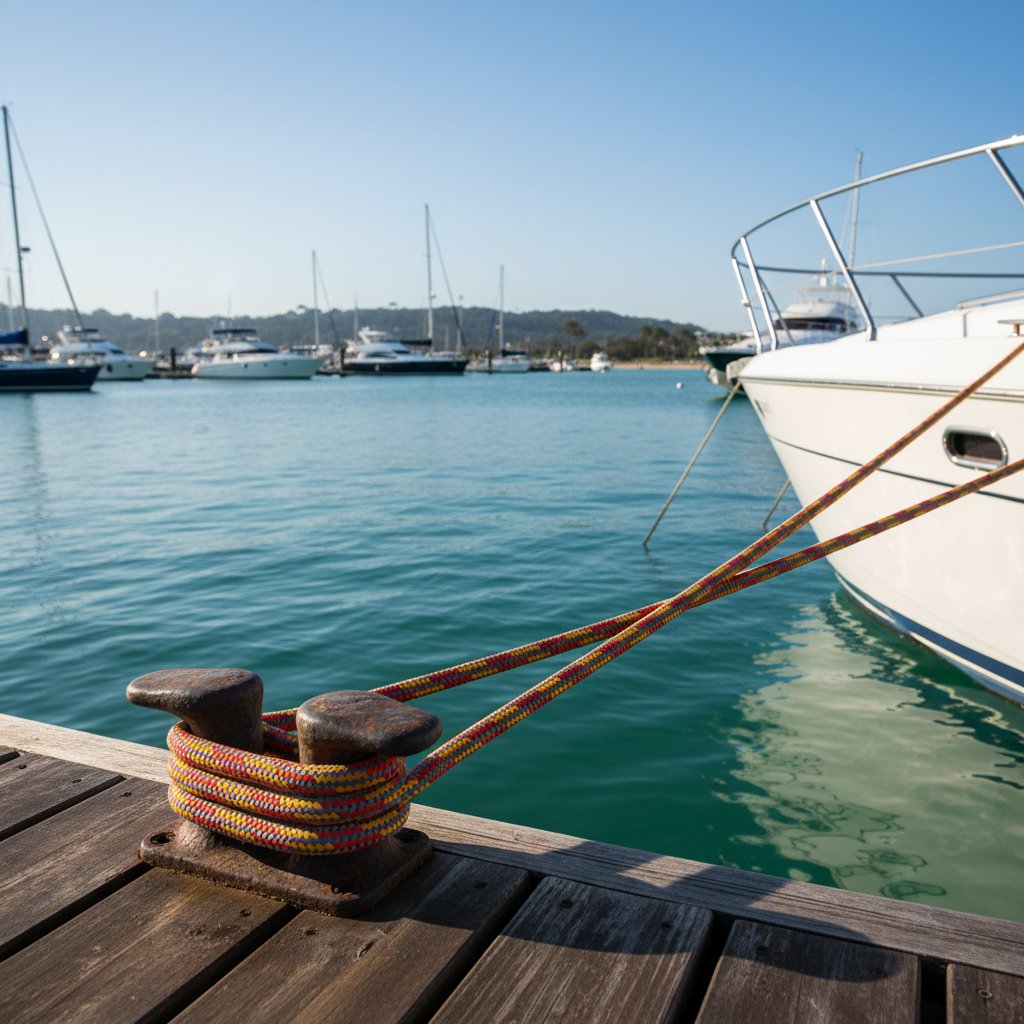
Key Insight
Choosing the right material turns potential hazards into peace of mind on the water.
Nylon Mooring Rope: The Shock Absorber with Hidden Flaws
As we saw earlier, the right material can make all the difference in handling unpredictable sea forces. Nylon steps up as a primary choice for situations where things get lively on the water. Picture this: you're anchored in a bay where sudden swells roll in, jerking your boat like it's trying to break free. That's when nylon's standout trait—its impressive elasticity—kicks in.
This synthetic polyamide can stretch 15 to 25 percent under load, far more than many alternatives. It acts like a built-in spring to soften impacts, protecting your cleats and hull from damage. But why does nylon mooring rope stretch more than polyester? Simply put, its molecular structure allows for greater elongation. While this extra give excels at absorbing shocks from gusts or tidal surges—acting as your boat's personal buffer—it also means the line can whip back with force if it snaps, posing a real hazard to anyone nearby. I've seen lines like these save the day in rough spots, but they demand respect for that rebound risk. On the plus side, nylon starts off with solid strength, often matching or exceeding its weight class, and it holds up well to initial abrasion from rubbing against pilings. You get a rope that's tough when dry and handles knots securely, making it a favourite for quick setups.
Of course, no material is perfect, especially in the salty, sunny world of boating. Nylon soaks up water, gaining weight and losing 10 to 15 percent of its strength when wet. This can surprise you during prolonged exposure. Over time, UV rays break it down faster than desired, leading to brittleness if left in direct sun without protection. It's like leaving a rubber band in the glovebox—it works great at first but doesn't age gracefully in harsh conditions.
Strengths
High initial tensile power handles heavy pulls effectively.
Elasticity
Absorbs dynamic energy from waves, reducing stress on gear.
UV Vulnerability
Degrades under prolonged sunlight, shortening service life.
Water Impact
Absorbs moisture, adding bulk and cutting wet performance.
When it comes to building a nylon mooring rope, manufacturers like iRopes offer versatile options to suit your needs. The classic 3-strand twisted design is straightforward and economical, twisting fibres into a rope that's easy to splice and inspect for wear. Double braid combines a braided cover over a braided core for smoother handling and a better strength-to-weight ratio; this is ideal if you're coiling lines frequently on deck. Then there's 8-strand plaited, which lays flat without kinking, perfect for applications where rotation could tangle things up. These constructions shine in permanent moorings or as anchor rodes, where you need forgiveness against constant motion—say, securing a workboat in a tidal harbour. Just remember to check for chafe regularly, as rubbing can accelerate those hidden flaws.
- 3-Strand Twisted: Basic, cost-effective for routine dock ties.
- Double Braid: Enhanced grip and flexibility for active use.
- 8-Strand Plaited: Non-rotating, suits winches and long runs.
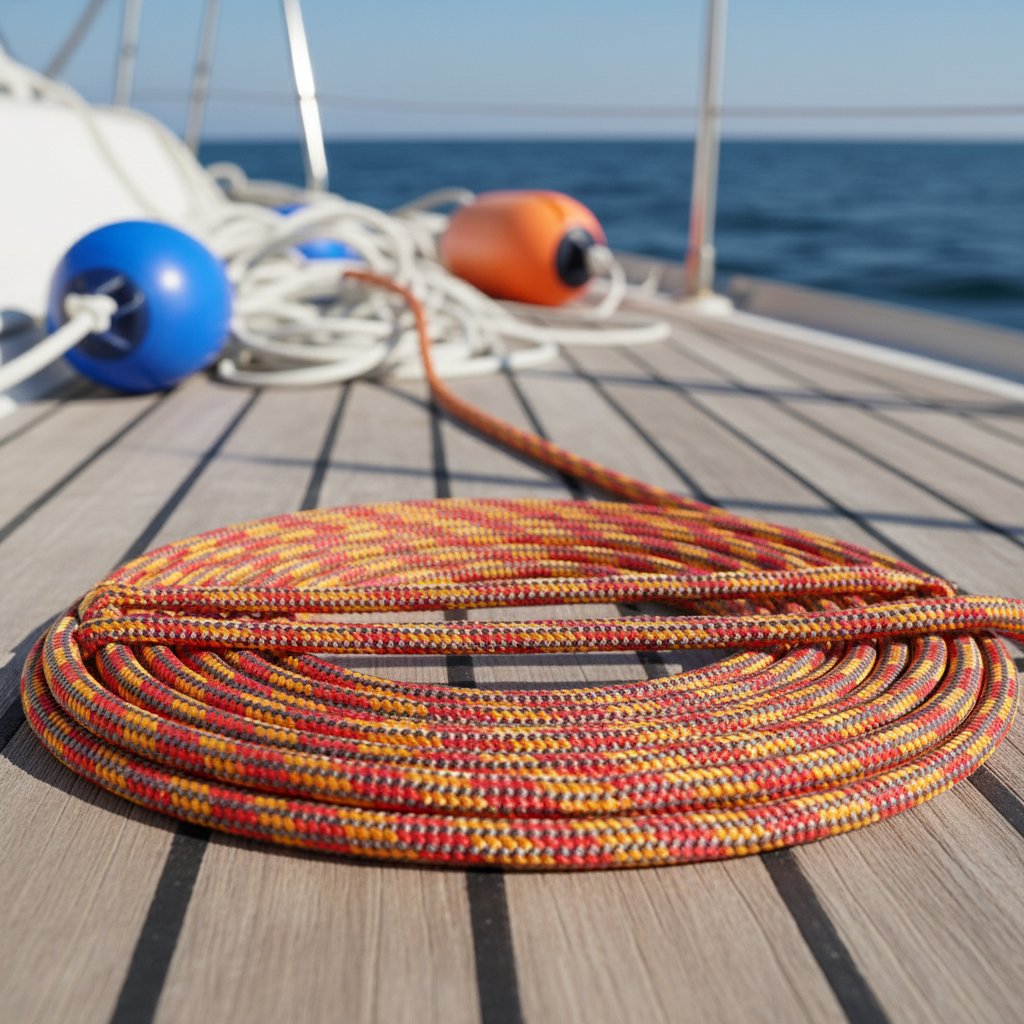
While nylon handles the ups and downs of rough water admirably, its sensitivities to the elements highlight why many turn to alternatives that hold steady longer in everyday exposures. Let's delve into how polyester mooring rope addresses these challenges.
Polyester Mooring Rope: The Reliable Choice for Enduring Conditions
Those sensitivities in nylon, like fading under the sun or softening in the rain, point straight to why polyester mooring rope often steps in as the steadier option for setups that face the elements day in and day out. If nylon is the flexible friend that bends with every wave, polyester is the dependable one that stands firm, keeping your lines predictably taut without much drama. I've watched skippers in sunny harbours swear by it after seeing nylon lines curl and weaken over a single season—it's that kind of reliability that builds trust on the water.
What makes polyester shine here is its limited give: it elongates just 8 to 12 percent under tension, which cuts down on dangerous snap-back and keeps the rope's shape consistent over time. This dimensional stability means your dock lines or stationary moorings won't sag or stretch out unexpectedly, making it perfect for tying off in marinas where you want everything to hold position without constant adjustments. Imagine securing your vessel overnight in a spot with steady but predictable pulls—no wild rebounds if something shifts, just quiet assurance.
Then there's how polyester weathers the real-world grind. It laughs off UV rays better than most, holding its colour and integrity through months of direct exposure without turning brittle. Water barely touches it, absorbing less than 0.5 percent, so it stays lightweight and maintains full strength even after a drenching—no surprises in performance when conditions turn wet. Abrasion resistance holds strong too, especially over the long haul, as it doesn't fray as quickly against rough pilings or hardware. And yes, polyester mooring rope is good for anchoring, particularly in calmer, static spots where you need it to hug the bottom without much surge action. Unlike nylon's bounce for wilder tides, this material keeps things planted firm in quieter bays or protected coves.
Core Strengths
Built for the Long Haul
UV Endurance
Resists degradation from sunlight, extending usability in open exposures.
Low Moisture Uptake
Stays dry and strong, ideal for frequent wet-dry cycles.
Abrasion Durability
Wears evenly against surfaces, maintaining grip over time.
Practical Edges
Everyday Marine Fit
Static Anchoring
Suits calm holds where steady tension prevents drift.
Controlled Stretch
Minimises rebound risks in dockside ties.
Marina Durability
Performs reliably in sheltered or sun-baked spots.
For construction, polyester works well in straightforward 3-strand twists, which offer an affordable, traditional feel that's easy to handle and splice for basic dock work. Double braid takes it up a notch, wrapping a smooth outer layer around a firm core for superior control and reduced bulk—great if you're dealing with winches or need lines that coil neatly without kinking, as explored in mastering yachting with double braid polyester rope. These setups suit everything from quiet marina slips to more exposed piers where lasting toughness matters, letting you focus on the boat rather than fussing with the ropes. Have you noticed how some lines just feel more solid after a storm? That's polyester doing its quiet work, setting up nicely for seeing how it stacks against others in tougher tests.
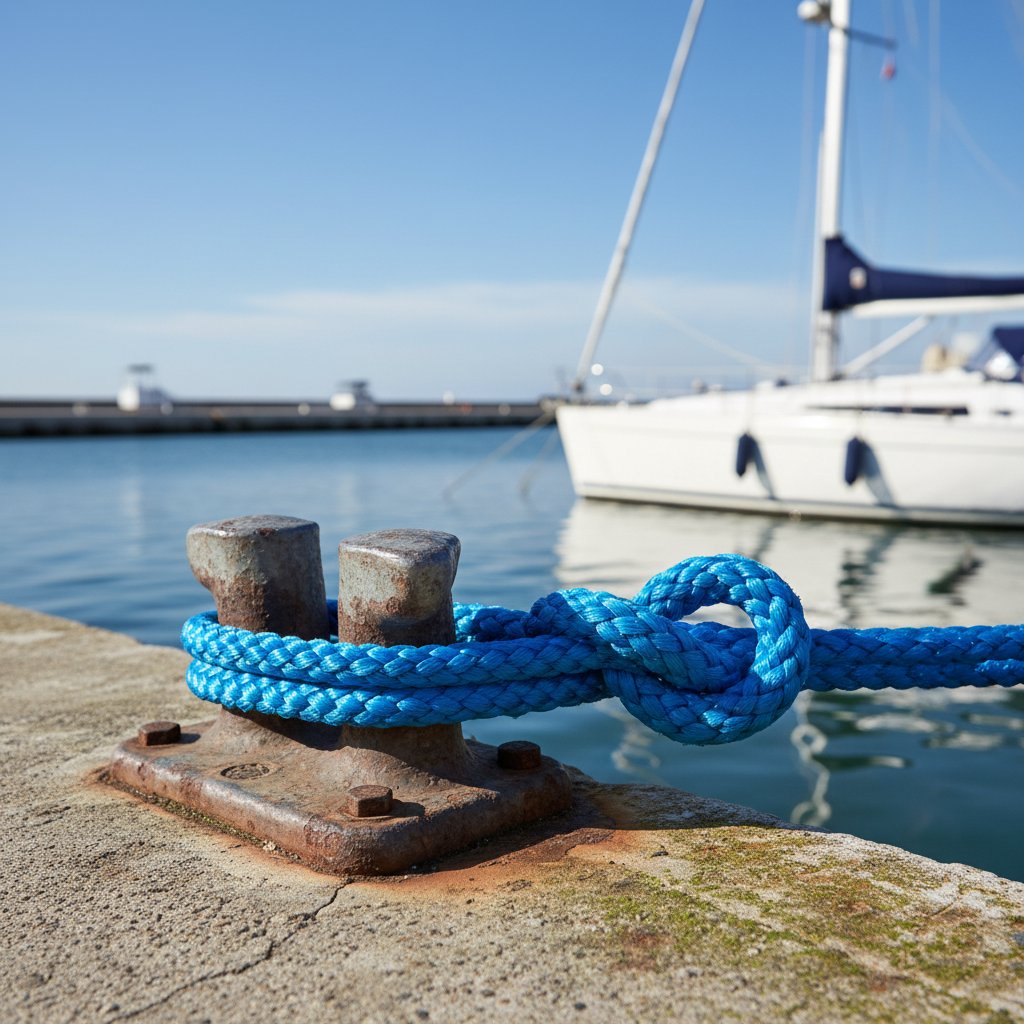
With these traits in mind, it's clear polyester brings a level of predictability that pays off where endurance counts most. This paves the way for a closer look at how it measures up directly against alternatives like nylon.
Nylon Mooring Line vs. Polyester: Head-to-Head Comparison and Recommendations
That predictability in polyester sets up the perfect moment to stack it against nylon directly, doesn't it? After seeing how each handles the sea's demands on its own, a side-by-side view clarifies where one pulls ahead in everyday boating realities. Let's break it down by the metrics that matter most—starting with how they respond to the pull and push of mooring life.
Take stretch first: nylon's 15-25% elongation gives it an edge in soaking up sudden jerks from waves or wind shifts, acting like a natural shock absorber to ease the strain on your fittings. Polyester, at 8-12%, stays truer to its length, which minimises that scary snap-back but might transfer more force to the boat in rough surges. UV resistance flips the script—polyester holds up far better under constant sun, retaining over 90% of its strength after a year of exposure, while nylon can drop 20-30% without protective coatings. Abrasion tells a similar story; both start strong, but polyester's surface wears more evenly over time, especially when rubbing against barnacle-crusted pilings, whereas nylon frays quicker once waterlogged.
Water absorption is another divider: nylon takes on up to 4% of its weight in moisture, which not only bulks it up but cuts strength retention to about 85% when soaked—imagine heaving a heavier, weaker line during a storm. Polyester barely notices, absorbing under 0.5% and keeping nearly full power wet or dry. Cost-wise, nylon often runs 10-20% cheaper upfront, making it tempting for budget setups, but polyester's longer life—typically 2-3 times in sunny, wet spots—evens the scales for serious users. Overall, which is better for mooring lines, nylon mooring line or polyester? It hinges on your setup; nylon suits spots with wild motion, but polyester wins for reliability in most real-world scenarios where the sun beats down and spray flies constantly.
Nylon Edges
Best for variable loads like tidal swings, cushioning impacts effectively.
Budget Friendly
Lower initial price suits occasional or high-motion needs.
Polyester Strengths
Superior longevity in sun and wet, with stable performance.
Safety Focus
Low stretch reduces hazards; pair with chafe guards always.
Those trade-offs mean nylon shines where loads vary wildly, like open anchorages with big swells. However, polyester takes the crown for enduring sun-baked marinas or rainy docks—its consistency cuts replacement hassles. Safety-wise, always add chafe protection, like tubular guards at contact points, since rubbing claims more lines than outright snaps. I've replaced too many after a single chafed-through spot in a storm.
For recommendations, start with your vessel: a 30-foot sailboat in a protected slip might use 1/2-inch polyester for steady holds, while the same boat in exposed waters calls for 5/8-inch nylon to handle surges, as detailed in the ultimate guide to weatherproof 1/4 and 5/8 marine rope. Open environments demand polyester's toughness against elements, but sheltered spots let nylon's give prevent overloads. At iRopes, our OEM and ODM services let you customise everything—from blending materials for hybrid stretch to exact diameters and branded ends—ensuring the line fits your operation perfectly, all backed by our precision builds.
- Small vessels (under 30 ft): Opt for 3/8-inch lines; polyester for calm docks, nylon for tidal bays.
- Larger boats (40+ ft): Go 5/8-inch or thicker; prioritise polyester in sunny exposures for lasting hold.
- Custom tweaks: iRopes tailors constructions like double braid with your specs for any condition.
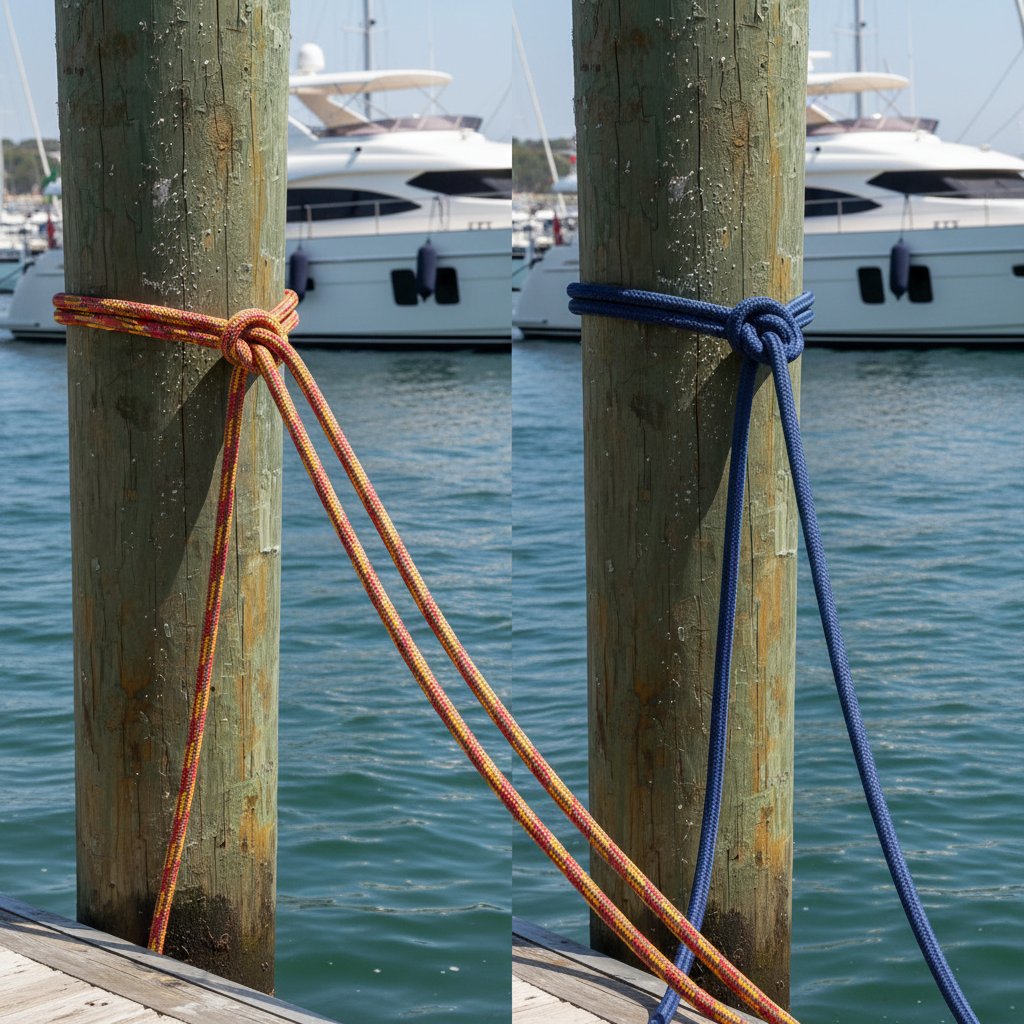
Matching these choices to your needs keeps things safe and simple. Leaning on experts for that final tweak makes all the difference in getting ropes that truly last.
In the unpredictable world of marine environments, the choice between nylon mooring line and polyester mooring rope reveals distinct strengths and weaknesses. Nylon excels in shock absorption through high elasticity, yet it falters under UV degradation and water absorption that compromise long-term performance. Conversely, a polyester mooring rope emerges as the superior option for enduring conditions, offering low stretch for stability, exceptional UV and abrasion resistance, and minimal moisture uptake to maintain reliability in sun-soaked or wet settings. By matching these properties to your vessel size—thicker lines for larger boats—and specific mooring conditions, from sheltered marinas to exposed anchorages, you ensure safer, more efficient operations, with options like those in our commercial marine solutions.
This comparison underscores how selecting the right material, like polyester for most real-world demands, safeguards your vessel while minimising replacements. For tailored advice drawing on iRopes' ISO 9001-certified customisation and IP protection for wholesale buyers, consider your unique setup to optimise safety and durability.
Need Customised Mooring Rope Guidance for Your Business?
If you'd like personalised recommendations to apply these insights to your business's marine needs, fill out the inquiry form above—iRopes is here to help craft the ideal wholesale rope solution for you.
