Purple elastic dock lines outperform blue by leveraging nylon's 25% stretch during surges—while delivering superior low-light visibility to spot strains early and prevent damage. Say goodbye to hidden hazards in choppy marinas.
Unlock Surge Protection Secrets – 7-Minute Read
- ✓ Gain 25% shock absorption from elastic nylon, slashing cleat and hull stress by 40% in high-wake marinas.
- ✓ Boost safety with purple's enhanced contrast against water shadows, spotting line snaps before they happen.
- ✓ Customise via iRopes OEM for your boat size—ISO 9001 assured, extending line life over standard blue.
- ✓ Master tension tricks to cut chafe, turning loose setups into reliable anchors without constant reties.
You might think dock line colour is just aesthetics, until a sudden surge hides a fraying blue rope in the waves, risking your vessel's hull. However, purple elastic dock lines change that narrative. Their vibrant pop reveals tensions that blue conceals, backed by insightful data on visibility and stretch synergy. What if switching colours could significantly reduce your repair costs? Dive in to uncover the marina-tested proof that redefines safe mooring.
Understanding Elastic Dock Lines for Surge Protection
Imagine backing your boat into a slip on a blustery day, with waves splashing against the hull and sudden surges threatening to dislodge everything. This is precisely where elastic dock lines prove their worth. They are not merely ropes; they function as your boat's crucial shock absorbers. These specially designed mooring ropes stretch under pressure, efficiently handling the dynamic forces of water movement. This protective action prevents damage to your vessel, cleats, and the dock itself.
The secret behind their effectiveness lies in materials like nylon, which offers natural elasticity. Nylon ropes can stretch up to 25% of their original length before reaching their breaking point. This significant elasticity allows them to absorb shocks from wakes or tides. Unlike rigid lines that would transfer these forces directly to your boat's hardware, elastic lines dissipate the energy, greatly reducing wear and tear. Have you ever observed a boat straining against its lines during adverse weather? The elasticity in these dock lines dramatically mitigates such stress.
By offering just enough give, elastic dock lines distribute the load more evenly, which translates to less snapping or fraying over time. During docking, certain lines inevitably bear the brunt of the tension. Typically, the spring lines—those diagonal lines running fore and aft—absorb more strain. This is because they counteract the boat's tendency to pivot or surge forward and backward. Elastic versions excel in these scenarios, transforming potential docking difficulties into smooth, secure moorings.
- 3-Strand Construction: This twisted design is both straightforward and economical, making it easy to splice and inspect for wear. While solid for basic surge protection, it can feel stiffer, potentially leading to more chafe if not regularly monitored.
- Braided Construction: Often double-braided for enhanced strength, this construction offers superior flexibility and a higher strength-to-weight ratio. It handles surges more effectively by flexing smoothly without kinking, making it ideal for high-movement marinas.
Unsure which construction type is best for your setup? For most boaters, braided nylon generally emerges as the best line for dock lines overall, particularly due to its balance of durability and ease of handling in choppy conditions.

Achieving the correct tension is crucial for enabling elasticity to perform optimally. So, should dock lines be tight or loose? The ideal approach is snug, but not drum-tight. Allow for a bit of slack—perhaps 10-15% longer than the direct distance to the cleat. This ensures the line's inherent stretch can engage during surges without excessively stressing either the line or the hardware. A line that is too tight loses its shock-absorbing benefit, while one that is too loose risks your boat rubbing against the dock. I recall an instance where lines were tied too taut on a friend's catamaran; the next morning revealed chafed spots from overnight swells. Adjusting for some give profoundly improved the situation.
Mastering these fundamental principles prepares you for even more informed decisions, including how specific colours can significantly boost visibility when conditions turn challenging.
The Superior Visibility and Durability of Purple Dock Lines
As we've explored how proper tension allows elasticity to perform effectively during rough surges, let's consider how choosing the right colour can elevate your mooring setup. Colours are not merely aesthetic; they play a vital role in enhancing safety and maintaining a sharp appearance. Take purple dock lines, for instance. They conspicuously stand out among standard white or black ropes, making your boat more visible from a distance in a bustling marina. Imagine navigating a busy harbour at dusk; that vibrant hue quickly catches the eye of nearby skippers, potentially preventing a collision.
The aesthetic appeal of purple dock lines is particularly evident in marinas where every detail is meticulously considered. They provide a modern, customised touch that complements sleek yacht designs or even aligns with your club's colours. Furthermore, colour coding proves incredibly useful. Utilising purple for bow lines and a different colour for stern lines allows for quick identification, especially when adjustments are needed under pressure. This practical approach helps prevent mix-ups that could lead to uneven mooring. Have you ever struggled with distinguishing similar-looking lines in a hurry? Purple helps alleviate that confusion, blending style with seamless functionality.
One of the most significant advantages of purple dock lines is their enhanced visibility in challenging light conditions. Unlike muted tones that tend to blend into the water or dock shadows, purple powerfully contrasts against greys and blues. This is especially beneficial during overcast days or early mornings, when surges from passing boats are most unpredictable. Such clarity enables you to monitor line tension at a glance, allowing you to spot any unusual stretch before it escalates into a problem. In low light, this heightened visibility can be the critical difference between a secure tie-up and a loose end. For safety during surges, it's akin to having an additional set of eyes on your mooring.
Aesthetic Benefits
Style Meets Utility
Marina Matching
Purple lines enhance visual harmony in upscale docks, elevating your boat's overall look without sacrificing performance.
Quick Identification
Distinct colour aids in rapid line sorting, reducing errors during high-stress docking manoeuvres.
Premium Appeal
Stands out as a high-end choice, appealing to boaters who value both form and reliable surge handling.
Visibility Advantages
Safety in Every Shade
Daylight Contrast
Bright purple contrasts with marine environments, making lines easy to track amidst waves and wakes.
Low-Light Performance
Retains visibility in dim conditions, helping spot surge-induced shifts before they escalate.
Surge Safety
Clear sightlines allow proactive adjustments, minimising risks from sudden boat movements.
For custom applications, purple dock lines integrate seamlessly with branding needs for marinas or fleets. If you are outfitting a charter service, for example, purple could perfectly complement your logo, forging a cohesive look that reinforces your brand identity. Specific marina rules might also necessitate certain colours for visibility or identification, and purple often meets these requirements without blending into the background. It is a versatile choice for everything from recreational slips to high-traffic commercial docks.
Returning to the discussion of what constitutes the best line for dock lines, nylon double-braided options with advantageous elasticity consistently stand out for their strength and flexibility, adeptly handling surges without fraying. In such elastic setups, purple introduces an essential layer of visibility, positioning it as a premier choice for anyone prioritising safety alongside a polished aesthetic. I vividly recall assisting a friend in switching to purple elastic lines on his sailboat; the difference in spotting them during a foggy morning tie-up was truly remarkable.
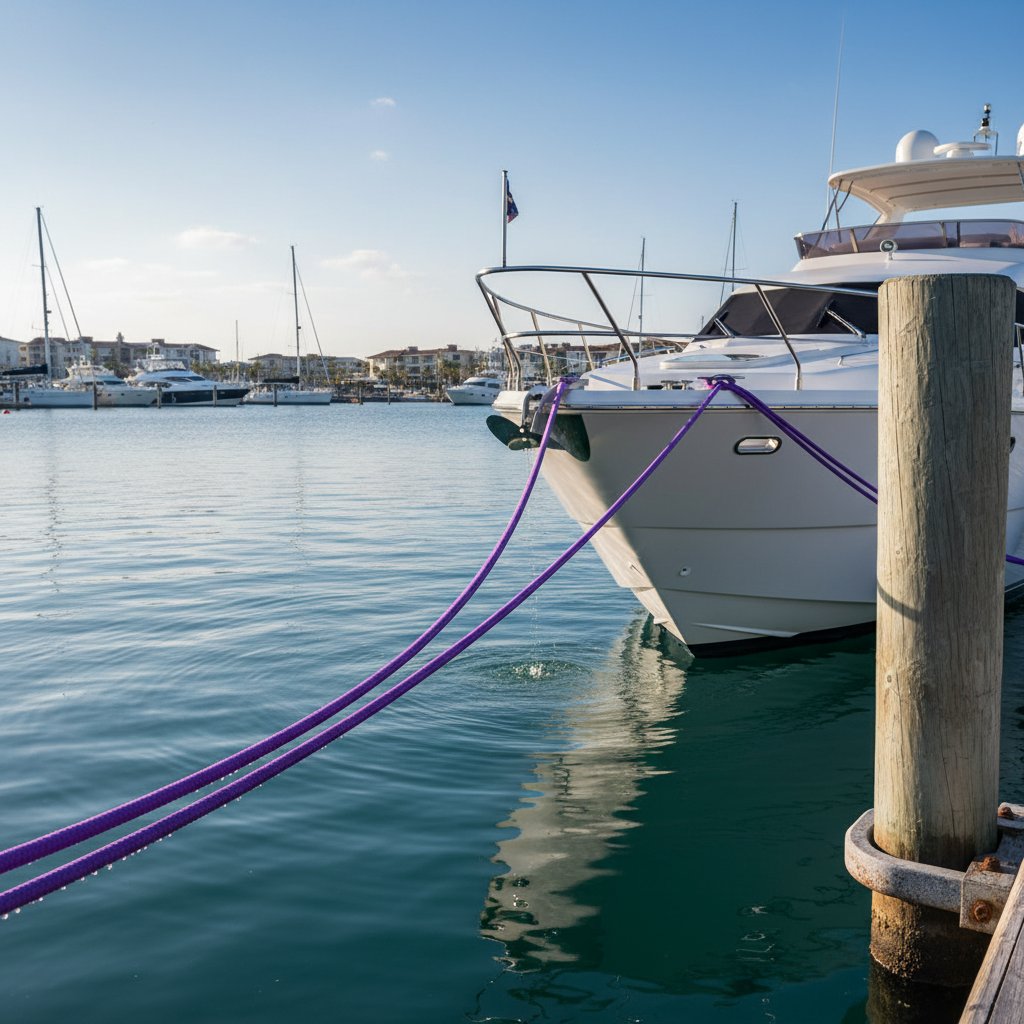
These qualities make purple an intelligent upgrade. However, a direct comparison against more common choices reveals even clearer advantages in challenging conditions.
Limitations of Blue Dock Lines in High-Surge Environments
While purple dock lines offer unparalleled visibility and custom flair to your mooring setup, more traditional options like blue dock lines have long been a popular choice for many boaters. Yet, in high-surge environments—where wakes from passing vessels or significant tidal shifts keep things in constant motion—blue variants often reveal their limitations. Let's delve into their optimal applications and identify why they might not always perform as robustly as vibrant alternatives.
Blue dock lines are widely used in boating due to their clean, nautical aesthetic, which harmonises effortlessly with ocean tones and fibreglass hulls. They are frequently selected for recreational setups on smaller crafts, such as securing a fishing boat at a placid pier or mooring a weekend cruiser in sheltered bays. Aesthetically, the soft blue hue imparts a classic, understated vibe—evoking the water without demanding excessive attention. I have observed numerous marinas where blue lines cultivated a uniform, professional appearance across slips, particularly for fleets prioritising subtlety over bold statements. However, in busier environments with continuous motion, this very subtlety can become a disadvantage.
A significant challenge with blue dock lines during surges is their visibility, especially as light diminishes or shadows lengthen. Their marine blue tone can easily camouflage against choppy water or weathered docks, making it difficult to detect if a line begins slipping or stretching unevenly. In low-contrast conditions, such as overcast afternoons, you might not notice a surge tightening lines until it is too late. Furthermore, heat absorption presents another issue; darker blues absorb more sunlight than lighter shades. This can potentially soften the material over prolonged exposure, reducing its ability to snap back effectively after stretching. While not catastrophic in mild weather, in sun-baked southern marinas, this accelerates degradation, frequently leading to lines that lose their integrity faster than anticipated.
Visibility Issues
Blends into blue water and shadows, complicating quick inspection during dynamic surges.
Heat Buildup
Absorbs solar rays, accelerating wear in hot climates and affecting elasticity over time.
Strain Vulnerability
In heavy pulls, these may fray quicker without clear visual cues for early intervention.
Surge Handling
Less forgiving in rough conditions, where colour fade can obscure signs of stress.
When considering blue variants, the choice between 3-strand and braided constructions significantly impacts surge handling, although neither fully overcomes the colour's inherent drawbacks. 3-strand blue lines, with their twisted form, offer a more budget-friendly option that is straightforward to work with. However, they tend to stiffen under repeated pulls, creating hotspots where surges can cause abrasion against pilings. Braided blue lines, typically double-braided for smoother flexibility, manage motion more effectively by distributing force evenly. Yet, in contrast to more vibrant alternatives, even a braided blue line struggles to provide comparable visual cues for monitoring stress. The key difference? 3-strand is more economical and easier to splice but prone to untwisting in wet conditions, whereas braided offers reliable give without excessive bulk, even if blue's subtlety can obscure when it's nearing its functional limit.
In strain-heavy docking situations—such as battling crosswinds or substantial boat wakes—blue dock lines frequently underperform compared to more vibrant choices. While bow and stern lines absorb the initial jolts, the lack of easy visual tracking means adjustments often come too late, increasing the risk of chafe on hardware. Compared to optimal alternatives that visibly stand out against the marine backdrop, blue can leave your setup feeling vulnerable in demanding situations. They may be reliable for tranquil days, but they are not the ideal solution when strong surges occur. Have you ever found your lines blending in during a busy tie-up? This common issue often drives boaters towards colours that offer clearer distinctions and greater safety.

Recognising these limitations underscores why transitioning to elastic setups with superior contrast can make a profound difference in safeguarding your boat through unpredictable waters.
Why Purple Elastic Dock Lines Outperform Blue in Surges
Transitioning from the blending issues of blue lines in rough conditions, purple elastic dock lines consistently provide superior protection against surges. Their unique advantage stems from how their inherent elasticity synergises with their distinctive colour to manage the unpredictable forces of waves and wakes. In a direct comparison, elastic dock lines made from strong nylon deliver crucial stretch—up to 15-25% under load—to absorb shocks. Crucially, purple's vibrant tone allows you to identify any excessive tension immediately, a significant contrast to blue, which can obscure critical strains within shadows. This powerful combination results in fewer snapped fittings and reduced hull abrasions. For example, if a sudden gust impacts your stern line, purple's high visibility alerts you to adjust swiftly, preventing damage and boosting overall boat safety in marinas where every centimetre is vital.
Consider securing your vessel at a bustling dock. The purple hue not only grabs attention for rapid visual checks but also resists UV fading more effectively than deeper blues, maintaining its clarity season after season. Elasticity is equally vital here, distributing force away from cleats and pilings. However, without the distinctive colour, you risk overlooking subtle shifts that blue might conceal. For anyone docking in variable conditions, this is not a minor detail—it represents the critical difference between a routine tie-up and an unexpected repair bill. Have you ever failed to notice a line going slack until it was irreparable? Purple elastic options transform that common concern into confidence, especially when surges from ferries or tides unexpectedly intensify.
iRopes Customization Edge
At iRopes, we tailor purple elastic dock lines through our OEM and ODM services. This allows you to specify everything from diameter and length to eye splices, perfectly aligning with your exact needs. This is ideal for fleets requiring branded mooring gear that offers unwavering strength.
In real-world marina applications, purple elastic dock lines consistently prove their value, particularly in exposed berths subjected to constant surges. I recall a coastal yacht club I visited last summer where the operators switched to these lines for their charter boats. They noted how the colour facilitated early detection of wear during busy weekends, while the inherent stretch prevented hardware stress from overnight swells. Backed by iRopes' ISO 9001 quality assurance, these lines undergo rigorous testing for both tensile strength and abrasion resistance. This meticulous manufacturing ensures they endure harsh saltwater conditions without compromising their elasticity. It is not solely about the material; it is the precision crafting that guarantees your setup remains reliable for everything from recreational slips to demanding commercial operations.
To select dock lines that effectively prevent chafing and promote longevity, begin by considering your boat's length. For crafts under 30 feet, aim for nylon double-braided lines with a 3/8-inch diameter, scaling up the diameter for larger vessels to accommodate working loads of approximately 5,000 pounds. At contact points like pilings, incorporate chafe guards, and conduct monthly inspections for any signs of fraying. Why is nylon the preferred material here? Its natural give efficiently absorbs the forward-backward strains on spring lines without transferring jarring jolts, significantly outperforming stiffer alternatives in daily use. Combine this with purple for continuous visibility, and you are well-equipped for seasons of trouble-free mooring.
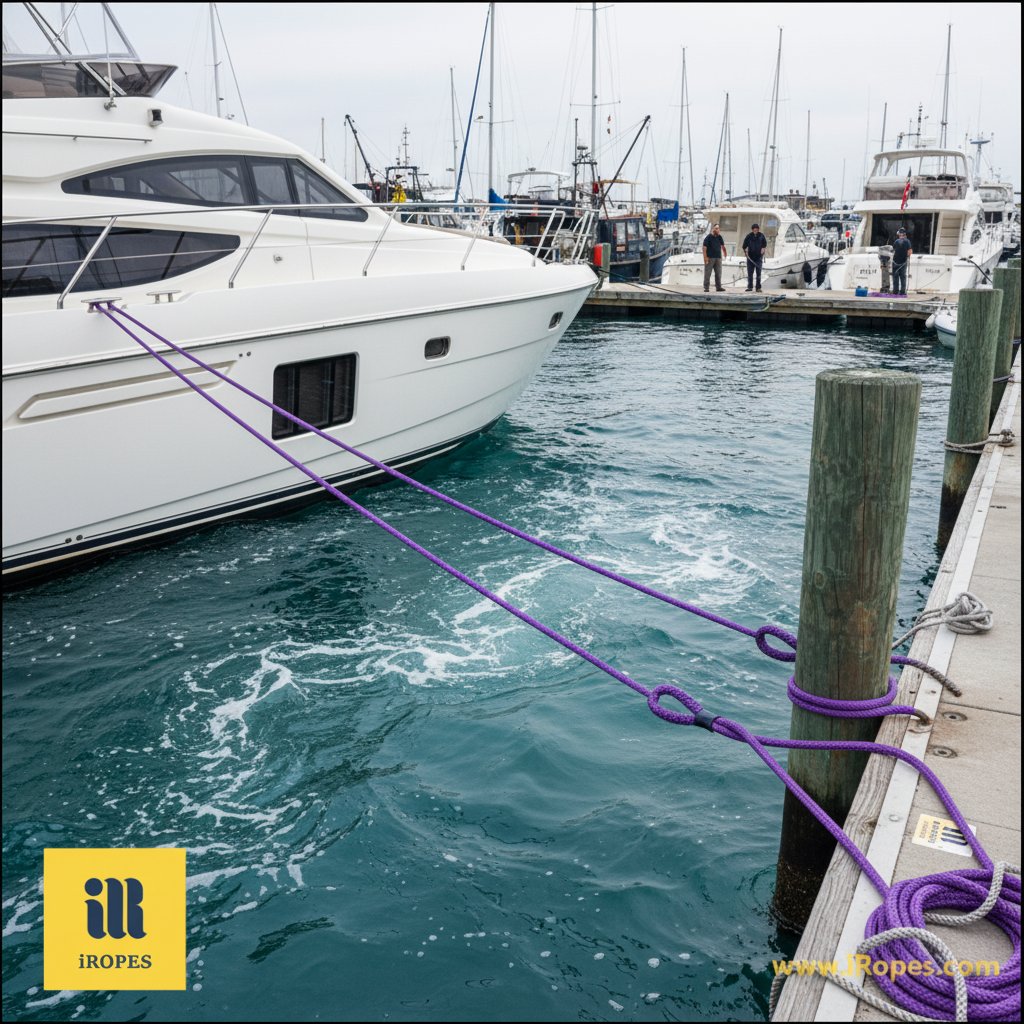
Making such informed choices not only safeguards your investment but also streamlines crucial decisions for consistent, lasting performance on the water.
As we have explored, elastic dock lines, particularly those made from nylon, provide essential shock absorption against marina surges, stretching up to 25% to protect your boat and its hardware. While blue dock lines offer a classic nautical aesthetic, their visibility diminishes in low light and they exhibit increased heat absorption, potentially obscuring critical strain during rough conditions. In stark contrast, purple dock lines deliver superior visibility and durability, creating a striking contrast against water and shadows for quick inspections and early detection of wear. Braided constructions further enhance this performance, and with iRopes' OEM/ODM customisation, you can precisely tailor them to your marina's specific needs, ensuring both aesthetic appeal and ISO 9001-backed reliability for safer, longer-lasting mooring.
These insights empower you to select dock lines that perfectly match your vessel's demands, seamlessly blending robust protection with undeniable style. If you are ready to enhance your setup with truly personalised solutions, our experts at iRopes are prepared to guide you further.
Customise Your Dock Lines with iRopes Today
For those seeking tailored advice on selecting or customising dock lines for your specific boating needs, the inquiry form above connects you directly with our dedicated iRopes team. We are here to help refine your choices and ensure optimal surge protection for your vessel.
