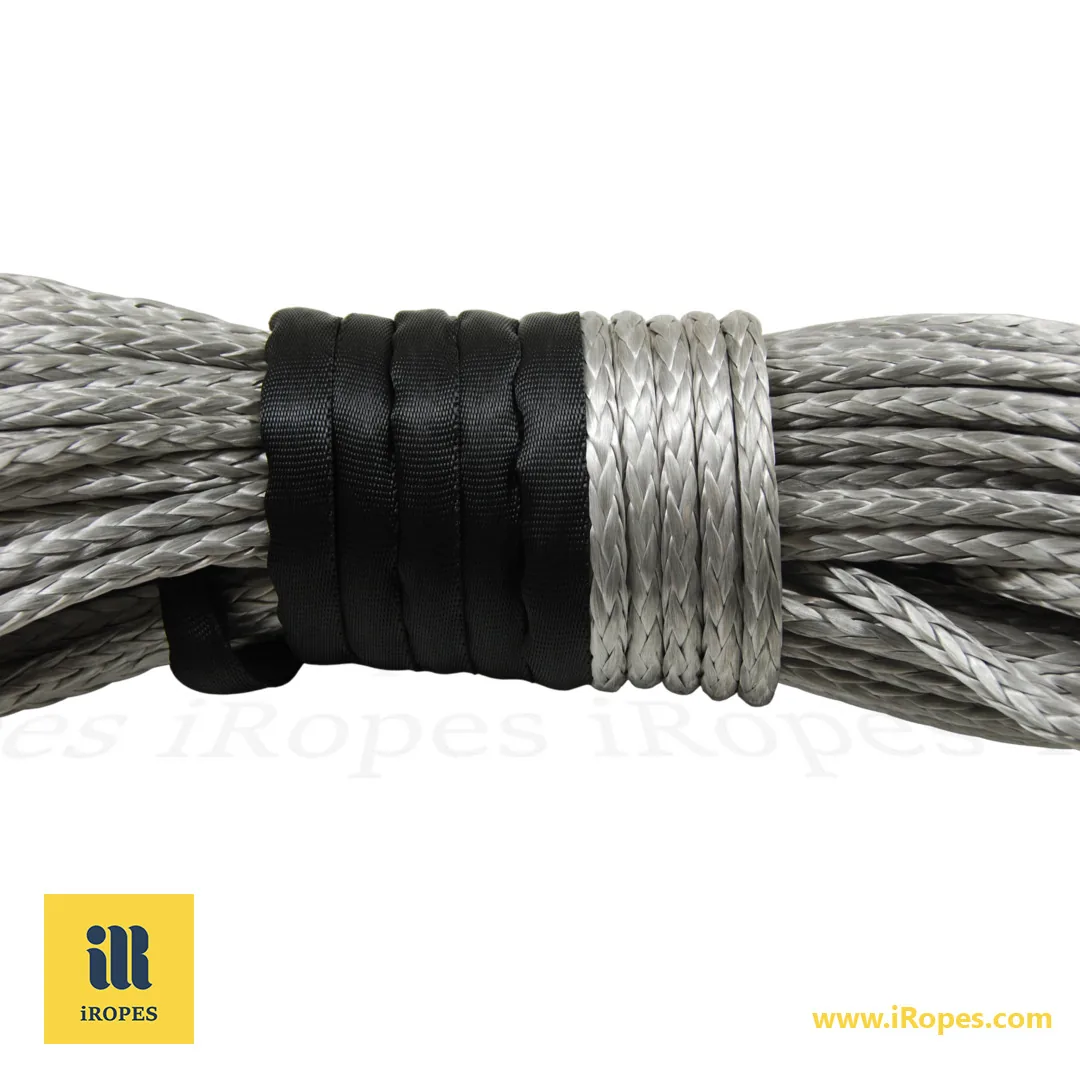
การเชื่อมตาแบบไนลอนสองชั้นบิดเกลียวช่วยรักษาแรงดึงของเชือกขนาด 1‑inch ที่มีแรงดึง 30‑ตันไว้ได้ 94 % — แต่การผูกโบว์ลดลงเหลือ 45 %.
ประโยชน์ที่คุณได้รับ (≈5 นาที)
- ✓ รักษาแรงดึง 94 % → เพิ่มความปลอดภัย +15 ตันบนเชือกขนาด 1‑inch
- ✓ ลดปริมาณ 60 % เทียบกับการผูกโบว์ → ไม่ติดบนวินช์
- ✓ ทำการเชื่อมให้เสร็จใน ≤7 นาทีด้วยเครื่องมือ iRopes → ทำงานภาคสนามเร็วขึ้น
คุณยังคงผูกเชือกด้วยโบว์และเสียแรงดึงเกือบครึ่งหนึ่งอยู่หรือไม่? ค้นพบวิธีเชื่อมที่ช่วยรักษา 94 % ของแรงดึงเชือกของคุณและเรียนรู้เกี่ยวกับโซลูชันแบบกำหนดของ iRopes สำหรับการใช้งานบนถนนออฟโรดและทางทะเล
ทำความเข้าใจการเชื่อมเชือกสองชั้นบิดเกลียวและข้อดีของมัน
เมื่อเชือกต้องรับน้ำหนักหนักในระหว่างการกู้คืนออฟโรดหรือการทำกำลังเรือ การทำปลายเชือกอย่างเหมาะสมมีผลอย่างมากต่อความปลอดภัยและประสิทธิภาพ การเชื่อมเชือกสองชั้นบิดเกลียว สร้างวงจรถาวรที่รับน้ำหนักได้ ให้ความแข็งแรงเหนือกว่าการผูกโบว์

ทำไมคุณควรเลือกการเชื่อมแทนการผูกโบว์? การทดสอบพบว่าการเชื่อมที่ทำอย่างดีสามารถรักษาแรงดึงที่แตกได้ 90‑95 % ในขณะที่โบว์ทั่วไปอาจลดความสามารถนี้ลง 40‑60 % อีกทั้งการเชื่อมยังให้วงจรที่เรียบและต่ำระดับ ไม่ทำให้ติดบนดรัมวินช์หรือเคล็ดท่าเรือ
- การรักษาแรงดึง – การเชื่อมช่วยรักษาความสามารถรับน้ำหนักของเชือกได้เกือบทั้งหมด
- ลดปริมาณ – วงจรนั่งราบ ลดการรบกวนกับอุปกรณ์ต่าง ๆ
- ความทนทาน – จุดเครียดน้อยลงทำให้บริการอายุการใช้งานยาวนานกว่า
ในโครงสร้างสองชั้นบิดเกลียว การเชื่อมตาเป็นแบบที่ใช้มากที่สุด เนื่องจากเปลือกด้านนอกสามารถดึงกลับมาครอบแกนด้านในได้โดยไม่ทำลายเส้นใย การเชื่อม “Class I” นี้ทำงานได้ดีเป็นพิเศษกับ เชือกไนลอนสองชั้นบิดเกลียว ทำให้เป็นตัวเลือกยอดนิยมสำหรับสายวินช์หรือสายท่าเรือ
สี่ประเภทการเชื่อมที่พบบ่อยได้แก่ การเชื่อมตา, การเชื่อมปลาย‑ต่อ‑ปลาย (สั้น), การเชื่อมด้านหลัง (หรือที่เรียกว่าการเชื่อมช่างทำเรือ) และการเชื่อมแบบยาว
การเข้าใจตัวเลือกเหล่านี้ทำให้คุณสามารถเลือกวิธีที่มีประสิทธิภาพที่สุดสำหรับโครงการของคุณ ไม่ว่าจะต้องการวงจรที่แข็งแรง การเชื่อมที่ไม่มีรอยต่อ หรือปลายเชือกที่ไม่หลุดร่อน การเชื่อมจึงเป็นทางเลือกที่เชื่อถือได้ ด้วยพื้นฐานของ การเชื่อมเชือกสองชั้นบิดเกลียว ที่ชัดเจนแล้ว เราจะไปสำรวจว่าความแข็งแรงของเชือกไนลอนสองชั้นขนาด 1‑inch ทำงานอย่างไรในสภาพออฟโรดและทางทะเลจริง
จุดเด่นด้านประสิทธิภาพของเชือกไนลอนสองชั้นขนาด 1‑inch สำหรับการใช้ออฟโรดและทางทะเล
เมื่อเราได้ทำความเข้าใจว่าการเชื่อมช่วยรักษาแรงดึงได้แล้ว ถึงเวลาพิจารณาเชือกเอง เชือกไนลอนสองชั้นขนาด 1‑inch มีแกนภายในที่ถักแน่นและเปลือกภายนอกที่ปกป้อง การออกแบบนี้ให้เชือกมีลักษณะไม่หมุน ไม่งอ การผสานแกน‑ใน‑แกนนี้เป็นสิ่งที่อุตสาหกรรมอ้างอิงเมื่อถามว่า “การเชือกสองชั้นบิดเกลียวหมายถึงอะไร?” แกนภายในทำหน้าที่รับน้ำหนักหลัก ขณะที่แกนภายนอกปกป้องแกนจากการขัดถูและสภาพแวดล้อม
ไนลอนในฐานะวัสดุให้คุณสมบัติสำคัญสามประการสำหรับสภาพออฟโรดและทางทะเลที่ท้าทาย ประการแรก ความแข็งแรงในการแตกที่สูงเกิน 30 ตัน ให้ขอบเขตความปลอดภัยสูงสำหรับการดึงกู้คืนและการยึดเกาะหนัก ประการที่สอง ช่วงการยืด 20‑40 % ที่แตกทำหน้าที่เป็นตัวดูดซับแรงกระแทกตามธรรมชาติ ความสามารถนี้ช่วยบรรเทาโหลดฉับพลัน เช่น เมื่อวินช์ดึงอย่างรวดเร็วหรือเมื่อกระแสน้ำกระทบสายกำลังประมง ประการที่สาม เปลือกทอให้ความทนทานต่อการสึกหรอบนพื้นผิวอย่างยอดเยี่ยม ทำให้เชือกคงความแข็งแรงและการยึดเกาะแม้หลังจากการขัดถูหลายครั้งกับราวยาน, ก้อนหิน หรือเคล็ดโลหะ
ข้อมูลทางเทคนิคของรุ่นมาตรฐานขนาด 1‑inch ยังย้ำถึงความเหมาะสมสำหรับงานหนัก เชือกนี้หนักประมาณ 0.75 kg ต่อฟุต ให้สมดุลระหว่างการจัดการง่ายและแรงดึงที่สัมพันธ์กับน้ำหนักของมัน ผู้ผลิตมักระบุ Working Load Limit (WLL) ประมาณ 6 ตันสำหรับขนาดนี้ ซึ่งสอดคล้องกับกำลังรับของวินช์ออฟโรดส่วนใหญ่และระบบกำหนดเรือเชิงพาณิชย์ ตัวเลขเหล่านี้แปลเป็นความมั่นใจที่เพิ่มขึ้นในสนาม: นักออฟโรดสามารถกู้คืนรถ 4x4 ที่ติดอยู่ได้อย่างปลอดภัย และนักเดินเรือสามารถยึดเรือโดยไม่ต้องกังวลเรื่องเชือกฉีกขาดฉับพลัน
การใช้งานจริงแสดงให้เห็นถึงความหลากหลายของเชือกนี้ ในการกู้คืนออฟโรด เชือกนี้เป็นแกนหลักของสายวินช์ ให้ความยืดหยุ่นพอที่จะดูดซับแรงดันของยานขณะดึงขณะยังคงแข็งแรงพอรับแรงดึงหลายตัน บนน้ำเชือกเดียวกันนี้ก็ทำหน้าที่เป็นสายท่าเรือหรือสายกำลังประมง ความยืดหยุ่นที่ควบคุมได้ป้องกันการเคลื่อนไหว “สปริง” มากเกินไปที่อาจทำความเสียหายต่อบังโคลน แต่ความยืดหยุ่นโดยธรรมชาติของมันดูดซับแรงกระแทกจากคลื่นได้อย่างมีประสิทธิภาพ แม้โครงการยึดเกาะหนักก็ได้รับประโยชน์ เนื่องจากเชือกสามารถผูกกับอานได้อย่างแน่นหนา พร้อมยังคงความยืดที่จำเป็นเพื่อให้เอาอานตั้งอยู่ได้อย่างมั่นคงภายใต้โหลดที่เปลี่ยนแปลง

Core Benefits
Why this rope stands out
Strength
Exceeds 30 tonnes breaking strength, providing a large safety margin for heavy loads.
Shock‑absorption
Its 20‑40 % elongation at break smoothly manages sudden pulls during winch recovery or mooring operations.
Abrasion resistance
The outer sheath protects the core from wear against rock, metal, and marine hardware, ensuring longevity.
Performance Specs
Numbers that matter
Breaking strength
Approximately 30 tonnes, ensuring reliable load‑bearing capacity for critical tasks.
Weight per foot
Around 0.75 kg, offering a good balance of handling ease and inherent durability.
Working load limit
Roughly 6 tonnes for the 1‑inch size, making it suitable for most recovery and mooring setups.
Typical Off‑road & Marine Uses
This rope is ideal for winch recovery lines requiring both high tensile strength and controlled stretch. It also excels as dock and mooring lines, given its abrasion‑resistant sheaths. Additionally, it suits heavy‑duty anchoring setups, where shock absorption protects gear from sudden wave impacts.
Step‑by‑step guide to creating a double braided nylon rope eye splice
Building on the technical data presented earlier, the challenge now lies in transforming a 1‑inch double braided nylon rope into a strong, permanent loop. A well‑executed eye splice preserves most of the rope’s capacity and delivers a low‑profile termination that won’t snag on winch drums or dock cleats.

When the goal is to join two pieces of nylon rope together, splicing is the preferred method because it retains up to 95 % of the rope’s original strength. This is far superior to any knot‑based solution.
- Mark the standing part – Use a permanent marker to place the “X”, “R”, “1”, and “T” marks at the distances specified in the manufacturer’s splice chart.
- Extract the core – Insert the fid into the rope, work it to the “X” mark, and gently pull the inner core out to the “R” point, ensuring the outer cover remains intact.
- Mark the core – Transfer the “1” and “T” marks onto the exposed core. This will guide the cover’s re‑entry and the final burying length.
- Re‑insert the cover – Carefully push the cover back over the core using the fid, aligning the “1” mark on the cover with the core’s “1” mark.
- Create the taper – Use a sharp knife to trim the outer sheath, forming a smooth taper that will facilitate the burying process.
- Bury the core tail – Slide the tapered cover over the core tail until the “T” mark on the cover meets the core’s “T” mark, then securely lock the tail in place.
- Lock stitch – Using a lock‑stitching needle, pass the thread through the burying zone three times, tightening each pass to secure the splice.
For a 1‑inch diameter rope, special consideration is required. Its larger sheath necessitates a longer fid (typically 300 mm) and a wider taping width. This prevents the core from slipping during the crucial burying stage.
Tip: When working with a 1‑inch double braided nylon rope, apply extra tape around the core before re‑inserting the cover. This simple step prevents the core strands from spreading, ensuring a smooth, uniform splice.
iRopes’ OEM/ODM solutions for custom double braided nylon rope
After mastering the eye splice, the next logical step involves sourcing a rope that perfectly matches your exact dimensions and performance requirements. At iRopes, we engineer each strand of double braided nylon rope precisely to the specifications needed for off‑road recovery rigs, marine dock lines, or any other specialised application you can envision.

Recognising that every project features its own unique load‑bearing calculations, environmental exposure, and branding guidelines, we offer a comprehensive menu of modular customisation choices. These options can be combined in any order to meet your specific needs.
- Diameter & Length – Choose from ½‑inch to 2‑inch cores; lengths can be precisely cut to your exact metre or foot count.
- Colour, Pattern & Branding – Select solid hues, high‑visibility stripes, or custom graphics; we can also print logos directly on the sheath or on the packaging.
- Accessories & Packaging – Add thimbles, loops, or reinforced terminations, and choose between bulk pallets, colour‑coded bags, or printed cartons.
Quality is never an afterthought at iRopes. Our production lines operate under ISO 9001 certification, meticulously tracking every batch from fibre extrusion to the final coil. This systematic oversight guarantees that the tensile characteristics you’ve specified are consistently delivered, ensuring superior performance and reliability.
“Our ISO 9001 framework ensures that every metre of double braided nylon rope meets the exact breaking strength and elongation limits declared in the data sheet, providing the confidence needed for critical winch and mooring applications.”
Beyond the factory floor, we meticulously manage worldwide logistics. This ensures that your customised coil arrives precisely on schedule, ready for immediate deployment in the field, wherever that may be.
Engineering Performance
Our engineers fine‑tune core braid count and sheath weave to deliver the exact shock‑absorption and abrasion resistance demanded by rugged off‑road recoveries.
Logistics Excellence
Direct pallet shipments, real‑time tracking, and optional custom‑branded cartons streamline your supply chain from our factory to your dock, ensuring timely delivery.
Marine Ready
Salt‑water‑resistant sheaths and UV‑stable dyes ensure long‑term performance for dock lines, mooring ropes, and anchor rodes in harsh marine environments.
Off‑Road Tough
High‑stretch cores absorb the sudden surge of a winch pull, while the rugged outer braid resists abrasion from rocks, sand, and metal hardware inherent in off-road use.
Whether you need a 1‑inch configuration robust enough for a 30‑tonne winch pull or a specialised colour‑coded line for a fleet of rescue boats, our OEM/ODM programme translates those specific requirements into a finished rope. This product then arrives ready for the intricate splice you’ve just learned to master, benefitting from the top benefits of nylon braid and double‑braid nylon rope.
Need a personalised rope solution?
This article has demonstrated how a double braided rope splice preserves up to 95% of a rope’s strength. We’ve also highlighted how the 1‑inch double braided nylon rope delivers over 30‑tonne breaking strength, coupled with controlled stretch and superior abrasion resistance, making it an ideal choice for both off‑road winch recoveries and marine moorings.
With iRopes’ comprehensive OEM/ODM expertise, you can order a double braided nylon rope built precisely to your exact specifications. This includes everything from colour and pattern to length, core construction, and branded packaging. You’ll receive ISO 9001‑certified quality, conveniently shipped directly to your site.
For a tailored recommendation that meets your unique needs, simply fill out the enquiry form above, and our rope specialists will contact you with customised advice.