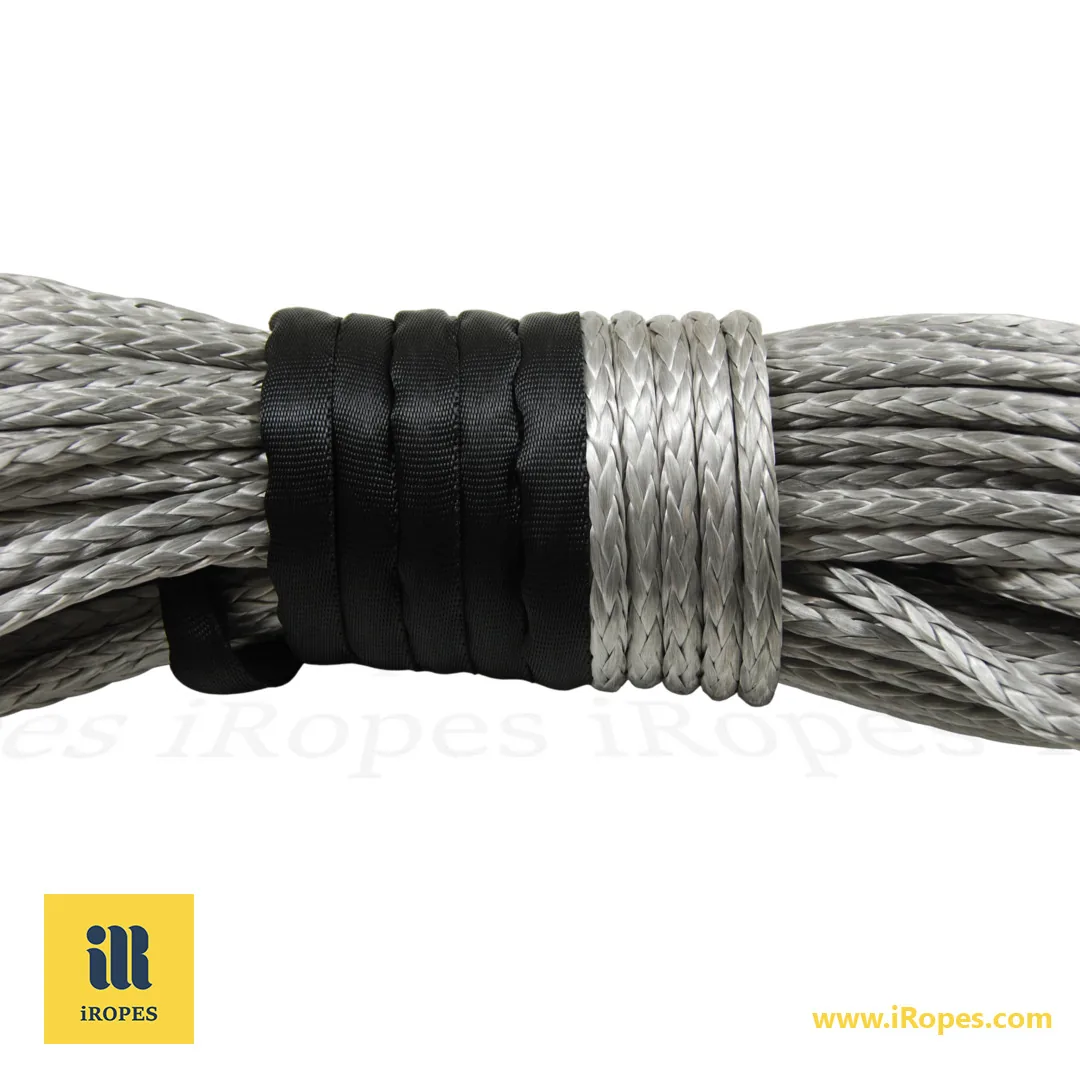
Double‑braided polyester rope is tough, low‑stretch, and far lighter than steel cable, making it a smart choice for 4×4 winches and a versatile option for camping and rescue setups.
Read in 2 min
- ✓ Excellent abrasion resistance → longer service life in rocky, sandy terrain.
- ✓ Low stretch under load → precise control for winches and haul systems.
- ✓ Much lighter than steel → easier handling and less vehicle weight.
- ✓ UV‑stable colours → improved visibility in low‑light conditions.
Many 4×4 crews grew up on steel cable, assuming heavier means safer. In practice, modern synthetic rope reduces recoil risk compared with steel and makes handling far easier on the trail. In the sections ahead, we’ll show how a low‑stretch core, UV‑resistant sheath, and custom‑colour branding can improve winch recoveries, fixed‑line work, and campsite rigging—without adding bulk.
Understanding the 4x4 winch rope and its core components
Now that you’ve explored why a 12 000 lb rating matters for your recovery gear, it’s time to look under the sheath and see what makes a 4x4 winch rope tick. The right rope can be the difference between a smooth pull and a dangerous snap, especially when you’re far from help.

At its core, a winch rope is a bundle of fibres engineered to stretch minimally while bearing large loads. Unlike steel cable, which can recoil like a spring, modern synthetic ropes store less kinetic energy, making them safer to operate and lighter to carry.
“UHMWPE fibres such as Dyneema offer very high strength‑to‑weight, while polyester brings superior abrasion and heat resistance. Choose based on the environment you drive in.” – iRopes engineering team
Understanding the material choices helps you decide which rope aligns with your adventure style. Below is a quick breakdown of the most common fibres you’ll encounter.
- Definition – A winch rope is a synthetic or steel line that transfers pulling force from the winch drum to a load; its key metric is breaking strength.
- Material focus – Dyneema and Spectra (UHMWPE) provide ultra‑high strength at low weight; double‑braided polyester balances cost, UV resistance, and abrasion durability.
- Load rating calculation – Minimum rope breaking strength ≈ winch rating × safety factor (1.5–2.0). For a 12 000 lb winch, target roughly 18 000–24 000 lb rope breaking strength.
Because safety hinges on proper sizing, always verify the rope’s breaking strength against the winch’s capacity. A simple rule: winch rating × safety factor = minimum rope breaking strength. This helps the line withstand shock loads and abusive conditions.
With these fundamentals in mind, you’re ready to match the rope’s construction to the specific demands of a 12 000 lb winch, which we’ll explore in the next section.
Selecting the right 12000 winch rope for your vehicle
Now that you understand the rope’s construction, the next step is matching those specs to the drum on your 4x4 winch. The right diameter and length keep the line snug on the drum, prevent slippage, and ensure you achieve the load capacity you need.

Below is a compact reference that answers the common question, “What size rope for a 12,000 lb winch?” – simply pick the row that matches your drum and the pull length you require.
| Diameter | Length (ft) | Compatible Drum Width | Typical Breaking Strength |
|---|---|---|---|
| 3/8" | 80–100 | ≈ 8–9.5" | 18,000–24,000 lb |
| 7/16" | 70–90 | ≈ 8.5–10" | 24,000–30,000 lb |
| 1/2" | 60–80 | ≈ 9–12" | 30,000–38,000 lb |
When the drum is too narrow for the chosen diameter and length, the line can ride up the sides and lose grip – a safety hazard you definitely want to avoid.
Cost‑per‑pound insight
Across major retailers, synthetic rope typically ranges around $0.04–$0.06 per pound of breaking strength, while steel cable sits near $0.02–$0.03. Steel often adds ~30 lb compared with a similar synthetic line (for example, ≈ 45 lb vs ≈ 14 lb at 3/8″ × 90 ft). The modest premium for synthetic buys easier handling, reduced recoil risk, and the ability to splice a damaged section instead of replacing the whole line.
To speed up selection, use the quick‑calc steps below, or ask the iRopes team for a sizing check if you’re unsure about drum fit or safety factors.
- Enter the winch’s rated pull (e.g., 12,000 lb).
- Multiply by a safety factor of 1.5–2.0 to find the minimum breaking strength.
- Select the smallest diameter that meets that strength and fits your drum’s width.
Armed with the table, the value analysis, and the calculator logic, you can confidently choose a rope that balances price, weight, and safety. The next step is keeping that rope in peak condition, which we’ll cover in the upcoming maintenance and repair guide.
Step‑by‑step winch rope repair guide
Now that your 4x4 winch rope is the right size and material, the real test comes when the line shows wear after a tough pull. Knowing how to assess damage and fix it yourself can keep you out of the shop and back on the trail.

Begin every inspection with a visual sweep while the rope is slack. Look for:
Any sign of broken fibres, deep cuts, melted or heat‑discoloured sections means the rope must be taken out of service immediately – continuing to use it could cause a catastrophic failure.
Most manufacturers recommend replacing a synthetic line every 2–3 years of regular use, or sooner if any of the above defects appear. This aligns with the common question, “How often should you replace winch rope?” – the rule of thumb is “inspect after each pull and plan a full swap at the two‑year mark for heavy off‑road work.”
When you spot only superficial wear, a splice can restore a high percentage of the original strength. However, tying a knot in synthetic rope is a bad idea; knots weaken fibres dramatically, which is why the FAQ “Can you tie a knot in synthetic winch rope?” is answered with a firm “No – always splice instead.”
Inspection Checklist
Quick visual cues before you hit the trail
Abrasion
Run your fingers along the sheath; any exposed fibres or rough spots indicate the protective layer is compromised.
UV Damage
Faded or chalky sections mean the polymer is breaking down – replace the rope or cut out the affected length.
Kinks & Twists
Sharp bends create stress points; a gentle unwind and straightening can salvage the line if no fibre breakage is visible.
Splicing Techniques
Two reliable methods for on‑site repairs
Brummel‑Lock Eye Splice
Open the braid, pass the tail through, then interlock and bury the tail to create a locked eye that maintains high strength without knots.
Traditional Eye Splice
Form a loop, make a smooth taper, and bury the tail back into the core; finish with lock stitching and a protective sleeve.
Repair Kit Recommendation
The WARN synthetic rope repair kit provides fids, sleeves and clear instructions – everything you need for a field‑ready fix.
If the core fibres are damaged, if cuts are deep, or if multiple defects occur close together, it’s safer to replace the line. A new 12 000 lb synthetic rope typically ranges from about $120 to $400 depending on brand, fibre, and length. When you do replace, keep the old rope as a spare for non‑critical tasks such as light towing.
Armed with a solid inspection routine and the right splice technique, you’ll spend less time waiting for parts and more time enjoying the trail. The next topic explores how double‑braided polyester ropes can expand the capabilities of your outdoor adventures.
Applying double‑braided polyester rope in outdoor sports
After mastering how to repair a damaged line, you’ll notice that the same double‑braided polyester that survives a tough winch pull also shines in camping, rescue, and fixed‑line work. Its blend of abrasion resistance, low stretch, and UV stability makes it a reliable partner when you’re off‑road, setting camp, or running a haul system.

Why does polyester perform so well here? First, its abrasion‑resistant outer braid copes with rocky crags and campsite hardware. Second, the low‑stretch construction holds steady under tension, which helps with controlled hauling and taut guy‑lines. Finally, bright colour options improve line visibility at dawn or dusk – a practical safety boost during recoveries and camp setup.
Custom Fit
Choose diameter, colour, and branding to match your team’s needs and performance goals.
Climbing
Ideal for fixed lines, hauling kits and anchor rigging. Note: use certified dynamic climbing ropes for lead climbing and fall‑arrest scenarios.
Camping
Abrasion‑resistant sheath endures rough ground and sharp stakes; perfect for guy‑lines, tarp ridgelines, and secure tie‑downs.
Rescue
Low stretch aids predictable hauling and lowers in mechanical‑advantage systems. Choose high‑visibility colours for quick line identification.
Branding
Custom colours and printed logos let teams match gear and reinforce identity on the trail.
iRopes recently delivered a tailor‑made solution for a 4×4 expedition crew tackling the Australian outback. The team requested a 3/8‑inch double‑braided polyester rope in high‑visibility orange, branded with their logo, and a 90 ft length to suit their winch drum. The rope was manufactured under an ISO 9001‑certified quality system and shipped directly to their staging depot, giving the crew confidence that every pull and every haul matched their exact requirements.
Now that you see how one rope type can serve multiple outdoor pursuits, you’ll be ready to select the right length and colour for your next adventure and, if needed, apply the same winch rope repair techniques you learned earlier.
Looking for a custom rope solution?
By now you’ve seen how a 4x4 winch rope can be sized, maintained and repaired, why a 12000 winch rope is essential for safe recovery, and how double‑braided polyester rope elevates camping, rescue and fixed‑line work with durability, low stretch and high visibility.
If you need a rope tailored to your exact specifications—diameter, colour, branding or OEM design—complete the form above. iRopes offers comprehensive OEM and ODM services, ISO 9001‑backed quality assurance, and dedicated IP protection, with non‑branded or customer‑branded packaging and reliable worldwide shipping to your location. Learn more about why synthetic winch cable is the smarter choice here.