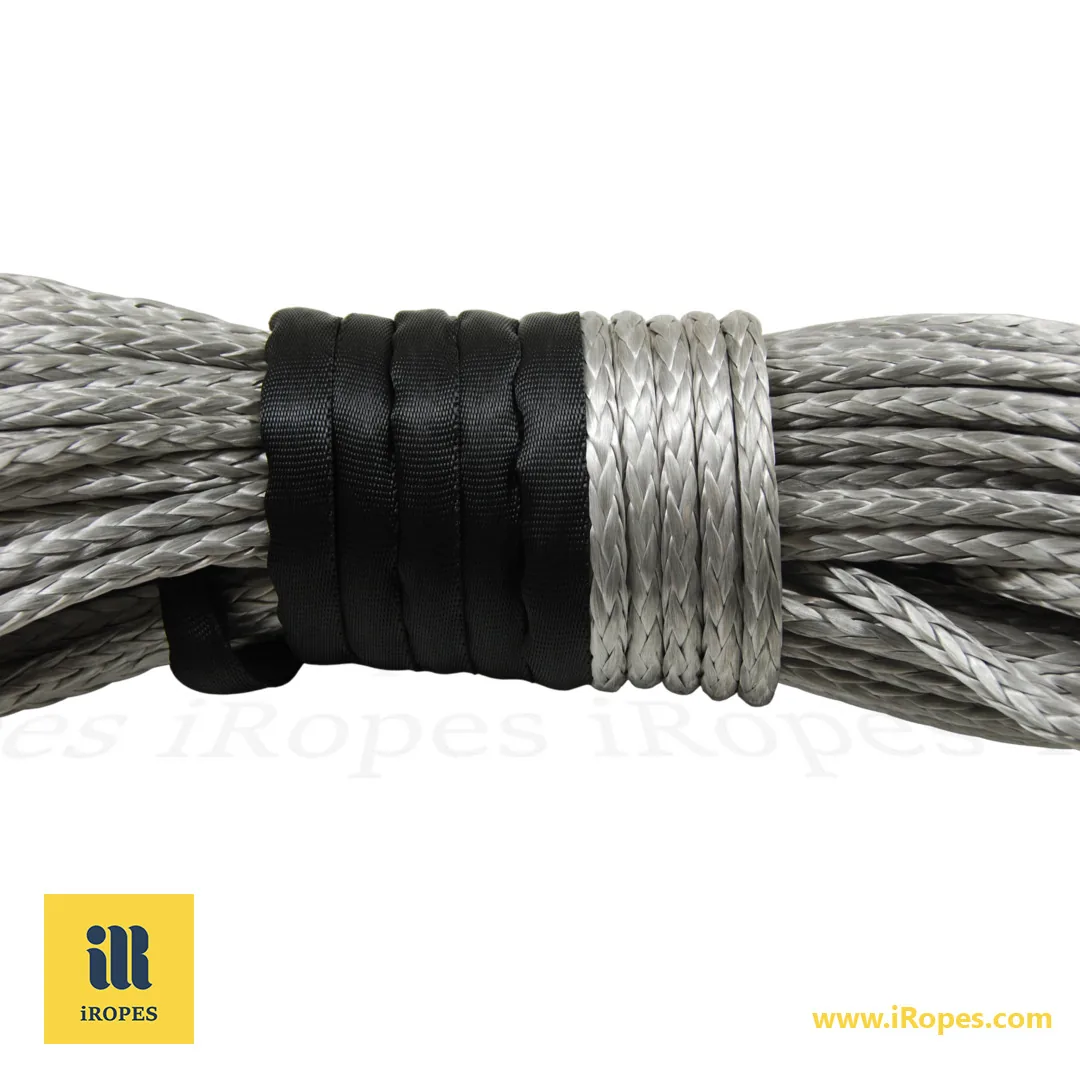
Many off-roaders assume steel winch cables are best, but synthetic rope is actually up to 85% lighter and reduces recoil energy by 70%—a clear win for safety and performance. ✅
Read in 2 min – What you’ll gain
- ✓ Reduce winch drum load by up to 85% for smoother pulls and less strain.
- ✓ Lower recoil danger by roughly 70% for significantly safer recovery operations.
- ✓ Save approximately 12% on fuel thanks to the lighter overall vehicle weight.
- ✓ Acquire custom lengths, colours, and branding from iRopes at competitive rates.
Imagine replacing the heavy steel on your winch with a rope that’s a mere fraction of the weight, yet significantly enhances safety and performance. This is the distinct synthetic advantage many off-road enthusiasts overlook. In the following sections, we will explore why iRopes’ custom-engineered fibre ropes surpass steel in real-world recoveries. We will also reveal the hidden cost savings and guide you through selecting, installing, and maintaining the ideal for any application.
Why Choose a Replacement Winch Cable: Benefits and Considerations
Once you understand why winch lines wear out, the critical next step is deciding which will provide optimal performance on the trail. This choice goes beyond simply swapping an old rope; it represents an opportunity to upgrade safety, improve handling, and enhance long-term value.
Is replacing a steel line with a synthetic alternative truly worthwhile? Absolutely. Synthetic ropes weigh roughly one-seventh of an equivalent steel cable, reducing the drum load and potentially improving your vehicle’s fuel efficiency. Furthermore, because synthetic rope stores significantly less kinetic energy, the risk of dangerous recoil drops dramatically should the line snap. In practical terms, you’ll experience a smoother pull, easier knot-tying, and the added benefit of a rope that floats if submerged.

- Lighter weight – a made from synthetic material reduces drum load by up to 85%, making every pull feel smoother and more controlled.
- Safer handling – less stored kinetic energy means significantly lower recoil danger, and the rope won’t present sharp frayed ends that can cause injury.
- Better performance – UHMWPE fibres float, resist kinking, and maintain impressive strength even in extreme temperatures and demanding conditions.
Cost-effectiveness is another crucial factor. While the initial investment for a might be higher than a traditional steel line, these ropes often lead to long-term savings. You’ll save on fuel, reduce wear and tear on the winch motor, and minimise costly downtime that can result from unexpected rope failure. Over the lifespan of the rope, the total ownership cost frequently proves lower than that of steel alternatives.
“Switching to a synthetic winch rope isn’t simply a matter of convenience—it’s a measurable safety upgrade that protects both the operator and the equipment.”
With the clear advantages of lighter weight, reduced recoil, and extended service life established, the next logical step is to match the appropriate diameter, length, and breaking strength to your specific winch. Selecting the correct specifications ensures you fully realise the benefits of a and prepares you for a hassle‑free installation.
How to Select the Right Replacement Cable for Winch Applications
Now that you understand how a can significantly boost safety and handling, the next crucial step is to meticulously match the rope to your winch’s specifications. Choosing the correct diameter, length, and strength ensures the line operates harmoniously with the drum, prevents premature wear, and consistently delivers the reliable performance you expect during critical recoveries.

Begin by consulting your winch’s rated line pull—this indicates the maximum load the motor is engineered to handle. The rope’s diameter must be compatible with both the drum’s groove width and the winch’s load capacity. For instance, a 12,000 lb winch typically performs well with a 3/8‑inch synthetic line, offering a safe working load while fitting comfortably on most mid‑size drums. Should you require greater reach, iRopes specialises in producing custom lengths that extend beyond standard 50 ft, 85 ft, or 100 ft options.
Next, carefully consider the rope’s breaking strength. This value represents the load at which the fibre will fail. To ensure a comfortable safety margin, it should be at least 1.5 times the winch’s rated line pull. The working load limit (WLL) is calculated by dividing the breaking strength by the safety factor, and you will often find it listed on product data sheets. Selecting a that exceeds the winch’s pull rating guarantees that the line will never be the weakest link during demanding recovery situations.
- Check the winch’s rated line pull and precise drum dimensions.
- Select a rope diameter that perfectly fits the drum groove and accurately matches the load rating.
- Choose a length that consistently reaches the intended recovery distance; remember, custom lengths are readily available from iRopes.
- Confirm the breaking strength is at least 1.5 × the winch’s line pull and make a note of the WLL.
- Verify that the fairlead (whether hawse or roller) is specifically rated for synthetic rope and precisely matches the chosen diameter.
Finally, carefully consider the fairlead and other related accessories. Synthetic ropes perform optimally with a hawse‑style fairlead, which guides the line smoothly without introducing excessive friction. While roller fairleads can be used, they must be specifically rated for fibre rope. Essential accessories like hooks, thimbles, and protective sleeves should be appropriately sized to match the rope’s diameter and material. iRopes can also supply OEM‑grade fairleads in matching colours or with custom branding, ensuring both seamless visual integration and robust functionality.
By diligently following these steps, you will select a that delivers optimal performance, respects the winch’s engineering limits, and pairs perfectly with the necessary accessories. The next section will guide you through the actual installation process, empowering you to confidently put your new synthetic line to work.
Synthetic Winch Cable Replacement: Installation Guide and Best Practices
Now that you’ve precisely identified the correct diameter, length, and breaking strength, the crucial work of swapping your old line for a fresh synthetic winch rope begins. This process, while straightforward, demands a few safety‑first habits to ensure a smooth installation and avoid frustrating setbacks.

Remove the Old Cable
1. Disconnect the winch power source and secure the drum with a robust strap or spare piece of rope to prevent any accidental rotation.
2. Loosen the anchor bolt that secures the cable to the drum and carefully slide the drum out of the winch cradle.
3. Pull the old line completely free from the drum, maintaining slight tension to prevent it from tangling or snapping back.
4. Thoroughly inspect the drum for any accumulated debris; a perfectly clean surface ensures the new synthetic rope spools evenly.
Spool and Tension the New Rope
1. Feed the synthetic rope smoothly through the fairlead, ensuring the line runs perfectly straight into the drum groove.
2. Align the rope’s starting point precisely with the drum’s marked “0” line; this step is crucial for preventing uneven layering later on.
3. Using a hand winch or equivalent tensioning device, slowly turn the drum while keeping the rope under consistent tension. A slight pull on the free end eliminates slack and promotes perfectly even spooling.
4. Once the required length is securely spooled on the drum, attach the rope’s tail with a stainless‑steel thimble and tighten the anchor bolt firmly.
During the initial ten pulls, ensure the load remains under 20% of the winch’s rated line pull. This allows the fibres to settle progressively and achieve their full breaking strength.
Addressing a common question—"How difficult is it to replace winch cable with synthetic?"—most owners find this task manageable with basic hand tools and a dedicated workspace. The most demanding aspect is maintaining careful tension during spooling; once the rope is evenly laid, the remainder of the installation progresses naturally.
After the rope is properly installed on the drum, a brief break‑in routine is essential to protect your investment. Execute five light pulls, then gradually increase to a moderate load for another five cycles. This controlled, gradual loading allows the UHMWPE fibres to settle, eliminating any initial stretch and guaranteeing the advertised working load limit.
Upon completion, perform a quick visual inspection of the line to confirm proper seating. Store any spare cable in a dry, UV‑protected bag. iRopes provides custom‑branded sleeves, ideal for keeping synthetic ropes clean and ready for your next adventure.
With your new securely in place, you’re prepared for our final topic: crucial ongoing maintenance, available accessory options, and why iRopes remains the trusted partner for bespoke winch solutions.
Transitioning from traditional steel rope to a fibre line delivers a lighter, safer, and significantly more durable experience—the primary reasons why a is arguably the smartest choice for off‑road recovery. iRopes combines ISO‑9001 certified quality with comprehensive OEM/ODM capabilities and optional branding, enabling us to deliver a rope that precisely matches your exact diameter, length, and breaking strength, all while substantially reducing drum load and recoil risk. For a deeper look at how synthetic ropes outperform traditional steel, see our advantages of synthetic ropes over traditional wire.
Our experienced specialists are on hand to guide you through selecting the ideal . We'll ensure your seamlessly integrates with your fairlead, accessories, and established maintenance routine. With our personalised support, you’ll undoubtedly maximise both performance and long‑term value.
Ready for a custom solution? Fill in the form below.
If you'd like tailored advice on choosing, installing, or branding your synthetic rope, simply complete the form above and our iRopes experts will promptly get in touch.