For tug boats, HMPE (Dyneema®) ropes offer up to 2.6 × the tensile strength of nylon and stretch under 1 %. This combination provides optimal durability for demanding marine operations.
Key benefits – 2 min read
- ✓ Increase line strength by up to 2.6 × compared to traditional nylon, reducing the risk of breakage during towage.
- ✓ Reduce rope weight by up to 85 %, leading to lower fuel consumption and decreased winch effort.
- ✓ Extend the service life of UV-exposed ropes by 30 % over polyester, cutting replacement cycles.
- ✓ Access custom-tailored diameters, colours, and terminations from iRopes, potentially saving up to 12 % on bulk orders.
Many tug operators still rely on heavy-duty nylon, mistakenly believing its stretch is the sole safety net. However, a 12-strand HMPE line delivers up to 2.7 times the tensile strength of a comparably sized nylon rope while shedding 85 % of the weight. This powerful combination reduces fuel consumption and lessens winch-handling fatigue. Discover how iRopes engineers this paradox-breaking blend and why transitioning to it could halve your maintenance costs within months.
Understanding tug boat rope: materials, construction, and key applications
After acknowledging the critical role of reliable lines in any marine operation, let's explore the ropes that power tug vessels. A tug boat rope must pull, hold, and absorb immense shock loads, all while enduring salt, sun, and constant abrasion.

What kind of rope is used for tug boats? In practice, manufacturers often choose synthetic fibres that combine strength with minimal stretch. HMPE (Dyneema®) offers tensile strength comparable to steel, yet at a fraction of the weight. Nylon provides significant elasticity, which is beneficial for shock absorption during sudden pulls. Polyester, on the other hand, delivers excellent UV resistance and minimal stretch, making it a reliable option for steady-state towing.
Choosing the correct material for a tugboat application depends on three core performance factors: ultimate strength, stretch characteristics, and durability in harsh marine environments.
- HMPE (Dyneema®) – ultra-light, 2-3 times stronger than steel, low elongation, and excellent abrasion resistance.
- Nylon – offers high elasticity for shock loading, good fatigue life, and is slightly heavier than HMPE.
- Polyester – features minimal stretch, superior UV stability, and proves reliable under continuous sun exposure.
Beyond material, the rope's construction significantly impacts its ability to handle stress. A 12-strand layout distributes the load across numerous fine fibres, providing a supple feel and superior shock absorption. This makes it ideal for harbour assists where rapid direction changes are frequent. Conversely, double-braid designs, which feature a solid core wrapped by a protective outer sheath, excel at resisting abrasion and maintaining shape under continuous tension. This construction is highly valuable for offshore towage, where the line may repeatedly run over rough chafing gear.
“A tug’s rope serves as its invisible engine; if the fibre fails, the entire operation stalls. Therefore, selecting the optimal blend of material and construction is not merely an option, but an absolute necessity.”
These ropes are primarily used in three scenarios. In harbour assist operations, the line must quickly take up slack without snapping, favouring a 12-strand nylon or HMPE rope with ample stretch. Offshore towage demands long-distance capabilities and resilience in varying sea states, making a double-braid polyester or HMPE rope suitable due to its chafe resistance and ability to hold a steady load. Emergency salvage operations often combine the best attributes of both types by using an HMPE core for strength encased in a nylon sheath for shock absorption.
Understanding these material and construction nuances allows for precise matching of the tug boat rope to the specific job, thereby maximising safety and efficiency. Next, we will explore a versatile 5/8-inch rope, detailing how material choice applies to everyday docking and mooring tasks on various vessels.
Choosing the right 5/8 boat rope for docking, mooring, and anchoring
Following our review of material choices for heavy-duty tug operations, the logical next step is to examine a size frequently found on recreational and light-commercial vessels: the 5/8-inch rope. This diameter effectively balances ease of handling with the strength needed for routine dockside work.

The 5/8-inch dimension is popular because it fits standard winch drums, offers sufficient breaking strength for boats up to 30 feet, and remains manageable for a single crew member. When coiled, this line occupies less deck space than larger diameters, which is a practical advantage on crowded slips.
Material selection customises the rope for its intended purpose. Nylon’s inherent elasticity makes it forgiving during docking manoeuvres, allowing the line to stretch slightly and absorb sudden loads without snapping. Polyester, in contrast, exhibits minimal stretch, resulting in a more predictable pull when a boat is anchored. This low stretch is crucial for maintaining steady holding power. Polypropylene, being buoyant, keeps the line afloat, simplifying retrieval after casting off from a mooring.
The construction method influences both handling and durability. A double-braid core encased in a protective sheath offers a smooth surface that spools cleanly on winches and effectively resists chafing against deck fittings. A traditional 3-strand twisted rope, though slightly heavier, is often preferred for older winch systems because its lay pattern is compatible with antique gear and it facilitates classic hitches more easily.
- Identify the rope’s breaking strength (for instance, 14,600 lb for a 5/8-inch double-braid nylon).
- Select an appropriate safety factor—industry standards recommend 5:1 for docking and mooring lines.
- Divide the breaking strength by the safety factor to determine the working load limit (WLL).
Following these steps, a 5/8-inch nylon line with a 14,600 lb breaking strength yields a WLL of approximately 2,920 lb (14,600 ÷ 5). This figure comfortably surpasses the typical dockside load of a 25-foot cruiser, providing an ample safety margin for unexpected gusts or wave impacts.
Safety Factor
A 5:1 safety factor is considered the industry baseline for dock and mooring lines. This accounts for dynamic forces such as wind gusts, swell, and potential human error, ensuring the rope remains within its elastic range long after initial loading.
When you effectively combine the right material, construction, and a calculated load capacity, the 5/8-inch rope becomes a highly dependable partner for every docking, mooring, or anchoring situation. The next section of this guide will explore how similar considerations influence the performance of boat rope winch lines.
Optimising boat rope winch lines: performance, safety, and customisation
Now that we’ve established the ideal diameter for dockside tasks, the next logical step is to focus on the line that actually engages the winch. Whether you’re anchoring a charter yacht or hauling a salvage hawser, the winch rope dictates the system’s smooth operation and its safe behaviour under load.
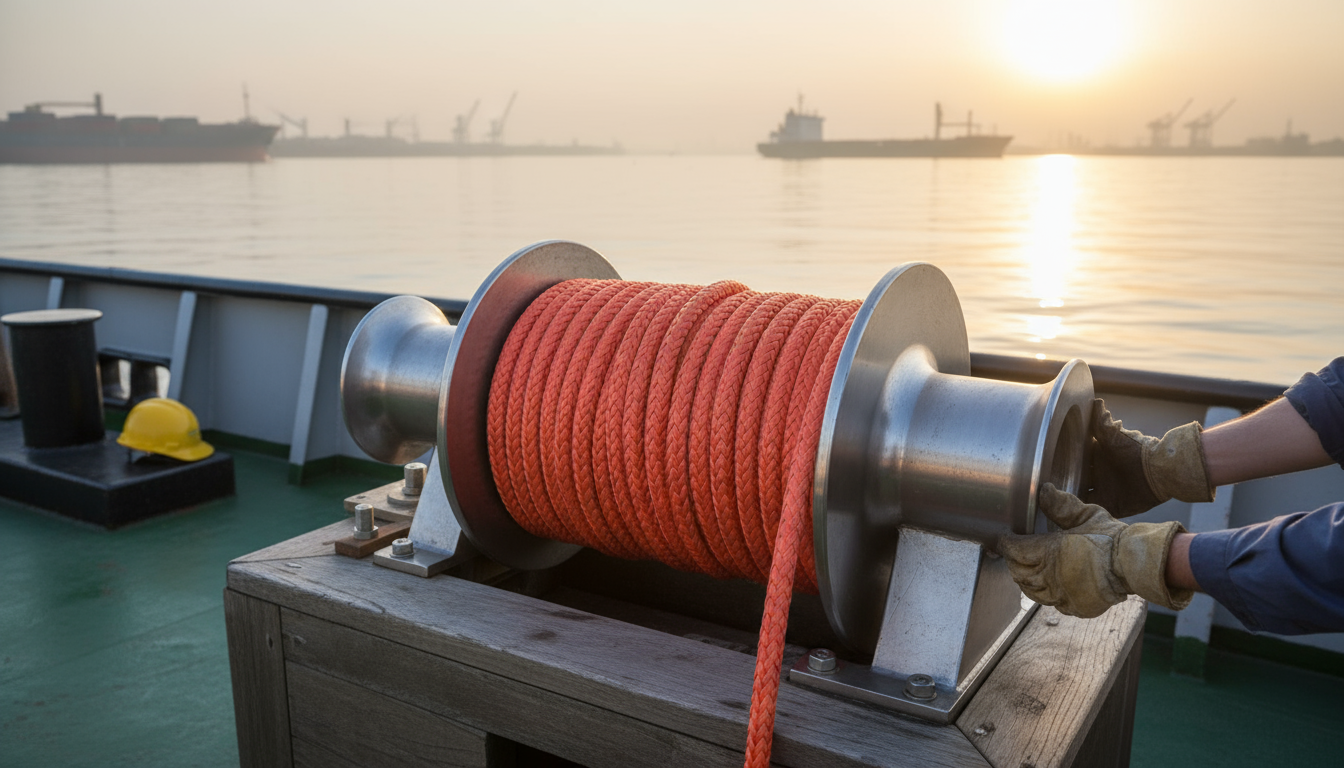
Three core performance pillars distinguish a superior winch line. Firstly, minimal stretch ensures that the line directly translates winch drum rotations into forward pull, eliminating the “slap-back” often associated with overly elastic fibres. Secondly, high tensile strength guarantees that the line can sustain the required working load limit without permanent deformation. Thirdly, robust abrasion resistance protects the braid where it interacts with chafing gear, the winch drum, or other boat hardware.
When comparing material choices, the answer to “What are the best materials for marine winch ropes?” becomes clear: HMPE (Dyneema®) provides the highest strength-to-weight ratio and virtually no stretch; Nylon offers substantial shock absorption for occasional overloads; and Polyester delivers low stretch combined with excellent UV stability for prolonged exposure. Each option aligns with a specific operational priority, allowing you to match the rope precisely to the winch’s duty cycle.
Beyond the fibre itself, accessories transform a generic line into a ready-to-use system component. Thimbles protect eye splices from wear, shackles establish secure connections to the windlass or capstan, and chafe gear (such as low‑friction sleeves) extends service life where the line slides over metal fittings. iRopes can terminate a winch line with custom eye splices, soft‑eye loops, or even incorporate colour‑coded tags for quick identification on busy decks.
Always inspect winch lines at the start of each season. Look for softened fibres, frayed ends, or worn thimbles, and replace any compromised sections immediately to prevent them from becoming a safety hazard.
Spooling efficiency is another frequently overlooked factor. A tightly woven double‑braid rope slides cleanly onto the drum, reducing wind‑up and minimising the chance of a “snarl” that can jam the winch. In contrast, a loosely constructed 3‑strand rope may bunch, increasing the effort needed to raise the load and accelerating wear on the drum’s surface.
Why synthetic wins
Synthetic winch lines offer a modern advantage: they are lightweight, safer, and easier to handle.
Choosing the correct winch line therefore integrates material science with practical hardware compatibility. By selecting a low‑stretch, high‑strength fibre, pairing it with appropriate terminations, and ensuring the line remains tidy on the drum, you can create a winch system that feels effortless, enjoys extended longevity, and significantly reduces the risk of dangerous recoil. The same principles of material selection and construction that guided our discussion of tug and dock ropes now ensure your winch operates at its peak efficiency.
Ready for a tailor-made rope solution?
By now, you understand how a tug boat rope’s material and construction determine its performance in towing, harbour assists, and salvage operations. You also appreciate why a 5/8 boat rope is the preferred size for everyday docking and mooring. The same principles apply to a boat rope winch line: low stretch, high tensile strength, and abrasion resistance are essential for safe, efficient winching. If your vessel requires a rope that precisely matches its specifications, iRopes can design and manufacture a bespoke solution, covering everything from the core fibre to custom branding on the packaging.
For personalised advice on selecting the perfect rope for your application, simply complete the inquiry form above, and our specialists will expertly guide you through all available options.
