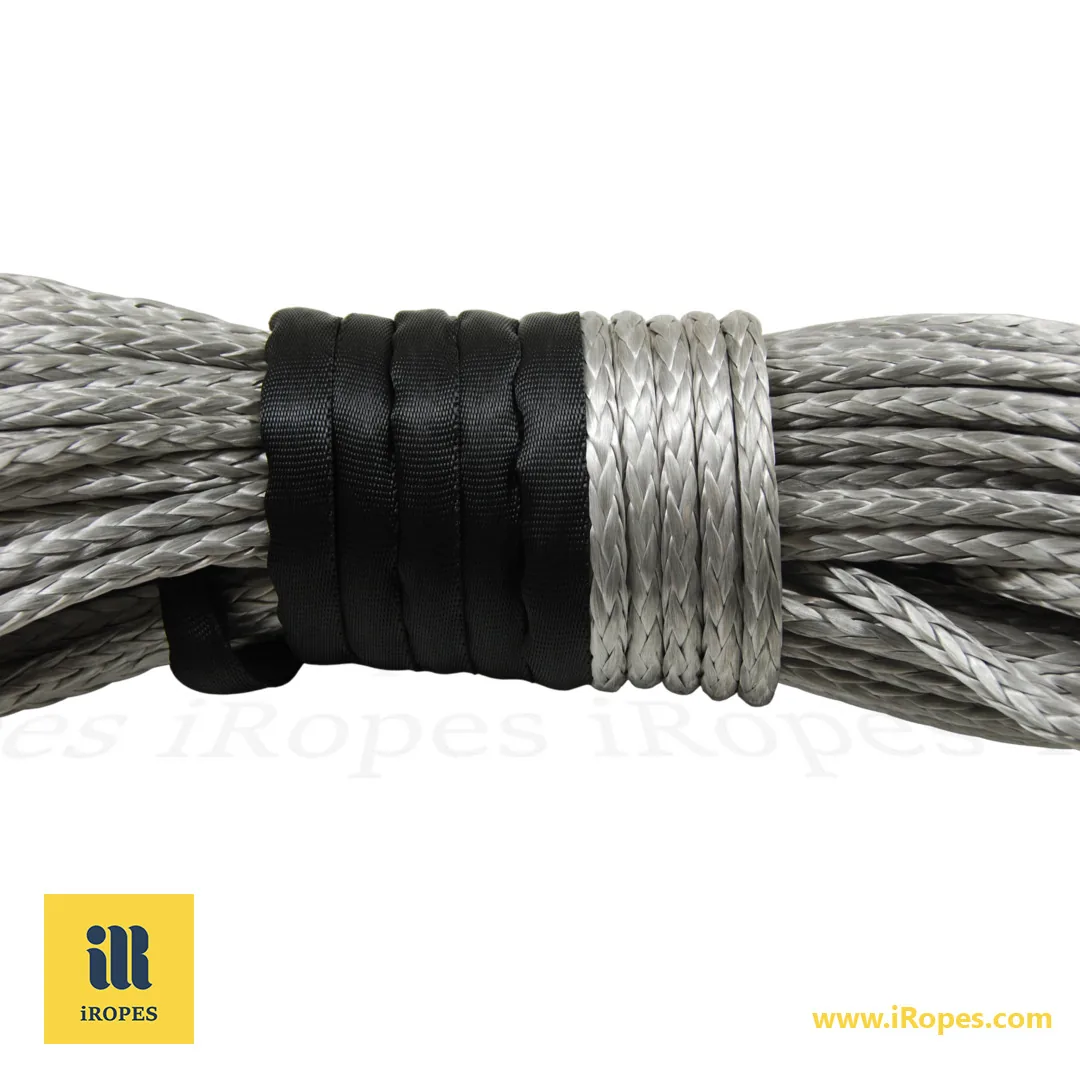
iRopes delivers the best hoisting rope, shock cord and splicing kit—up to 30 kN breaking strength, shock cords with up to 300 % elongation, and ≈ 90 % strength retention after splicing, all backed by ISO 9001 quality.
Read in 2 min 34 sec
- ✓ Optimise lift capacity with custom‑graded nylon or Dyneema hoisting ropes.
- ✓ Absorb dynamic loads – shock cords stretch up to 300 % to stabilise cargo.
- ✓ Preserve ≥ 90 % of original rope strength using iRopes’ precision splicing kit.
- ✓ Speed rig‑down with OEM colour‑coding and rapid‑swap accessories.
Not every heavy‑duty rope suits a lift. Material, construction and safety factor determine performance. In the sections below, we outline how iRopes’ engineered hoisting ropes, shock cords and precision splicing tools help you retain about 90 % of line strength and reduce hardware reliance—so you can plan lifts with confidence.
Best Rope for Hoisting
The best rope for hoisting combines high tensile strength, controlled stretch, and resistance to the elements, while meeting a safety factor of at least 5 × the intended load. Selecting the right material and construction ensures reliable lifts and protects both crew and cargo.

Material and Construction Options
When you ask “what material is best for hoisting rope?”, the answer depends on the balance of strength, stretch and durability you need. Nylon offers excellent strength‑to‑weight performance with about 30 % elongation, making it forgiving under dynamic loads. Polyester provides lower stretch (often around 10‑15 %) and superior UV resistance, ideal for outdoor rigs. Dyneema® delivers exceptional tensile strength at very low weight and very low stretch, which improves precision under load. Steel‑wire rope has negligible stretch and excels in extreme‑load scenarios, though it adds weight and requires corrosion protection.
Safety Factor and Load‑Rating Guidelines
To calculate the safety factor, divide the rope’s breaking strength by the expected working load. For example, lifting a 2 tonne load requires a rope with at least 10 tonnes breaking strength (2 t × 5 = 10 t). Always select a rope whose rated strength exceeds the calculated requirement, leaving a margin for shock loads and wear.
Industry guides, including US Netting, recommend a minimum 5× safety factor for hoisting to protect personnel and equipment.
Environmental Resistance Considerations
UV exposure can degrade polymer fibres over time, so look for UV‑stabilisers or a protective outer sheath. Temperature and moisture affect performance: nylon can absorb water and its properties vary with temperature, while polyester resists UV and absorbs less water. Chemical contact, such as oil or salt water, calls for chemically resistant fibres, protective coatings, or—in highly corrosive settings—galvanised or stainless steel wire rope.
Top‑3 Hoisting Rope Recommendations
- 12 mm 3‑strand nylon (high‑strength) – Breaking strength ≈ 30 kN, ~30 % stretch, UV‑stabilised finish, €45 per 100 m, OEM colour customisation available.
- 10 mm Dyneema®‑core braided – Breaking strength ≈ 28 kN, very low stretch, low‑temperature resilience, €120 per 100 m, lightweight for precision handling.
- 8 mm steel‑wire rope – Breaking strength ≈ 35 kN, negligible stretch, galvanised corrosion‑resistant finish, €150 per 100 m, suitable for heavy‑duty industrial lifts.
By matching the material and construction to your site’s load demands and environmental challenges, you ensure that the best rope for hoisting delivers safety, longevity and cost‑effectiveness. With the ideal hoisting rope identified, the next step is selecting a versatile shock cord for dynamic load management.
Best Shock Cord
After you’ve locked in the perfect hoisting rope, the next piece of the puzzle is a shock cord that can soak up sudden loads without snapping. A shock cord consists of a stretchy rubber or polyurethane core wrapped in a protective sheath—usually nylon or polyester. When a load spikes, the core elongates, turning kinetic energy into temporary deformation, then returns to its original length.

When you compare different cords, focus on four performance metrics. The most decisive ones appear in the short list below.
- Diameter – determines load capacity
- Breaking strength – max force before failure
- Elongation – typical stretch percentage (200‑300 %)
- UV resistance – stability under sun exposure
UV stabilisers baked into the sheath help resist embrittlement under sunlight, while a temperature‑resistant core supports performance across common ambient conditions. These characteristics answer the common question “how much can a shock cord stretch?” – most high‑grade cords will elongate two to three times their original length, giving you a reliable cushion for cargo swings, sail‑boat rigging or rescue‑line shock absorption.
Below are two ready‑made kits that cover demanding marine and cargo scenarios.
Marine‑Grade Kit
Designed for salt‑water environments
Length
15 m coil, easy to store on deck
UV‑stabilised sheath
Resists sun exposure in harsh marine conditions
Core
Rubber core delivers up to 300 % stretch
Cargo‑Tie Kit
Ideal for warehouse and truck loads
Length
20 m coil, perfect for pallet straps
Jacket
Reinforced nylon resists abrasion
Strength
Breaking strength ≈ 1 kN; suitable for light‑duty tie‑downs. Do not use for lifting.
Keeping a shock cord in top condition is simple. Store it away from direct sunlight, wipe any salt residue after marine use, and inspect the sheath for cuts before each deployment. If the core feels permanently elongated, replace the cord—elasticity is the key to its shock‑absorbing power.
With a resilient shock cord in place, the final piece of the lifting puzzle is a reliable splicing kit that lets you join ropes without sacrificing strength.
Best Rope Splicing Kit
Now that you have a shock cord that can soak up sudden loads, the final piece of the lifting puzzle is a reliable splicing kit. Proper splicing lets you join ropes without the bulk of shackles while keeping almost the full strength of the original line.
When a splice is done correctly it retains ≥ 90 % of the rope’s breaking strength, meaning you lose only a fraction of capacity compared with using a mechanical fitting. This strength retention translates directly into lower hardware costs and lighter‑weight rigs – a win for any industrial or marine operation.

Kit Components
A top‑grade splicing kit contains the essential tools you need to work efficiently: a set of steel fids sized for different rope diameters, a tapered needle for feeding the rope through the fid, durable splicing tape to secure the lay, high‑tenacity whipping twine for final reinforcement, and a rugged storage pouch that keeps everything tidy on‑site.
Choosing the right fid size is the first step to a clean splice. Follow the manufacturer’s compatibility chart for your rope type; the quick guide below shows common pairings.
Diameter
Rope sizes typically range from 6 mm to 20 mm for industrial lifts.
Fid Size
Match the fid to the rope diameter and construction for optimal performance.
6‑8 mm
3 mm fid – perfect for lightweight rigging and rescue lines.
10‑12 mm
5 mm fid – suited for most hoisting ropes and cargo‑tie applications.
Here are the three kits that consistently rank as the best rope splicing kit choices for professionals:
- iRopes Standard Kit – €45, includes 4 fid sizes (3 mm‑7 mm), stainless‑steel needle, 10 m of splicing tape and a reinforced pouch; 12‑month warranty.
- iRopes Pro Bundle – €78, adds premium aluminium fids, double‑weave tape and a heavy‑duty whipping twine; 24‑month warranty and manufactured under ISO‑9001 quality management.
- iRopes Marine Edition – €92, features corrosion‑resistant fids, UV‑stabilised tape and a waterproof storage case; 36‑month warranty plus optional custom colour branding.
Maintenance is straightforward: wipe each component after use, store the pouch in a dry place and inspect the needle tip for wear before every splice. Keeping the kit clean helps each eye or short splice achieve the typical 90 % strength retention.
With a robust splicing kit in hand, you’re ready to combine the right rope, the right shock cord and flawless splices into a safe, high‑performance lifting system.
Customization, Safety & OEM Benefits
Having a reliable splicing kit in hand means you can join lines without losing strength, but the true edge comes from tailoring every component to your workflow. iRopes offers full‑scale OEM and ODM services, so you can specify colour‑coded jackets that match your brand palette, embed reflective strips for night‑time visibility or request fire‑retardant fibres for hazardous environments. The result is a rope that not only meets the best rope for hoisting criteria but also carries your company’s identity from the factory floor to the job site.

Even the most robust line can degrade if you skip regular checks. Below is a quick inspection and maintenance checklist that keeps your ropes performing at peak levels:
Visual inspection – look for fraying, cuts or UV‑induced fading every six months.
Proof load – follow your site standard to verify integrity; never exceed the working load limit (WLL).
Core check – roll the rope on a flat surface; any hard spots indicate internal damage.
Storage – keep coils off the ground in a dry, shaded area to avoid moisture and temperature extremes.
Answering a common query, “Do I really need a custom‑made rope for industrial hoisting?” the answer is yes when you require specific certifications, colour‑coding for multiple crews or specialised coatings such as anti‑corrosive marine finishes. A custom solution also simplifies inventory control, because each colour or marking instantly signals the rope’s load class to operators on the floor.
All iRopes products are manufactured under ISO‑9001 quality‑management standards. This means every batch is traceable, undergoes tensile testing and receives a certificate of conformity before shipping. At the same time, iRopes safeguards your intellectual property throughout the design‑to‑delivery pipeline, so proprietary colour schemes or performance additives remain exclusively yours. We offer non‑branded or customer‑branded packaging and direct pallet shipping worldwide.
Peace of Mind
ISO‑9001 assurance, rigorous inspection routines and full IP protection combine to give you confidence that every rope, shock cord and splicing kit performs exactly as specified.
With customised ropes, a disciplined maintenance plan and certified quality backing each component, you’re ready to assemble a lifting system that delivers safety and efficiency in equal measure. The next step is to reach out for a tailored quote and see how iRopes can turn these capabilities into a competitive advantage for your operations.
iRopes, as a leading rope maker in China, we provide the best rope for hoisting, delivering high tensile strength, controlled stretch and UV‑resistant finishes that meet a 5× safety factor. Coupled with our elastic shock‑cord options and precision‑engineered splicing kits, you can build lifting systems that retain strength, reduce hardware costs and align with ISO‑9001 quality standards.
Whether you need advice on the best shock cord for dynamic loads or the best rope splicing kit to maintain ≥ 90 % line strength, our OEM/ODM team can tailor colour‑coded, IP‑protected solutions to your exact specifications, with timely delivery worldwide.
Request Your Bespoke Rope Solution
If you’d like personalised assistance, simply complete the form above and our experts will contact you with a tailored quote.