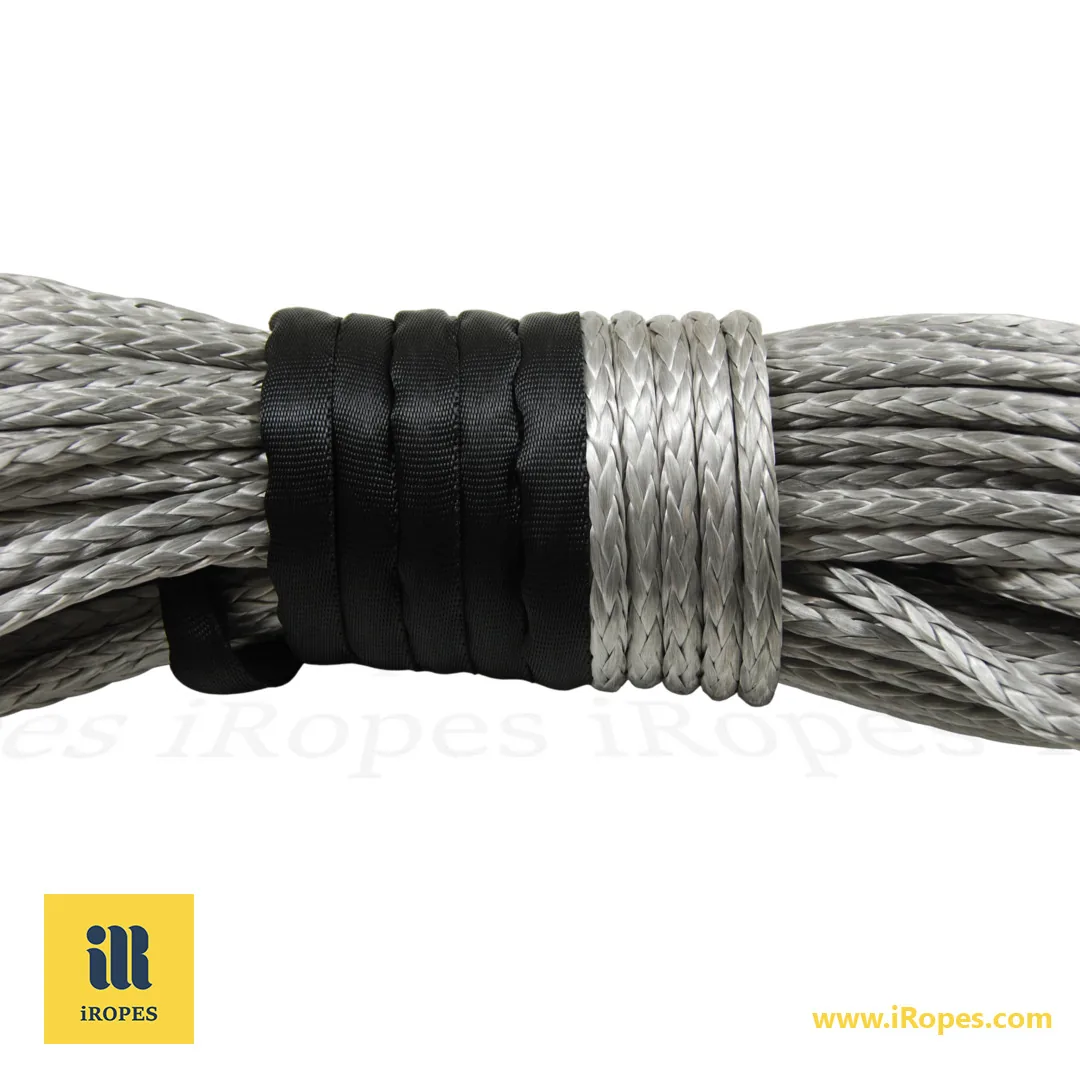
UHMWPE rope delivers a far higher strength‑to‑weight ratio than steel and offers long outdoor service life with minimal maintenance.
2‑minute read – What you’ll gain
- ✓ Superior strength‑to‑weight vs steel → lift more with less mass
- ✓ Much lighter, cutting installation labour and handling time
- ✓ UV and chemical resistance helps retain strength after prolonged exposure
- ✓ No corrosion, reducing ongoing maintenance
For most outdoor projects, polyester is the best rope material for outdoor use thanks to its UV stability and low stretch. Most contractors still reach for steel because it’s familiar, yet the data shows UHMWPE outperforms it in many outdoor metrics. Imagine a rope with a higher load‑to‑weight ratio that never rusts and keeps its grip after years of sun and salt. In the sections below we’ll break down the science, the cost trade‑offs, and how iRopes can tailor an ISO 9001‑backed OEM/ODM solution that fits your project’s toughest demands, with IP protection and custom branding from sample to shipment.
best natural rope for outdoor use
Having explored why material choice matters for every project, you can now focus on the natural fibres that have powered outdoor work for generations.

When you search for the best natural rope for outdoor use, the three most common fibres are Manila, hemp and sisal. Manila, derived from abaca leaves, is prized for its smooth feel and classic brown hue, making it popular for garden fences and decorative ties. Hemp offers a firmer grip and has long been used in work ropes. Sisal, harvested from agave leaves, is robust and often appears in landscaping and general utility lines.
- UV resistance – All three have limited UV resistance and will fade and weaken in strong sun.
- Water absorption – Natural fibres absorb water readily, which accelerates wear if not treated.
- Shrinkage – Wet Manila can contract about 5‑10%; hemp and sisal also change dimension when wet.
- Rot susceptibility – Untreated natural ropes can develop mildew and rot outdoors within 1‑2 years.
So, what are the disadvantages of Manila rope? It can shrink about 5‑10% when wet and typically loses around 15% strength when wet. It can also rot after one to two years of exposure, and its limited UV resistance means the colour and strength fade faster than synthetic alternatives. These drawbacks often steer contractors toward polyester, which dominates the rankings for the best rope material for outdoor use.
“iRopes’ UV‑treated Manila gave our coastal boardwalk the natural look we wanted, and after 12 months we saw no rot and minimal diameter change.” – Landscape architect, Pacific Shores
If you plan manila rope outdoor use, opting for iRopes’ UV‑stabilised coating adds a protective skin that reduces sun‑induced fading and slows water‑related decay. The result is a rope that retains the classic aesthetic of natural fibre while approaching the durability of synthetic blends.
Now that you understand the strengths and limits of natural ropes, the next step is to see which material truly earns the title of the best rope material for outdoor use across a wider range of conditions.
best rope material for outdoor use
If you need a rope that will stand up to sun, rain and everyday wear, the answer is simple: polyester rope is the best all‑round outdoor material. It balances strength, UV stability and affordability, so you can rely on it for everything from garden fences to marine dock lines.

When you compare the three most common synthetic ropes, the differences become clear. Is polyester rope good for outdoor use? Yes – it stretches very little and its UV‑stable fibres resist degradation, which is why professionals often reach for it first.
- Polyester – excellent UV resistance, low stretch, strong abrasion performance.
- Nylon – high stretch for shock absorption, moderate UV stability, good for dynamic loads.
- Polypropylene – floats, inexpensive, but poorer UV and abrasion resistance.
Choosing the right diameter and load rating depends on the task at hand. As a reference, 1/4‑inch (≈ 6 mm) Manila has an approximate 1,600 lb breaking strength, while 3/8‑inch (≈ 10 mm) polyester is around 4,500 lb breaking strength. Always apply a safety factor of at least five to convert breaking strength to a working load, and consult the manufacturer’s chart for your exact construction.
Sizing guide
• Garden fence – 5‑8 mm (¼‑5⁄16‑in.) Manila, or 8‑10 mm polyester for low stretch.
• Dock line – 8‑10 mm (3⁄8‑½‑in.) polyester for UV stability and abrasion resistance.
• Heavy‑duty haul – 12‑16 mm (½‑5⁄8‑in.) polyester; verify load on manufacturer charts.
Reference: ¼‑in Manila ≈ 1,600 lb; 3⁄8‑in polyester ≈ 4,500 lb (breaking strength). Apply ≥ 5× safety factor.
With polyester established as the overall winner, the next logical step is to see how a treated Manila rope can still fit niche projects that demand a natural look while needing a little extra durability.
manila rope outdoor use
Having seen how iRopes’ UV‑treated Manila can close the gap between rustic charm and durability, let’s look at the performance criteria that matter when you plan a garden fence, a decorative swing, or any outdoor project.

When Manila fibre absorbs water, the strands swell and then contract as they dry, resulting in about 5‑10% shrinkage. That dimensional change can loosen knots and alter tension, especially on load‑bearing applications. In addition, Manila typically loses around 15% strength when wet. Exposure to moisture creates a breeding ground for mildew; without protection the rope often starts to rot after 1‑2 years in a sunny, damp environment. These factors explain why many contractors still ask, “How long will Manila rope last outside?” The short answer: untreated Manila usually survives only a season or two before strength degrades noticeably.
Care
• Rinse gently with low‑pressure water after heavy rain.
• Apply a mild soap solution (pH ≈ 7) and scrub lightly to remove surface grime.
• Store rope in a shaded, well‑ventilated shed; avoid direct contact with the ground.
• Re‑apply a UV‑blocking coating every 12 months to delay rot.
Upgrade
iRopes’ custom UV‑treated Manila adds a transparent, sun‑resistant finish that significantly reduces fading and moisture ingress. In a coastal boardwalk project, a 12‑month post‑install inspection showed no rot and ≤ 3% diameter change, and durability improved by up to threefold versus untreated Manila.
Longevity
The UV‑treated option reduces shrinkage effects and inhibits mildew, often extending service life depending on climate and exposure. Many projects see a lifespan increase of up to 3× compared with untreated Manila.
Eco‑feel
Because the base fibre remains natural abaca, the rope stays biodegradable at the end of its service life, aligning with projects that value a low‑impact material footprint.
In summary, raw Manila rope offers a warm, earthy look but suffers from moisture‑induced shrinkage and a relatively short outdoor lifespan. By following the simple maintenance routine above or opting for iRopes’ proprietary UV‑treated finish, you can enjoy the visual appeal of the best natural rope for outdoor use while mitigating its traditional weaknesses. This balance paves the way for exploring high‑tech alternatives such as UHMWPE ropes, where weight and strength become the next considerations.
UHMWPE rope vs steel wire rope: advantages and applications
After exploring Manila’s quirks, it’s time to compare a high‑tech fibre with the industry‑standard metal cable. Understanding where ultra‑high‑molecular‑weight polyethylene (UHMWPE) excels helps you decide if it is the best rope material for outdoor use for your project’s most demanding tasks.

UHMWPE fibres are engineered from long‑chain polyethylene molecules, giving the rope exceptional tensile strength while remaining remarkably light. The material also resists UV degradation and most chemicals, so a line left on a sun‑baked pier retains its performance for years.
In contrast, steel wire rope provides massive load capacity but suffers from corrosion in salty environments, adds considerable weight, and bends less easily, which raises installation labour and handling time.
UHMWPE
Lightweight high‑strength
Strength
Far higher strength‑to‑weight than steel for many applications.
Weight
Significantly lighter than comparable steel wire rope.
UV & chemical
Resists sun‑induced degradation and most marine chemicals.
Steel
Traditional metal
Corrosion
Prone to rust without regular galvanising or coating.
Weight
Heavier, increasing handling effort and transport costs.
Flexibility
Limited bend radius; installation can be labour‑intensive.
Because of these contrasts, UHMWPE shines in marine moorings, winch lines, and heavy‑load hoisting where weight savings and UV stability matter. Steel still dominates in permanent rigging where maximum static load and fire resistance are paramount.
Selection checklist: Cost – UHMWPE carries a higher upfront price; Lifespan – long outdoor service life when specified correctly; Exposure – choose UHMWPE for high UV or chemical environments; Handling – lighter weight simplifies installation.
When you weigh strength, weight, and maintenance against budget and site conditions, the choice between UHMWPE and steel becomes clearer. For detailed insights on the benefits of UHMWPE boat winch cables, see our UHMWPE Boat Winch Cable Benefits guide. Armed with this comparison, you can move confidently toward the final specification that matches your outdoor challenge.
Need a tailored rope solution for your project?
From the guide you now know that polyester remains the best rope material for outdoor use, while iRopes’ UV‑treated Manila delivers the classic look required for manila rope outdoor use. For the most demanding applications, UHMWPE rope provides ultra‑high molecular‑weight strength, minimal stretch, excellent UV and chemical resistance, and far less weight than steel wire rope – a clear advantage in handling and longevity. Explore top mooring rope solutions in our Top Mooring Rope Manufacturers Choose iRopes High‑Quality Solutions article. As an ISO 9001‑certified manufacturer, iRopes offers OEM and ODM services, IP‑protected designs, custom colours and packaging, and punctual global shipping to wholesale customers.
For personalised advice, simply complete the enquiry form above and we’ll work with you to design the ideal rope package for your specific needs.