Skip to Content

Boost Your Winch with a Durable Replacement Synthetic Rope

iRopes synthetic winch rope delivers lighter weight, higher strength, and unmatched safety

Replace your frayed steel cable with iRopes’ synthetic winch rope – it’s up to 85% lighter, 30% stronger, and delivers roughly 20,000 lb breaking strength on a 12,000 lb winch. ⚡

Read in 7.4 min – Your winch upgrade payoff

  • ✓ Up to 85% weight reduction → easier handling and storage.
  • ✓ 30% higher breaking strength than steel – extra safety margin.
  • ✓ UV‑resistant polyester sheath adds 2‑3 years of service life.
  • ✓ Custom diameters, colours and terminations to match any winch spec.

You’ve seen steel cables fray, snap, or become a tangled mess. Instead of constantly replacing them with another budget synthetic line, imagine a single, data-backed upgrade. iRopes’ custom-engineered replacement ropes can shave up to 85% off the weight, boost breaking strength by 30%, and drastically reduce recoil risk. This changes the game for winch performance.

The Essential Upgrade: Why Choose replacement synthetic winch rope

When a steel cable shows signs of fraying or your winch struggles to pull, the natural inclination is to simply replace the worn part with another metal line. However, the demands of modern recovery operations necessitate more than a simple like-for-like swap. A robust **replacement synthetic winch rope** offers a powerful combination of enhanced strength, significant weight savings, and crucial safety features that steel cables simply cannot match.
Side-by-side view of a synthetic winch rope and a steel cable highlighting lighter weight and flexible texture
Synthetic rope is up to 85% lighter and offers higher breaking strength than steel cable.
Beyond the obvious weight reduction—synthetic ropes are up to 85% lighter than steel cable—synthetic fibres like UHMWPE deliver a breaking strength that can be 30% greater than an equivalent steel cable. This often exceeds the rated capacity of the winch itself, providing a substantial safety margin. This added strength translates into smoother, more reliable recoveries and less strain on your winch drum. Another significant advantage? Synthetic ropes float, eliminating the hazard of a submerged steel cable during water-based recoveries.

“Switching to a synthetic line transformed our off‑road outings into a confidence‑driven experience. The rope’s low recoil and higher strength allow us to focus on the terrain, not the equipment.” – Field technician, off‑road recovery team

iRopes’ engineered ropes are a testament to these advantages. Each strand is precisely braided to maximise load distribution, while a tough polyester sheath provides superior protection against abrasion and UV exposure. The result is a line that not only meets its promised breaking strength but also retains that strength for longer than a comparable steel cable, thanks to our robust ISO 9001 certified manufacturing processes.
  • Weight advantage - Up to 85% lighter, making handling and storage easier.
  • Strength edge - Typically 30% higher breaking strength than equivalent steel.
  • Safety boost - Low‑recoil design significantly reduces the risk of sudden snap‑back.
Many scenarios prompt a **winch synthetic rope replacement**. These often include a visibly frayed steel cable, frequent wear from navigating rugged terrain, or a strategic upgrade for professional recovery teams aiming for enhanced performance. In each instance, the motivation to move away from steel is rooted in the desire for a rope that lasts longer, weighs less, and ensures greater operator safety. Therefore, choosing a synthetic solution is not just about embracing novelty; it's about aligning with the practical demands of modern winching. Its superior strength, durability, and safety features make it the logical choice. The next crucial step involves matching the rope’s specifications to your winch’s capacity, allowing you to harness the full benefit of iRopes’ high‑performance design, backed by our extensive OEM and ODM capabilities for customised rope solutions.

Decoding Needs: winch synthetic rope replacement Selection Guide

Once you understand the superior benefits of synthetic ropes over steel, selecting the perfect line becomes critical. Matching your **replacement synthetic winch rope** with the exact specifications of your winch is less about guesswork and more about understanding material composition, size, and protective features. This ensures optimal performance across all your recovery scenarios.
Close‑up view of Dyneema synthetic winch rope showing fibre weave, colour‑coded diameter markings and glossy UV‑coated sheath
Understanding material grades helps you choose the right strength and durability for your winch.
The core of every high-performance line is its fibre. UHMWPE (Ultra High Molecular Weight Polyethylene) stands as the industry standard, and iRopes offers it in three distinct Dyneema grades:
  • SK75 – This grade provides reliable strength suitable for most recreational winches. It offers solid creep resistance for moderate use.
  • SK78 – With similar breaking strength to SK75, SK78 boasts reduced elongation and improved creep performance. This makes it a smoother choice for more frequent pulls.
  • SK99 Max – As our premium grade, SK99 Max delivers the highest tensile strength and the lowest stretch. It's ideal for heavy‑duty recovery operations where every extra pound of margin is crucial.
To address a common question: the primary difference between SK75 and SK78 lies in their elongation and creep characteristics. SK78 is designed to hold its length more effectively under repeated loading, resulting in more predictable recovery behaviour. Matching the correct diameter and length for your winch follows a simple rule of thumb. For a 12,000 lb winch, a 3/8‑inch synthetic line is the standard recommendation. This typically provides around 20,000 lb of breaking strength while fitting most winch drum sizes. Winches with shorter drums might require 1/4‑inch lines, while larger 20,000 lb units often require a 7/16‑inch diameter rope. Always verify that the rope’s length aligns with your drum’s capacity; over‑spooling can lead to premature wear and reduced efficiency.
  1. Confirm your winch’s Working Load Limit (WLL) and select a rope with a Minimum Breaking Strength (MBS) at least 1.5 times higher.
  2. Pick the appropriate diameter based on the WLL chart – for example, 3/8″ for a 12,000 lb winch or 7/16″ for a 20,000 lb unit.
  3. Determine the required length by measuring the drum’s circumference and adding a safety margin.
  4. Choose protective features suitable for your environment, such as UV‑resistant sheathing or reflective fibres for night work.
Beyond specific sizing, protective layers play a vital role in extending the rope’s service life. A heavy‑duty polyester sheath effectively guards against abrasion from common elements like rocks, sand, and metal edges. Additionally, an outer UV coating prevents degradation caused by sunlight exposure. For night‑time recoveries, some iRopes lines incorporate reflective or glow‑in‑the‑dark fibres, significantly improving visibility without adding unnecessary bulk. Learn more about extending synthetic winch ropes while maintaining durability.

End Terminations

Selecting the right termination is crucial for both safety and convenience. Options include robust stainless‑steel thimbles (available in tube or safety styles), which provide maximum abrasion resistance. Additionally, machined hooks offer quick attachment, while soft‑eye loops eliminate metal‑to‑metal contact, thereby reducing wear on both the rope and the winch drum.

This advantage is further explained in why fiber ropes outperform steel cables for winch repair. When you combine the correct material grade, precisely sized diameter, adequate protective sheathing, and a compatible termination, the **winch synthetic rope replacement** you install will not only meet your winch’s rating but will also significantly outperform it in terms of durability and safety. This systematic approach eliminates guesswork, allowing you to focus completely on the recovery itself, rather than worrying about your equipment. Remember, iRopes specialises in offering comprehensive OEM and ODM services to ensure your custom rope solutions are perfectly aligned with your business needs.

Maintaining Performance with replacement winch rope Care & Safety

Having meticulously selected and custom‑designed your ideal synthetic line, the next priority is ensuring it consistently performs at its best. Proper installation, routine inspection, and adherence to sensible safety habits are crucial. These practices transform a high‑strength rope into a reliable and long‑lasting recovery partner.
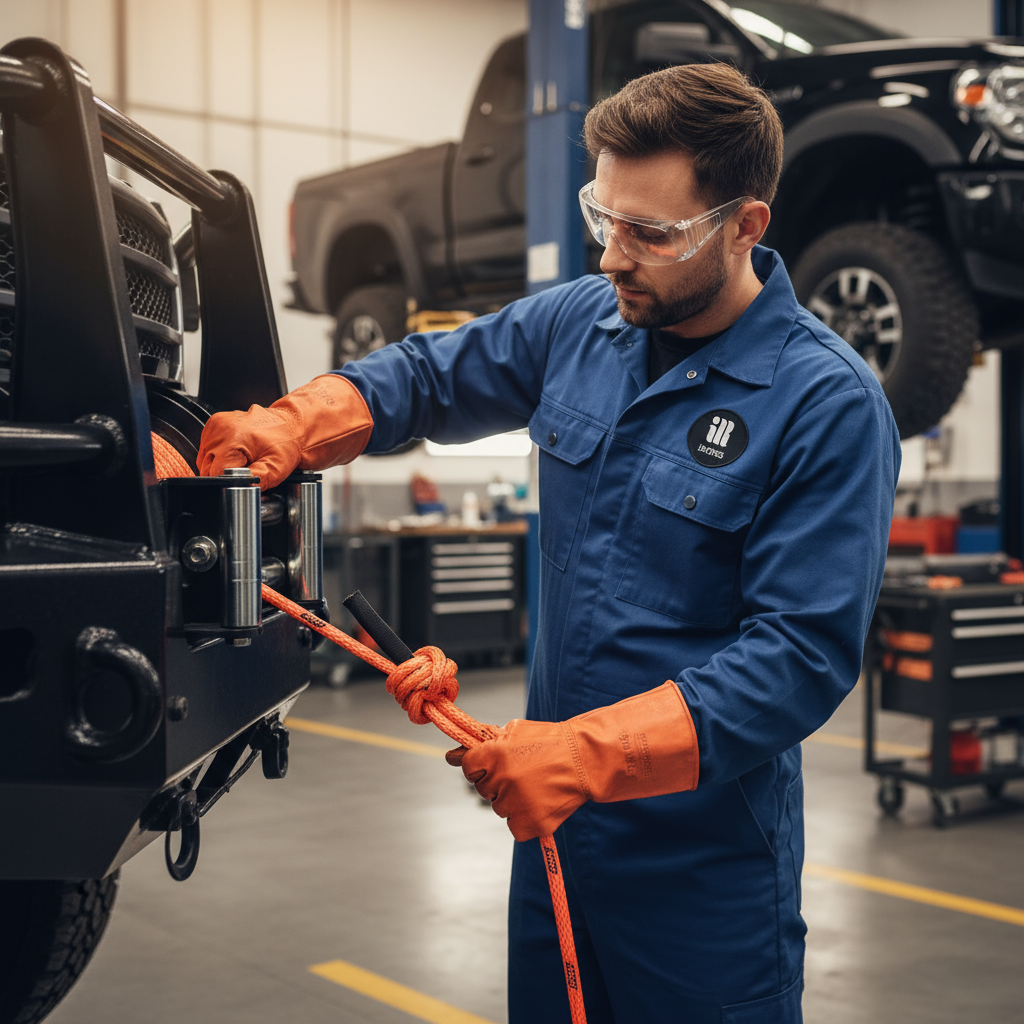
Technician splicing a synthetic winch rope onto a truck winch drum, showing correct looping and tensioning
Step-by-step visual guide to installing a synthetic winch rope on an ATV, UTV or truck winch.
For an ATV or UTV winch, begin by carefully loosening the drum bolts. Next, feed the rope through the fairlead and form a tight loop that rests securely against the drum flange. Once positioned, secure the loop with a stainless‑steel thimble, then retighten the bolts according to the manufacturer’s torque specifications. A truck winch follows the same fundamental principles but often requires a greater length of rope. The line should be wound from the drum outwards, ensuring each coil remains snug to prevent undesirable overlap. After the rope is correctly in place, pull it taut by engaging the winch at a low speed, verifying that the line runs smoothly without any snagging.

Never exceed the winch’s working load limit; the rope’s breaking strength must be at least 1.5 times the winch rating.

Routine inspection is the absolute cornerstone of operational longevity. Before each outing, perform a quick visual check. Focus on the integrity of the sheath, the consistency of the diameter, and the condition of all end terminations. To clean the rope, use mild soap and water, rinse thoroughly, and allow it to air‑dry away from direct sunlight. Store the line loosely coiled in a dry bag to prevent compression set. When considering the question, “What is the life expectancy of a synthetic winch rope?”, the answer largely depends on intensity of use: heavy off‑road recovery might yield 2–3 years of service, while light‑duty recreational use can extend to 5–10 years with diligent care. Safety protocols inherent in synthetic ropes significantly enhance those vital inspection habits. Their low‑recoil designs minimise the dangerous sudden snap‑back that can occur with traditional steel cables. Moreover, closed‑loop systems, such as soft‑eye loops or Factor 55 links, maintain constant tension on the line, substantially reducing the chance of a free‑spinning rope. Some iRopes products also feature strategically incorporated reflective or glow‑in‑the‑dark fibres. These elements significantly improve visibility in low‑light conditions, helping operators maintain control and enhancing safety during critical night recoveries.

Good Condition

Intact sheath – The polyester cover shows no cuts, abrasions, or UV fading, indicating the rope can still deliver its rated strength.

Uniform diameter – No fraying or thinning; the core fibres remain evenly spaced, ensuring consistent performance.

Worn Condition

Damaged sheath – Visible cuts, abrasion, or discoloration indicates compromised protection and significantly reduced strength.

Frayed ends – Exposed fibres or an uneven diameter are clear signals that the rope should be retired immediately for safety.
When any of these critical warning signs appear—be it sheath damage, frayed ends, or a noticeable loss of elasticity—you must replace the line without hesitation. Following a disciplined inspection routine, respecting the inherently low‑recoil design, and storing the rope correctly ensures that your **replacement synthetic winch rope** remains a safe, high‑performance asset throughout its entire service life. Always remember that iRopes is dedicated to providing high‑quality ropes with higher breaking strength, greater longevity, superior wear resistance, and increased safety.

Get Your Custom Synthetic Winch Rope Quote

After exploring why a synthetic line outperforms steel, the critical importance of matching material grade, diameter, and protective sheathing, and the best practices for installation and upkeep, it’s unequivocally clear. A **replacement synthetic winch rope** from iRopes can deliver up to 30% higher breaking strength, up to 85% weight reduction, and built‑in low‑recoil safety. Discover the advantages of synthetic winch rope for off‑road use. iRopes’ fibre‑based ropes are specifically engineered for higher breaking strength, greater longevity, superior wear resistance, and enhanced safety, making a **replacement winch rope** the intelligent upgrade for demanding off‑road and professional recovery work. Whether you’re sizing a 3/8‑inch line for a 12,000 lb winch, selecting UV‑protected sheaths, or adding reflective elements, our comprehensive OEM/ODM capabilities empower you to tailor every aspect of your **winch synthetic rope replacement**. If you’d like personalised guidance to specify the perfect rope for your unique application, simply utilise the form above. For a detailed, one‑to‑one consultation about ideal specifications for your business, fill out the inquiry form above, and our specialists will promptly respond to your custom requirements.
Tags
Our blogs
Archive
Fiber vs Steel Winch Cable Which Is Better
Why Fiber Winch Rope Beats Steel: stronger, lighter, and safer for every pull