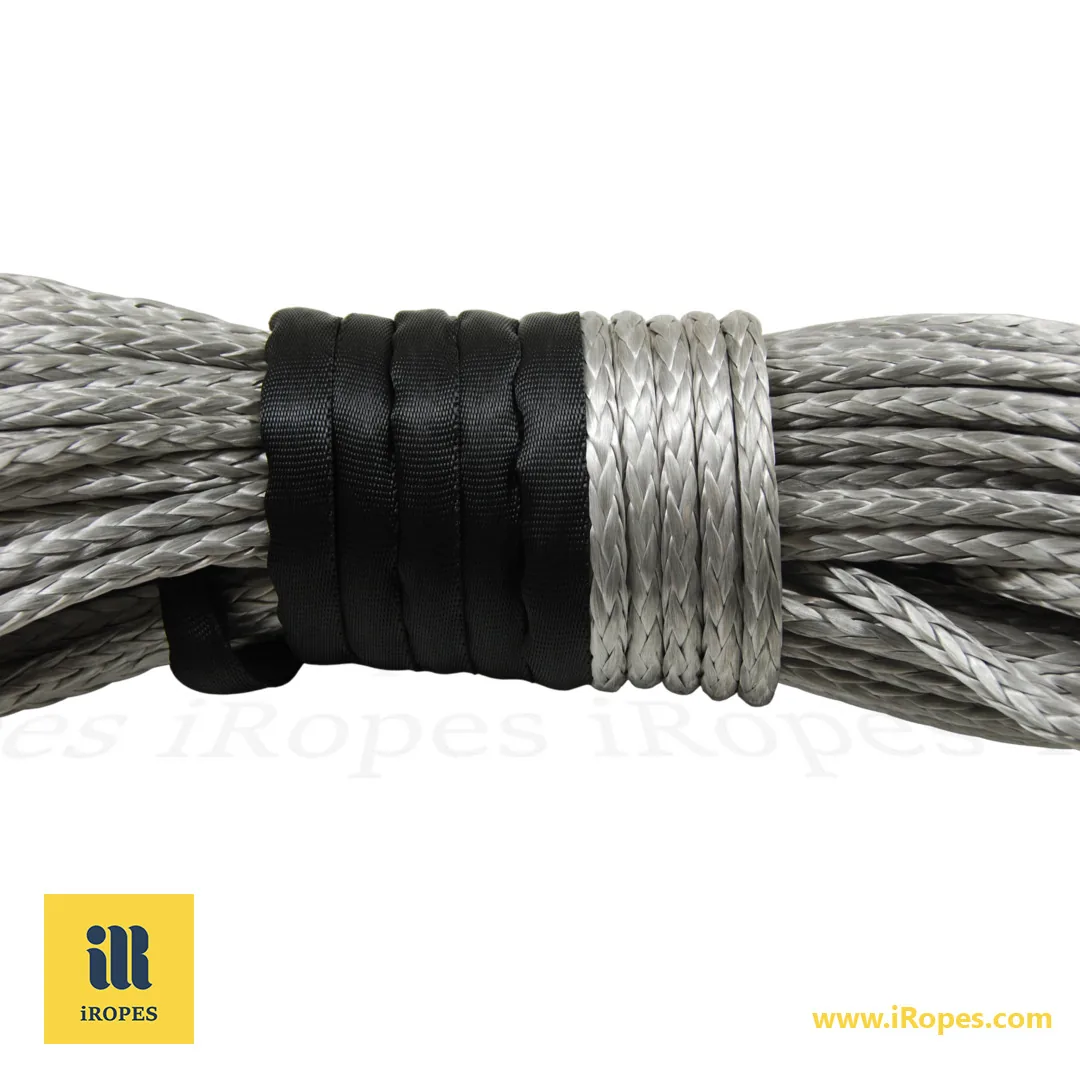
10 mm blue winch rope pulls 11 600 kg — the nylon counterpart stops at 2 500 kg, a 4.6× strength gap you can’t ignore.
What you’ll learn in 2 min
- ✓ Lift safely up to 2 320 kg for static applications with the blue rope’s working load.
- ✓ Manage shock loads in marine settings — nylon’s 5–10% stretch helps, noting it absorbs about 8% water.
- ✓ Gain flexibility and splicing ease from braided ropes (strength 4 500–9 000 kg, depending on fibre).
- ✓ Get 2–4 week lead times with iRopes OEM/ODM customisation and ISO 9001‑backed quality.
You might think the cheaper nylon line is enough for most jobs, but missing the hidden performance gap could cost you a failed lift or a snapped dock line when the tide turns. In this guide, we compare the 10mm blue rope, the 10mm nylon rope, and the 10mm braided rope so you can choose the right 10mm rope with confidence and keep your operation moving.
Understanding the 10mm blue rope – strength, material, and applications
When you reach for a rope that can pull a 4‑wheel‑drive out of a mud pit without stretching like a rubber band, the 10mm blue rope is often the first choice. Its breaking strength tops out at 11 600 kg, which means you have a large safety margin for static loads. In practice, many engineers apply a safety factor of five, so the safe working load sits around 2 320 kg — plenty for heavy‑load winching, anchor‑line work, or lifting steel beams.

The secret behind that power is the fibre itself. The rope uses high‑modulus polyethylene (HMPE) — for example, Dyneema — which delivers an exceptional strength‑to‑weight ratio. HMPE offers good UV stability, the blue coating resists sun‑induced degradation, and the material’s low elongation keeps the load steady even when the winch is cranking at full torque.
“High‑modulus polyethylene gives the blue rope an unmatched combination of tensile strength and minimal stretch, which is why it excels in off‑road recovery.” – Dr Lena Müller, Materials Engineer, SGS Testing Labs
Beyond raw numbers, the rope’s real value shows up in the jobs it can tackle. If you’re wondering “what are the uses of a 10mm blue rope?”, think of any scenario where you need a short, sturdy line that won’t snap under sudden loads.
- Off‑road recovery – pulls stuck vehicles out of mud, sand or snow while staying taut under high tension.
- Industrial rigging – secures heavy machinery during lifts or temporary anchoring on construction sites.
- Heavy‑duty lifting – raises pallets, steel girders, or engine blocks where a low‑stretch line is essential.
Those three categories cover most professional needs, and the rope’s low stretch also suits temporary anchor lines in expedition camps. As we move on, keep in mind that the blue rope’s ultra‑high strength comes from HMPE, whereas the 10mm nylon rope relies on different traits — notably moderate stretch and strong marine durability.
Choosing the right 10mm nylon rope – performance factors and use cases
That extra give becomes decisive when you move from the ultra‑high strength of a winch rope to a line that must flex with tide and swell. A 10mm nylon rope delivers a breaking strength of 2 500 kg, which translates to a safe working load of about 500 kg once you apply the industry‑standard safety factor of five.

Calculating that working load is straightforward: divide the breaking strength by five. For a rope that can hold 2 500 kg, the maximum load you should apply in regular service is roughly 500 kg. This simple rule helps you stay within safe limits without needing a calculator on the job site.
- Locate the breaking strength figure on the product data sheet.
- Divide that number by five to obtain the working load limit.
- Never exceed the calculated limit during operation.
Nylon’s moderate stretch (typically 5–10% under load) gives it natural shock‑absorbing qualities. It also absorbs about 8% water, so allow for some wet‑strength reduction; however, its toughness and abrasion resistance make it a staple for marine use. These traits suit dock lines, mooring, and anchor rope where elasticity helps protect both the vessel and fittings.
Because of those characteristics, you’ll most often see a 10mm nylon rope in the following settings:
- Dock lines – secure vessels to a pier while accommodating swell and surge.
- Mooring and anchor lines – absorb shock loads without transferring harsh jolts.
- Arborist work – support tree‑work setups where a bit of give reduces sudden jerks.
- General marine applications – tie‑downs and duties that benefit from controlled stretch.
Custom Nylon Solutions
iRopes can tailor the colour, strand count, and core type of a 10mm nylon rope to match your branding or performance needs. With ISO 9001-certified production and full IP protection, you receive a rope that blends reliability with a personal touch.
Now that you understand how stretch and water absorption influence nylon’s suitability for dock and mooring work, the next step is to compare those benefits with the handling of a 10mm braided rope, which often provides a practical balance of strength and flexibility across multiple industries.
Evaluating the 10mm braided rope – construction options and benefits
After weighing the give of a nylon dock line, the next question is whether a braided design can give you the best of both worlds — strength with smooth handling. That’s where the 10mm braided rope steps in, offering a blend of load‑bearing power and ease of use that many tradespeople rely on.

So, is braided nylon rope strong? In short, yes — interlaced fibres distribute stress evenly, letting the rope handle loads that would otherwise cause a single‑strand line to kink or fray. Depending on the fibre you choose — polyester, HMPE, or nylon blends — the breaking strength of a 10mm braided rope typically sits between 4 500 kg and 9 000 kg. That range lets you match safety factors and budget without over‑or under‑specifying.
Construction Types
Solid braid offers a uniform weave that resists abrasion, diamond braid adds staggered interlaces for kink resistance, while 3‑strand designs provide simple splicing and repair.
Strength Range
Expect about 4 500 kg with polyester‑based braids and up to around 9 000 kg with HMPE options, with nylon blends sitting between — exact figures vary by fibre and construction.
Flexibility
The interwoven strands bend smoothly around pulleys, reducing wear on both rope and equipment during repetitive operations.
Easy Splicing
Many braid designs allow straightforward eye splices without special tools — a handy trait for field repairs and custom terminations.
When you factor in real‑world handling, the braided profile shines in projects that demand frequent routing around rigging or trees. In forestry and tree work, switching from a stiff line to a 3‑strand or double‑braid often speeds setup because the rope lies flatter and resists the snarls that slow down crews.
Remember the safety factor rule: divide the quoted breaking strength by five to obtain the recommended working load limit for static applications.
If you need a custom colour to match branding, or a specific core material for an offshore project, iRopes can tailor the braid pattern, strand count, and even add reflective elements for night‑time visibility. Their ISO 9001-certified facilities keep tolerances tight, so the rope you receive meets the exact specifications you provide.
For more information on high‑strength synthetic winch ropes, see our guide on discovering high‑strength synthetic winch rope for sale.
Choosing the correct product is simple here: if you require a customised solution — specific colours, core types, or branding — our experts are ready to help you fine‑tune the perfect rope for your business.
Get a personalised rope quote or technical advice
For any further questions or a bespoke recommendation, simply complete the form above and a dedicated iRopes specialist will contact you promptly. Learn how to ensure safety with high‑quality nylon line rope for your marine applications.