Choosing the right 16 mm mooring rope delivers around 3,500 kg minimum breaking load while weighing about 13.7 kg per 100 m – a common choice for 10‑12 m yachts, depending on conditions.
What you’ll gain – ~5 min read
- ✓ Select the optimal fibre for an ≈ 3,500 kg breaking load while keeping weight around 13.7 kg/100 m.
- ✓ Improve handling and reduce wear by using high‑visibility colour coding that speeds up docking.
- ✓ Benefit from tiered pricing and 4–6‑week lead times on wholesale orders.
- ✓ Gain IP protection and ISO 9001 quality assurance for consistent quality.
Many assume any 16 mm line will do, yet the trade‑offs between weight, stretch and UV exposure can affect daily docking. By matching fibre, colour code and construction to your boat and berth, you’ll improve safety and make mooring more efficient. At iRopes, we support dinghy, cruising and racing programmes, as well as mooring and anchoring set‑ups, with materials that suit each task. The next sections show how our engineers help you choose and customise the right solution.
Choosing the Right 16mm mooring rope for Yachts
After understanding why a 16 mm rope is often chosen for yacht mooring, the real challenge is picking the material that matches your vessel’s size, colour scheme and daily use. Let’s break it down so you can decide with confidence.
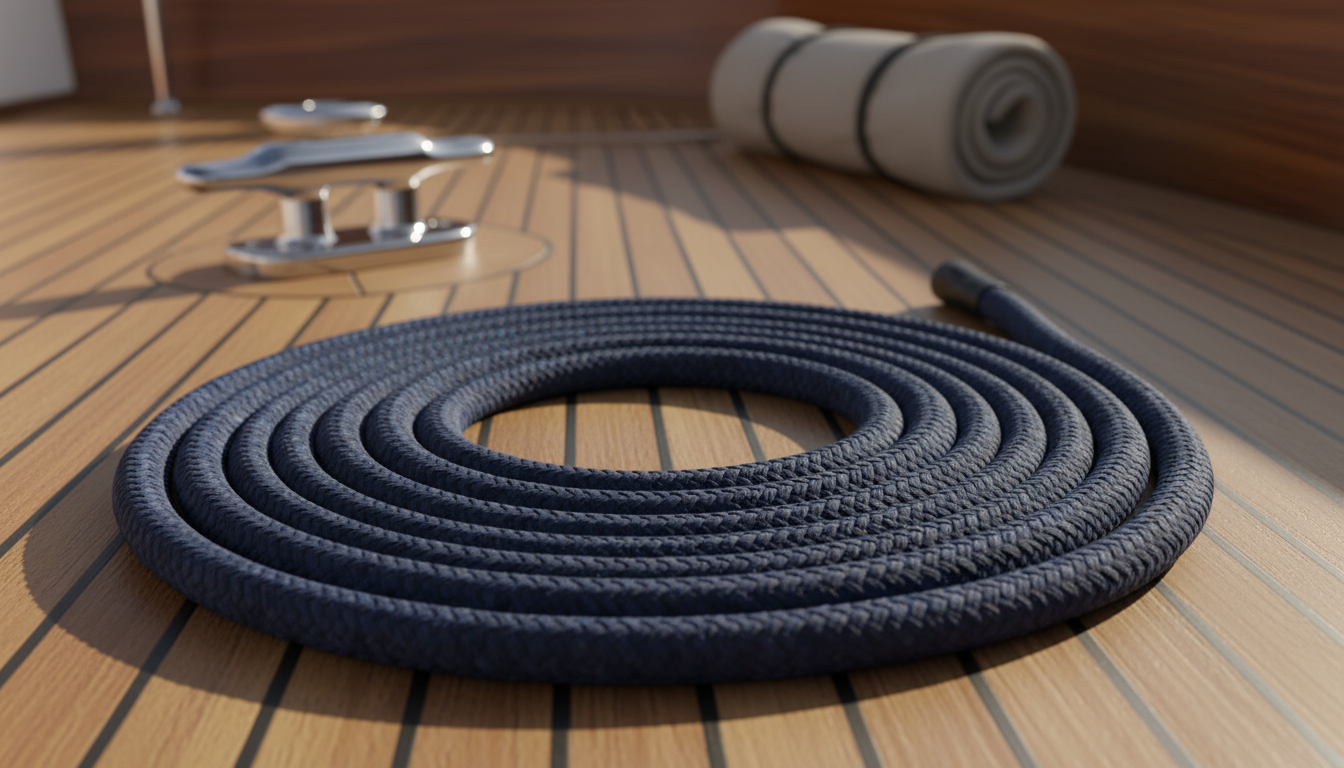
Material families and marine performance
Each fibre brings a different blend of strength, stretch and water‑behaviour:
- Polyester – sinks, resists UV, low stretch; ideal for permanent mooring lines.
- Nylon (polyamide) – high elasticity; great for shock absorption when docking in windy ports.
- UHMWPE – ultra‑light, very low stretch; excellent for high‑speed winches.
- Technora & Vectran – heat‑resistant; maintain strength under prolonged load.
- Kevlar – outstanding tensile strength; best for specialised lifting tasks.
- Polypropylene (PP) – floats, easy to spot; suited for temporary anchoring and pick‑up lines.
How thick should a mooring rope be?
The rule of thumb links yacht length to rope diameter. For a typical cruising yacht, a 16 mm line offers a comfortable safety margin in exposed berths.
| Yacht length | Recommended polyester diameter | Recommended polypropylene diameter |
|---|---|---|
| 8 m (26 ft) | 10 mm | 14 mm |
| 10 m (33 ft) | 12 mm | 16 mm |
| 12 m (39 ft) | 14 mm | 18 mm |
For yachts in the 10‑12 m range, a 16 mm mooring rope provides around 3,500 kg breaking load and remains manageable on deck, particularly where a higher safety factor is desired.
“When we specify a 16 mm polyester line for a 10 m cruiser, its sinking behaviour helps prevent fouling and the UV‑resistant finish holds up for years,” notes the iRopes marine engineering team.
Colour and pattern options
Matching your rope to the boat’s branding not only looks sharp, it can improve safety by increasing visibility.
- Solid hull colours – navy, white, black, or custom Pantone matches.
- High‑visibility strips – neon orange or reflective yarns for night docking.
- Patterned designs – chevron or wave motifs that echo a yacht’s logo.
By pairing the right fibre with a colour that suits your vessel, you get a 16 mm rope that performs reliably and reinforces your brand on the water.
Next, we’ll look at the exact specifications and load‑capacity calculations that prove whether a particular 16 mm rope meets the safety standards required for your yacht.
Understanding 16mm rope specifications and load capacity
Building on the material overview, the next step is to see how each fibre translates into real‑world performance. Below you’ll find the key numbers that tell you whether a 16 mm rope can safely handle the forces your yacht will encounter.

Each material brings a distinct balance of strength, stretch and heft. The numbers below are typical values supplied by recognised manufacturers and standards bodies.
| Material | Breaking load (kg) | Elongation at load (%) | Weight per 100 m (kg) |
|---|---|---|---|
| Steel 6×19 wire | 3 200 | 1.5 | — |
| Polyester (3‑strand) | 3 500 | 5.0 | 13.7 |
| Polypropylene (3‑strand) | 2 800 | 6.5 | 11.5 |
These figures form the backbone of every safety calculation. Marine practice typically applies a safety factor of 5 to 6 for mooring lines, so the rope’s Minimum Breaking Load (MBL) should be at least five to six times the expected maximum mooring load.
- Estimate the vessel’s maximum mooring load (consult your builder or class guidance).
- Choose a safety factor (SF) between 5 and 6.
- Calculate the required rope MBL: Required MBL = Mooring load × SF.
For example, if your estimated mooring load is 600 kg and you apply an SF of 5, target a rope with an MBL of at least 3,000 kg. A 16 mm polyester rope at ≈ 3,500 kg meets that requirement; if your calculated load is higher, step up a diameter or select a higher‑strength construction.
Capacity of 16mm wire rope
A standard 16 mm steel 6×19 wire rope delivers a breaking load of roughly 3,200 kg. Its low elongation makes it ideal for applications where minimal stretch is crucial, such as winch‑driven anchoring or heavy‑duty lifting.
When you compare the options above, polyester offers the highest tensile strength in the 16 mm examples, steel provides the smallest stretch, and polypropylene gives the lightest weight with the benefit of floating. Selecting the right 16 mm rope therefore hinges on which performance trait matters most for your yacht’s operating conditions.
With the load‑capacity table and safety‑factor formula in hand, you can now match a rope’s specifications to the forces it will face, setting the stage for the next part of the guide where we contrast wire rope against synthetic alternatives for marine use.
Evaluating 16mm wire rope options for marine use
Having seen the load‑capacity tables, the next step is to judge whether a steel‑core 16 mm wire rope or a synthetic alternative will serve your yacht best. The decision hinges on how the rope behaves under tension, how it ages in salty air, and what you actually need it to do on deck.
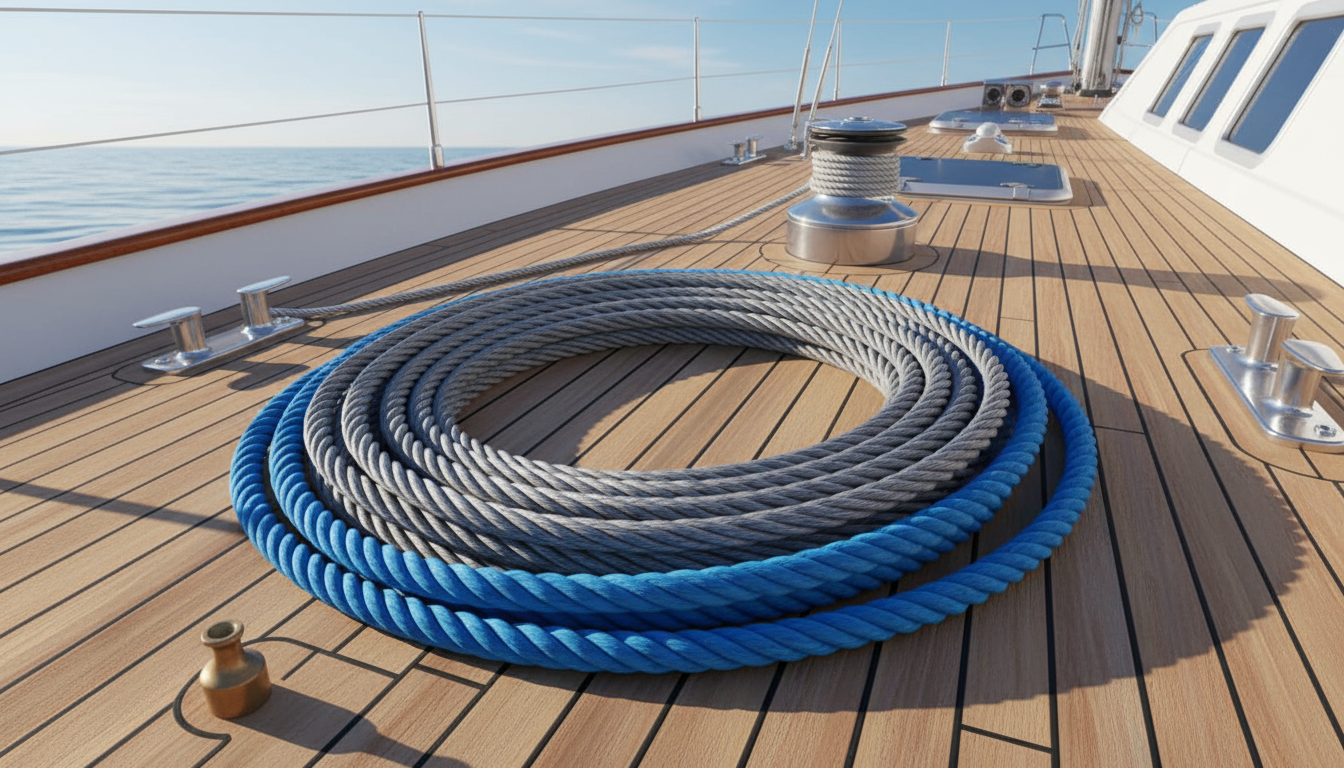
Steel 6×19 construction is prized for its low stretch – typically around 1.5 % under load – which makes it ideal when you need a predictable pull, such as when a winch is handling the line. The trade‑off is weight: coils are significantly heavier than synthetics, and the metal core demands vigilant corrosion control.
Modern synthetics – polyester, nylon or UHMWPE – give a higher elongation (about 5 %‑7 %) that can absorb shock, and many captains prefer that “give” when docking in choppy conditions. They are lighter, float (polypropylene) or sink (polyester), and can be dyed to match any hull colour.
Steel Strength
Breaking load near 3 200 kg, minimal stretch, excellent for winch‑driven anchoring where precise tension matters.
Durability Edge
Resistant to abrasion and UV, but requires regular rinsing and a protective coating to stave off rust.
Synthetic Flex
Polyester offers a breaking load of about 3 500 kg with a sinking characteristic that keeps the line clear of surface fouling.
Weight & Visibility
About 13.7 kg per 100 m for 3‑strand polyester, easy to handle, and available in high‑visibility hues or with reflective strips for night work.
When it comes to mooring lines, polyester‑based 16 mm rope still tops the list for most yachts. Its sinking behaviour prevents the line from drifting, the UV‑resistant finish endures sun‑baked decks, and in the 16 mm examples shown above, its rated tensile strength exceeds the steel 6×19 figure while staying lighter. In short, for a yacht that values both safety and aesthetics, polyester is the go‑to material.
Tip: If you choose steel 6×19, apply a marine‑grade anti‑corrosion spray after every rinse to keep performance close to the rated value.
Understanding these nuances lets you match the rope to the task – steel for low‑stretch, high‑precision winch operations, polyester for everyday mooring where strength, durability and brand‑matching colour matter most. The next part of the guide will show how iRopes can turn any of these choices into a fully customised solution—including UHMWPE mooring rope options—right down to the eye splice and packaging.
Customisation, OEM/ODM services and purchasing guide
Now that you’ve compared the strengths of polyester, steel and other fibres, the next step is shaping that 16 mm mooring rope into a line that reflects your yacht’s personality and meets every operational detail.
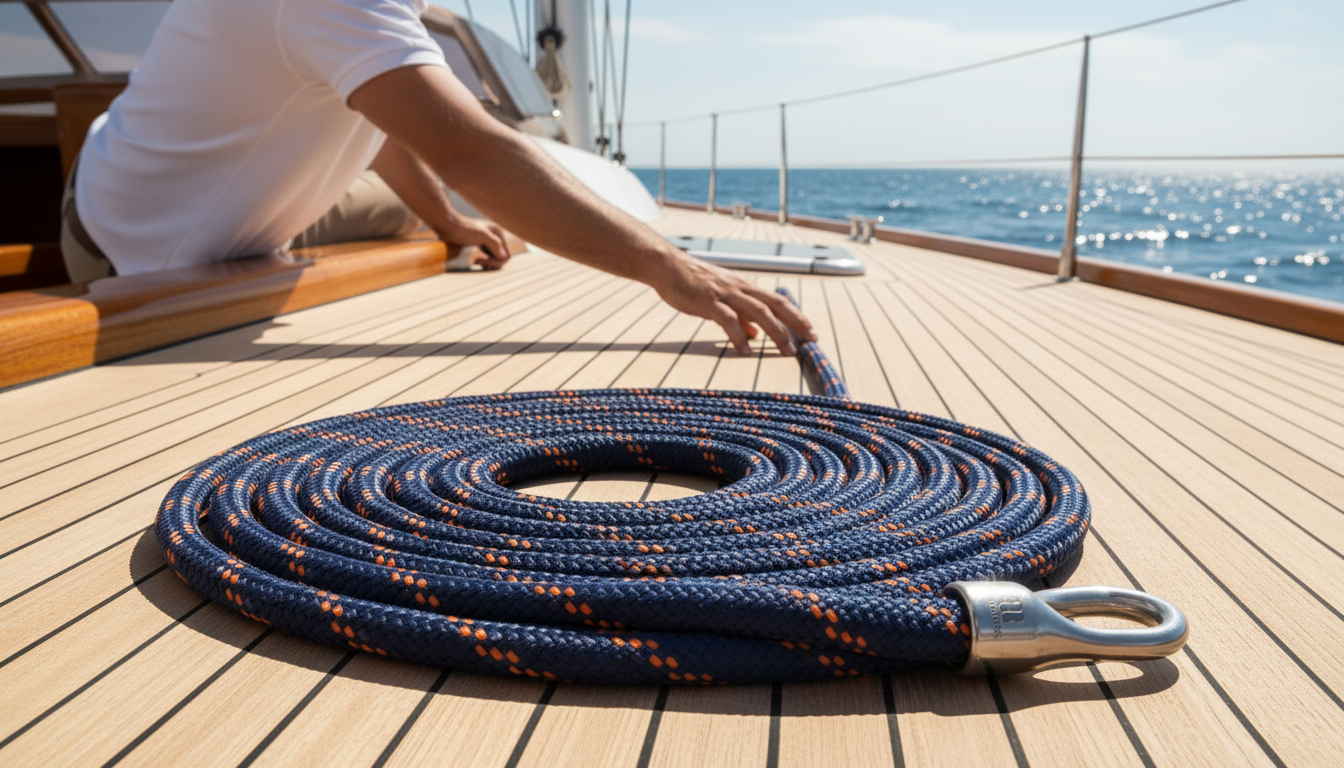
iRopes lets you decide every visual and structural element, so the rope not only holds fast but also tells your story on the water. Our marine range spans dinghy, cruising and racing applications, with fibres including UHMWPE, Technora, Vectran, polyester, polyamide (nylon), Kevlar and PP. We’ll help you select the right material for sheets, halyards, mooring and anchoring so each line performs as intended.
- Colour & pattern – choose solid hull shades, high‑visibility strips or a bespoke graphic that mirrors your logo.
- Core type – pick parallel‑core, fibre‑core or steel‑core constructions to balance stretch, weight and load‑bearing needs.
- Accessories – add pre‑formed eyes, stainless‑steel thimbles or a professionally spliced termination for instant readiness.
Beyond aesthetics, iRopes safeguards the ideas you bring to the table. Every custom order benefits from dedicated intellectual‑property protection, and our production floor operates under ISO 9001 certification to ensure consistent quality from fibre selection to final packaging. Choose non‑branded or customer‑branded packaging (bags, colour boxes or cartons), or opt for custom‑branded, ISO‑certified ropes, and we’ll ship pallets directly to your location worldwide.
OEM / ODM Assurance
Typical lead‑time is 4–6 weeks, with MOQ usually aligned to pallet quantities depending on your specification. Tiered pricing rewards larger volumes, and bulk discounts are available for extended runs. Request a quote through our online form and our team will tailor a proposal to your schedule and budget.
When you combine the right colour, core and accessories with iRopes’ reliable OEM/ODM pipeline, the resulting 16 mm rope becomes a seamless extension of your vessel’s safety system and brand image. Ready to see a sample layout or lock in a bulk price? Just click the “Request a Quote” button below, and we’ll walk you through the final steps before the next section shows how to evaluate the overall value of your customised solution.
You now understand how material families, load‑capacity calculations and colour options shape the ideal 16mm mooring rope for your yacht. Whether you need the low‑stretch performance of a 16mm wire rope, the sinking strength of a polyester 16mm rope, or high‑visibility UHMWPE strands, iRopes can customise every aspect – from fibre selection to branding colours and accessories – while guaranteeing ISO 9001 quality and IP protection.
Our OEM and ODM services provide fast lead times, tiered pricing for bulk orders, and direct pallet shipping worldwide, ensuring your customised line, delivering performance comparable to premium 3‑strand marine rope, arrives on schedule and fits your budget.
Request Your Bespoke Rope Quote
If you’d like personalised advice on selecting or customising the right rope for your yacht, please complete the form above and our specialists will get back to you promptly.
