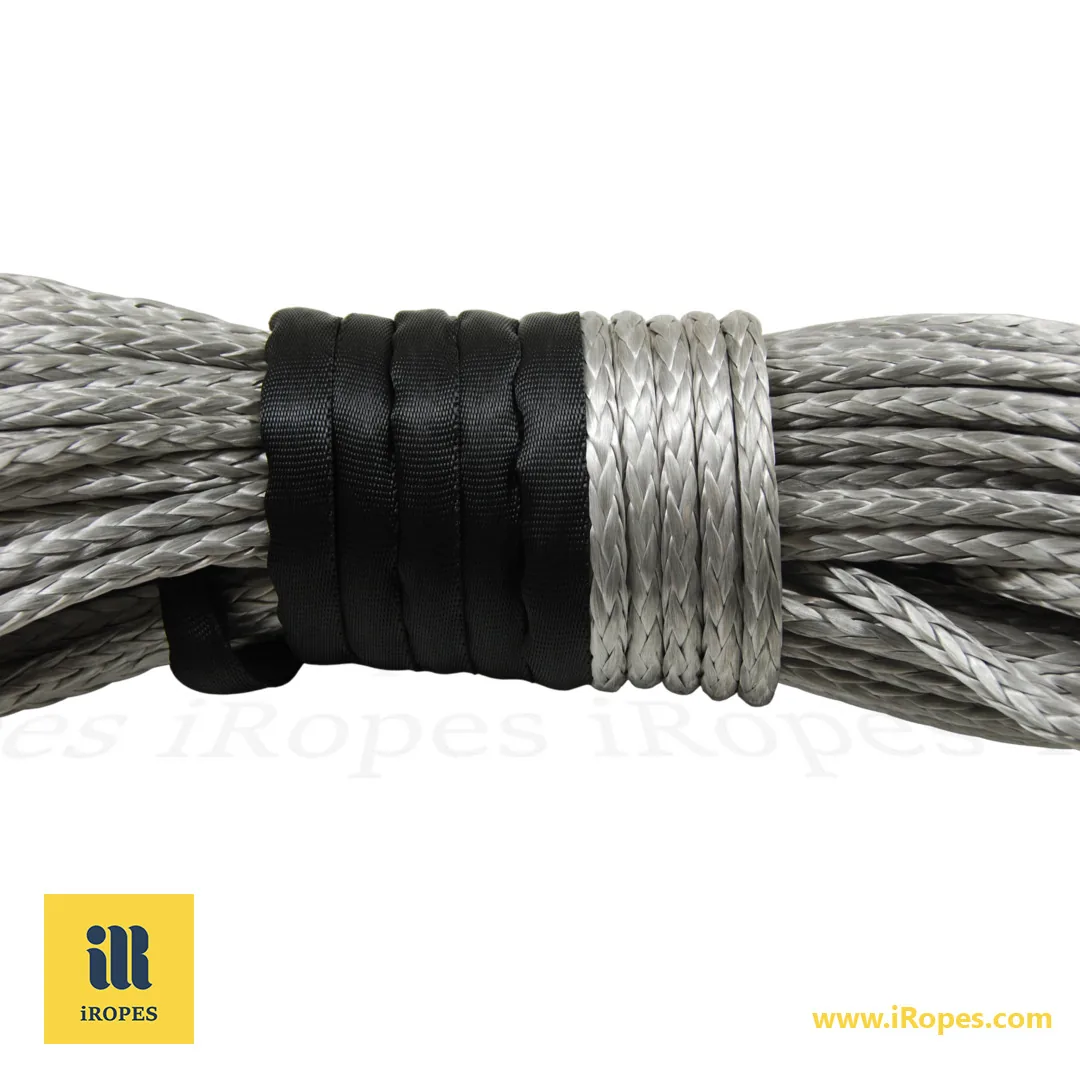
3‑ply rope typically delivers higher tensile strength than twisted poly rope—roughly 400–10,000 lb across sizes—while pricing commonly starts around US$0.30 / ft.
Benefits – ~3 min
- ✓ 3‑ply rope: higher tensile strength (≈400–10,000 lb across sizes) and strong abrasion resistance.
- ✓ Twisted poly: floats and is often the most economical (≈US$0.15–$0.30 / ft).
- ✓ Cotton: shrinks 10–15% after washing; soft grip; from ≈US$0.20 / ft.
Many DIYers reach for low‑cost twisted poly rope first, yet 3 ply rope often offers higher strength and better abrasion resistance for demanding jobs. This guide compares 3 ply rope, twisted poly rope, and cotton fiber rope so you can balance strength, cost, and application. We’ll also show how iRopes’ custom blends deliver the exact performance and branding you need.
Understanding 3 ply rope
When you hear the term 3 ply rope, picture three individual strands twisted together in a balanced helix (three‑strand lay). This construction gives the rope a smooth feel and predictable stretch, making it a favourite for projects where reliability matters.

The three strands are usually made from high‑tenacity synthetic fibres such as polyester or nylon. Each strand is twisted in the opposite direction to its neighbour, a technique that cancels torsional forces and helps the rope stay straight under tension. Typical diameters range from 1/8 in (≈3 mm) to 1 in (≈25 mm), with breaking loads spanning about 400 lb to 10,000 lb depending on material and size.
“Under our ISO 9001‑certified quality system, we design and test our 3 ply rope to a minimum 5:1 safety factor, aligning with widely used industry and OSHA guidance,” says an iRopes senior engineer.
Strength alone isn’t the whole story; OSHA and industry guidelines recommend using a safety factor of five for load‑bearing rope. For example, if a task requires a 1,000 lb pull, select a 3 ply rope with a breaking load of at least 5,000 lb. This buffer helps manage shock loads and wear.
- Marine use – docking lines, winches, and sail‑handling where water resistance and load capacity are critical.
- Industrial rigging – lifting, towing, and securing equipment in factories or on construction sites.
- Recreation & watersports – utility and tow lines where predictable handling matters.
Because the three‑strand layout resists kinking, it also works well in situations with frequent bending, such as winch drums or pulleys. If you’re unsure whether a 3 ply rope fits your project, compare its diameter and breaking load against the required safety factor; that check will point you toward the right size.
Now that we understand what a 3 ply rope offers, let's explore the alternative material of twisted poly rope.
Twisted poly rope: properties and applications
After exploring the balanced strength of a 3 ply rope, you might wonder which material offers buoyancy without breaking the bank. That’s where twisted poly rope steps in.
Twisted poly rope is typically made from polypropylene or polyester filaments that are formed into three strands and laid together in a helical twist. Polypropylene has low density and floats, while polyester adds extra UV stability and abrasion resistance for prolonged sun exposure. Some ropes blend both to balance floatation, durability, and cost.

These material choices translate into three practical benefits you’ll notice on the job site:
- Polypropylene option – floats on water.
- Polyester option – higher UV and abrasion resistance.
- Low price per foot – budget friendly.
When you compare this with a 3 ply rope, the differences become clear. Twisted poly rope typically breaks at about 300–3,000 lb, which is lower than an equivalent 3 ply synthetic of the same diameter. However, its floatation means you never have to worry about a dock line sinking, and the lighter weight reduces handling fatigue. The trade‑off is a shorter lifespan under heavy abrasion, so reserve it for applications where buoyancy and cost outweigh extreme wear, such as boat‑deck lines, floating fenders, or temporary outdoor rigging.
Twisted poly rope typically costs between US$0.15 and $0.30 per foot, making it a very economical choice for large‑scale marine and outdoor projects.
Having seen twisted poly rope’s benefits, we turn to the natural alternative of cotton fiber rope for different projects.
Cotton fiber rope: benefits and uses
When you reach for a rope that feels soft to the touch and leaves a minimal environmental footprint, cotton fiber rope often proves the ideal choice. Harvested from natural plant fibres, it offers a gentle grip and a warm aesthetic that many synthetic ropes can’t match. Because the fibres are spun rather than extruded, the rope has a slightly textured surface, making knots hold securely without slipping.

Natural characteristics
Cotton rope is biodegradable, meaning it can break down naturally when exposed to soil and moisture—an advantage for projects that value sustainability. One quirk to anticipate is shrinkage: after the first wash, the rope can contract by about 10–15%, especially if the fibres are unbleached. This dimensional change is why many makers recommend ordering a little extra length for precise cuts. Compared with a 3 ply rope, the tensile strength is lower, typically ranging from around 400 lb for a ¼‑in strand to about 2,500 lb for a ½‑in rope, but the softness suits light‑duty tasks.
Shrinkage Notice
Expect a 10–15% reduction in length after the first laundering. To retain the intended measurement, purchase a slightly longer piece or pre‑shrink the rope by washing it before cutting.
Ideal uses
Because it is gentle on surfaces and easy to handle, cotton rope shines in craft and decorative projects—think macramé wall hangings, woven baskets, or pet leads that won’t chafe sensitive paws. Outdoor applications are possible, provided the rope is kept out of prolonged direct sunlight; the natural fibres will degrade faster than synthetics if UV exposure is constant. For light‑duty tasks such as securing garden tools, tying temporary tarps, or creating decorative lighting loops, cotton rope offers a pleasant aesthetic without sacrificing basic utility.
Maintenance tips to preserve strength
To extend the life of your cotton rope, start with a gentle hand‑wash using lukewarm water and a mild detergent. Rinse thoroughly, then lay the rope flat in a shaded area to air‑dry—avoid direct heat, which can accelerate fibre breakdown. Store the rope coiled in a dry, ventilated container; humidity encourages mildew, while exposure to sharp objects can cause fraying. Periodically inspect the rope for soft spots or discolouration, and replace sections that show signs of rot before they compromise safety.
With a clear picture of how cotton fiber rope behaves, you’re ready to compare it against the other materials and decide which option best matches your project’s demands.
Choosing the right rope and iRopes customization options
Now that you have a clear picture of how each rope behaves, the next step is turning that knowledge into a practical purchase decision. Below you’ll find a quick‑draw flowchart, a price snapshot, and the ways iRopes can tailor any rope to your exact specifications.

How to select the proper diameter and load rating
Start by writing down the maximum load you expect to pull or hold. Multiply that figure by five – the industry‑recommended safety factor – to get the minimum breaking load the rope must sustain. Next, consult the diameter‑to‑strength chart for the rope type you prefer (whether a 3 ply rope, twisted poly rope, or cotton fiber rope). Choose the smallest diameter that meets or exceeds the calculated breaking load; a tighter rope saves weight and cost without compromising safety. Finally, verify that the selected rope’s price per foot fits your budget.
Price per foot comparison and value analysis
Synthetic strength
High‑load, long‑life options
3 ply rope
Premium performance for marine and industrial jobs; price commonly starts around US$0.30 per foot, reflecting its durability.
Twisted poly rope
Best‑value choice for floating applications; most cost‑effective at roughly US$0.15–$0.30 per foot.
Cotton fiber rope
Ideal for décor and light‑duty tasks; pricing varies from about US$0.20 up to $2 per foot depending on finish and length.
Value drivers
What to consider beyond cost
Longevity
3 ply rope’s abrasion resistance often outweighs its higher upfront price over a multi‑year lifespan.
Floatation
Twisted poly rope stays buoyant, cutting labour time on dock‑line installations and retrievals.
Eco‑profile
Cotton rope biodegrades naturally, a selling point for sustainable projects and temporary installations.
iRopes customization – make the rope yours
Material & colour
Pick any blend of UHMWPE, Technora™, Kevlar™, Vectran™, polyamide, polyester or cotton, then add custom dyes, reflective tracers, or glow‑in‑the‑dark threads to match branding or safety needs.
Terminations
Choose from factory‑installed loops, thimbles, eye splices, or bespoke hardware; each termination is verified under ISO 9001 quality checkpoints.
OEM / ODM
Whether you need a single prototype or a bulk run, iRopes handles design, precision manufacturing, and final packaging (non‑branded or customer‑branded) under ISO 9001 certification—with dedicated IP protection throughout.
Quality assurance
Every batch undergoes tensile testing and environmental checks within our China facilities, and we can ship pallets directly to your location worldwide to support punctual fulfilment.
Ready to turn the guidance above into a concrete order? Click the button below to request a free, no‑obligation quote (custom large‑diameter rope options), or download the full buying‑guide checklist (maritime rope guide) to keep the decision steps handy while you shop.

Need a custom rope solution?
We’ve walked you through the strengths of 3 ply rope, twisted poly rope and cotton fiber rope, showing how safety factors, buoyancy and sustainability influence the right choice. With 15 years of experience in China and a catalogue of 2,348 cordages for marine, racing sports, industrial and safety uses, iRopes engineers ropes from strong synthetic fibres such as UHMWPE, Technora™, Kevlar™, Vectran™, polyamide and polyester—with a wide range of coatings that embody the quality of “Made in China”.
If you’d like personalised guidance on selecting the optimal rope for your project, use the enquiry form above. Our specialists will help you design a solution—material, diameter, colour, terminations and packaging—that meets your load, budget and branding requirements, supported by OEM/ODM services, ISO 9001 quality assurance, IP protection and reliable global shipping.