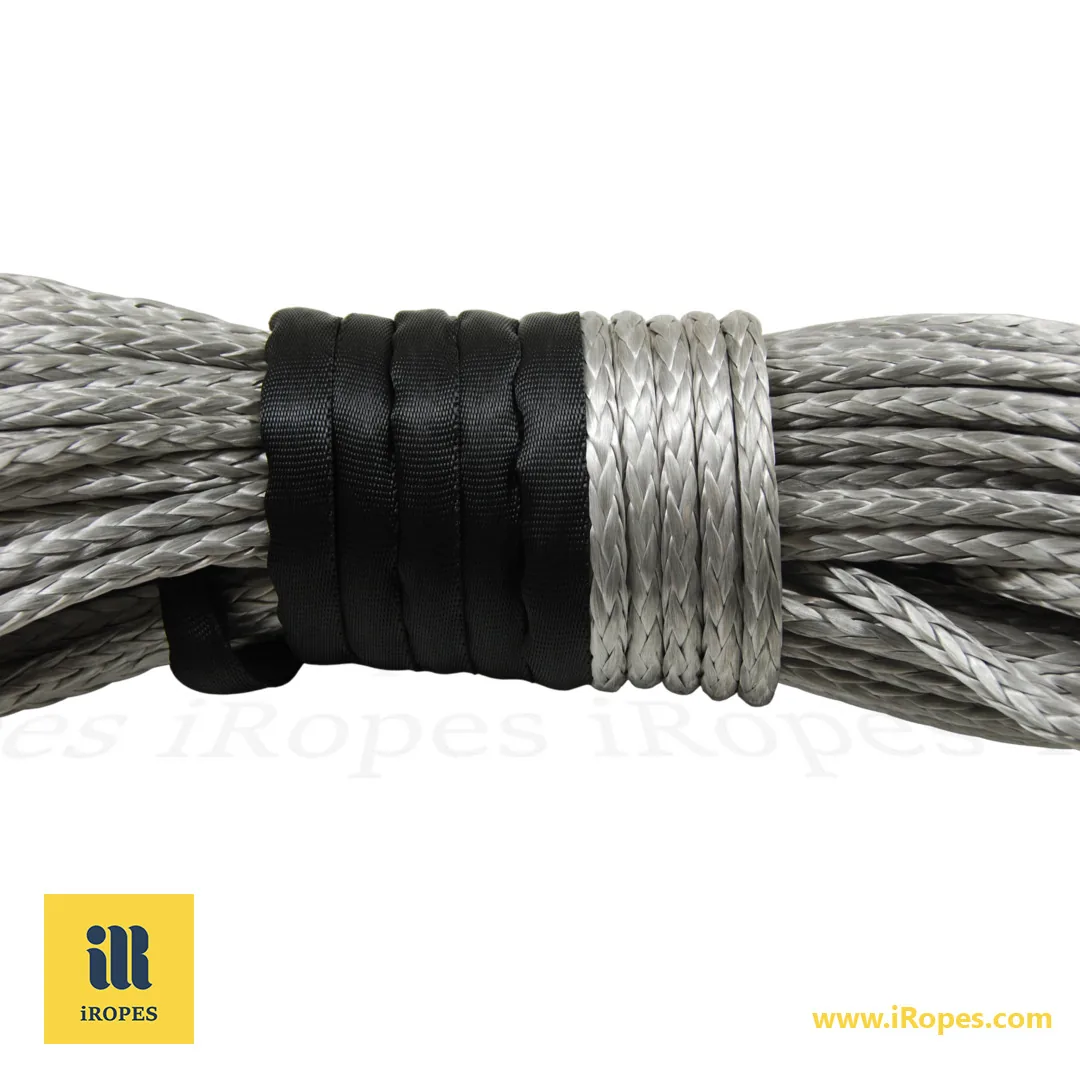
Hollow-braid rope delivers up to 10× the tensile strength per kilogram of steel wire rope while weighing a fraction of the load.
What you’ll gain – ~2 min read
- ✓ 10× higher strength‑to‑weight ratio – lift more with less mass.
- ✓ Up to 40% faster visual inspection – surface wear is instantly visible.
- ✓ 30% reduction in operator fatigue thanks to lighter handling.
- ✓ Custom branding at no extra cost – colours, reflective strips, packaging.
You might assume steel always wins on raw strength. However, a 12 mm hollow-braid line can actually out-pull a 16 mm steel cable while weighing half as much. This synthetic rope lets you rig faster and safer. This guide unpacks the science, the safety edge, and the hidden cost savings. We’ll then show you how iRopes can tailor a rope to fit your brand and performance targets.
Understanding hollow braid rope
Having briefly touched on the importance of rope choice, let's now delve into the specifics of the synthetic option that's reshaping demanding industries. So, what exactly is hollow braid rope?
A hollow braid rope is a core-less, tightly woven rope where the outer strands form a tube-like structure, leaving an empty centre. This innovative design eliminates the heavy metal core found in traditional wire rope, creating an exceptionally strong, yet remarkably lightweight line. Because high-performance fibres are used in its construction, the rope can float on water and exhibits minimal stretch under load.

Manufacturers typically spin the braid from fibres such as UHMWPE (often marketed as Dyneema), polyester, or polypropylene. UHMWPE offers the highest tensile strength, making it ideal for extremely demanding applications. Polyester balances strength with excellent UV stability for outdoor use, while polypropylene provides buoyancy at the lowest cost, often used in marine settings.
- Lightweight strength – synthetic fibres deliver up to 15 times the strength of steel per kilogram, making them incredibly efficient.
- Flexibility – the braided outer layer bends easily, reducing fatigue on winches and pulleys, which extends equipment life.
- Easy splicing – knots and splices can be formed without specialised tools, significantly speeding up field repairs and modifications.
These attributes make hollow braid rope ideal for a diverse range of tasks. For instance, arboriculturists value the gentle handling that protects tree bark during rigging operations. Marine crews, on the other hand, appreciate its buoyancy and resistance to salt-water corrosion, crucial for long-term ocean exposure. Off-road recovery teams rely on the rope’s ability to unwind without kinking, ensuring smooth operation in challenging conditions. Industrial lifting operations benefit from the low stretch characteristics, allowing for precise load positioning.
“When I switched to a hollow braid line for my off-road winch, the rig felt lighter and the rope never kinks, even after dozens of rescues.” – field technician, 4x4 recovery unit.
With its combination of high tensile performance, easy maintenance, and custom-colour options, hollow braid rope stands out as a modern alternative. It’s ready to meet the toughest job specifications across various industries.
Analyzing steel cable wire rope characteristics
When professionals speak of "steel cable," they are typically referring to the same product family as "wire rope," yet subtle distinctions matter. A steel cable often denotes a lighter-weight, smaller-diameter assembly used for precise control, such as in bicycle brakes or small lifting applications. Conversely, 'wire rope' generally describes larger, heavy-duty constructions intended for high-load lifting and long-span suspension systems in construction or maritime industries. Understanding these nuances helps engineers choose the right line for each job.

At its core, a steel cable wire rope consists of individual wires twisted into strands. These strands are then helically laid around a central core. The core type significantly influences the rope's flexibility, crush resistance, and overall load capacity.
- WSC – Wire Strand Core: A solid bundle of wires that provides high crush strength but typically reduces flexibility.
- IWRC – Independent Wire Rope Core: A miniature rope inside the main rope, offering a superior balance of strength and bendability.
- FC – Fibre Core: Often made from polyester or nylon, this core type maximises flexibility and reduces weight for applications where kink resistance is critical.
Strand configurations, such as 7x7 (seven strands of seven wires) and 7x19 (seven strands of nineteen wires), further dictate how the rope behaves under load. A 7x19 layout delivers superior flexibility and fatigue resistance, making it popular for winch lines that must unwind repeatedly. Conversely, a 7x7 build offers higher abrasion resistance, ideal for static rigging where the rope remains largely stationary and subject to wear.
Material Options for Steel Cable Wire Rope
Two primary steel grades dominate the market for wire rope. Galvanised steel receives a zinc coating, which slows corrosion in dry or mildly humid environments. However, it can still rust if water penetrates the coating over time. Stainless-steel variants—specifically 304 and the more marine-friendly 316—contain chromium and nickel alloys that form a protective oxide layer. This dramatically extends service life in saltwater or chemically aggressive settings.
Typical deployments of steel cable wire rope reflect its robust character. Heavy-duty lifting rigs on construction sites rely on the predictable elongation and high breaking strength of a 7x7 steel rope. Structural rigging for bridges or towers often specifies an IWRC core to withstand repeated bending without sacrificing load capacity. Long-term suspension systems, such as gondola cables, favour stainless-steel 316 because its superior corrosion resistance significantly reduces maintenance intervals.
Because the core is metal, inspecting steel rope demands a careful look at each wire strand for corrosion, broken wires, or loss of lay. Unlike hollow braid rope, internal damage in steel rope can be hidden, requiring a systematic lay-length count to satisfy rigorous safety standards. Nevertheless, when the job calls for maximum load, minimal stretch, and proven performance under extreme temperatures, steel cable wire rope remains the industry benchmark.
Performance and safety comparison: steel rope wire vs hollow braid rope
Now that we've examined the construction and material options of steel cable wire rope, we can effectively weigh its real-world performance against the modern hollow braid rope. Understanding these differences is crucial for making informed decisions.

When comparing a kilogram of UHMWPE fibre with a kilogram of steel, the fibre typically carries about ten times the breaking load of a steel cable of the same diameter. This remarkable difference translates into a lighter rig, which in turn reduces operator fatigue. Crucially, it also lowers the kinetic energy released if the line fails, significantly improving safety.
Flexibility is another decisive factor distinguishing these two rope types. A hollow braid rope bends smoothly around pulleys and can be spliced in the field with a simple knot or a short splice, requiring minimal tools. In contrast, steel rope tends to retain its lay and can easily kink if forced around tight bends. This difference in handling considerably shortens set-up time and minimises the risk of damage during winding and unwinding operations.
Durability in harsh environments often favours the synthetic option for many applications. Dyneema and polyester strands resist abrasion from rough edges, shrug off UV exposure, and remain chemically inert to most substances. While stainless-steel 316 offers excellent corrosion protection, it can still suffer from surface pitting in prolonged salt spray environments over many years. In abrasive soil or rocky terrain, the self-lubricating fibres of hollow braid rope frequently outlast a comparable steel line.
From a safety perspective, inspecting a hollow braid rope is straightforward; any fraying, cut, or crush is readily visible on the surface. Steel rope, by contrast, can hide broken wires within its core, making thorough inspection a more complex and time‑consuming process. The "3-6 wire rope rule" dictates removal from service if specific wire breaks (3 in a single strand, 6 in multiple strands) are observed over one lay length, necessitating diligent, multi-minute counts. Moreover, when a synthetic line snaps under extreme tension, it typically unravels. This behaviour dramatically reduces recoil energy and the chance of secondary injury, unlike a steel cable which can snap violently. In short, hollow braid rope generally provides a far safer failure mode.
Hollow Braid
Lightweight performance
Strength‑to‑Weight
Approximately tenfold higher tensile capacity per kilogram than steel, enabling lighter, more efficient rigging.
Flexibility
Easy to splice, knot without specialised tools, and unwinds smoothly without kinking, speeding up operations.
Safety
Visible wear, low-recoil failure mode, and faster visual inspections contribute to a safer working environment.
Steel Wire
Traditional strength
Load Capacity
Very high absolute breaking loads make it essential for the most extreme heavy-duty lifting applications.
Abrasion Resistance
Excellent resistance to surface wear in rocky or gritty conditions, ideal for static, high-friction tasks.
Corrosion
Stainless grades effectively resist rust, but galvanised steel can still pit over time, requiring careful maintenance.
iRopes can tailor hollow braid rope diameter, colour, reflective strips, and accessory terminations to match any brand identity while maintaining ISO-9001-backed quality for wholesale customers.
Need a Tailored Fibre Rope Solution?
This comprehensive comparison highlights that hollow braid rope delivers up to ten times the tensile capacity per kilogram, offers easy splicing, and boasts a low-recoil failure mode. These advantages make it a safer, lighter, and more efficient choice for a wide range of applications, including off-road recovery, marine operations, and industrial tasks. While steel cable wire rope still provides unmatched absolute load capacity and excellent abrasion resistance for the heaviest lifts, the synthetic option’s superior strength-to-weight ratio and easily visible wear give wholesale buyers a clear performance edge for many modern uses. The steel rope wire remains a benchmark for extreme static loads and situations demanding rigid resistance.
iRopes understands that every application is unique; therefore, we can tailor your rope’s material, diameter, colour, and accessories to match any brand identity and meet specific safety requirements. For personalised advice on selecting the right fibre rope for your project, please fill out the form above. Our specialists will work closely with you to design a customised solution that precisely meets your performance, safety, and branding needs, ensuring you get the perfect rope for the job.