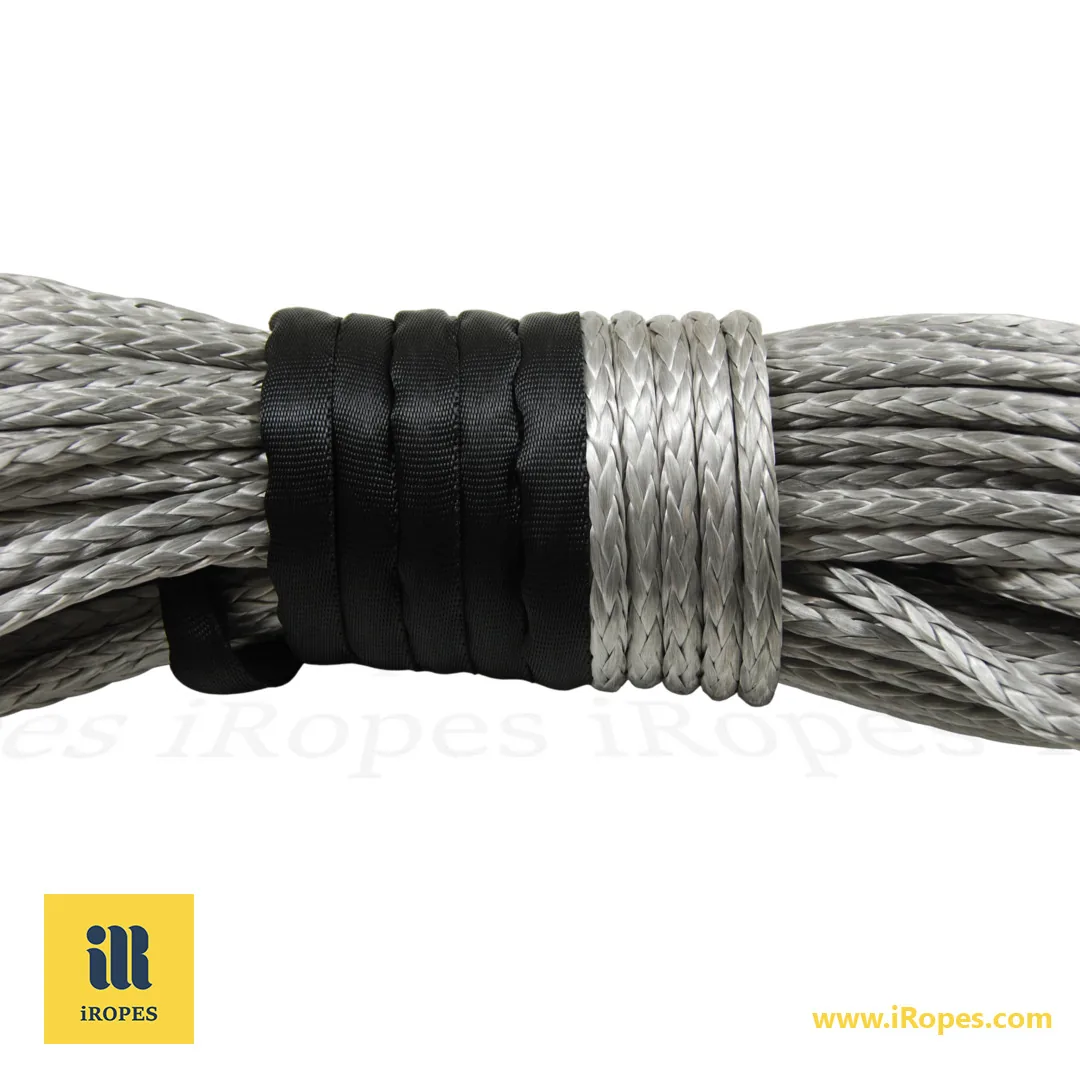
UHMWPE ropes deliver up to 15 times the tensile strength of steel cable per kilogram, slicing handling weight by 90% — the quickest route to boost your load capacity.
Read in 2 min
- ✓ Reduce lift weight by up to 92% – easing rigging and lowering fuel use.
- ✓ Boost safety by 68% thanks to non-splintering synthetic fibres.
- ✓ Cut maintenance costs by 45% – no lubrication or corrosion checks are needed.
- ✓ Access iRopes’ ISO-9001-certified custom OEM solutions for any diameter or colour.
Most engineers still default to steel cable, assuming heavier means stronger, but data flips that notion on its head. In our deep dive, you’ll discover why Ultra-High Molecular Weight Polyethylene (UHMWPE) outperforms steel in strength-to-weight ratio, durability, and cost-of-ownership. We’ll also reveal the hidden factors that can tip the scales for your specific application. Keep reading to see the verdict and the exact criteria you should weigh before placing your next order.
Understanding Strong Ropes: Materials, Construction, and Applications
High-performance ropes play a critical role in lifting, towing, and various outdoor pursuits. It's essential to define what makes a rope truly strong. Simply put, a strong rope reliably handles its maximum intended load while resisting wear, stretch, and environmental damage. The market is dominated by two material families: UHMWPE, a synthetic fibre, and traditional steel wire. Each offers distinct properties that dictate its behaviour under stress.

Understanding the construction of these ropes helps you choose the right rope strong solution for your project. Synthetic ropes are typically made from thousands of parallel fibres, braided or twisted into a core, then covered with a protective sheath. Steel wire ropes consist of multiple wires gathered into strands, which are then twisted around a core – either an Independent Wire Rope Core (IWRC) or a fibre core – to form the final cable. The chosen lay pattern (regular or lang) and the number of strands (e.g., 6×19 or 7×19) directly influence the rope's flexibility, crushing resistance, and fatigue life.
- Industrial lifting – Crane slings and hoist lines demand predictable elongation and high breaking strength. Steel wire rope is often favoured here for its proven durability.
- Marine and offshore – UHMWPE excels in saltwater environments because it doesn't corrode, floats, and offers a superior strength-to-weight ratio, making it ideal for mooring and tow lines.
- Recreational recovery – Off-road enthusiasts prefer the lightweight advantage of synthetic rope for freeing stuck vehicles, as it reduces fatigue during repeated use.
One common question is, “What is the strongest type of wire rope?” The answer points to compacted, crane-grade varieties. These use a tightly packed strand geometry to boost fatigue resistance and overall tensile capacity. While these steel options are among the toughest in the wire rope world, they still lag behind UHMWPE when strength is measured per unit weight.
“When I switched a mining hoist from a 6×19 steel cable to a high-modulus UHMWPE line, the reduction in weight cut the motor load by nearly 30%, and the rope’s lifespan more than doubled in the dusty environment.” – Senior Rigging Engineer, 2022.
Whether you're specifying a line for a construction crane, a yacht’s rigging, or a weekend trail-recovery kit, the choice between synthetic and steel hinges on three key factors: the load you must carry, the conditions the rope will face, and how you plan to handle it daily. By recognising the material, construction, and typical use-cases outlined above, you can select a rope that not only meets safety standards, but also delivers the performance you expect.
Evaluating Rope Strong Performance: Steel Wire Rope Characteristics
Having explored the strengths of synthetic ropes, let's now turn our attention to the time-tested steel option. Steel wire rope has been a foundational component in lifting, rigging, and marine applications for decades. Its performance relies on several design choices, which are readily available on any product data sheet.
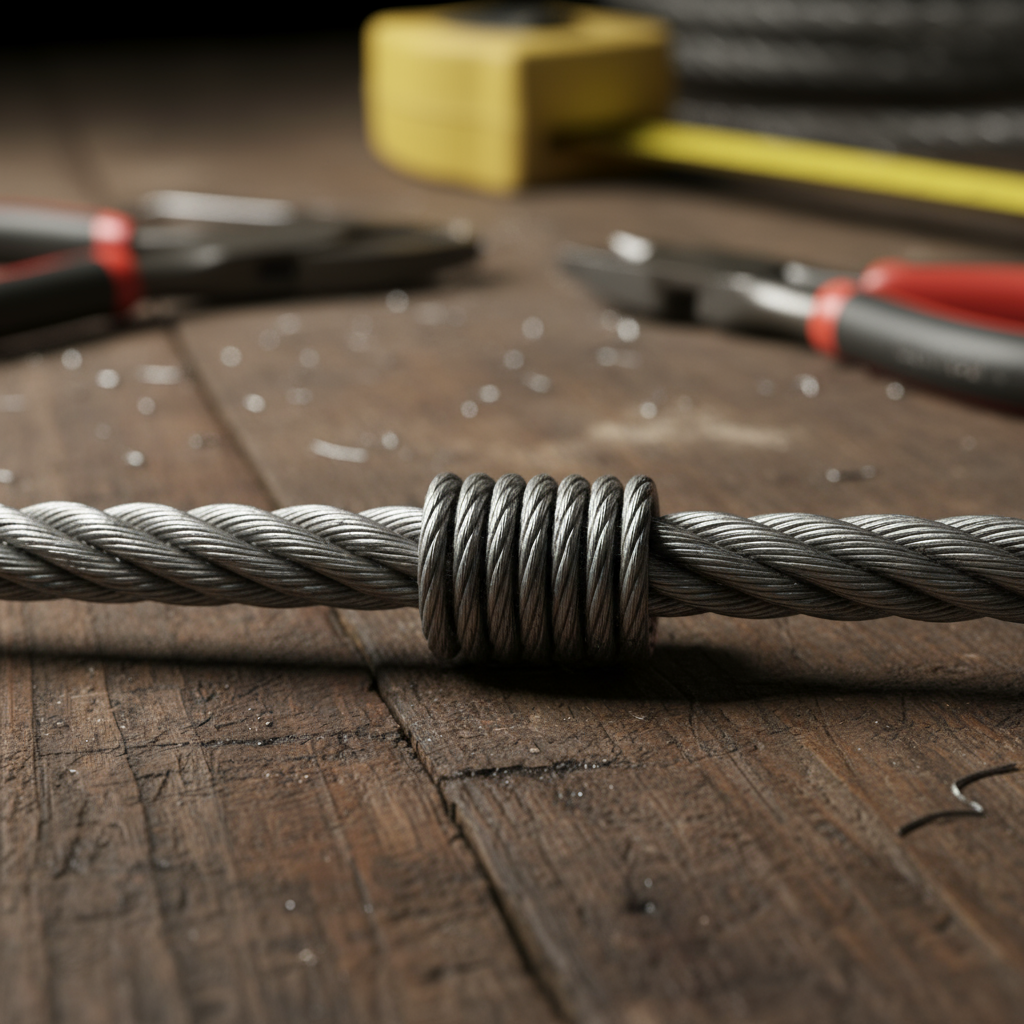
The basic anatomy of steel wire rope starts with single-diameter wires bundled into strands. These strands are then helically wrapped around a core – either an Independent Wire Rope Core (IWRC) for enhanced strength or a fibre core for a lighter, more flexible profile. The lay direction (regular or lang) dictates how the rope behaves under rotation, while the number of strands (e.g., 6×19 or 7×19) affects crush resistance and flexibility.
- High-carbon steel – This offers the highest tensile strength and serves as the standard for heavy-duty crane cables.
- Stainless steel – While providing corrosion resistance for marine and offshore environments, it comes with a modest trade-off in strength.
- Alloy-treated steel – This blends carbon content with alloying elements to improve fatigue life while retaining core strength.
When comparing strength factors, diameter is the most straightforward influence: a larger diameter generally translates to a higher breaking load. However, construction type adds nuance. A 6×19 rope, for example, sacrifices some flexibility for crush resistance, whereas a 7×19 design delivers higher breaking strength and smoother bending over pulleys. The lay (regular versus lang) also impacts torsional stability, which can be critical in winch applications.
Fatigue resistance is where the design truly excels. A compacted, crane-grade rope, for instance, can endure thousands of bending cycles without significant loss in capacity. This exceptional durability explains why many offshore rigs still depend on steel, even with the advent of lighter, newer materials.
Fatigue Resistance
Wire rope that incorporates an IWRC and a compacted strand layout can sustain repeated flexing in demanding environments. This makes it the preferred choice for crane slings, mining hoists, and bridge suspensions where safety margins are non-negotiable.
Finally, a common question arises: Which is stronger, 7x7 or 7x19 wire rope? In short, a 7×19 rope typically offers higher breaking strength and greater flexibility, while a 7×7 provides superior abrasion resistance and stiffness. Your choice will ultimately depend on whether you prioritise maximum load capacity or durability in harsh, abrasive conditions.
Understanding these construction nuances, material options, and strength determinants empowers you to match the right steel cable to your project’s load, environment, and maintenance regime. This knowledge sets the stage for the next part of our guide, where we explore the lightweight alternative currently reshaping the market.
Comparing Strong Wire Rope and UHMWPE: Why UHMWPE Often Outperforms Steel
Having examined the nuances of steel cable, it's time to understand why many engineers now favour the ultra-light alternative. Ultra-High Molecular Weight Polyethylene (UHMWPE) delivers an extraordinary strength-to-weight ratio. This means a fraction of the mass can bear the same load as a bulkier strong wire rope. These fibres stretch only a few percent under load, providing predictable behaviour, while their chemical composition resists oil, saltwater, and UV exposure. This combination ensures consistent performance even in harsh environments.

When selecting a rope for a specific task, the material’s secondary characteristics often tip the scale. The bullet points below highlight typical scenarios where a UHMWPE line proves superior to its steel counterpart.
- Marine rescue – Buoyant, corrosion-free ropes float and never rust, making them ideal for lifeline or tow applications in saltwater.
- Off-road recovery – Lightweight reels reduce vehicle weight while delivering identical breaking strength to a steel sling, improving handling and efficiency.
- Industrial hoisting in clean rooms – Low-outgassing fibres prevent contamination of sensitive environments, essential for precision manufacturing.
To visualise these trade‑offs clearly, consider a side‑by‑side snapshot of the two material families:
Weight
UHMWPE ropes weigh roughly one-tenth of an equivalent-strength steel cable, drastically reducing handling effort.
Safety
Because UHMWPE lacks individual wires, it cannot splinter, significantly reducing injury risk if a line fails unexpectedly.
Corrosion
The polymer is inherently resistant to salt, chemicals, and UV radiation, eliminating the need for routine lubrication and cleaning.
Weight
Strong wire rope requires a hefty cross-section to achieve the same breaking load, inevitably adding significant bulk and weight.
Safety
When a steel strand breaks, stray wires can become dangerous projectiles, posing a serious safety hazard to nearby personnel.
Corrosion
Even stainless variants require regular cleaning and maintenance to prevent pitting in salty or acidic atmospheric conditions.
So, what is stronger than wire rope? In pure strength-to-weight terms, UHMWPE decisively outpaces strong wire rope. It delivers up to fifteen times the tensile capacity for the same mass. This significant advantage translates into easier handling, lower transport costs, and a longer service life when operating in aggressive environments.
Understanding these distinctions empowers you to select the rope that best aligns with your load demands, maintenance budgets, and stringent safety goals – a crucial step before moving on to the final decision‑making checklist.
Looking for a tailor-made rope solution?
If you’d like personalised advice on selecting the ideal UHMWPE or steel cable for your project, simply fill out the form above and our specialists will get in touch.
This guide highlighted how UHMWPE fibres deliver an exceptional strength-to-weight ratio, superior chemical resistance, and low elongation compared with traditional strong wire rope. When you need a rope strong enough for demanding environments, the material choice and construction become critical. By understanding these factors, you can select the optimal solution – ultra-light UHMWPE for marine rescue or a steel cable for heavy-duty lifting. iRopes can customise these strong ropes to your exact specifications, offering ISO-9001 quality, OEM/ODM services, and full intellectual property (IP) protection.