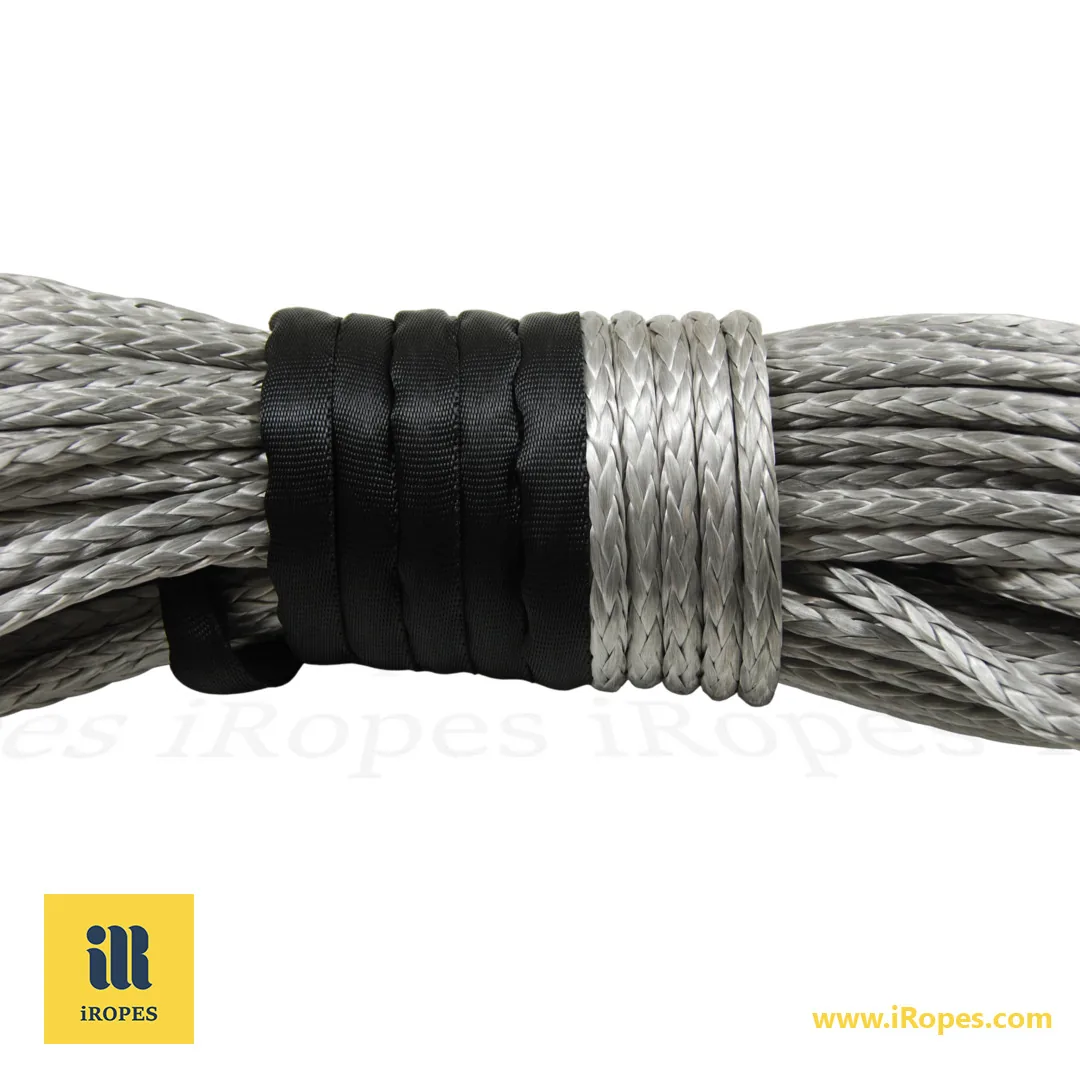
Our new abrasion‑resistant nylon braid delivers up to 14.7% longer wear life and 5% higher breaking strength – 1,928 lb on a 5/16″ rope.
Read time: ~1 min
- ✓ 14.7% longer abrasion life versus standard nylon ropes.
- ✓ 5% higher breaking strength (1,928 lb on 5/16″) for heavier loads.
- ✓ Full OEM/ODM customisation – colour, branding, reflective trims.
- ✓ ISO‑9001 quality, IP protection, and direct pallet shipping in 10‑14 business days.
Most people assume any nylon rope will survive a rough off‑road job. Yet, many off‑the‑shelf ropes shed their outer fibres after just a few hundred pulls. What if you could double that lifespan without sacrificing flexibility? Below, we’ll reveal how iRopes’ new abrasion‑resistant coating and engineered braid offer up to 14.7% more wear life. This allows your fleet to stay on‑site longer and helps keep your budget tighter.
The Power of ropes nylon: Abrasion-Resistant Nylon Tow Ropes Explained
iRopes' latest abrasion‑resistant nylon tow rope is here. It’s time to understand why ropes nylon have become the preferred choice for demanding tow applications worldwide.

The core advantage of nylon lies in its ability to stretch just enough to absorb shock, yet remain firm enough to pull heavy loads. This balance of strength and flexibility significantly reduces the risk of sudden rope failure. Furthermore, it gives operators a smoother handling experience, which is crucial for safety and efficiency.
- Breaking strength – A 3/8″ braid typically reaches around 2,800 lb before it parts.
- Safe working load – Applying a standard safety factor of 5 yields a usable load of roughly 560 lb for the same diameter.
- Flexibility – Nylon’s inherent elasticity allows up to 15% stretch under load, providing natural shock absorption.
When you ask, “Which is stronger, braided or twisted nylon rope?” the answer is generally clear. Braid ropes often outperform twisted versions in both tensile strength and surface smoothness. The interwoven strands of a braid distribute load more evenly, which reduces stress concentrations that can lead to early wear. Twisted ropes remain a viable, more economical option for certain projects, but they do sacrifice some strength and handling feel.
What truly sets our tow ropes apart is the specialised abrasion‑resistant coating applied to the outer sheath. This polymer‑rich layer acts like a shield, protecting the fibres from abrasive elements like sand, gravel, and sharp edges commonly found on off‑road sites or in dockyards. Over time, this coating considerably slows surface wear, extending the rope’s service life without compromising the underlying nylon’s essential elasticity.
“In my twenty‑year career with marine rigging, I’ve never seen a synthetic rope combine shock absorption and abrasion resistance as reliably as our new nylon braid. It’s the quiet workhorse that lets crews pull heavy loads with confidence.”
Understanding these material strengths and protective features is crucial. This knowledge paves the way for exploring the extensive customisation options iRopes offers to bulk purchasers, ranging from colour‑coded bundles to reflective‑striped finishes.
Explore nylon ropes for sale – Customisation Options and Bulk Purchasing
Building on the material strengths already discussed, iRopes provides a comprehensive catalogue that transforms technical data into a straightforward buying experience. Wholesale buyers can easily review detailed specifications, choose from a wide palette of colours, and select the exact diameter needed for their specific operations.

Each product entry in our catalogue highlights key specifications, making the ordering process as transparent as possible:
- Exact breaking strength and safe working load for every diameter.
- Colour‑coded bundles and optional reflective strips for safety‑critical sites.
- Length options from 10 m spools to 1000 ft bulk rolls, all listed with clear price breaks.
Beyond our standard listings, iRopes offers full‑scale OEM/ODM services. This means materials can be tweaked for enhanced oil‑resistance, branding can be applied directly to the sheath or on custom‑printed packaging, and accessories such as eye‑splices, thimbles, or loop terminations can be added at the factory. This comprehensive level of customisation ensures the rope arrives ready to represent your brand on‑site, eliminating the need for any after‑market modifications.
Bulk pricing tiers start at 50 units, with lead times of 10–14 business days and direct pallet shipping to ports worldwide.
For those needing a quick reference on performance, a 5/16" braided nylon rope delivers approximately 1,925 lb breaking strength and a safe working load of around 380 lb. This figure clearly illustrates why nylon ropes for sale are a reliable choice for demanding tow and rigging tasks across various industries.
When you combine clear catalogue data, flexible customisation, and competitive bulk terms, the decision‑making cycle shortens dramatically. This allows you to quickly secure the right rope, in the right colour, at the right price, with direct shipping to your warehouse.
Understanding braid ropes – Construction Types and Application Advantages
Having explored the customisation possibilities, the next logical step is to understand how the braid construction itself profoundly shapes performance on the job site.

Three principal braid structures largely dominate the market. A solid braid consists of a single, tightly‑woven sheath, offering a compact profile and excellent knot‑holding ability. A double braid pairs a soft, flexible core with a tougher outer cover, effectively marrying high tensile strength and smooth handling. The diamond braid, conversely, uses a flat‑weave pattern that spreads load uniformly across a wider surface, making it particularly well‑suited for heavy‑duty rigging.
Mechanical Advantages
Solid braid offers a compact profile and reliable knot security; double braid combines a core‑plus‑cover for superior strength‑to‑flexibility; diamond braid provides consistent load sharing across a flat‑weave, ideal for demanding rigging tasks.
Because the strands are intricately interlaced rather than merely twisted, braid ropes are engineered to keep torque low and to spread load evenly across every individual filament. This intelligent design significantly reduces the rope's tendency to wind around drums and spooling mechanisms. Critically, it also ensures that no single strand bears a disproportionate share of the force, enhancing overall durability and safety.
When balancing strength with flexibility is the top priority, double‑braid designs consistently offer the highest ratio among common braid ropes. This provides operators with a powerful pull without sacrificing smooth, manageable handling.
Industry specialists carefully match rope construction to the specific environment and application. For example, marine operators often favour double‑braid for dock lines because the robust outer cover effectively resists chafing against pilings, while the inner core supplies high pull strength. Off‑road teams frequently prefer solid‑braid for recovery ropes, appreciating its ideal blend of flexibility and abrasion resistance on rugged terrain. Industrial riggers, on the other hand, typically lean toward diamond‑braid when consistent, uniform load distribution is critically important for heavy‑load lifts.
Torque‑Free Handling
The interwoven strands keep the rope’s rotation to a minimum, giving smoother pull on winches and capstans.

Your Selection Roadmap
Three simple steps turn technical data into a rope that works flawlessly for any application.
Selection Steps
From load to braid
Define Load
Calculate the required safe working load by adding a suitable safety factor to the maximum pull force expected in service.
Choose Diameter
Match the calculated load to a rope diameter that delivers the necessary breaking strength while keeping the rope manageable on winches and spools.
Pick Braid Type
Decide between solid, double, or diamond braid based on handling smoothness, torque‑free operation, and flexibility requirements.
Quality Safeguards
Why iRopes stands out
ISO 9001 Certified
Production follows a rigorous quality‑management system, guaranteeing consistent tensile performance across every batch.
IP Protection
Designs, colour schemes, and branding are legally protected from concept to finished roll, giving customers peace of mind.
Custom Packaging
Options range from branded colour boxes to plain pallets, allowing wholesale buyers to align delivery with their brand standards.
Maintenance is the final pillar of rope longevity. Regular visual inspection for fibre wear, abrasion cuts, or core exposure is essential to prevent unexpected failure. Understanding nylon rope diameter strength for off‑road and docking helps you select the right size and construction for your specific tasks. Cleaning with mild soap and fresh water effectively removes salt and grit, which can otherwise accelerate surface wear. Additionally, storing the rope on a dry rack away from direct sunlight helps preserve its elasticity and overall integrity. Following these simple practices significantly extends the service life of even the most heavily used ropes, ensuring maximum return on your investment.
Wholesale customers ready to secure a rope that meets their exact specifications can easily request a personalised quote and, if desired, a sample from iRopes. Our specialists are well‑equipped to translate your selection roadmap into a finished product, delivered conveniently on a pallet, ready for immediate deployment.
Need a personalised rope solution?
After exploring the strength, coating, and braid constructions, and the distinct advantages of braid ropes, you now have a clear picture of why our new abrasion‑resistant nylon tow rope stands out for heavy‑duty applications. With ISO‑9001 quality, robust IP protection, and a full suite of OEM/ODM options, iRopes can tailor the perfect rope – from diameter and colour to reflective trims – to precisely match your load requirements and branding. Whether you’re sourcing ropes nylon for demanding tow work or browsing nylon ropes for sale in bulk, our specialists can also help you choose the right double‑braided nylon rope for off‑road and marine applications to maximize performance.
If you’d like a custom quote, sample, or expert design advice, simply fill out the form above, and our rope experts will get back to you promptly.