Nylon rope typically delivers around 10% higher tensile strength than polyester and stretches 4–6% at working loads. Example: a 5/8‑inch double‑braided nylon line with a 15,200 lb minimum break has a ~760 lb WLL at a 5% safety factor—ideal for off‑road recovery and docking.
Read time: 6–8 min – What you’ll gain
- ✓ About 10% higher break strength vs polyester, reducing rope‑failure risk.
- ✓ 4–6% elastic rebound at load that absorbs shock without permanent deformation.
- ✓ UV‑ and oil resistance, with UV‑stabilised nylon rated for over 10 years of outdoor exposure.
- ✓ Custom‑diameter OEM/ODM options from iRopes, delivered on schedule.
Many assume the thicker the rope, the safer the lift—yet at the same diameter, nylon can outperform polyester while staying lighter and more flexible. This advantage comes from nylon’s high tensile strength and standout rebound, which together dissipate shock and protect gear. Below, you’ll see how to apply these nylon rope diameter benefits to off‑road towing and marine docking, and how iRopes tailors every detail to your exact specifications.
Understanding the 5 inch diameter rope for off‑road towing
Before you dive into specifications, note how rope diameters are defined. Manufacturers list a nominal size—so a line is advertised as 5 in even though the actual diameter can change slightly under load. This matters when you need predictable performance while winching a vehicle on a steep slope.
Exact breaking strength for a 5 inch diameter rope depends on construction (3‑strand, double‑braid, parallel‑core), fibre blend, and test method. Working load limits (WLL) are typically set at 5% of the certified minimum break strength (MBS) for dynamic tasks like recovery. For context—and to answer a common question— a 5/8″ double‑braided nylon rope typically has an MBS of about 15,200 lb; applying a 5% factor yields a WLL of roughly 760 lb for continuous use. Always size and specify against certified test data for your exact construction.
People also ask: What is the breaking strength of a 5 8″ double‑braided nylon rope? It’s typically about 15,200 lb, based on manufacturer‑certified strength tables for that diameter and construction.
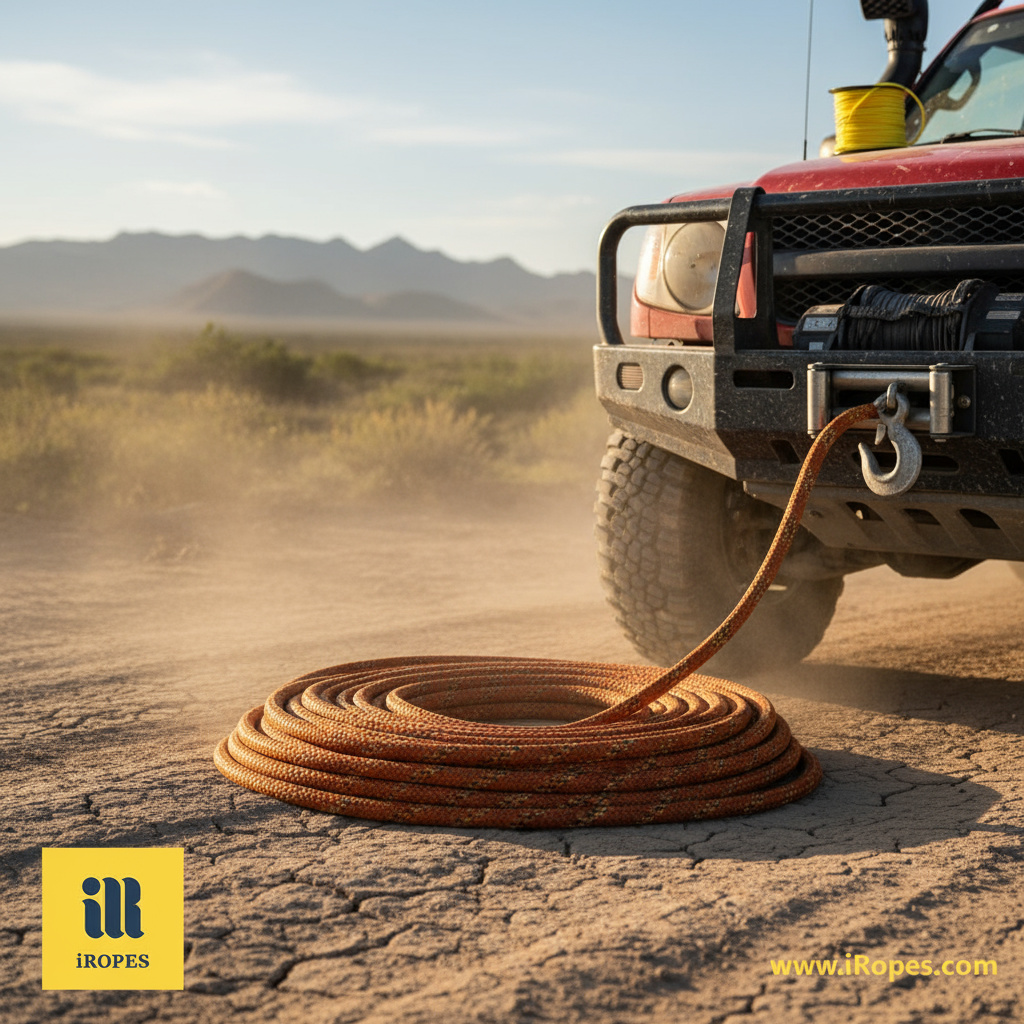
Matched to the right task, a 5 inch diameter rope suits ultra‑heavy recovery, industrial winching, and anchoring oversized equipment. For most light‑vehicle recoveries, smaller diameters are appropriate; however, the same nylon advantages scale up for extreme loads:
- Vehicle recovery - pulling stuck 4×4s or heavy plant from mud or sand (diameter sized to vehicle mass).
- Winch lines - managing high‑tension loads where shock absorption prevents component damage.
- Heavy‑duty anchoring - securing trailers or equipment to ground anchors on uneven terrain.
Industry guidance notes that nylon’s inherent elasticity helps safely absorb sudden shock loads—a critical factor in offshore towing and rescue operations.
With these principles in mind, you can see why nylon remains a top choice for high‑energy pulls. Next, let’s look at how a slimmer, 2 inch diameter rope works in demanding marine docking scenarios.
Exploring the 2 inch diameter rope for marine docking
After seeing how high‑energy off‑road pulls benefit from nylon’s rebound, consider docking. A 2 inch rope provides substantial holding power for large vessels and exposed berths while remaining manageable for trained crews.

Translating size numbers into everyday units helps you spec the right line quickly. Here’s the quick conversion:
- #48 – the standard size number that corresponds to a 2 inch rope.
- Metric equivalent – roughly 48 mm in diameter (≈ 2 in).
- US customary – marketed as a 2 inch diameter rope for marine use.
Strength ratings for a 2 inch nylon rope depend on construction, braid count, and test standard. iRopes certifies each custom build to ISO 2307 and provides a manufacturer’s certificate with the minimum break strength (MBS). The working load limit is then set as a percentage of that MBS for your use‑case (5% is common for dynamic mooring).
Load Capacity
| Diameter | Material | Breaking Strength | Working Load Limit |
|---|---|---|---|
| 2 in | Nylon | Per ISO 2307 test report (construction‑specific) | ≈ 5% of certified MBS (dynamic mooring) |
In practice, a 2 inch rope serves heavy mooring lines on commercial docks, exposed berths, and workboats. It is robust enough to handle surge and tide yet can be deployed efficiently through appropriate deck hardware. If you wonder “what rope size is best for a 2‑inch diameter?”, the answer is the #48 size—it maps directly to a 2 inch nominal diameter and is widely stocked for commercial docking.
Understanding these dimensions and certification steps sets up the next section, where we examine why nylon’s unique diameter‑to‑performance profile makes it a standout for heavy‑duty applications.
Key factors of nylon rope diameter and performance
Across equal diameters, nylon excels for two reasons that matter off‑road and at the dock. First, it offers high tensile strength. Second, its elastic rebound lets it absorb sudden loads without permanent deformation. Together, these traits help protect attachment points and equipment during shock events.

Compared with the same‑size polyester or aramid lines, the difference is clear. Polyester provides good strength but only about 2–3% stretch at load, so it can’t dampen a sudden jerk as effectively. Aramid fibres are virtually inelastic; they excel in heat resistance but are risky when the line must absorb impact.
High Tensile
Nylon delivers around 10% higher breaking strength than comparable polyester ropes of the same diameter.
Elastic Rebound
Its ~4–6% elongation at ~30% of breaking strength cushions shock, protecting both cargo and attachment points.
Polyester
Provides good strength but only about 2–3% stretch, which limits shock absorption.
Aramid
Offers exceptional heat resistance yet virtually no elasticity, making it unsuitable for dynamic loads.
Because nylon’s performance hinges on exact diameter, accurate measurement is essential. Use the reliable string‑wrap method: wrap a thin, non‑stretch string once around the relaxed rope, mark where the string meets, measure the string length, then divide by π (≈ 3.1416). The result is the rope’s true diameter, which you can compare against the manufacturer’s nominal size.
Measure nylon rope diameter
Three simple steps using a string and a ruler give you an accurate reading every time.
Understanding how nylon’s elasticity and strength scale with size lets you decide whether a 5 inch diameter rope suits ultra‑heavy off‑road winching, or if a slimmer 2 inch diameter rope will meet the demands of a busy marina. Armed with a precise measurement, you can move on to the next stage—seeing how iRopes transforms these specifications into fully customised, OEM‑ready solutions for your business.
Custom OEM/ODM Solutions and Ordering with iRopes
After you’ve seen why nylon’s rebound and strength shine in off‑road and marine settings, the next question is how to turn those numbers into a rope that fits your brand and project perfectly. iRopes lets you specify every detail—from the fibre blend to the colour of the outer sheath—for any diameter, whether you need a massive 5 inch diameter rope for heavy‑duty recovery or a sleek 2 inch diameter rope for precise docking work.

Our material catalogue covers pure nylon, blended nylon‑polyester, and specialised aramid cores, each offering distinct stretch, UV resistance, and abrasion characteristics. You can choose a parallel‑core for maximum load stability, a braided‑core for flexibility, or a single‑strand core for lightweight applications. Colour options range from standard black and navy to custom‑tinted hues that match your corporate palette, and we can print logos directly onto the sheath for unmistakable branding. We also offer accessories such as soft eyes, thimbles, and terminations, plus non‑branded or customer‑branded packaging (bags, colour boxes, or cartons) with direct pallet shipping worldwide.
Material Choices
Tailor strength and durability
Pure Nylon
High elasticity, excellent shock absorption, ideal for dynamic loads.
Nylon‑Polyester Blend
Balanced stretch with enhanced abrasion resistance for marine environments.
Aramid Core
Maximum tensile strength with minimal elongation for static anchoring.
Branding & Finishing
Make the rope yours
Custom Colours
Match any corporate palette or safety‑code requirement.
Logo Printing
Durable markings that stay legible after years of use.
IP Protection
Full intellectual‑property safeguards from design to delivery.
iRopes operates under ISO 9001 certification, follows ISO 2307 tensile‑test protocols, and guarantees complete IP protection for every custom design.
The ordering journey is streamlined into four clear steps:
1️⃣ Specification Request: Fill out our online form with diameter (e.g., a 5 inch diameter rope or a 2 inch diameter rope), material, length, and any branding details.
2️⃣ Technical Review: Our engineers validate load calculations, suggest core options, and confirm colour matches.
3️⃣ Sample Approval: We produce a short prototype, ship it to you, and incorporate any final tweaks.
4️⃣ Production & Delivery: Once approved, the full order is manufactured, quality‑tested, and dispatched directly to your dock or workshop.
Ready to see a rope that bears your logo, meets your exact nylon rope diameter, and arrives on schedule? Request a personalised quote now and let iRopes turn your technical drawing into a ready‑to‑use solution.
By understanding the distinct needs of a 5 inch diameter rope for rugged off‑road recovery and a 2 inch diameter rope for demanding marine docking, you’ve seen how nylon’s high strength and standout rebound give it a clear edge over other fibres. Whether you need a heavy‑duty line for vehicle winching or a slimmer dock‑line that still absorbs shock, iRopes can engineer a rope that matches your exact nylon rope diameter requirements and branding. Our ISO‑9001‑certified OEM/ODM service ensures every specification is tested, protected, and delivered on time—giving you confidence in every pull or moor.
Ready for a personalised rope solution?
If you’d like expert guidance to fine‑tune your rope specifications, simply fill out the enquiry form above and our team will help you customise the perfect solution.
