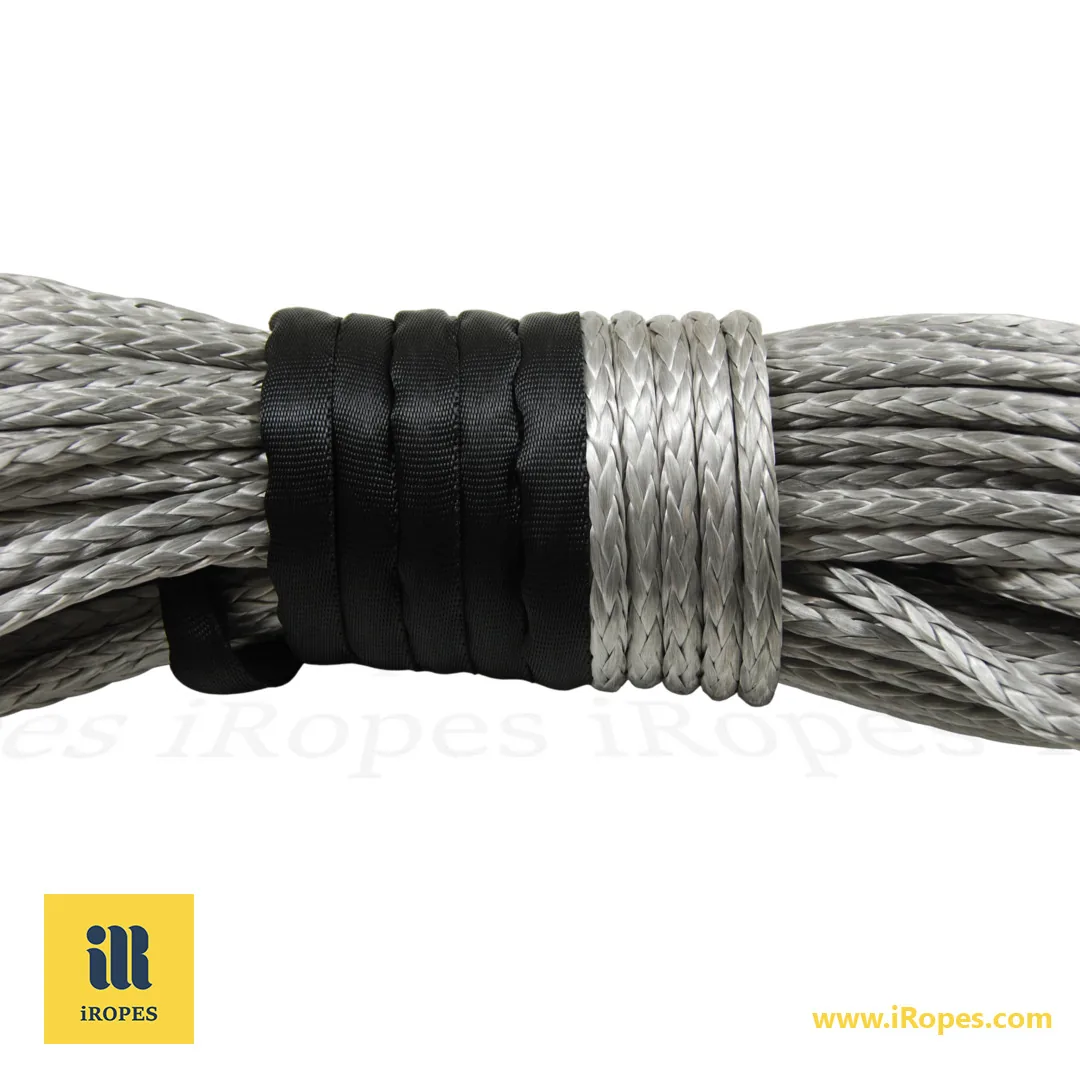
Zingit cord delivers up to 600 lb break strength at 2.2 mm—about 30% higher than comparable 2 mm nylon—while a 2‑ton pull typically needs about six wraps of winch cord.
What you’ll gain – 4‑minute read
- ✓ Cut winch motor strain by up to 30 % versus steel cable with low‑mass Zingit cord.
- ✓ Size any cord in seconds using the break ÷ 10 safety‑factor formula.
- ✓ Know your price points: Zing‑It 1.75 mm ≈ $0.18 / ft (180 ft @ $33); bulk orders (≥ 10 spools) save about 15 %.
- ✓ Secure IP‑protected OEM branding under an ISO 9001‑certified quality system.
Many installers still wind winch lines the old way, assuming more wraps automatically mean safety. In reality, choosing the right HMPE diameter and keeping around six firm wraps improves grip on the drum. Combined with the low mass of Zing‑It cord, synthetic lines can reduce winch motor load by 20–30% versus steel. Keep reading to discover the exact sizing formula and how iRopes can deliver a custom line—whether HMPE or cord nylon—straight to your site.
Zingit Cord – High‑Performance Dyneema Rope Explained
Building on the safety fundamentals we just covered, let’s dive into why zingit cord stands out when you need a rope that won’t compromise under pressure. Imagine a line that feels almost weightless in your hands yet can handle a tough pull without stretching – that’s the promise of Dyneema‑based rope.

At its core, Zingit cord is a blend of ultra‑high‑molecular‑weight polyethylene (HMPE) fibres—known in the industry as Dyneema—wrapped in a urethane coating that resists abrasion and adds a bright, safety‑first colour.
- Material composition – Dyneema (HMPE) fibres encased in a low‑stretch urethane coating, delivering
- Key specifications – 1.75 mm diameter offers 250 lb break strength; 2.2 mm provides 600 lb, weighing only 0.31 lb per 100 ft.
- Typical use cases – off‑road winch lines, arborist throw lines, pilot lines, and high‑visibility utility tasks where weight matters.
When you compare it with regular nylon rope, three clear differences emerge: Dyneema’s HMPE fibres replace the polyamide of nylon, the stretch drops below one per cent, and a high‑visibility urethane coating makes the line easy to spot in low‑light conditions. The result is a rope with significantly higher tensile strength than a comparable nylon line while staying feather‑light. In small utility sizes (e.g., 2.2 mm HMPE vs 2 mm nylon), expect roughly a 30% strength advantage.
“For dynamic loads a 10:1 safety factor is essential. HMPE such as Dyneema offers ultra‑low stretch (
If you’re planning a winch setup, the low mass of Zing‑It cord means the motor works less hard, extending service life. That’s why many off‑road rigs now favour a synthetic line over a steel cable. In the next part we’ll translate those material advantages into choosing the right winch cord for different loads.
Winch Cord – Selecting the Right Line for Your Winch
Having seen how Dyneema‑based Zing‑It reduces motor strain, the next step is to match the right winch cord to the load you plan to pull. Whether you’re gearing up for a 2‑ton recovery or a lighter task, the material you choose dictates both performance and safety.

The market groups winch lines into three families:
- HMPE (Dyneema/Spectra) – ultra‑low stretch, high tensile strength, bright‑colour coating for visibility.
- Nylon – more stretch, lower break strength, economical for light‑duty tasks.
- Steel cable – highest strength but heavy, prone to corrosion and difficult to handle.
Choosing the proper line starts with a simple three‑step check.
- Pick material that meets the required safety factor.
- Calculate working load: break strength ÷ safety factor (typically 1/10 for dynamic pulls).
- Apply the wrap rule – about six wraps of HMPE cord for a 2‑ton load.
Why does the wrap count matter? Each additional turn spreads the force across a larger surface area, reducing the peak stress on any single point of the drum. Too few wraps concentrate the load, increasing the risk of line slip or premature failure.
Safety Factor Quick‑Check
For dynamic winching, use a 10 : 1 safety factor. If a cord’s break strength is 5 000 lb, the safe working load is 500 lb. This rule keeps the line well within its elastic limit, even under sudden load spikes.
For a 2‑ton (4 000 lb) pull with dynamic loads, target a break strength around 40 000 lb to maintain the 10:1 safety factor; in practice this calls for appropriately sized HMPE or steel lines. The six‑wrap guideline improves grip and protects the line; it does not replace correct sizing. If you opt for nylon, you’ll need a much larger diameter to approach the same margin, which often defeats the purpose of a lightweight winch setup.
Armed with these guidelines, you can size your winch cord with confidence, knowing the material, calculation, and wrap count are aligned for optimal performance. Up next, we’ll explore when a classic nylon cord becomes the smarter, more cost‑effective choice for lower‑load projects.
When Cord Nylon Is the Smart Choice
After sorting out the maths for winch lines, you might wonder whether a more affordable rope could handle everyday jobs without compromising safety. That’s where cord nylon steps in – it gives you useful stretch, reasonable UV performance, and a price tag that keeps the budget happy.

- Stretch – typically 8‑10 % elongation, providing a forgiving give that protects delicate loads.
- UV resistance – stabilisers slow sun‑induced degradation, though nylon loses more strength over time than HMPE.
- Cost advantage – generally lower cost per metre than Dyneema‑based lines, making large‑scale projects economical.
Compare a standard 2 mm nylon cord (about 450 lb break strength) with a 2.2 mm Dyneema line (600 lb): the HMPE variant wins on tensile power and UV durability. Dyneema’s UV‑stabilised coating typically loses 20 % in the same period.
Because of that strength gap, nylon cord isn’t the right answer for a 4‑ton winch. A 4‑ton (8 000 lb) winch demands a working load far above what conventional nylon can safely carry; use HMPE or steel cable instead.
- Utility work – securing tools, bundling conduit, or light‑duty lifting on construction sites.
- Camping – pitching tarps, fastening hammocks, or building quick shelters.
- Very light positioning pulls – small‑boat manoeuvres or trailer corrections where shock loads are minimal.
When the job calls for a modest pull and you value affordability, cord nylon delivers a reliable, easy‑to‑handle solution. And if you ever need a colour change, custom length, or branded packaging, iRopes can spin that same nylon into a tailor‑made product that fits your exact specifications, setting the stage for the OEM options we’ll explore next.
Custom OEM & Branding Solutions for All Rope Types
Now that you understand the strengths of each rope family, imagine a line that not only meets those performance goals but also carries your brand’s colours, logo, and packaging. iRopes’ OEM/ODM service starts with a collaborative design workshop where you choose material, diameter, length, and visual details, then watches those choices become a finished coil ready for shipment.

Quality assurance is baked into every step. All products are manufactured under an ISO 9001‑certified quality system, and batch testing follows ASTM D2256 methods, with reports available on request. In addition, iRopes protects your intellectual property throughout the process, so no design idea is ever exposed to third parties.
Design
Material selection, diameter sizing, colour matching, and branding artwork are finalised with your input before any fibre is cut.
Production
Precision braiding, UV‑stable coatings, and strict tolerances ensure each metre meets the agreed specifications.
Branding
Custom‑printed bags, colour‑coded reels, or sealed cartons can carry your logo, safety warnings, or QR codes.
Logistics
We ship pallets worldwide with typical delivery windows of 7‑10 business days. Bulk pricing applies from ten spools.
Pricing adapts to volume: a 180‑ft reel of Zing‑It 1.75 mm typically retails around $33 in the US (≈ $0.18/ft), while 2.2 mm is about $38. Bulk orders of ten or more spools unlock an approximate 15 % discount across winch cord and cord nylon families. The tiered structure lets small workshops and large manufacturers alike benefit from cost‑effective sourcing.
“Our rescue team switched to iRopes’ custom‑coloured cord nylon for every drill; the branding makes the line instantly recognisable and the ISO‑certified testing gives us confidence on the field.” – Regional safety coordinator, 2024.
Whether you need a high‑performance winch cord for off‑road recovery, a lightweight zingit cord for arborist work, or a durable cord nylon for utility tasks, iRopes can turn that specification into a finished product that arrives on a pallet, fully branded and ready to use.
Request a personalised rope solution
For customised advice or a bespoke OEM quote, complete the form above and our team will contact you with a solution that matches your project’s unique needs.