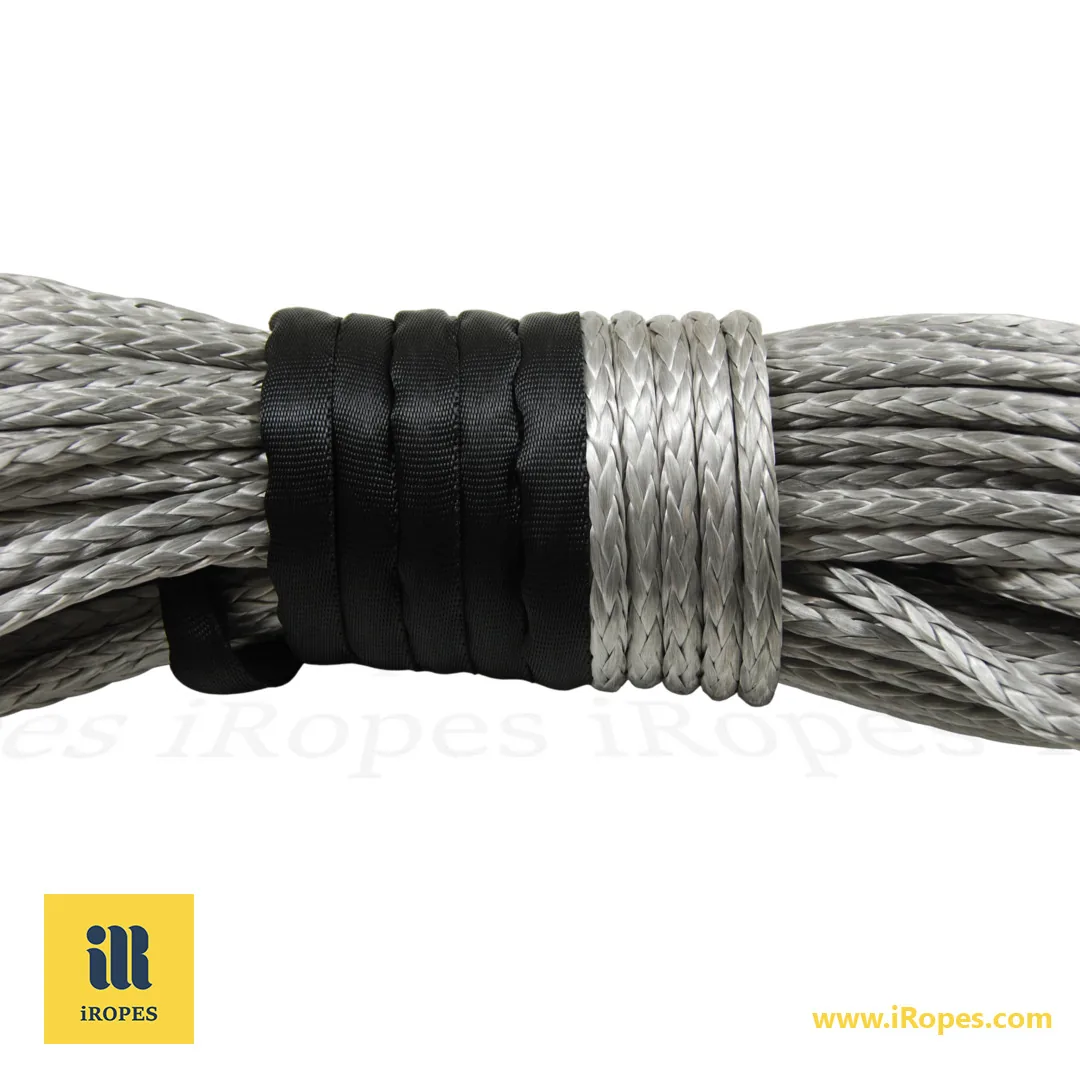
iRopes' kinetic towing rope stretches up to 30% and cuts shock-load impact by roughly 28%, delivering a breaking strength 2.5× your vehicle’s GVW.
Read in 2 min
- ✓ 30% elongation absorbs shock loads, reducing vehicle stress by up to 28%.
- ✓ Nylon 66 core with abrasion-resistant coating extends service life beyond 5 years in harsh mud or sand.
- ✓ Custom OEM/ODM lets you tailor diameter, colour and branding, trimming inventory costs by up to 12%.
- ✓ ISO 9001-certified production guarantees consistent tensile strength across every batch.
You’ve probably heard that a steel winch cable is the only way to recover a stuck 4×4 from deep mud. Yet, this overlooks a lighter, smarter alternative that offers significant advantages. What if the rope itself could store and release energy, delivering a smoother pull while protecting your vehicle’s chassis? Think elastic steel without the cumbersome weight. Below, we’ll reveal how iRopes’ 30% stretch Nylon 66 kinetic rope outperforms both static ropes and synthetic winch lines. It’s quickly becoming the go-to choice for challenging recoveries.
Understanding towing ropes
When a vehicle becomes disabled on a flat section of road, a **towing rope** is often the most straightforward tool in your recovery kit. Its function is clear: to provide a steady, reliable connection between the pulling vehicle and the stranded one, allowing you to move the load without the complexities of winches or kinetic recovery systems.
Towing ropes are typically crafted from polyester or polypropylene fibres. Polyester offers superior tensile strength and resistance to UV-induced degradation, while polypropylene is lighter and floats in water—an advantageous characteristic for marine recovery operations. Both materials are constructed using braided or twisted methods, balancing flexibility with their load-bearing capabilities.
These ropes excel in situations such as:
- Flat-ground towing – moving a non-operational car onto a tow platform or out of a car park.
- Light-duty vehicle transport – hauling ATVs, small trailers, or equipment across even surfaces when a winch isn’t accessible.
- Temporary recovery assistance – providing a quick connection while awaiting professional help.
However, static tow ropes offer very little stretch, typically less than 5%. This means they can transmit sudden shock loads if the lead vehicle accelerates too quickly. Such impacts can damage chassis components or even cause the rope to snap, which is why they are not suitable for deep-mud, sand, or snow extractions where a dynamic pull is essential.
A common question encountered in enthusiast forums is, “What is the difference between kinetic rope and tow rope?” In brief, a kinetic rope stretches up to 30% to store and release energy, facilitating a smoother, more controlled pull that safeguards both vehicles. A traditional tow rope, conversely, remains largely inelastic, making it ideal for steady, predictable towing but unsuitable for the high-energy recoveries where kinetic ropes truly shine.
“A well-maintained polyester towing rope can be the difference between a safe, controlled move and a sudden snap that endangers both driver and vehicle.”
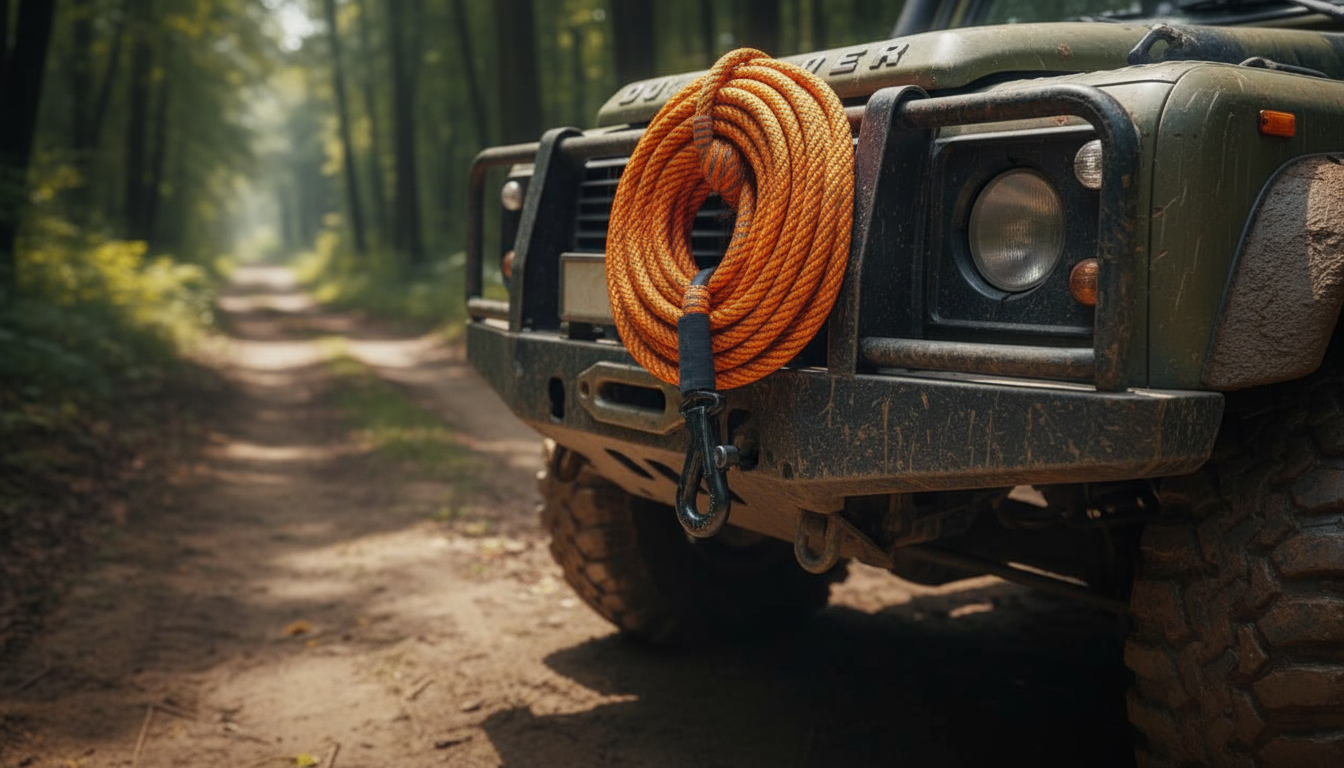
Understanding these fundamental characteristics helps set the scene. Next, we explore why many off-road enthusiasts choose synthetic winch cables for controlled, lightweight pulling solutions.
Exploring towing winch cable options
A synthetic **towing winch cable** is a high-performance cable specifically engineered to operate with a mechanical winch. It effectively converts motor torque into a smooth, linear pull while minimising friction during deployment and retrieval.
As the winch motor turns, the cable spools onto a drum, applying force directly to the load. Synthetic materials offer superior flexibility compared to steel, leading to minimal energy loss and enabling the operator to maintain precise control over the pull. This inherent flexibility reduces bending and potential damage to the cable during operation.
When comparing UHMWPE (often marketed as Dyneema) with traditional steel cables, the differences are remarkable. UHMWPE fibres deliver tensile strengths comparable to steel, yet weigh significantly less. Furthermore, they resist corrosion and maintain flexibility even in extremely cold temperatures, making them a robust choice for various environments.
- Lightweight – up to 70% less mass than steel, which significantly reduces winch strain and overall vehicle weight.
- Safety – eliminates sharp wire splinters, enhancing safety during handling and manual spooling.
- Strength-to-weight ratio – UHMWPE fibres deliver tensile strengths on par with steel, all within a much smaller diameter.
Can a kinetic rope be used with a winch? While it can technically function as a short damper, a kinetic rope’s substantial 30% stretch is specifically designed for dynamic, snap-back recovery. Using it as the primary winch line is generally not recommended due to the risk of uncontrolled recoil once the rope reaches its elongation limit, especially during continuous winching operations.
Quick note
Synthetic winch cables excel in controlled pulls and are compatible with standard winch systems. They should not be confused with kinetic ropes, which are designed for dynamic recovery rather than continuous winching.
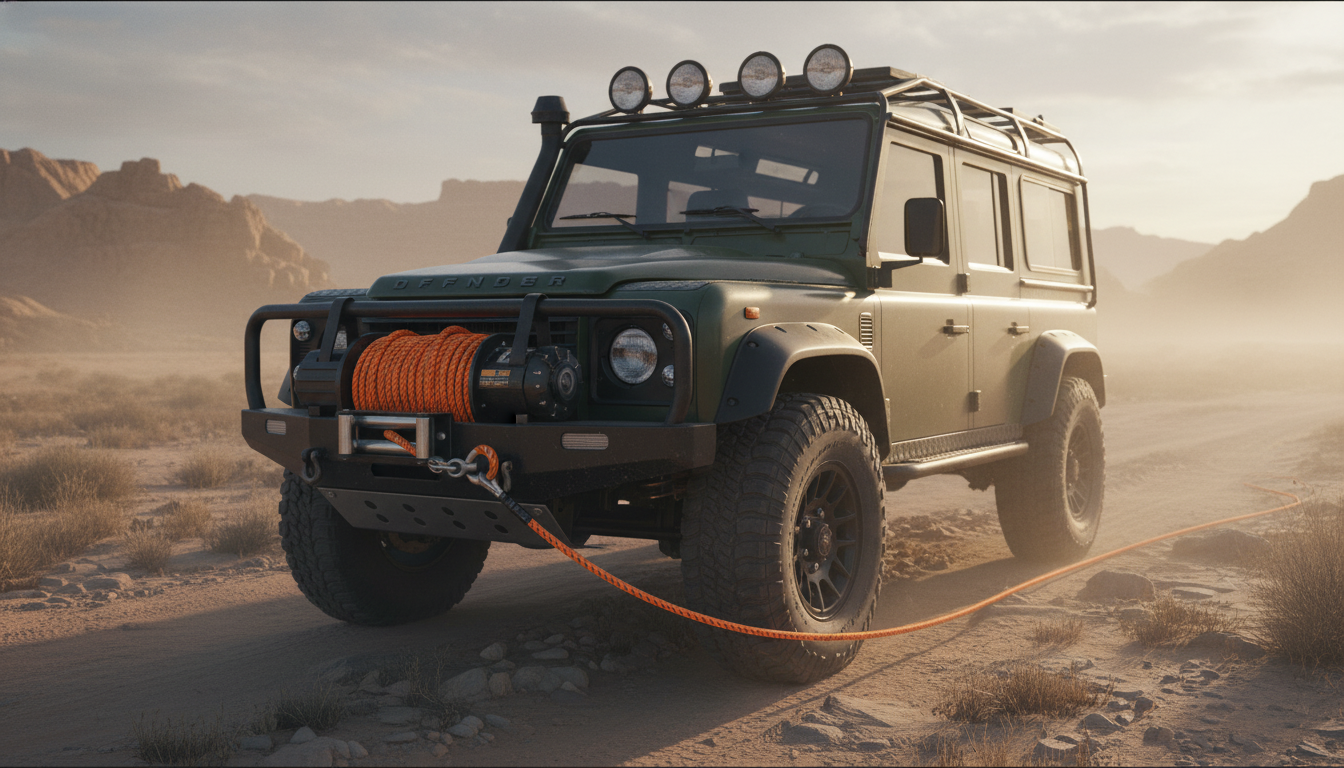
With the distinctions of synthetic winch lines now clear, the next logical step involves matching the optimal rope—whether a static tow rope, winch cable, or kinetic rope—to the vehicle’s weight, terrain, and the specific nuances of the recovery strategy.
The science behind kinetic towing rope
Moving from the controlled pull of synthetic winch lines, the **kinetic towing rope** offers a fundamentally different approach to energy management. Instead of acting as a rigid link, this specialised rope behaves much like a high-performance spring. It expertly converts the force applied by the recovery vehicle into stored elastic energy.
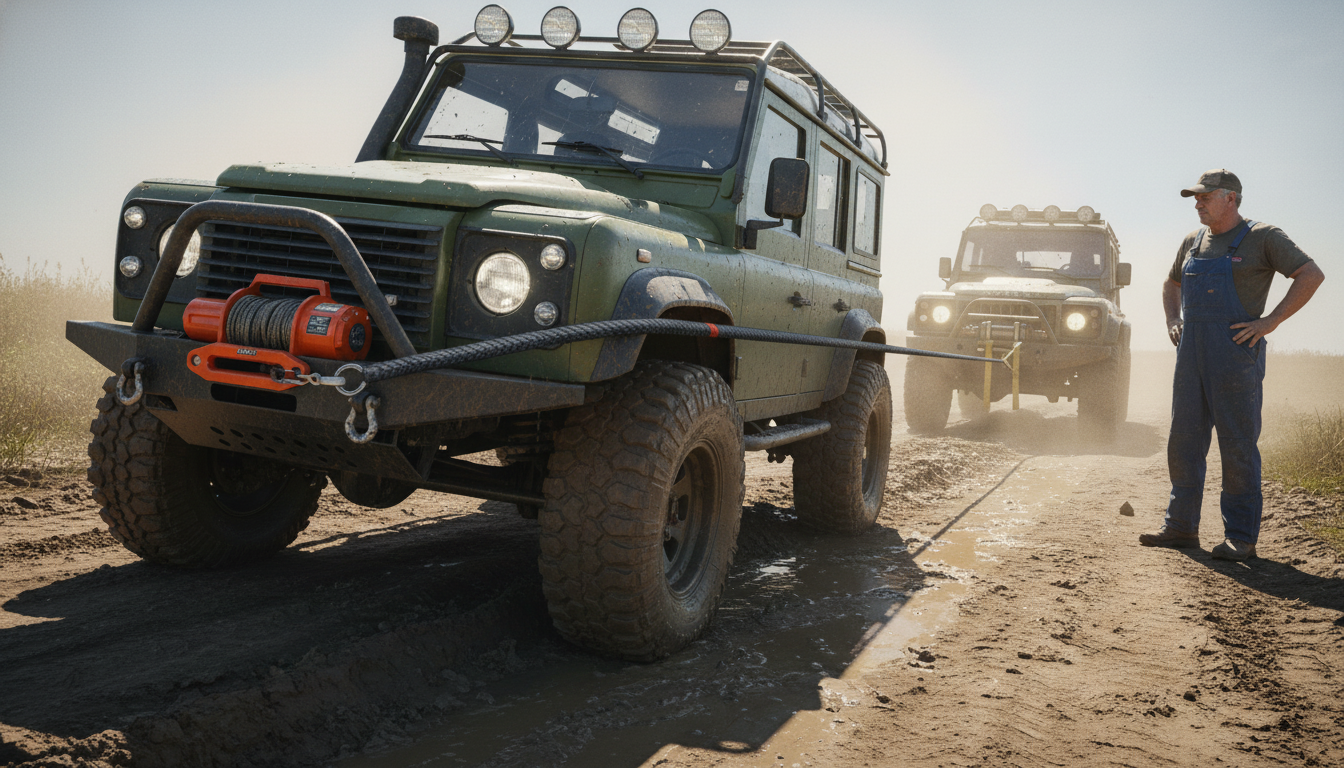
When subjected to tension, the rope’s polymer fibres can elongate by almost a third of their original length. This deformation stores mechanical work as elastic potential energy, which is then gradually released as the rope returns to its resting state. The result is a much smoother, less abrupt acceleration, which not only protects chassis components but also significantly reduces the risk of sudden, dangerous snaps.
iRopes exclusively uses Nylon 66 as the core polymer for its kinetic towing ropes. Nylon 66 offers an exceptional tensile-strength-to-weight ratio and maintains its elasticity even after numerous recovery cycles. Encasing these fibres is a proprietary, super-strong **abrasion-resistant coating**. This protective layer shields the rope from abrasive elements like sharp rocks, sand, and mud, which would typically wear down less protected materials. This adherence to **international kinetic towing rope standards** ensures superior performance and durability.
- Energy absorption – The 30% stretch cushions shock loads, significantly reducing stress on both recovery and stuck vehicles.
- Higher pulling force – Stored energy imparts additional momentum, resulting in a more powerful and effective extraction.
- Durability – The abrasion-resistant coating extends the rope’s service life in the most demanding off-road conditions.
Compared to conventional towing ropes, which exhibit less than 5% stretch, the kinetic design provides a measurable safety margin. Unlike a towing winch cable, which relies on the winch’s motor for force modulation, the kinetic rope contributes its own elastic energy. This makes it particularly effective in situations where a winch cannot generate sufficient torque or where rapid, uncontrolled recoil from a winch line could pose a hazard.
Is a kinetic recovery rope a worthwhile investment? For those operating in challenging conditions like deep mud, sand, or snow, the ability to harness stored energy translates directly into fewer failed recovery attempts, a lower risk of vehicle damage, and reduced reliance on heavy-duty winch systems. The exceptional elasticity of Nylon 66, combined with the robust abrasion-resistant coating, delivers a lifespan that often outweighs the initial investment, making these ropes highly cost-effective over time.
Understanding these performance characteristics empowers operators to select the most appropriate line for their specific vehicle weight, terrain type, and recovery strategy. This knowledge sets the stage for our guidance on matching rope specifications to real-world applications. For a deeper dive into the performance edge of kinetic ropes, see our article on the key advantages of Yankum kinetic rope over tow rope.
Choosing the right rope solution and safety guidelines
Having explored how kinetic ropes store energy and how synthetic winch lines provide smooth, controlled pulling, the next crucial step is to match the rope to your vehicle, load, and terrain. Selecting the correct line prevents dangerous shock loads, protects vehicle components, and ensures every recovery operation is predictable and safe.
Rope selection basics
Key factors for a safe pull
Weight
Match the rope’s Minimum Breaking Strength to at least 2-3 × your vehicle’s Gross Vehicle Weight (GVW).
Terrain
Consider challenging conditions like mud, sand, or rocky ground; kinetic ropes excel where static lines might fail.
Size
Select a diameter and length that are appropriate for the recovery distance and the required pulling force.
iRopes customisation
Tailor-made solutions for wholesale partners
OEM/ODM
We produce ropes precisely to your specifications, covering material, colour, diameter, length, and performance. This includes custom choices like Nylon 66 for specific applications.
Branding
Add your company logo, custom packaging, or colour-coded sleeves for instant brand recognition and differentiation.
Coating
Choose our abrasion-resistant Nylon 66 coating for kinetic ropes or UV-stable finishes for static lines, ensuring optimal protection and longevity.
Always inspect the rope for cuts, frays, or abrasion before each use; a compromised line can fail under load and cause serious injury.
When calculating the required Minimum Breaking Strength (MBS), remember the critical rule of thumb: the rope's MBS should be at least two to three times the vehicle’s Gross Vehicle Weight (GVW). For example, a 5,000-lb ATV typically requires a rope rated for 10,000–15,000 lbs MBS. While ensuring adequate strength, also select a diameter that is manageable and not excessively heavy. Furthermore, ensure the length is sufficient to reach a stable anchor point without needing to prematurely tension the line.
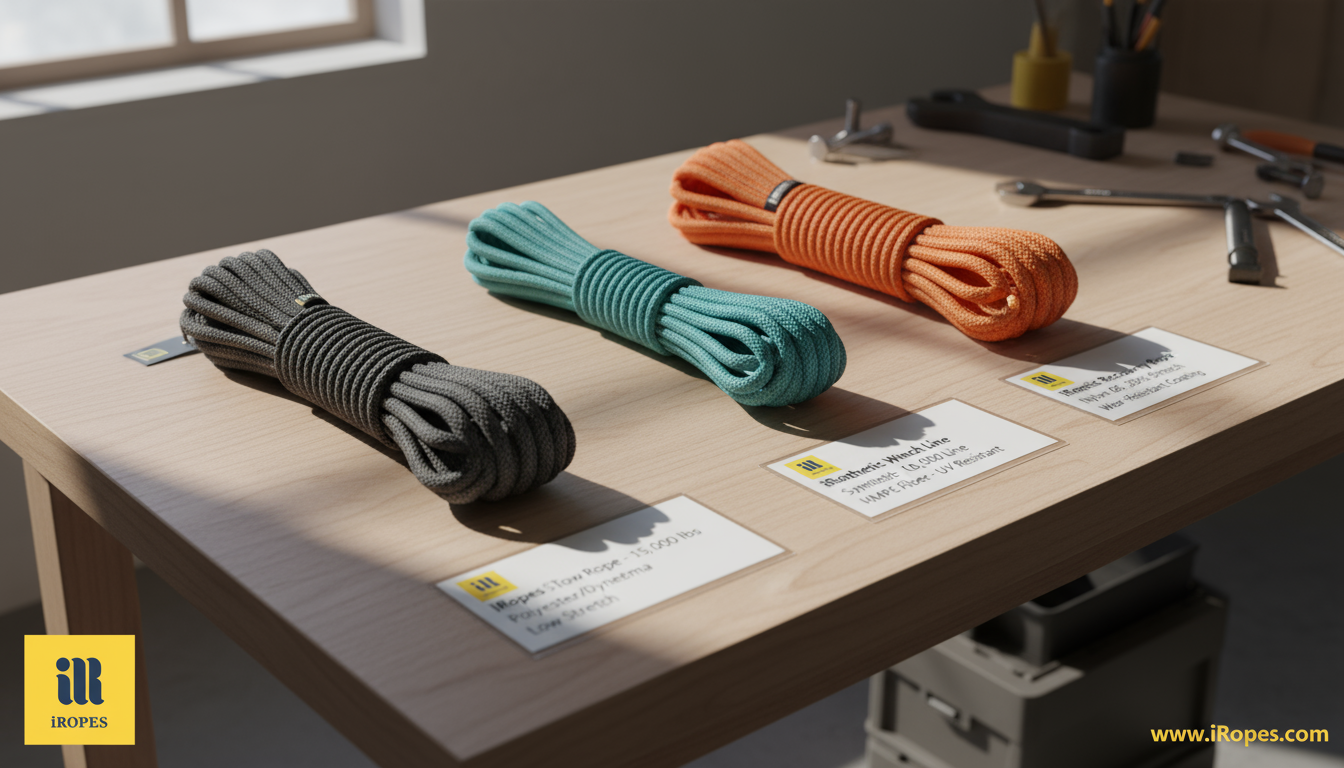
iRopes can meticulously adapt any of these parameters to your specific needs. Whether you require a high-visibility orange tow rope for a fleet, a low-stretch synthetic winch cable for marine use, or a high-performance Nylon 66 kinetic towing rope with 30% elongation for extreme off-road extractions, our OEM/ODM team is equipped. We will engineer the exact configuration, apply a super-strong abrasion-resistant coating, and ensure the product meets stringent international kinetic rope standards.
Quick FAQ recap:
• The fundamental distinction between a kinetic rope and a traditional tow rope lies in their stretch properties: kinetic ropes elongate up to 30% to absorb shock, whereas tow ropes remain essentially inelastic.
• A kinetic rope is not designed to function as the primary line on a winch; it can be utilised only as a short damper, given that the winch already regulates pulling force.
• Investing in a kinetic recovery rope is particularly advantageous when you frequently encounter deep mud, sand, or snow, as its stored energy provides a smoother, more powerful pull and significantly reduces the risk of vehicle damage.
For comprehensive guidance, refer to our best recovery rope guide, which expands on safety practices, rope selection, and maintenance.
With the right rope selected, proper terminations securely installed, and a diligent pre-use inspection conducted, you will possess a recovery system that performs reliably across any terrain. The next step involves applying these safety practices in the field and experiencing the confidence that comes from utilising equipment built to ISO 9001 standards.
Ready for a Customised Rope Solution?
You’ve seen how conventional **towing ropes** provide steady pull on flat terrain and how a synthetic **towing winch cable** delivers lightweight, controlled force. Now, understand why the **kinetic towing rope**—crafted from Nylon 66, featuring a super-tough abrasion-resistant coating, and offering 30% elongation—provides the safest, most powerful recovery solution in mud, sand, or snow, meeting international standards.
If you need a rope specifically tailored to your vehicle weight, branding, or packaging requirements, simply fill out the form above. Our dedicated OEM/ODM team will design the perfect solution. With our ISO 9001-certified facilities, we guarantee both exceptional quality and timely delivery for every order.