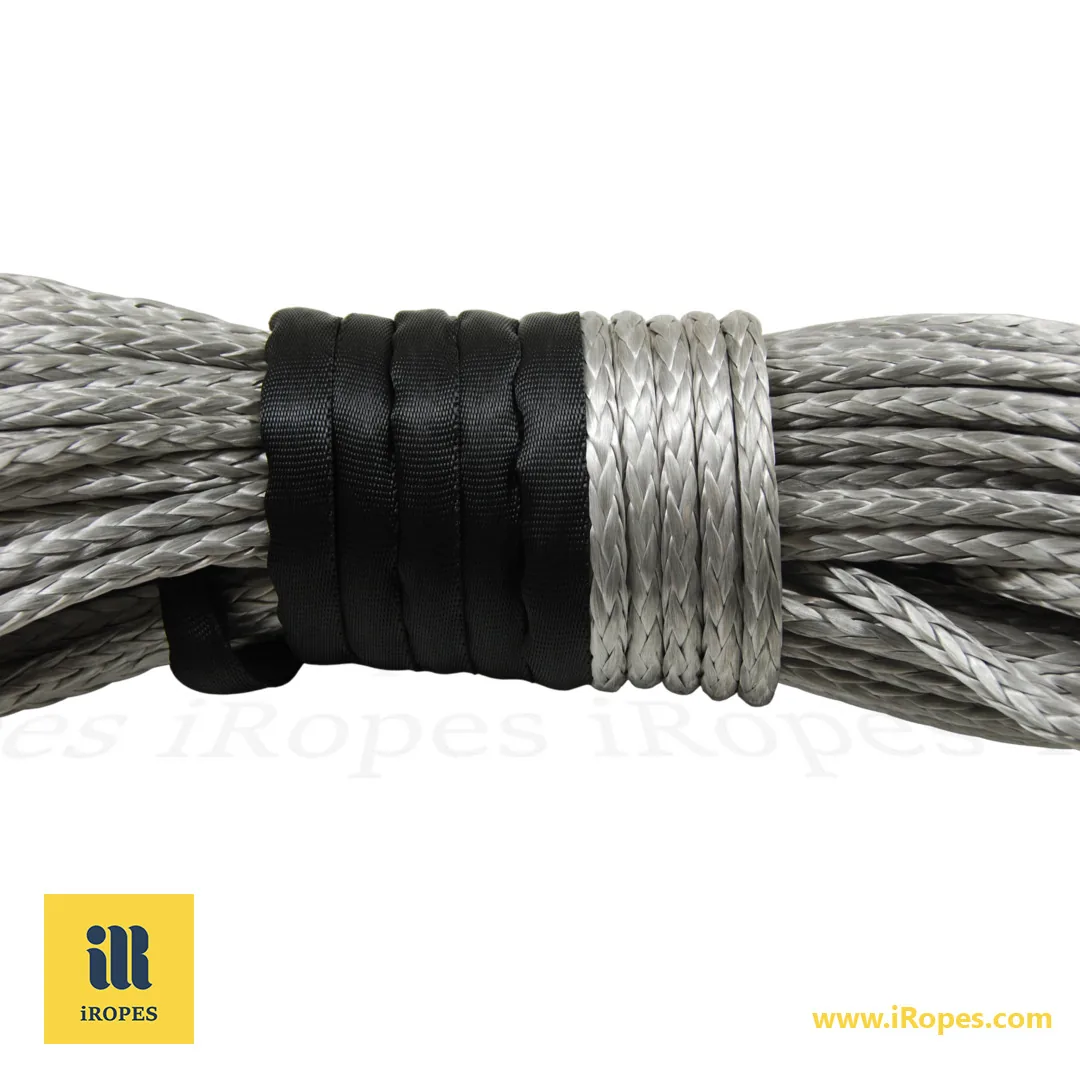
iRopes’ 8‑strand polypropylene mooring rope floats and delivers typical breaking strengths up to 1,750 lb (3/8 in), making it a reliable choice for marine and industrial use.
What you’ll gain – 3‑minute read
- ✓ Use the exact SWL formula to plan loads with confidence.
- ✓ Speed up installation with the recommended eye splice.
- ✓ Manufactured under ISO 9001; ABS/Lloyd’s compliance available on request.
- ✓ Leverage iRopes’ OEM customisation for colours and branding to streamline inventory.
Many teams still rely on knots that can cut rope strength by half. In the sections below, you’ll see why a properly executed splice can retain up to 100 % of an 8‑strand rope’s breaking strength, helping you meet marine‑grade safety factors with less re‑work. You’ll also learn why the industry‑standard eye splice outperforms most knots in harsh salt‑water conditions.
8 strand polypropylene mooring rope – definition, construction and buoyancy
Having explored why strand count matters for marine strength, let’s look at what an 8 strand polypropylene mooring rope actually is. It is a hollow‑braid rope built from eight separate strands of polypropylene monofilament that braid around an empty core. The empty centre keeps the line light, while the eight‑strand geometry spreads load efficiently to achieve a higher minimum breaking load than many lower‑strand alternatives.

The construction of an 8 strand polypropylene rope is purpose‑built for high‑load marine duties. Each strand consists of tightly twisted monofilaments that interlock without a central core, creating a balanced plait that resists flattening and maintains shape under tension. The design also limits elongation, so the line reacts predictably when a vessel swings against a dock.
- Hollow‑braid structure – individual monofilaments are braided around an empty centre to keep weight low.
- Eight‑strand load sharing – the braid distributes force evenly, boosting tensile strength.
- Low stretch – controlled elasticity helps the line hold position under load.
- UV & chemical resistance – stabilisers protect against sunlight and common oils.
- ISO 9001 assurance – every batch undergoes strict quality checks before shipping.
Buoyancy is the hidden hero of mooring lines. Polypropylene’s specific gravity is about 0.91, so it is lighter than water and floats even after prolonged immersion. This characteristic simplifies handling on docks and prevents the line from dragging on the seabed, which can cause abrasion and premature wear.
People also ask: What is the breaking strength of 8‑strand polypropylene mooring rope? For common diameters, the minimum breaking load typically ranges from roughly 850 lb for a 3/16 in (5 mm) line up to 1,750 lb for a 3/8 in (10 mm) line. Applying a 10:1 safety factor gives a safe working load of about one‑tenth of the breaking strength, which suits many small‑craft mooring scenarios.
“For permanent mooring, an 8‑strand polypropylene rope offers the best balance of floatation and load capacity, especially when ABS‑certified for marine environments.” – Marine Surveyor Laura Chen
When you compare this to a 3 strand polypropylene rope, the eight‑strand version delivers higher breaking strength and less stretch, while still floating effortlessly. That extra strength makes it a go‑to choice for permanent dock lines, marker buoys, and any application where a floating, high‑load rope is essential.
8 strand polypropylene rope – technical specs and certifications
Now that the construction is clear, let’s dig into the exact specifications that turn an 8 strand polypropylene rope into a workhorse for marine and industrial jobs.

- Diameter options
- Minimum breaking load (MBL)
- Weight per 100 ft
Diameter choices typically run from 5 mm (3/16 in) through 10 mm (3/8 in), matching both vessel size and expected forces at the dock. Corresponding MBL values commonly range from about 850 lb at the smallest size to 1,750 lb for the 10 mm version, which covers the needs of most recreational and small‑commercial mooring set‑ups.
Weight is another practical factor: a 5 mm line weighs about 0.30 lb per 100 ft, a 7 mm line roughly 0.55 lb, and the 10 mm variant near 0.85 lb per 100 ft. These figures translate into easy handling on deck while still delivering the load‑bearing capacity you need.
Because polypropylene’s specific gravity sits below 1, the rope naturally floats. Even after extended immersion, a typical 8 strand line remains on the surface, simplifying retrieval and preventing seabed abrasion — a direct answer to “Does polypropylene rope float?”.
iRopes manufactures under ISO 9001. On request, we can produce to project specifications and support compliance with ABS/Lloyd’s requirements and testing to ASTM D2256 for tensile performance.
Beyond ports, you’ll find this rope in permanent dock lines, floating marker and mooring buoys, heaving and tow lines, and industrial pull‑lines where low stretch and predictable handling matter. When the job calls for lighter duty — such as garden edging or temporary dock lines — a 3 strand polypropylene rope often provides sufficient strength while helping control material cost.
With the technical picture now clear, the next step is to compare those specs with the popular 3‑strand alternative, so you can decide which configuration aligns best with your project’s load requirements and budget.
3 strand polypropylene rope – specifications, pros & cons
Now that the advantages of the 8‑strand version are clear, it’s time to examine the lighter‑weight 3 strand polypropylene rope that many dock‑line and landscaping projects rely on.
Typical diameters run from ¼ in (6 mm) to 3⁄8 in (10 mm). A ¼‑in line offers a minimum breaking load of about 600 lb, while the 3⁄8‑in size reaches roughly 1,200 lb. Weight per 100 ft ranges between 0.25 lb and 0.70 lb, making the rope easy to handle on deck or in a garden shed. Because the polymer’s specific gravity stays under 1, every size floats — a handy feature when you need to retrieve a line quickly.
Calculating the safe working load (SWL) is straightforward: divide the minimum breaking load by 10 for typical marine use. For example, a ¼‑in rope with a 600‑lb breaking strength provides an SWL of about 60 lb in a standard dock‑line scenario.
- Cost‑effective – material usage is lower, so price per metre is often below an 8‑strand counterpart.
- Greater flexibility – fewer strands help the rope bend more easily around tight‑radius fittings.
- Lower load capacity – the trade‑off for lighter weight is reduced breaking strength, so it’s unsuitable for heavy‑duty mooring.
- Same buoyancy – polypropylene’s density ensures the rope still floats.
- Simpler splicing – fewer strands make eye splices quick and reliable, with typical retention up to 90 %.
When might you reach for this version? Small pleasure‑craft, temporary dock lines, garden edging, or any application where the load is modest and budget matters are prime considerations. Its ease of splicing also makes it a favourite for DIY enthusiasts who prefer a quick eye splice without sacrificing too much strength.
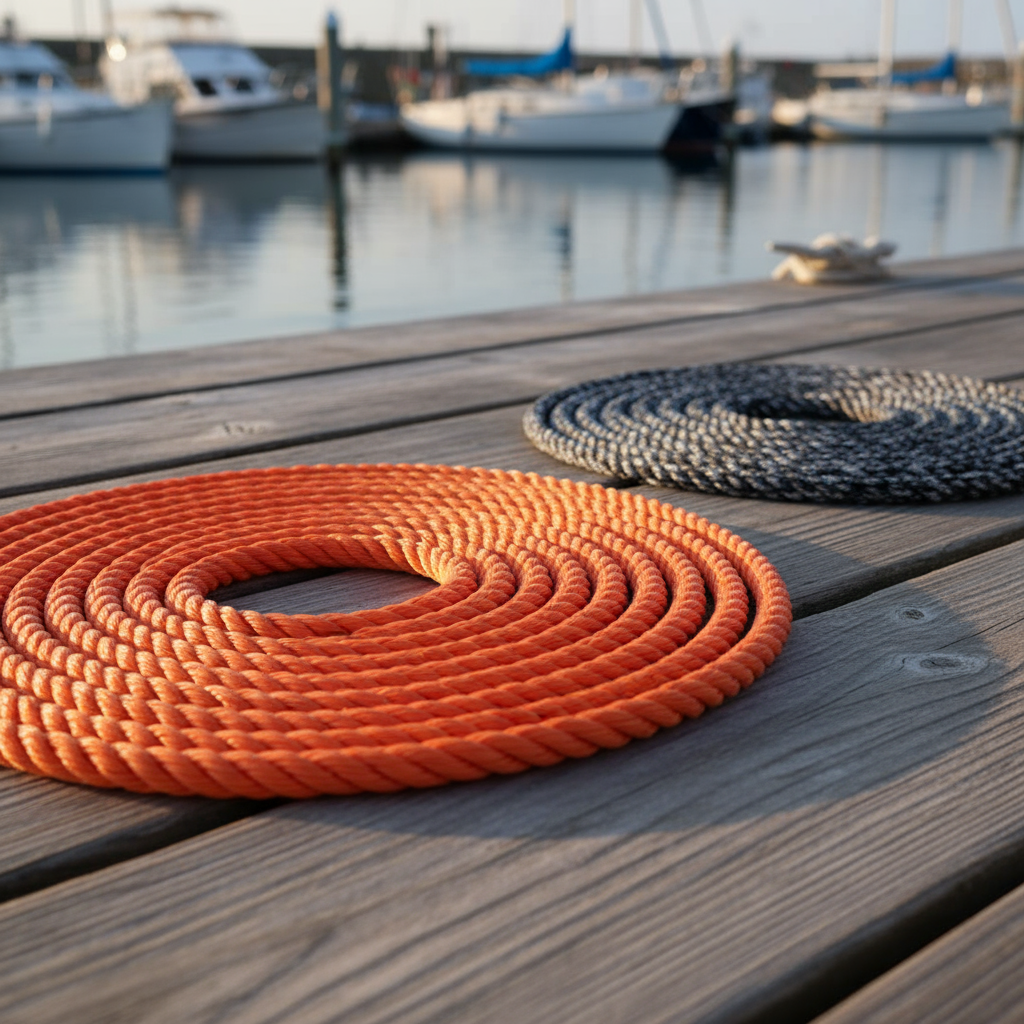
Choosing between the two boils down to load demands, handling preferences, and budget constraints. If you need the highest tensile strength and minimal stretch, the 8‑strand option remains the go‑to. For lighter, more flexible tasks where cost savings matter, the 3‑strand rope delivers reliable performance without over‑engineering the solution.
Choosing the Right Rope & iRopes customization options
Now that you understand the trade‑offs between eight‑ and three‑strand lines, the next step is to turn those specifications into a practical safety figure. The safe working load (SWL) is the rope’s minimum breaking load (MBL) divided by ten for typical marine use. For example, if the 8 strand polypropylene rope you are eyeing has an MBL of 1,200 lb, the base SWL would be about 120 lb. In harsher conditions, apply a stricter factor (e.g., 12:1 to 15:1), reducing the allowable load to roughly 80–100 lb.
If a 3 strand polypropylene rope meets your budget, the same SWL approach applies. However, the lower strand count generally yields a smaller MBL, so the final working load will be reduced accordingly.

Splicing is the most reliable way to terminate a rope while preserving strength. An eye splice unlays the strands and weaves them back into the standing part to form a durable eye; a loop splice interweaves two ends to create a permanent closed loop. Both methods typically retain 80–100 % of the original rope strength, whereas knots may reduce strength by up to 50 %.
Eye Splice
Form a secure eye by unlaying the strands and tucking them back into the standing part; commonly retains 80–100 % strength.
Loop Splice
Create a closed loop by interweaving the tail ends; ideal for fixed‑length lines with high strength retention.
Storage
Keep rope coiled in a dry, shaded area away from chemicals; UV‑protected bags extend service life.
Cleaning
Rinse with fresh water after salt exposure and mild detergent; avoid high‑pressure jets that can fray fibres.
Regular maintenance — proper storage, gentle cleaning, and periodic visual inspections for UV cracking or abrasion — keeps both 8 strand and 3 strand polypropylene ropes performing at their rated strength for years.
OEM/ODM Services
iRopes can produce the 8 strand polypropylene rope in the diameter, colour, construction, and branding you require. Custom packaging — bags, colour boxes or cartons — can bear your logo. Our ISO 9001‑certified manufacturing, IP protection and on‑time delivery give consistent quality from coil to shipment.
With the right calculations, a solid splice, and a maintenance routine in place, you’re set to choose the rope that fits your project’s load, budget, and longevity goals — a straightforward path to dependable performance.
By comparing the high‑load, low‑stretch characteristics of an 8 strand polypropylene mooring rope with the lighter, more flexible 3 strand polypropylene rope, you now have a clear framework for choosing the right line, calculating safe working loads, and maintaining performance through proper splicing and storage. With iRopes’ 15 years of manufacturing expertise in China and a wide range of synthetic fibres — from UHMWPE, Technora™, Kevlar™ and Vectran™ to polyamide, polyester and polypropylene — plus ISO 9001 quality assurance and full OEM/ODM support, you can order custom rope solutions in the exact diameter, colour and branding for your marine, industrial or recreational application. Explore our custom polyester and polypropylene mooring lines for tailored marine projects.
Get a personalised rope solution
If you’d like tailored advice or a custom quote based on the specifications discussed, simply fill out the form above and our specialists will be in touch.