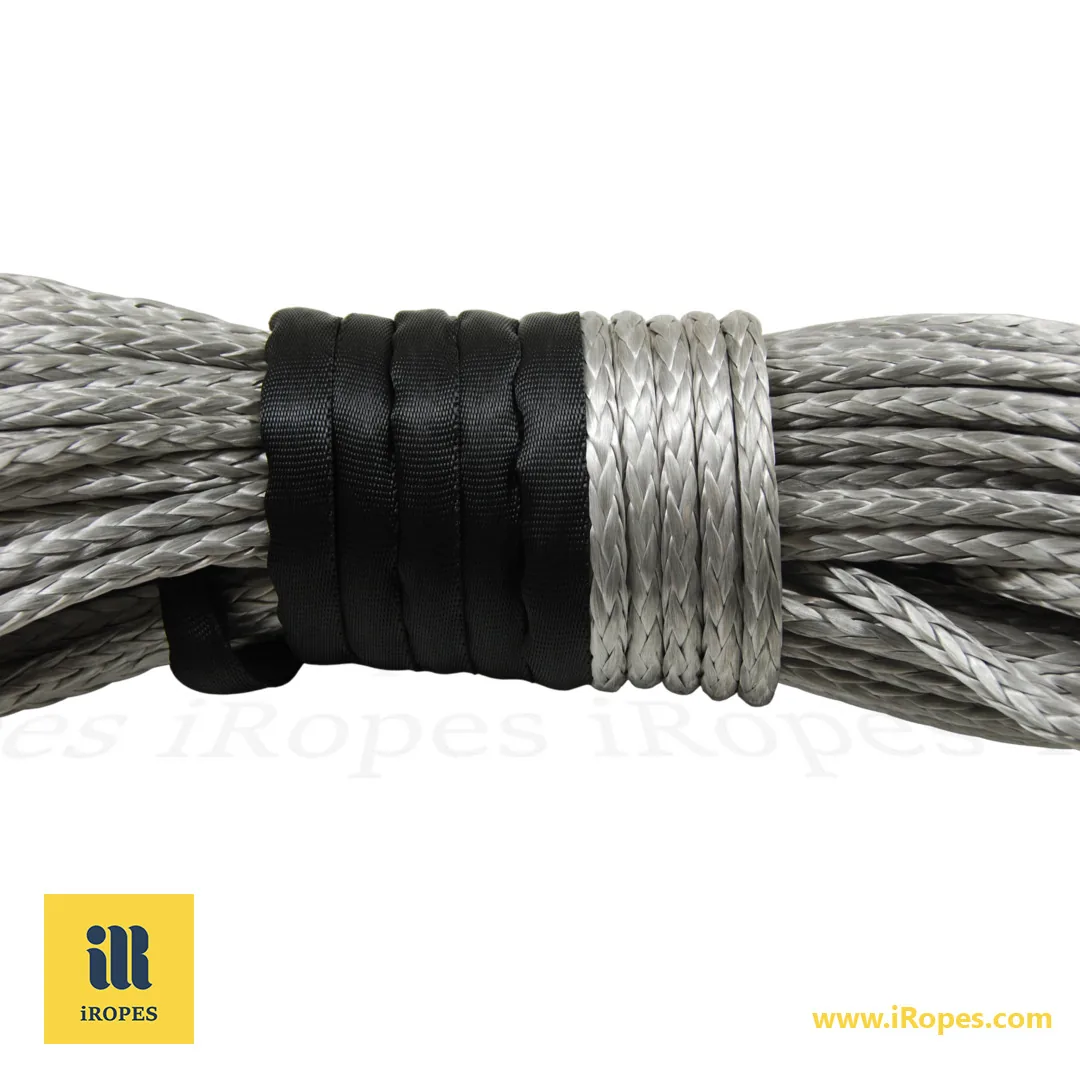
SK78 Dyneema can reach ≈ 2 500 tonnes breaking strength on large diameters, with a strength‑to‑weight ratio up to 15× that of steel. A 12 mm polypropylene rope typically breaks at ≈ 3 100 lb.
≈ 4 min read – what you’ll gain
- ✓ Composite ropes deliver high tensile performance at a fraction of the mass of steel, helping cut rig weight significantly.
- ✓ SK78 Dyneema shows around 3.5 % elongation at break — far lower than polyester for crisper control.
- ✓ Polypropylene floats (specific gravity 0.91), simplifying buoyant systems and marine handling.
- ✓ iRopes OEM/ODM delivers custom rope solutions quickly, backed by ISO 9001 quality assurance.
Most operators assume the cheapest poly rope is enough for any job, yet a 12 mm poly line typically caps at ≈ 3 100 lb while an 8 mm SK78 Dyneema can reach ≈ 6 300 kg. Large‑diameter SK78 lines can even exceed 2 500 tonnes. Imagine swapping a heavy, rust‑prone steel cable for a feather‑light line that matches or exceeds performance in key metrics like strength‑to‑weight and handling. In the sections below, we’ll show how each material measures up and which one suits your next project.
Understanding Composite Rope: Construction, Benefits, and Applications
When you need a line that can carry heavy loads without weighing down your rig, composite rope is a proven choice. It typically blends an ultra‑high‑modulus polyethylene (UHMWPE) core—often marketed as HMPE or Dyneema—with a woven polyester jacket. The core provides the tensile strength, while the outer sheath shields the fibre from abrasion, UV exposure and chemicals, creating a balanced package that feels both light and robust.
Two construction methods dominate the market. A double‑braid layout wraps a core‑protecting sheath around the inner fibre bundle, offering excellent resistance to wear and a smooth surface for spooling. In a parallel‑core design, several strands run side by side for uniform load distribution, and the rope may be finished with a protective cover. The choice between these structures influences how the rope behaves under tension, its handling characteristics and its suitability for specific equipment.
- High strength‑to‑weight ratio - the HMPE core delivers outstanding tensile strength at a fraction of steel’s mass.
- Enhanced durability - the polyester outer layer resists abrasion, UV radiation and chemical contact, extending service life.
- Flexibility for demanding rigs - the construction allows easy handling and smooth spooling, even on tight winches.
Because of these properties, composite rope finds a home in several high‑performance sectors. Off‑road recovery crews rely on its strength and lightness to pull stuck vehicles without adding excess weight to the tow vehicle. Yacht owners favour it for running halyards and sheets, where low stretch improves sail trim while the polyester jacket tolerates salty spray. Tree‑work professionals appreciate its flexibility, which lets them manoeuvre lines around branches and still trust the rope to hold the load safely.
Composite rope blends the best of both worlds: the high strength of UHMWPE fibres and the protective qualities of a polyester sheath, making it ideal for high‑load, mobile applications.
When you compare this material to more conventional options, the performance gap becomes clear—especially for tasks that demand both lightness and resilience. Understanding how the core and jacket work together sets the stage for the next topic.
→ With a solid grasp of composite ropes, we can now explore the standout performance of the SK78 rope.

What Is SK78 Rope? Performance Characteristics and Ideal Uses
Having explored how composite ropes blend core and jacket for balanced performance, let’s shift the focus to a material that pushes the limits of strength even further. The SK78 rope stands out as a benchmark for anyone who needs maximum load capacity without the bulk.

What is SK78 rope? It is a 12‑strand braided rope made from HMPE (high‑modulus polyethylene) fibres marketed under the Dyneema® brand. Each strand interlocks to create a sleek profile that runs smoothly over sheaves while retaining exceptionally low stretch.
The core specifications that give SK78 rope its reputation are impressive. Large‑diameter lines can reach breaking strengths up to ≈ 2 500 tonnes, while elongation sits around 3.5 % at break. With a specific gravity of ≈ 0.98, SK78 floats and offers excellent UV and chemical resistance for long service life in harsh environments.
- Breaking strength – up to ≈ 2 500 t on very large diameters.
- Elongation – roughly 3.5 % at break.
- UV and chemical resistance – excellent stability in harsh environments.
When comparing grades, the most common question is, “What is the difference between Dyneema SK38 and SK78?” The answer lies in the fibre classification: SK78 is about 25 % stronger than SK38 for the same diameter and shows slightly lower elongation. Both are lighter than steel, but SK78 delivers the extra margin that competitive sailors and heavy‑load operators demand.
Another frequent query asks, “Which synthetic rope is the strongest?” The widely accepted response is that Dyneema®—including the SK78 grade—is the strongest man‑made fibre by weight, with a strength‑to‑weight ratio up to 15 times that of steel. Its low creep and abrasion resistance make it the go‑to choice when safety cannot be compromised.
Given these attributes, SK78 rope finds its niche in several high‑performance arenas. Regatta sailing teams rely on its minimal stretch to keep sail trim razor‑sharp. Heavy‑lifting operations benefit from the combination of massive breaking strength and a light package that eases handling. Defence units appreciate the rope’s resistance to chemicals and UV, which prolongs service life in demanding field conditions. Off‑road recovery crews also favour SK78 because its low weight reduces strain on tow vehicles while still delivering the pull needed to free a stuck truck. This performance illustrates why synthetic ropes outperform steel lifting cables in demanding applications.
Why SK78 Leads
Because it pairs unrivalled tensile strength with a feather‑light profile, SK78 rope lets engineers and crews push the limits of load‑bearing designs without the penalty of excessive mass.
Understanding these performance characteristics prepares you for the next comparison—how a more economical option like polypropylene measures up when buoyancy and cost are the primary concerns.
Poly Rope Strength: How Much Weight Can Poly Rope Hold and When to Choose It
After seeing how SK78 pushes the envelope of synthetic performance, you might wonder whether a more budget‑friendly line can still get the job done. Polypropylene rope—often simply called poly rope—delivers solid strength while staying lightweight and buoyant, making it a sensible choice for many everyday applications.
If you’re asking, “How much weight can poly rope hold?” the answer lies in the rope’s diameter and construction. The figures below link common sizes to typical breaking loads and a conservative safe working load at ≈ 20 % of break. Use them as a quick reference and always confirm final values with manufacturer data for your exact construction.
Diameter & Breaking Load
How much load each size can bear
12 mm
Breaking strength around 3 100 lb (≈ 1 400 kg).
16 mm
Breaking strength near 5 500 lb (≈ 2 500 kg).
20 mm
Breaking strength about 8 600 lb (≈ 3 900 kg).
Safe Working Load
Recommended limit for continuous use
12 mm
Safe load about 620 lb (≈ 280 kg).
16 mm
Safe load roughly 1 100 lb (≈ 500 kg).
20 mm
Safe load near 1 700 lb (≈ 770 kg).
Those numbers are a solid baseline, but real‑world performance also depends on a few key factors. Construction type matters: a braided rope will generally be stronger than a simple 3‑strand twist of the same diameter. Prolonged UV exposure can reduce strength if the line isn’t UV‑stabilised, so consider protective covers or treated grades. Finally, quality variations between manufacturers mean you should verify certifications before committing to a bulk purchase.
Polypropylene ropes degrade under UV exposure; choose a UV‑stabilised grade or protect the line to maintain its rated strength.
When buoyancy outweighs raw tensile power, poly rope shines. Its specific gravity of 0.91 means the line floats, making it ideal for mooring buoys, water‑ski tow lines, and floating dock fixtures. The cost‑effectiveness also suits large‑scale projects such as temporary construction barriers or bulk‑handling loops where ultimate strength is less critical than affordability and ease of handling.
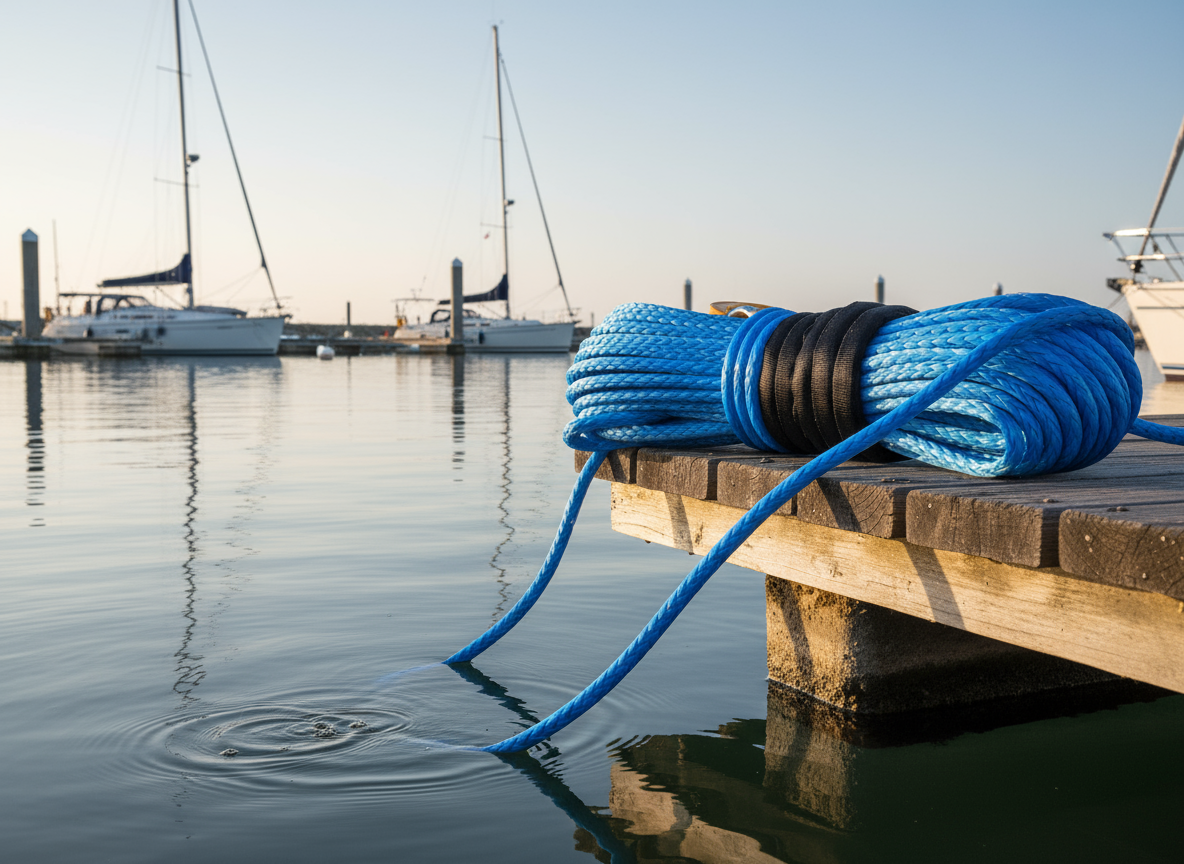
Understanding poly rope’s load limits and environmental sensitivities sets the stage for tailoring a solution that meets your exact requirements—something iRopes excels at with its OEM/ODM capabilities. For applications where visibility matters, the yellow poly rope offers high‑visibility colour while retaining the buoyant, low‑stretch characteristics described above.
Tailoring High‑Performance Ropes with iRopes: OEM/ODM Advantages
After exploring how poly rope can stay afloat and how SK78 rope delivers extreme strength, the natural question is: how can you get a line that matches every unique requirement of your operation? iRopes answers that by turning a standard specification into a bespoke product that feels like it was built just for you.

iRopes’ OEM/ODM platform starts with a menu of customisation options that go far beyond colour swatches. You can choose the exact fibre blend—whether you need the ultra‑light HMPE core of a composite rope, the proven power of an SK78 rope, or the buoyant cost‑effectiveness of poly rope strength—and then define diameter, overall length, colour or pattern, required accessories such as thimbles or loops, and even the core construction (braided, parallel‑core, or double‑braid). This depth of choice means the final product aligns perfectly with the load, environment and handling preferences of your project.
Material
Select HMPE, polyester, polypropylene or hybrid blends to hit exact strength and weight goals.
Dimensions
Specify your required diameter and length to match working load and handling needs.
Logistics
Direct pallet shipping keeps your project on schedule.
Branding
Non‑branded, colour‑coded or logo‑printed bags and cartons reinforce your brand identity.
Every batch leaves our factory under the watchful eye of ISO 9001‑certified quality control. That framework helps ensure tensile‑strength claims are backed by repeatable testing, and it sits alongside comprehensive IP protection throughout the process—from the initial design sketch to the final boxed shipment. In practice, this means you can share a confidential specification with confidence, knowing that iRopes safeguards your intellectual property.
iRopes protects every design with dedicated IP protocols, keeping your proprietary rope solution exclusive from concept to delivery.
Ordering is streamlined: share your technical brief, select packaging preferences—plain, colour‑coded, or custom‑printed bags, boxes or cartons—and receive a prompt production timetable. Once the rope is fabricated, pallets are shipped directly to your dock, warehouse or on‑site location, eliminating middle‑man delays.
If you’re ready to move from a generic line to a rope that mirrors the exact performance of a composite rope, the unrivalled pull of an SK78 rope, or the buoyant reliability of poly rope strength, simply request a quote below. Our engineers will walk you through material selection, load calculations and branding options, turning a simple requirement into a high‑performance solution built just for you.
Need a bespoke rope solution? Get expert advice
From the ultra‑light strength‑to‑weight ratio of composite rope to the tensile power of SK78 rope and the buoyant practicality of poly rope strength, you now have a clear guide to choosing the right line for off‑road, marine or industrial tasks. With iRopes’ ISO 9001‑certified OEM/ODM capabilities, you can customise material, diameter, colour and accessories so the rope fits your exact load and branding requirements.
At iRopes, we understand how important strong, safe, and reliable ropes are for different industries. Our goal is to make top‑quality, customised ropes that are light, strong, and easy to use. If you’d like personalised advice on the ideal rope solution for your operation, use the form above.