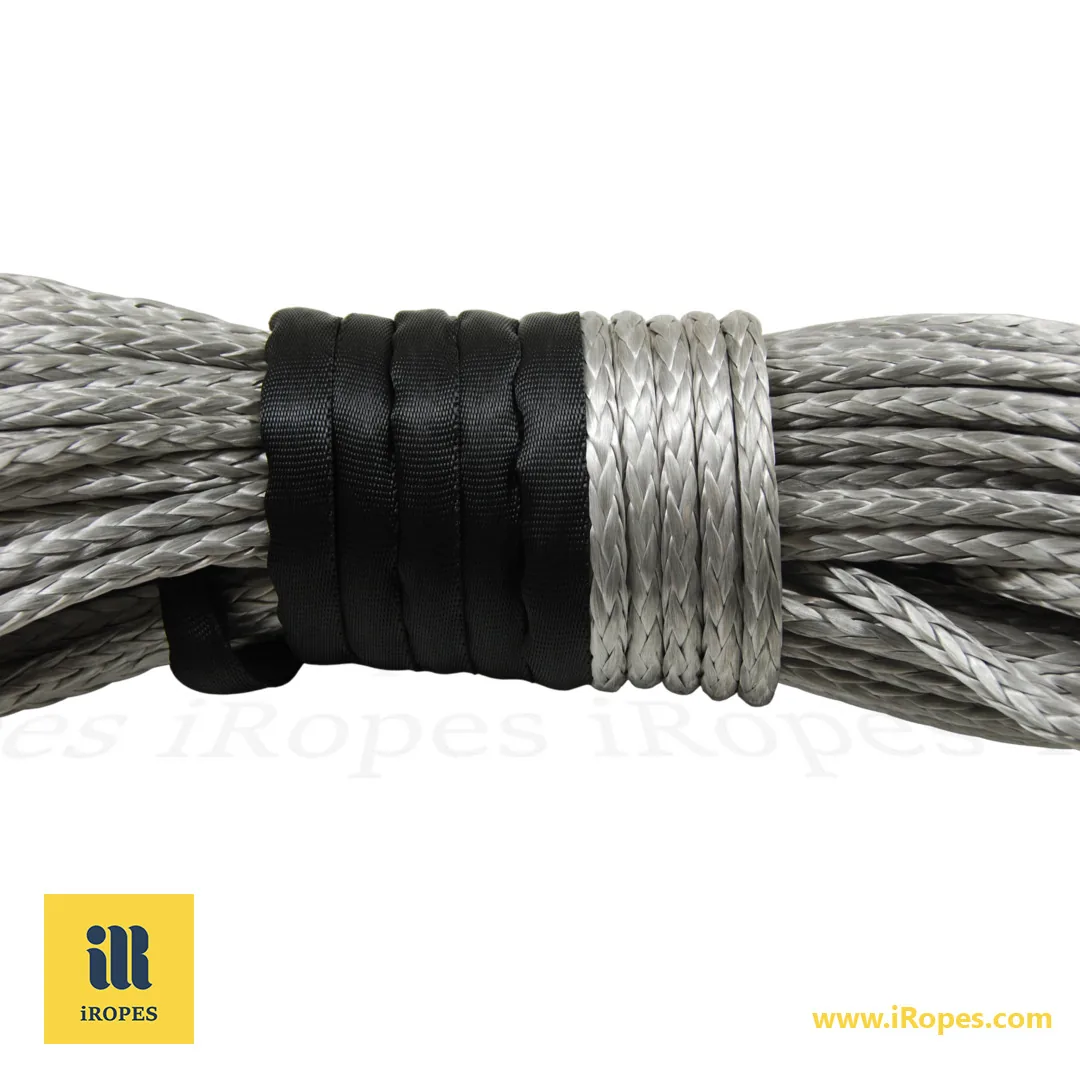
Braided nylon cord delivers up to 3,750 lb breaking strength on a 10 mm line and stretches ≈30 % to absorb shocks—max load capacity with built‑in safety.
What you’ll gain – ~2 min read
- ✓ Up to 3,750 lb MBS on a 10 mm braid, giving a safe working load of ≈750 lb (20 % safety factor).
- ✓ ≈30 % elasticity cuts impact forces by roughly 40 % versus static ropes.
- ✓ ISO 9001‑certified production guarantees consistent tensile performance batch‑to‑batch.
- ✓ Custom OEM/ODM options let you pick colour, core type, reflective strands and branded packaging for wholesale orders.
Most crews still reach for any generic rope, assuming all lines behave alike, but that habit hides a hidden risk. What if you could slash shock‑load peaks by up to 40% while lifting 3,750 lb with a cord that stretches 30% and never twists? In the sections below, we’ll unpack the science and the exact numbers. You’ll also discover how iRopes tailors every braid to your toughest tow‑line challenges.
Understanding Braided Nylon: Composition and Benefits
There's a growing demand for high-strength tow ropes, and braided nylon is a favourite among professionals who need reliable, dynamic lines. What exactly makes it so exceptional? At its core, braided nylon is a synthetic fibre known as polyamide, typically produced as Nylon 6 or Nylon 6.6. These polymers feature long, interlocking chains that provide impressive tensile capacity while remaining surprisingly lightweight.

When these fibres are woven into a true braid, each strand supports its neighbours. This distributes the load evenly across the entire cross-section. This unique geometry eliminates the twist-induced torque that can plague twisted ropes. As a result, the line stays straight under tension, allowing you to reel it in without fighting unwanted rotation.
- Exceptional strength: The polyamide matrix provides high tensile strength, effectively resisting sudden shocks.
- Flexible handling: The braid allows the rope to bend smoothly around pulleys and winches.
- Torque‑free operation: The interlaced construction prevents the line from winding itself during use.
- Elastic stretch: Up to 30% elongation absorbs impact loads, protecting both load and equipment.
- Durable surface: Resistance to abrasion, UV light, and mildew keeps the rope reliable in harsh environments.
High tensile strength combined with noticeable elasticity translates directly into safety on the tow line. When a vehicle jerks forward, the rope’s stretch acts like a cushion, reducing the peak force transmitted to the anchor point. This cushioning effect lowers the risk of sudden failure, which is why many rescue teams and off-road enthusiasts prefer a braided nylon cord for dynamic loads.
“Nylon’s elasticity lets it absorb shock loads that would snap a static line, making it the safest choice for towing.”
So, are nylon cords strong? Absolutely. They combine high breaking strength with a forgiving stretch, providing a rope that not only holds heavy loads but also mitigates the sudden forces that cause accidents. Understanding both the composition and the benefits of the braid allows you to select the right line for any tow‑line scenario, whether you’re pulling a boat, recovering a 4x4, or securing cargo on a pallet.
Braided Nylon Cord Construction Types and Customization Options
Nylon cords are indeed strong, but their performance and feel in your hands change depending on how they’re woven. Whether you are pulling a boat onto a trailer or securing cargo on a pallet, the construction of the cord determines its stretch, how easily it feeds through a winch, and how it holds up under repeated loads.

The two most common architectures are solid braid and double braid. While both start with the same polyamide fibres, the arrangement of these fibres creates distinct performance signatures. Let's delve into their differences.
- Solid Braid: This construction features a single, tight weave, offering smooth, torque-free feeding and excellent knot-holding ability. It is ideal for lighter-weight towing and utility lines.
- Double Braid: Comprising an inner core surrounded by an outer sheath, the core carries the bulk of the load. The cover protects against abrasion, making it well-suited for heavy-duty recovery and marine mooring.
- Performance Impact: Solid braid flexes more readily, providing a softer feel. Double braid, however, sacrifices a bit of flexibility for higher breaking strength and superior resistance to wear.
Beyond the braid itself, iRopes enables wholesale buyers to fine‑tune a host of variables. This ensures the cord matches the exact demands of their market. This level of customisation is why many OEM partners choose us for their specialised lines.
- Dimensions and colour: Choose diameters from 3 mm up to 25 mm and a palette that ranges from high-visibility neon to corporate-branding hues.
- Core and accessories: Opt for a polyester or steel-core for extra stiffness, add loops, thimbles or custom terminations, and request reflective or glow-in-the-dark strands for night-time safety.
- Packaging and labelling: Select bulk pallets, colour-coded bags, or branded cartons; each package can carry your logo, batch code and compliance marks.
So, are nylon cords strong? The answer remains a confident yes. The inherent tensile capacity of polyamide, combined with the chosen braid—whether solid or double—delivers a minimum breaking strength that comfortably exceeds most towing and recovery requirements. Moreover, nylon’s elasticity absorbs shock loads. This means the cord stretches under sudden force instead of snapping, adding an extra layer of safety for both people and equipment.
When you pair the right construction with the appropriate custom options, the resulting braided nylon cord becomes more than a simple line. It transforms into a tailored solution that meets load‑critical specifications while fitting your branding and logistics needs. This synergy between design and performance paves the way for the next step: translating strength figures into real‑world safety calculations.
Braided Nylon Rope Strength: Metrics, Tables, and Safety Considerations
Now that you understand the differences between solid‑braid and double‑braid constructions, let’s translate those designs into concrete numbers. Knowing the exact strength figures lets you match the right rope to the load you intend to move. This knowledge also underpins every safety calculation you’ll perform on the job site.
Minimum Breaking Strength (MBS) is the force at which the rope actually snaps under a steadily increasing load. On the other hand, Safe Working Load (SWL) is the load you should never exceed in normal operation. Most manufacturers, including iRopes, apply a 20% safety factor, meaning the SWL is roughly one‑fifth of the MBS. The relationship can be expressed as:
SWL = MBS × 0.20
| Diameter | MBS (lb / kg) | SWL (lb / kg) |
|---|---|---|
| 3 mm (1/8") | 500 lb (227 kg) | 100 lb (45 kg) |
| 6 mm (1/4") | 1,200 lb (545 kg) | 240 lb (109 kg) |
| 10 mm (3/8") | 3,750 lb (1,700 kg) | 750 lb (340 kg) |
| 12 mm (1/2") | 5,200 lb (2,360 kg) | 1,040 lb (472 kg) |
So, how strong is braided nylon rope? As the table shows, a 10 mm cord can hold roughly 3,750 lb before it breaks. However, you should limit routine loads to about 750 lb – that’s the safe working load you’ll rely on for towing, rigging, or recovery. If you wonder “how much weight can nylon rope hold?”, remember the answer hinges on the specific diameter you choose and the safety factor you apply.

Strength Metrics
Key data you’ll reference on site
MBS
The ultimate load at which the rope fails; measured in pounds or kilograms.
SWL
Recommended operating limit, typically 20% of MBS for dynamic applications.
Moisture Impact
Strength drops about 10% when the rope is wet; plan accordingly for marine use.
Safety Practices
Keeping you and your load secure
Never Exceed SWL
Even a brief overload can cause irreversible fibre damage.
Regular Inspection
Look for frayed ends, cuts, or abrasion that reduce the effective MBS.
Dry Storage
Keeping rope dry preserves its rated strength and elongation characteristics.
Never rely on the breaking strength number alone – always calculate and respect the safe working load for your specific application.
When you choose a diameter that matches the calculated SWL for your task, you benefit from nylon’s natural stretch. This cushions sudden shocks without compromising the load limit. That combination of quantified strength and inherent elasticity is what makes braided nylon rope strength a trusted metric for tow lines, marine moorings, and industrial rigging alike.
Need a Tailored Solution for Your High-Strength Tow Line?
If you’d like a personalised recommendation, simply fill out the form above and our rope specialists will get back to you promptly.
You’ve seen how the polyamide core and true braid give a rope its remarkable strength, torque‑free handling, and up to 30% stretch. This makes a double‑braid nylon tow rope both safer and more reliable for dynamic loads. iRopes offers ISO‑certified manufacturing and can fine‑tune diameter, colour, core type, and reflective features to match your exact SWL.
Ready to optimise your application? Complete the enquiry form above and our specialists will help you design the perfect braided nylon cord and guide you through material selection, custom branding, and fast global delivery.