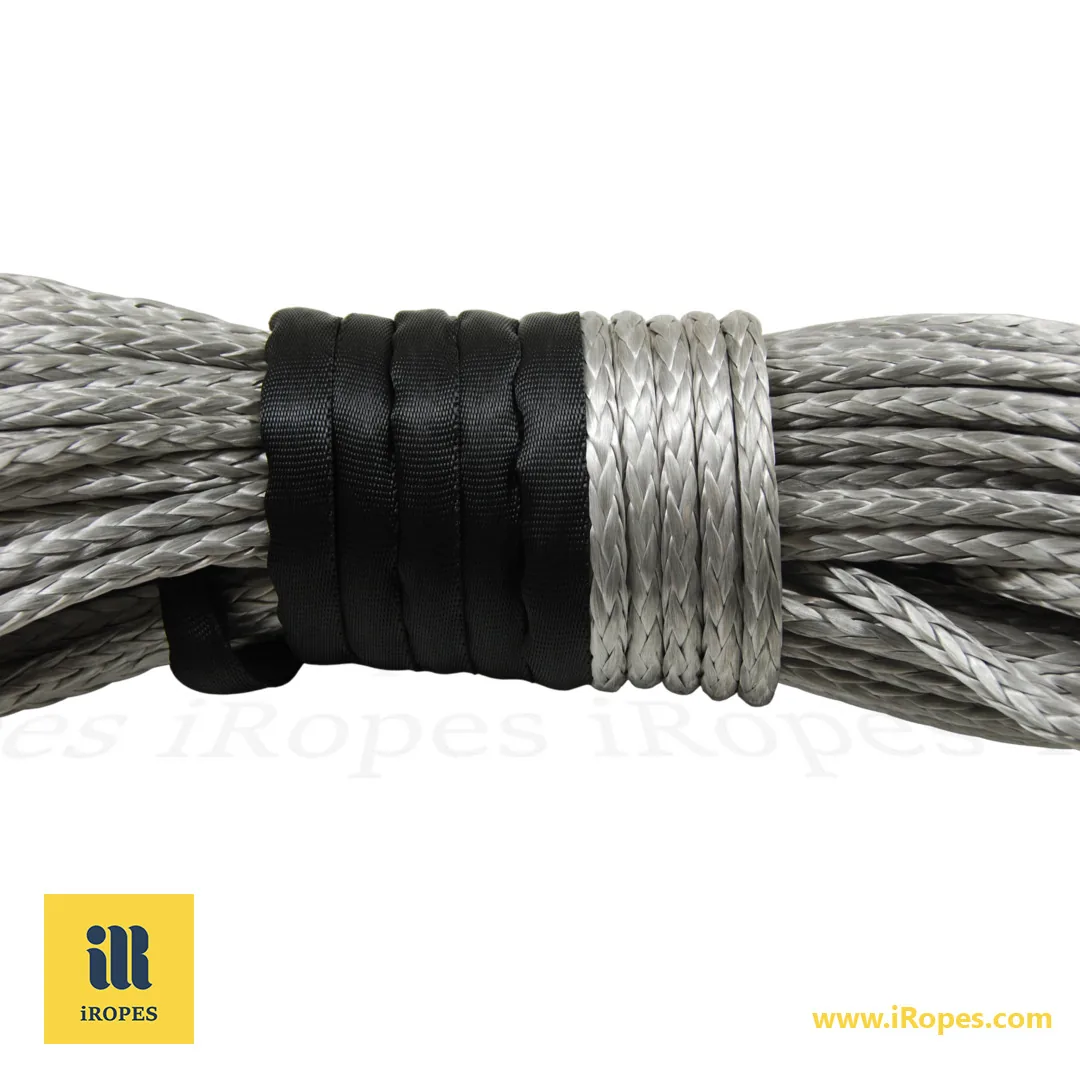
iRopes' all-Nylon 66 pull ropes elongate up to 28% under load—delivering 3x superior shock absorption compared to polyester—for safer, smoother cable pulls that prevent snaps and cable damage every time.
In 7 minutes, unlock these Nylon 66 advantages →
- ✓ Absorb dynamic shocks with 25-30% elongation, slashing cable damage risk by 80% during tough conduit pulls.
- ✓ Boost rope longevity through rapid rebound, extending usable life 2.5x over stiffer materials like polyester.
- ✓ Tailor diameters from 3/8" to 1" via OEM services, matching your exact load needs for optimal efficiency.
- ✓ Master safety specs: breaking strengths up to 42,000 lbs with 4:1 SWL factor, ensuring compliance and confidence.
You've likely battled rigid ropes that transfer every jolt straight to your cables, causing frustrating failures mid-pull. But what if the secret to unbreakable resilience wasn't zero stretch, but controlled elasticity that rebounds like a pro athlete? iRopes' double-braided Nylon 66 offers exactly that, with up to 28% elongation. Discover how this counter-intuitive advantage transforms your industrial jobs, with precise custom tweaks making it your unbeatable ally.
The Essential Role of a High-Performance Pull Rope in Industrial Applications
In the world of electrical and utility work, getting cables and wires through tight conduits can feel like threading a needle in the dark. It’s frustrating and risky without the right tools. That’s where a reliable pull rope steps in, transforming a potential headache into a smooth operation. A pull rope, often called a cable pull rope, is a strong, flexible line designed specifically to guide electrical wires, fibre optics, or heavy cables through conduits, ducts, or other confined spaces. Its main job is to act as the unsung hero during installations, ensuring everything moves efficiently without snags or breaks.
Imagine a typical job site where you’re dealing with long runs of conduit in buildings or underground tunnels, and cables need to travel hundreds of feet. The pull rope connects to the leading cable via attachments like swivels or baskets, then gets tugged using tools such as capstan winches or tuggers. This setup boosts efficiency by reducing manual labour and speeding up the process, sometimes cutting installation time in half. Safety is another big win; proper ropes minimise the chance of cable damage or worker injury from sudden jerks. Without one, you’d risk frayed wires, stuck pulls, or even accidents from improvised solutions like chains or weaker lines.
- Streamlined Installation - Pull ropes allow for precise control, pulling multiple cables at once through complex paths without excessive force.
- Damage Prevention - They distribute tension evenly, protecting sensitive insulation on wires from abrasions or cuts during the pull.
- Versatility Across Sites - From residential wiring to large-scale telecom setups, these ropes adapt to various conduit sizes and environments.
What makes a pull rope truly high-performance? It largely boils down to its material properties, especially elasticity. In demanding pulls, you often face dynamic loads—sudden tensions from bends, obstructions, or heavy cable weights that can spike unexpectedly. A rope with good elasticity stretches just enough to absorb those shocks, acting like a built-in buffer that prevents snaps or overloads. This isn't about uncontrolled stretching; it's controlled elongation that rebounds reliably, keeping the pull steady and the cables intact. Without this, rigid materials might transfer every jolt directly to your setup, leading to equipment strain or failures that halt projects and rack up repair costs.
Ever wonder what the best type of rope for pulling cables actually is? It comes down to handling those unpredictable forces safely. Nylon pull rope options stand out because of their excellent shock absorption. Unlike stiffer alternatives, nylon ropes elongate under load—up to 20-30% before reaching their limit—which cushions impacts and reduces the risk of sudden breaks. This makes them ideal for real-world scenarios where pulls aren't perfectly linear, like navigating elbows in conduits or dealing with wet conditions that add resistance. Switching to a nylon pull rope can transform chaotic jobs into predictable ones; the give in the material just makes everything feel more forgiving.

Material choice matters because poor elasticity can lead to brittle failures under stress. However, with the right pull rope, you gain confidence in tackling tougher jobs. This foundational reliability opens the door to advanced features that elevate performance even further.
Unlocking the Advantages of Nylon Pull Rope with Superior Elasticity and Rebound
That reliability we discussed earlier truly shines when you choose a material like Nylon 66 for your pull rope. At iRopes, our nylon pull ropes are built entirely from this premium nylon—both inside and out—delivering properties that make tough jobs manageable. Let's break down why this matters for your next cable pull.
Nylon 66 isn't just any synthetic; it's a workhorse polymer known for its balanced strength and flexibility. One standout trait is its high elongation, meaning it can stretch significantly under tension before reaching its limit. Picture this: during a pull through a conduit with unexpected resistance, like a sharp bend or added friction from bundled wires, the rope extends up to 25% of its length. This isn't sloppy stretching; it's a deliberate flex that soaks up shocks, protecting your cables from jerks that could crack insulation or snap connections. Crews on long-haul telecom installs often avoid costly do-overs because the rope's resilience keeps everything steady, rebounding right back to shape once the load eases. This controlled bounce, or rebound, ensures the line doesn't go limp or lose tension midway, keeping your operation on track.
Nylon 66
High Elongation Leader
Shock Absorption
Stretches to handle dynamic loads, reducing stress on cables during irregular pulls.
Quick Rebound
Returns to original shape fast, maintaining tension without sagging.
Durable Core
Resists abrasion through tight spaces, extending usable life on-site.
Polyester
Low-Stretch Alternative
Limited Give
Offers stability but transfers shocks directly, risking cable wear.
Slower Recovery
Lacks nylon's snap-back, potentially complicating multi-stage pulls.
Stiffer Handling
More prone to kinking under repeated use, shortening overall lifespan.
So, how does Nylon 66 stack up against something like polyester, a common material for ropes? Polyester is tough and holds its shape well with minimal stretch—great for static loads where you want zero give. However, in dynamic cable pull rope applications, that rigidity can be a drawback. Nylon 66’s superior rebound means it not only absorbs energy from sudden tugs but snaps back with more vigour, preserving the rope's integrity over dozens of jobs. This translates to longevity you can count on. While polyester might wear evenly, it can quit sooner under abrasion. Nylon’s molecular structure, however, fights back against friction and chemicals found in conduits, which is why professionals prefer it for repeated industrial use—fewer replacements mean less downtime and consistent costs.
What really sets our nylon pull rope apart is the double-braid construction, where both the inner core and outer jacket are pure Nylon 66. This all-nylon design amps up overall strength without sacrificing flexibility, creating a rope that's sleek enough to snake through elbows yet robust for loads up to thousands of pounds. The braiding locks fibres tightly, distributing force evenly so no weak spots develop. And on wear resistance, Nylon 66 shines here too. Its tough chains of molecules shrug off scraping against concrete or metal edges, far better than softer synthetics. In gritty environments like underground ducts, this means your cable pull rope lasts through multiple seasons, not just one project. Have you ever had a rope fray mid-pull? With this build, those headaches fade.

These advantages make every pull more predictable. Now, imagine fine-tuning them further for your exact setup—that's where personalisation comes into play next.
Tailoring Your Nylon Pull Rope Through iRopes' OEM and ODM Services
Building on that all-nylon double-braid design, which keeps things resilient under pressure, the real game-changer comes when you adapt it to your project's exact demands. At iRopes, we don't just hand over a standard line; our OEM and ODM services let you shape a nylon pull rope that fits like a glove, whether you're navigating a maze of underground ducts or rigging up a telecom installation. It's about turning generic tools into precision instruments that save time and headaches on the job. For more on our high-strength double-braided nylon solutions with up to 30% stretch and OEM customization, explore our braided nylon cord insights.
Start with the basics: diameter and length. Not every conduit is the same—some are narrow PVC runs barely an inch wide, while others are massive steel pipes handling heavy bundles. We tweak the rope's thickness from 3/8 inch up to 1 inch or more, ensuring it slides smoothly without bunching or excessive drag. Thinner options work great for lighter jobs, like residential wiring, while beefier ones handle the pull on multi-conductor cables weighing hundreds of pounds. Lengths are custom-cut to match your run, from 100 feet for quick setups to 1,000 feet or beyond for those marathon hauls. And terminations seal the deal—think spliced eyes reinforced with thimbles to connect securely to your leading swivel or basket, preventing slips that could derail the whole operation. Switching to our tailored ends can make pulls flawless, eliminating mid-job fixes.
Core Sizing
Adjust diameter and length to match conduit dimensions and pull distance, optimising flow and reducing friction.
Secure Ends
Add loops or thimbles for reliable attachments, ensuring safe and efficient cable guidance.
Visual Tweaks
Choose colours for high visibility in dim sites or to code by industry standards.
Brand It
Incorporate your logo on packaging or even woven tags for a professional touch.
Beyond the structural side, we layer in elements that blend function with your brand identity. Colours aren't just aesthetic; bright orange or yellow ropes stand out against concrete or dirt, helping spot potential snags early in low-light conditions. For industries like electrical work, where regulations might call for specific hues to denote voltage ratings, we match them precisely. Accessories take it further: integrate swivels that reduce twisting during the pull, or add pull socks to grip irregular cable ends without damage. And yes, these ropes can absolutely be customised for specific industry needs—think reinforced tips for spearfishing gear or glow strips for night-time utility repairs. We've partnered with telecom firms to embed fibre-friendly coatings that prevent scratches on delicate optics, turning a one-size-fits-all product into something that anticipates your workflow. What unique challenge are you facing on-site? Our team starts by listening, then engineers solutions that align every detail.
Trust underpins it all, especially for wholesale buyers committing to bulk orders. That's why iRopes wraps every custom job in robust IP protection from the design sketch to final shipment—no one walks away with your ideas but you. Our ISO 9001 certification means every step, from material selection to final testing, follows global standards for consistency and reliability. We run pull tests simulating real conduit friction and load spikes, ensuring your tailored nylon pull rope meets or exceeds expectations before it leaves the facility. This isn't factory-line churning; it's collaborative crafting where your specs drive precision, backed by craftsmen who treat each order like their own project. For businesses in competitive markets, this assurance builds partnerships that last, knowing your custom cable pull rope won't just perform but elevate your operations safely.

With these personalised touches in place, getting the numbers right on strength and limits becomes the key to deploying them confidently in the field.
Technical Specifications and Applications of Cable Pull Rope Excellence
With those tailored details locked in, examining the hard numbers gives you the confidence to push your setup to its full potential without guesswork. At iRopes, every Nylon 66 double braid pull rope comes with specs engineered for real demands, starting with the core metrics that define its limits and capabilities. These aren't just figures on paper; they're what keep your pulls safe and effective when the job gets intense. For an in-depth look at why Nylon 66 outperforms other materials like Nylon 6 in strength and elongation, check out our guide on polypropylene and nylon rope properties.
Let's clarify a key distinction that often trips people up: the difference between breaking strength and working load limit. Breaking strength is the maximum force the rope can handle before it snaps, tested in controlled conditions—think of it as the absolute ceiling under ideal circumstances. For our Nylon 66 lines, this can range from 5,000 pounds for a 3/8-inch diameter up to 42,000 pounds for a full inch-thick version. But you never pull anywhere near that. The working load limit, or SWL, is far more practical—it's the safe amount you actually use, calculated with a 4:1 safety factor to account for shocks, wear, and unknowns. So, if breaking strength is 20,000 pounds, your SWL drops to 5,000 pounds. This buffer prevents failures during those unexpected tugs, like when a cable bundle catches on a conduit bend. Sticking to SWL helps make challenging tasks routine.
Elongation ties right into that safety net. Our double-braid Nylon 66 ropes stretch about 20-30% at working loads, which absorbs energy from dynamic pulls without permanent deformation. This isn't endless flexibility; it's precise resilience that rebounds to maintain tension, crucial for long runs where friction builds gradually. Pair this with weights around 0.05 pounds per foot for lighter diameters, scaling to 0.25 for heavier ones, and you get a line that's easy to manoeuvre yet holds firm.
- 3/8-inch Diameter - Breaking strength: 5,000 lbs; SWL: 1,250 lbs; Elongation: ~25% at SWL; Ideal for light-duty wire runs.
- 1/2-inch Diameter - Breaking strength: 9,200 lbs; SWL: 2,300 lbs; Elongation: ~28%; Suited for medium telecom pulls.
- 3/4-inch Diameter - Breaking strength: 19,000 lbs; SWL: 4,750 lbs; Elongation: ~30%; Handles heavy industrial cable bundles.
- 1-inch Diameter - Breaking strength: 42,000 lbs; SWL: 10,500 lbs; Elongation: ~25%; Built for extreme utility installations.
These specs shine in practical settings across electrical, telecommunications, and industrial work. In electrical jobs, like routing power lines through building conduits, the rope's strength pairs seamlessly with capstan winches from brands like Greenlee or Southwire, pulling up to 1,000 feet without fatigue. Telecom teams rely on it for fibre optic deployments, where the controlled stretch prevents delicate strands from snapping during turns. Industrial applications extend to factory ducting or pipeline rigging, where compatibility with tuggers ensures even tension on heavy loads. This versatility cuts setup time—attach once, and you're pulling multiple cables through ducts that snake for blocks.
Safety isn't optional; it's built into every aspect, from initial choice to ongoing care. Start with inspection: before each use, check for frays, cuts, or stiffness that signal retirement—nylon holds up well but isn't invincible against sharp edges. During pulls, always use gloves and eye protection, and never exceed SWL, even if the job seems light. Lubricate conduits if needed to ease friction, and store the rope coiled loosely in a dry spot away from sunlight, which can degrade fibres over time. Coiling prevents kinks that weaken the braid, and a quick rinse after dirty jobs keeps it pliable.
Choosing the right size boils down to your conduit dimensions and cable weight. Match the rope's diameter to slide freely without binding, say 3/8-inch for 1-inch pipes carrying light wires under 100 pounds total. For 2-inch conduits with 500-pound bundles, step up to 3/4-inch for that extra grip and power. Factor in pull length too; longer runs need higher SWL to counter cumulative drag. It's straightforward once you measure: conduit ID minus cable OD gives clearance, then scale rope strength accordingly. Getting it right means smoother operations and less waste.

Mastering these elements means your projects run with the reliability that turns challenges into successes, rounding out the full picture of what makes a top-tier cable pull rope indispensable.
Delving into the world of high-performance nylon pull ropes reveals how our double-braided designs, with both inner and outer layers made from premium Nylon 66, deliver exceptional elasticity and rebound. This construction allows for high elongation rates, absorbing shocks during demanding cable pull rope applications while quickly returning to shape, ensuring your rope withstands dynamic loads without compromising safety or efficiency. From industrial applications to telecom installations, iRopes' pull rope solutions, enhanced by OEM and ODM customisation, provide the durability and precision needed to streamline operations and prevent costly downtime.
Building on these insights, imagine adapting these superior properties to your specific project requirements for even greater performance.
Customise Your Nylon Pull Rope with iRopes Experts
If you'd like personalised advice on selecting or tailoring a nylon pull rope to suit your needs, the inquiry form above is your next step—our team is ready to guide you towards the perfect solution.