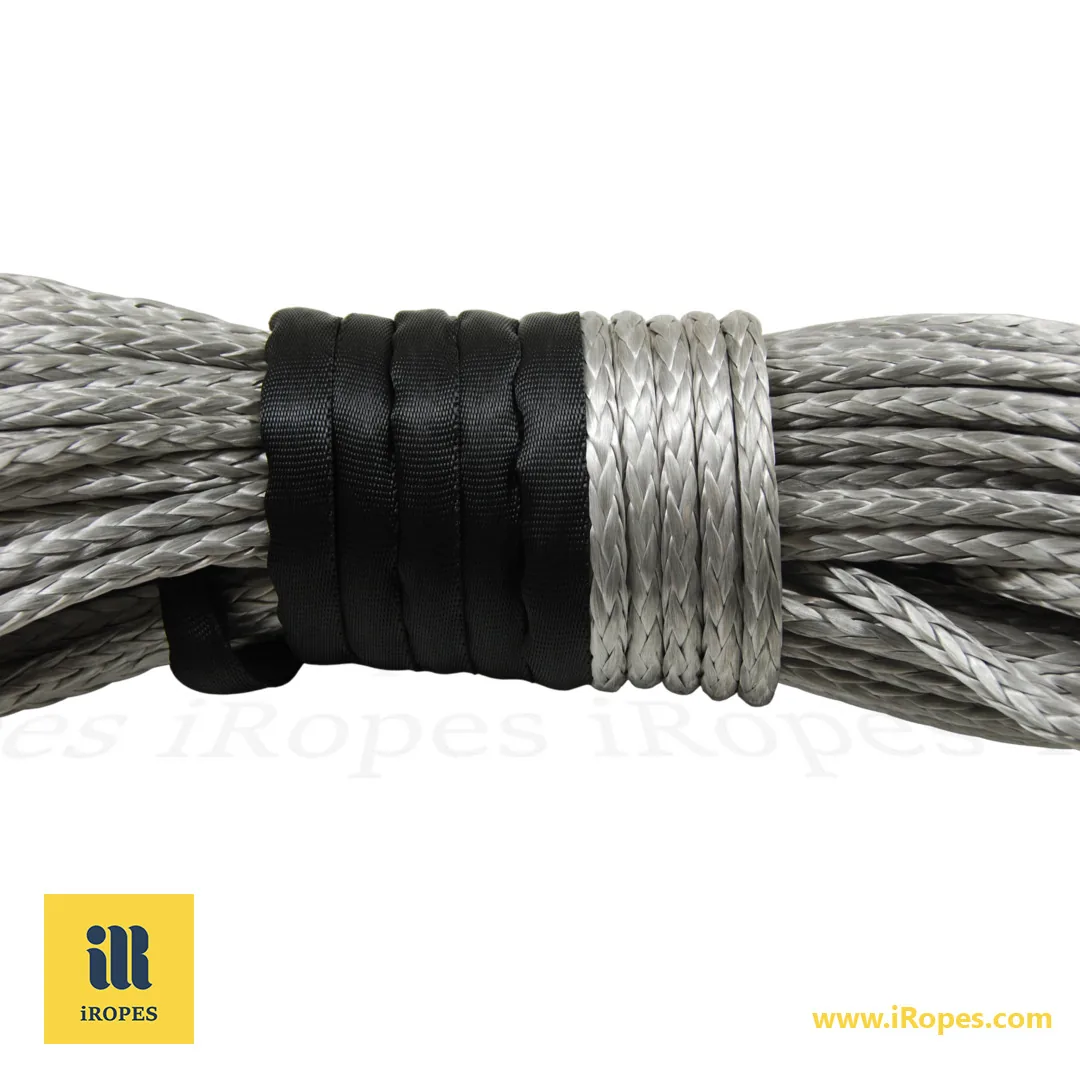
Single-braided ropes deliver up to 12% more load per kilogram than traditional ropes. iRopes offers customisation with 8, 12, 16, or 3-strand constructions, and hollow-braid sleeves in 16, 24, or 32 strands for tailored chafe protection.
Read in 1 min
- ✓ Tailor strand count (8, 12, 16, 3) to optimise lift-to-weight ratios, boosting handling efficiency by up to 30%.
- ✓ Choose hollow-braid sleeves (16, 24, 32 strands) for chafe protection without adding bulk, extending service life by approximately 40%.
- ✓ Apply custom colour-coding or reflective strips for immediate site safety and enhanced brand visibility.
- ✓ Benefit from ISO 9001-certified production and a 48-hour quote turnaround for quicker project rollouts.
Imagine still relying on one-size-fits-all braids while your competitors are reducing kilograms from every lift. That hidden, extra weight can inflate your fuel costs and increase crew fatigue by up to 15%. iRopes has, however, mastered the art of matching strand count, diameter, and colour to each specific task. The real secret lies in a simple design tweak we'll soon reveal. Keep reading to discover how a minor change can significantly boost performance and safety across marine, arborist, and off-road projects.
Single Braided Rope
In response to the increasing demand for high-performance rope solutions, let's explore the world of synthetic single braided ropes. Whether you are rigging a yacht, pruning trees, or recovering a vehicle from challenging terrain, these ropes offer an unparalleled combination of strength and flexibility that traditional laid ropes simply cannot match.
Manufacturers typically provide various strand configurations. For instance, a 12-strand braid achieves an excellent balance between load capacity and pliability. An 8-strand version, by contrast, is often lighter and easier to manage on-site. For tasks demanding greater rigidity, a 16-strand or even a 3-strand construction can be selected. Generally, a higher strand count distributes the load more evenly, though the rope may become slightly stiffer. Moreover, hollow-braid constructions, such as 16, 24, or 32-strand sleeves, function effectively as protective chafing gear, safeguarding delicate equipment without adding unnecessary bulk.
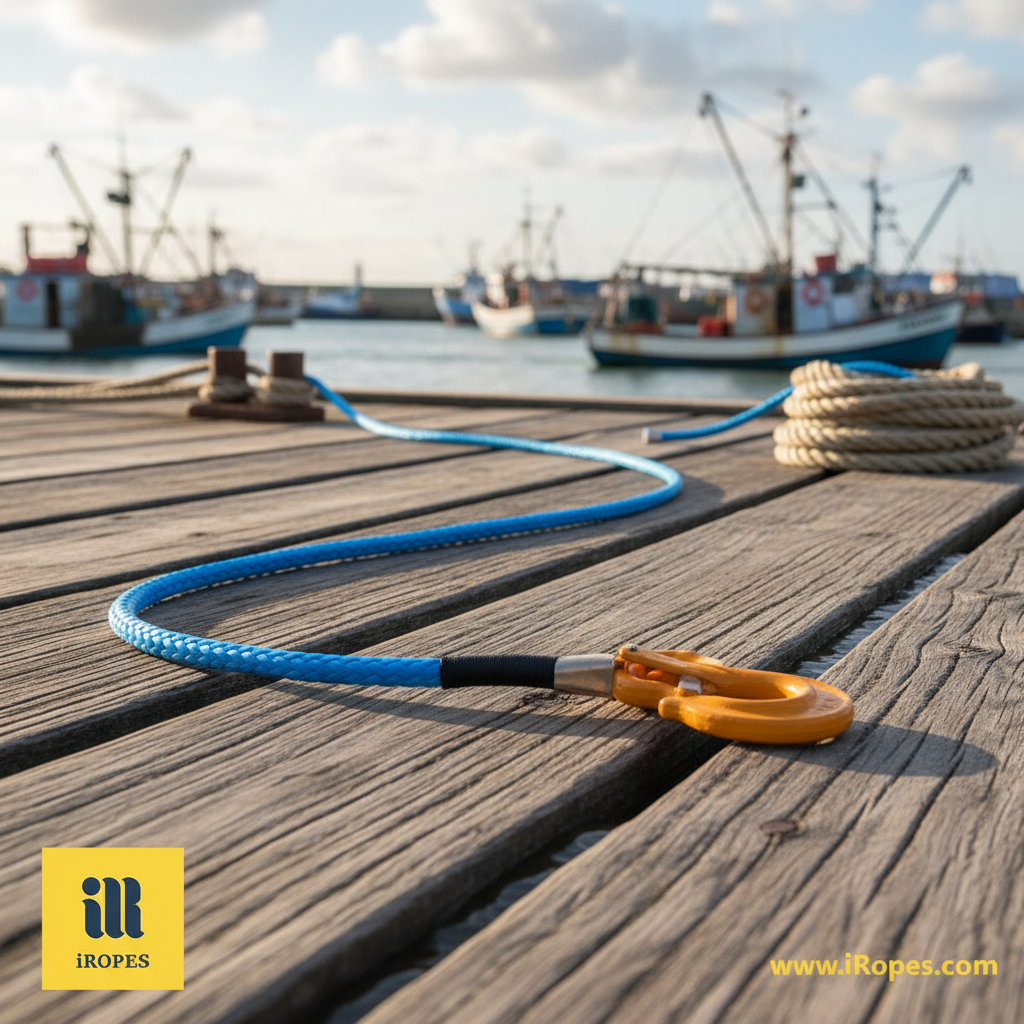
What sets these ropes apart? The following key benefits are highly valued by engineers and field crews alike:
- Lighter weight – Synthetic fibres significantly reduce overall weight compared to steel, simplifying manual handling and cutting transport costs.
- Superior knot holding – The braided texture offers a secure grip, ensuring critical knots remain tight even under dynamic loads.
- Easy splicing – A straightforward mechanical splice allows lengths to be joined in minutes, eliminating the need for specialised tools.
“When I first switched to a 24-strand hollow-braid sleeve for a winch line, the reduction in chafe wear was immediate. The rope lasted twice as long without sacrificing strength.” – Senior Rope Engineer, iRopes
Beyond these performance advantages, the same construction principles extend to what the industry often refers to as a 'single braid line'. This versatility allows you to specify colour, diameter, or even reflective strips for enhanced night-time visibility. With this foundational understanding, our next topic will delve into the metal equivalent that tackles the heaviest lifting tasks: the single wire rope sling.
Single Wire Rope Sling
Shifting our focus to the metal counterpart, a single wire rope sling is created by braiding several individual wire ropes together to form a robust, flexible lifting element. This construction transforms a standard wire rope into a ready-to-use sling, which can then be fitted with eyes, hooks, or loops for demanding heavy-duty applications.
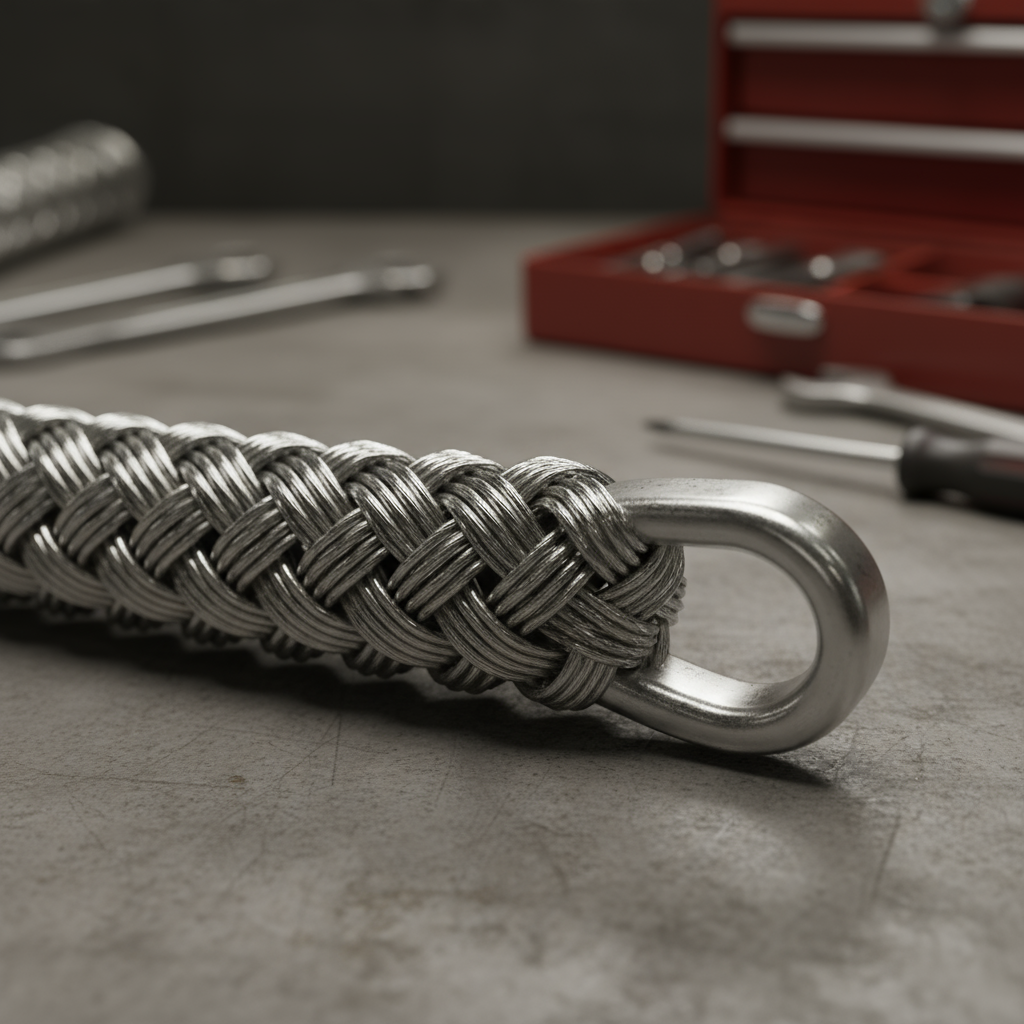
Wire rope slings are available in several 'part' counts, each directly influencing their flexibility, resistance to rotation, and how they distribute load:
- 3-part: This construction results in a flat, low-profile braid, which is well-suited for confined spaces.
- 6-part: Offering a balanced round braid, this option combines strength with ease of handling.
- 8-part: A thicker, higher-capacity braid, commonly employed in demanding crane rigging operations.
Another popular choice is the 9-part construction. This configuration delivers the highest rated capacity among braided slings while preserving remarkable flexibility.
When working with any steel lifting device, safety is, of course, paramount. The industry-standard '3/6 wire rope rule' stipulates that a sling must be immediately withdrawn from service if six or more wires are found broken in a single 'lay' (one complete helical turn of the strands), or if three or more wires are broken in any one strand of a single lay. Adhering to this simple guideline is crucial for preventing hidden damage from compromising the sling’s structural integrity.
3/6 Rule Quick Check
Visually inspect the braid. If you identify six broken wires in one lay, or three broken wires in any strand within a single lay, discard the sling immediately. Regular inspections are key to ensuring your single wire rope sling remains safe and reliable.
Despite their inherent robustness, wire rope slings do have a few noticeable drawbacks. Their steel core makes them substantially heavier than synthetic alternatives, which can significantly increase the effort required for on-site handling. Furthermore, detecting internal damage can be challenging, as the braid effectively conceals broken wires until a comprehensive visual or magnetic examination is conducted. Finally, when compared to high-performance fibres such as Dyneema, their strength-to-weight ratio is lower, meaning a greater mass of material is needed to achieve the same load capacity.
By understanding both the constructional benefits and crucial safety considerations, you are better equipped to select the appropriate single wire rope sling for heavy-lift tasks, whether you're rigging a crane load or securing cargo on a recovery winch. Our next discussion will clarify the often-interchangeable term 'single braid line' and explain how it fits within the context of these robust metal solutions.
Single Braid Line
While the term “single braided rope” frequently refers to the fibre-based product, many users encountering “single braid line” often wonder if it denotes something different. In practice, a single braid line is indeed a synthetic rope constructed with a continuous braid of fibres. However, “single braided rope” can sometimes be used more broadly to include hollow-braid sleeves. The primary distinction often lies in their intended purpose: a 'line' is typically marketed for load-bearing applications like rigging, whereas a 'braid sleeve' is usually offered as a protective covering.
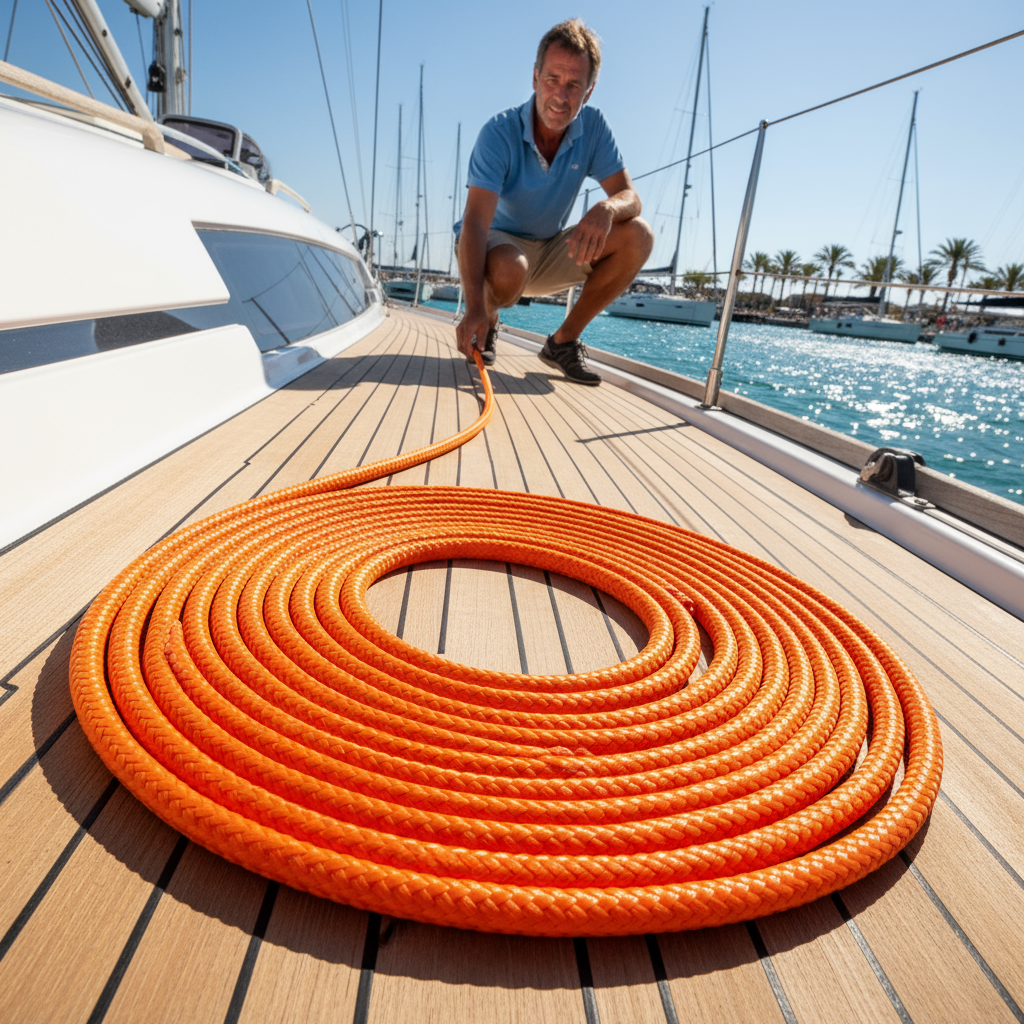
The material you select profoundly influences how the line performs under various conditions, including load, UV exposure, and abrasion. Dyneema, for instance, provides the highest strength-to-weight ratio available, making it an excellent choice for high-performance sailing rigs. Polyester, on the other hand, boasts superior UV resistance and maintains its strength effectively in wet conditions—a critical characteristic for off-road recovery lines. Nylon introduces a degree of stretch, which can be advantageous in tree-work rescue scenarios where shock absorption helps mitigate peak forces on the load.
Materials
Core fibre choices
Dyneema
This ultra-light yet immensely strong material resists moisture and chemicals, making it perfect for marine and high-tension applications.
Polyester
With excellent UV stability and minimal stretch, polyester is well-suited for outdoor rigs constantly exposed to sunlight.
Nylon
Nylon offers modest elasticity, a beneficial trait for shock-absorbing loads in specific arborist rescue situations.
Performance
Key benefits
Strength-to-weight
These lines offer greater capacity per kilogram than traditional steel ropes, simplifying handling and transportation.
UV resistance
Ropes maintain their tensile strength even after prolonged sun exposure, significantly extending their service life on decks and rigs.
Low stretch
Predictable elongation ensures improved load control, which is crucial for precise lifting and rescue operations.
When determining the correct size for a line, the Working Load Limit (WLL) is typically calculated by dividing the rope’s breaking strength by the industry-standard safety factor, which is usually five. For example, a 12 mm Dyneema line with a breaking strength of 50 kN would yield a WLL of approximately 10 kN. Selecting the appropriate diameter ensures the line meets the required load capacity while simultaneously keeping its weight to a minimum.
Real-world users apply these characteristics daily. For instance, a yachting crew might specify a 10 mm Dyneema single braid line for the forestay because it effectively manages the dynamic loads of sailing without sagging. In tree-work rescue, professionals often favour a 6 mm nylon line due to its slight elasticity, which can absorb the shock of a fall, thereby protecting both the victim and the anchor point.
A comprehensive understanding of material nuances, load calculations, and typical use cases is crucial for selecting the ideal single braid line for any project. iRopes manufactures each line to these precise specifications, incorporating colour codes, reflective strips, or custom-branded terminations to ensure the product integrates seamlessly into your workflow, just as the rope itself performs flawlessly.
Customisation and Industry Applications
Having explored the technical fundamentals of each rope type, the next crucial step involves translating these specifications into practical solutions tailored to a customer’s exact operational requirements. iRopes provides a comprehensive OEM/ODM pathway, transforming a list of needs into a fully finished product that is ready for global shipment.
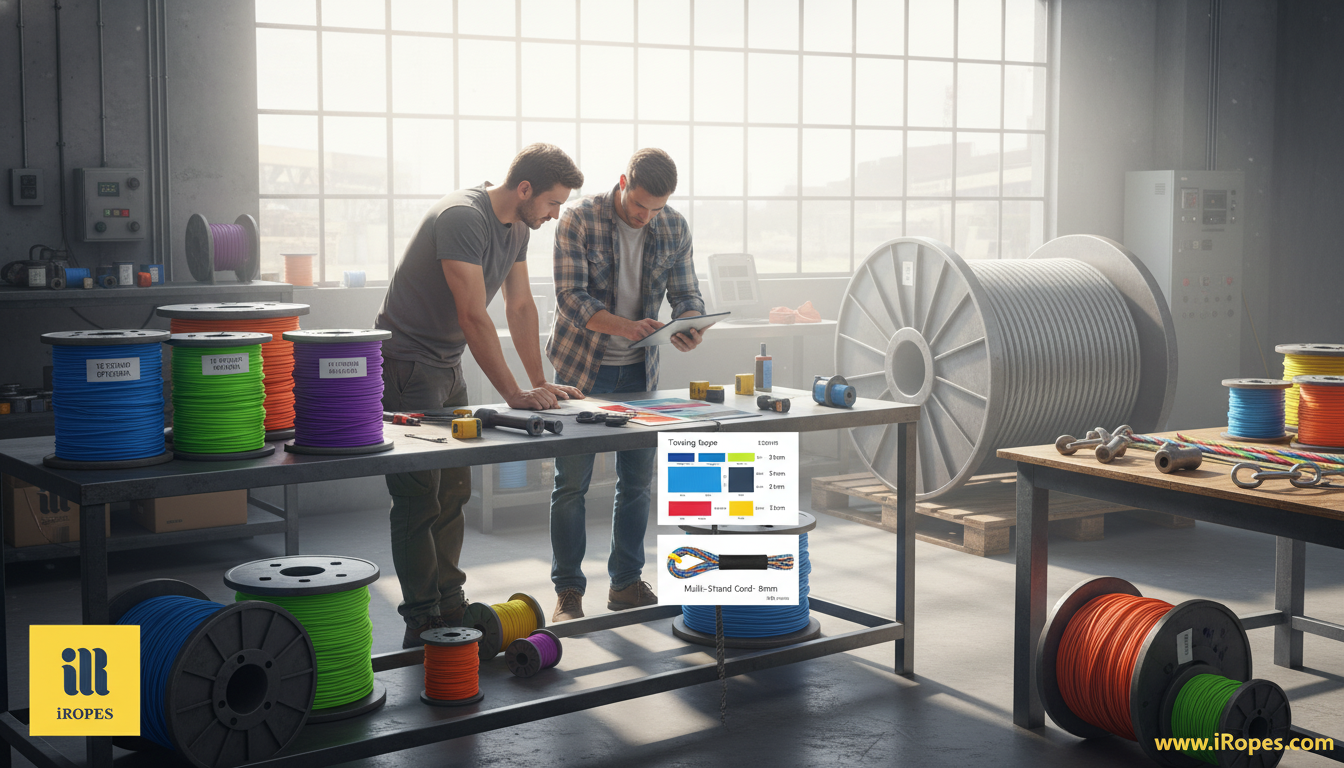
OEM/ODM Process: From Material to Branding
The process begins with clients selecting a base material—Dyneema for its ultra-light strength, polyester for its UV endurance, or nylon when moderate stretch is desired. Our engineers then precisely calculate the optimal diameter and length needed to meet the required Working Load Limit while ensuring the weight remains manageable. Colour and pattern choices serve a dual purpose: they function as visual safety codes on a job site and simultaneously reinforce corporate branding. Finally, crucial accessories such as thimbles, eye terminations, or reflective inserts are added, and the entire assembly is packaged in either non-branded bags or custom-printed cartons, depending on the buyer’s specific logistical requirements. For detailed guidance on our customization options, please explore our dedicated customization page.
Industry-Specific Case Studies
In marine rigging, a yacht manufacturer requested a 10 mm Dyneema single braid line featuring orange‑white striped markings for the forestay. This custom colour code not only expedited inspection times on deck but also adhered to the vessel's strict weight budget. Similarly, an off‑road recovery firm required a 12 mm single braided rope with a hollow‑braid sleeve to protect a winch cable; the sleeve’s 24‑strand construction impressively extended its service life by 40% in harsh, abrasive mud conditions. Furthermore, a construction contractor specified a 6‑part single wire rope sling with a galvanised eye for lifting precast concrete panels. The braided geometry of this sling provided greater flexibility than a traditional steel rope, enabling it to navigate tight crane angles without kinking.
All iRopes products are manufactured under ISO 9001 certified processes and include full IP protection for client designs.
Quality Assurance and Global Delivery
Every batch of our products undergoes rigorous tensile testing, thorough visual inspection, and precise dimensional verification before it leaves our facility. Our ISO 9001 framework guarantees that the same systematic controls are applied consistently, regardless of whether the order is for a single‑piece prototype or a container‑load of custom‑branded slings. Intellectual property safeguards are meticulously integrated into our production workflow, ensuring that proprietary colour schemes or performance enhancements remain exclusive to the ordering company. Furthermore, shipping is efficiently coordinated through our dedicated freight partners, offering real-time tracking that aligns perfectly with the buyer’s project schedule.
How to Request a Custom Quote or Sample
Prospective clients can begin by completing our online specification form, where they are welcomed to upload engineering drawings, select specific material grades, and indicate any desired branding elements. Within 48 hours, the iRopes technical team will respond with a detailed quotation outlining price, lead time, and recommended testing certificates. For projects with high‑risk considerations, a short‑run sample can be dispatched at no cost. This invaluable service allows the buyer to thoroughly validate splice quality, colour accuracy, and accessory fit before committing to full production.
Ready to customise?
Submit your specifications today and receive a tailored quote within 48 hours, backed by guaranteed on-time delivery.
This detailed custom‑design workflow naturally transitions into the next critical phase: demonstrating how iRopes meticulously aligns each engineered solution with the specific operational challenges across various sectors, from demanding heavy‑lift rigging to delicate precision arborist rescue.
Ready for a tailor-made rope solution?
This article has demonstrated how single braided rope can be meticulously tailored with 12‑strand, 8‑strand, 16‑strand, or even 3‑strand cores. We’ve also revealed how hollow‑braid sleeves, available in 16, 24, or 32 strands, effectively protect cables without adding bulk. Furthermore, we’ve covered the inherent strength and essential safety regulations pertaining to single wire rope sling constructions. Finally, we clarified the crucial distinction of a single braid line for demanding load‑bearing tasks such as yacht rigging or intricate tree‑work rescue. With iRopes’ ISO‑9001 certified OEM/ODM capabilities, you possess the flexibility to specify material, colour, reflective trims, and various accessories to perfectly match any project’s requirements.
If you'd like personalised guidance to select the ideal configuration, simply complete the enquiry form above, and our dedicated technical team will respond to you within 48 hours.