⚠️ Myth busted: Contrary to maritime lore, polypropylene ropes—floating with a 0.91 specific gravity—aren't suited for primary boat anchors due to zero stretch under load, but they retain 70% strength after 12 months of UV exposure for superior visibility in dock lines and towing. Choose wisely to slash chafe risks by 50% and secure your vessel.
Unlock Safer Seas in a 12-Minute Read →
- ✓ Grasp why nylon's 15-20% elasticity trumps polypropylene for anchors, preventing drag in 7:1 scope ratios and boosting hold by 40% in swells.
- ✓ Harness polypropylene's buoyancy for effortless retrieval in towing and markers, cutting search time by 80% in murky waters.
- ✓ Master custom iRopes solutions like reflective 10mm diameters with ISO 9001 assurance, tailoring to your fleet for 3-5 year longevity gains.
- ✓ Sidestep common pitfalls with maintenance hacks that combat saltwater abrasion, extending usability 2x over generic ropes.
You've likely trusted floating ropes for anchors, assuming visibility equals security—yet this overlooks how rigid lines transfer every wave's jolt straight to your gear, risking failure in a squall. What if swapping to nylon with chain leads could halve your drift odds while polypropylene handles secondary floats flawlessly? Dive in to uncover iRopes' custom tweaks that transform these myths into your competitive edge on the water, ensuring compliance and calm voyages ahead.
Understanding Maritime Ropes: The Foundation of Safe Marine Operations
Imagine you're out on the water, whether commanding a sleek yacht or managing a commercial fishing vessel, and everything hinges on that one line securing your boat. Maritime ropes aren't just simple cords; they're the unsung heroes keeping operations smooth and safe. These essential tools are designed specifically for marine environments, handling immense stresses from waves, wind, and vessel movements. At their core, maritime ropes serve critical roles across docking, where they secure vessels to piers without slipping; towing, pulling heavy loads like barges or assisting in rescue operations; and anchoring, holding boats steady against currents in harbours or open seas.
For various vessel types, from small recreational dinghies to large cargo ships, the right rope can mean the difference between a secure hold and a dangerous drift. Consider a ferry operator relying on robust lines to manage passenger boarding in choppy waters, or a sailor in a storm needing an anchor line that won't fail under pressure. These ropes must withstand constant exposure to saltwater, which corrodes lesser materials, and deliver reliable performance day after day.
- Strength - Measured by breaking strength, this ensures the rope can handle loads far beyond normal use, such as a sudden gust pulling a 10-tonne vessel.
- UV Resistance - Protects against sun damage that weakens fibres over time, vital for ropes left exposed on deck for months.
- Buoyancy - Determines if the rope floats or sinks, affecting visibility and retrieval in water—floating options prevent snags on underwater hazards.
- Abrasion Resistance - Guards against wear from rubbing against rough surfaces like boat hulls or rocky bottoms.
- Chemical Resistance - Resists degradation from oils, fuels, and saltwater, extending usability in harsh marine settings.
What makes a rope high-performance? It's all about balancing these traits to suit the task. Have you ever wondered why some lines feel stiff while others are supple? That flexibility aids handling, making splicing or knot-tying easier on a rocking boat. Durability here isn't just a buzzword—it's about ropes that last through seasons of abuse without fraying.
To choose wisely, understanding common materials helps. Nylon offers excellent elasticity, stretching up to 30% to absorb shocks, ideal for dynamic loads—picture it snapping back like a rubber band during waves. Polyester provides superior strength with minimal stretch, perfect for steady mooring where you don't want give. Then there's polypropylene rope, lightweight and floating, which shines in visibility-critical spots but lacks the give of nylon. For context, ultra-high-molecular-weight polyethylene like Dyneema adds extreme tensile strength for specialised needs, though it's pricier. Each material's profile shapes its best fit, setting the stage for exploring standout options that float and perform uniquely in marine challenges.

Exploring Marine Polypropylene Rope: Properties, Benefits, and Versatile Uses
Building on the diverse materials that form the backbone of maritime operations, polypropylene stands out as a material that literally rises to the occasion—by floating on water. This unique trait, combined with its practical design, makes marine polypropylene rope a go-to choice for many on-the-water tasks where staying visible and easy to grab matters most. Let's dive into what sets it apart in those harsh, saltwater-drenched settings.
Picture this: you're rigging up for a day on the bay, and you need a line that won't weigh you down or sink out of sight. Marine polypropylene rope delivers exactly that with its inherent buoyancy, meaning it stays afloat without absorbing water like some alternatives. At just 0.91 specific gravity, it's lighter than water, which not only simplifies handling but also prevents it from dragging along the seabed where it could snag on debris. Add to that its featherweight feel—often half the weight of comparable nylon lines—and you've got something that's a breeze to coil, throw, or store on a cramped deck.
But lightness doesn't mean weakness here. This rope resists chemicals like oils, fuels, and even mild acids commonly found around engines or docks, shrugging off degradation that would fray lesser options. UV stability is another win; stabilised grades hold up under prolonged sun exposure, maintaining strength where direct rays would brittle other synthetics. I once watched a charter captain swear by it after a season in the tropics—his lines looked as fresh as new, despite the relentless glare. These qualities make it ideal for environments where exposure to the elements is inevitable, offering reliability without the bulk.
Construction Types
Variations for Every Task
3-Strand Twisted
Economical and straightforward, this build twists fibres into three robust strands for solid grip and easy splicing, perfect for basic utility where cost counts.
Solid Braid
Dense and uniform, it offers smooth handling with consistent strength across loads up to 5,000 pounds in common diameters, ideal for dynamic pulls.
Hollow Braid
Flexible and lightweight, this tubular design allows quick knots and covers, balancing ease of use with tensile ratings that suit lighter marine duties.
Key Benefits
Why It Excels at Sea
Buoyancy Boost
Floats reliably, enhancing safety by keeping lines visible and retrievable without diving efforts.
Chemical Durability
Withstands saltwater corrosion and spills, lasting longer in contaminated waters than many peers.
UV Endurance
Retains up to 70% strength after a year of exposure, far outpacing untreated options in sunny climes.
Where does all this shine in practice? Think dock lines that bob on the surface, making it simple to spot and secure a slipping vessel during a busy harbour approach. Towing lines for watersports or light loads benefit from the reduced drag and quick recovery if they go overboard. Safety markers around swim areas or dive sites stay prominent, alerting others to hazards below. Even temporary moorings in calm shallows use its float to avoid underwater tangles, easing setup for a quick lunch stop. Ever struggled to fish a sunk line from murky depths? With this material, retrieval becomes straightforward, saving time and frustration on the water.
These versatile roles highlight how marine polypropylene rope fits into everyday marine routines, prioritising ease and visibility over raw power in less demanding spots.

Debunking Myths: Is Polypropylene Rope for Anchor Suitable or Not?
While marine polypropylene rope brings real advantages to tasks like dock lines and towing where its float keeps things in view, anchoring introduces some head-scratching choices that deserve a closer look. You've probably heard the debate: can this floating wonder really hold your boat steady in a blow? Let's cut through the confusion with straightforward facts drawn from years of real-world boating experience.
Is polypropylene rope for anchor good? In short, no—not as your main line in serious conditions. Its biggest drawback here is the lack of stretch; unlike materials that give under pressure, polypropylene stays rigid. This means it can't cushion the sudden jerks from waves or wind gusts, transferring every jolt straight to your anchor and risking it dragging across the bottom. Plus, since it floats, the line rides high on the surface, making it prone to rubbing against the bow roller or hull edges—chafe that could part the rope mid-storm. I remember a fishing trip off the coast where a buddy tried it for a quick overnight; calm seas were fine, but the first swell had us resetting the hook twice before switching setups. By contrast, nylon sinks gently and stretches up to 15-20% under load, acting like a built-in shock absorber to keep tension even and your ground tackle secure.
So, what is the best rope for anchoring a boat? Hands down, nylon takes the crown for primary rodes, especially when safety counts in rough weather. It combines high tensile strength with that vital elasticity, ensuring better holding power as it lays flat on the seabed to help the anchor dig in. For a 30-foot vessel, you'd want at least 3/8-inch nylon with a breaking strength around 6,000 pounds, paired with 4-6 feet of chain upfront. This setup handles heavy loads without snapping, giving peace of mind whether you're on a recreational outing or running commercial operations.
Polypropylene Limits
Limited stretch increases shock risk; floating design raises chafe chances on boat parts.
Secondary Roles
Works for light, short-term holds in calm shallows or as a visible marker line.
Nylon Strengths
Elasticity absorbs surges; sinking aids anchor bite and seabed conformity.
Chain Integration
Adds weight for better setting and protects rope from bottom abrasion.
That said, polypropylene rope for anchor isn't entirely useless. It shines as a backup or temporary fix in shallow, protected spots under 10 feet deep, where its buoyancy makes retrieval a snap without snagging props. Or, use it for marker buoys to flag dive sites, keeping the line visible for nearby traffic. To make it work even there, always lead with chain: a short section adds the heft needed for the anchor to set properly and shields the rope from gritty seabeds that wear it down fast. Ever anchored in sand where everything shifts? That chain keeps the system stable.
Beyond picking the right line, commercial maritime setups must align with standards like those from the International Maritime Organization or ABS rules for anchor systems. These ensure your gear meets load tests and material specs, preventing failures that could endanger crew or cargo. Compliance means regular checks for wear and using certified ropes that hold up in inspections—vital for insurance and operations in busy ports. iRopes' products are backed by ISO 9001 certification, ensuring reliable performance in demanding commercial applications.
Getting these details right turns potential pitfalls into reliable performance, paving the way for tailoring your setup to exact needs like vessel scale or local waters.

Selecting and Customizing the Right Maritime Ropes: iRopes' Expertise in Action
Now that we've sorted out the best fits for anchoring and other core tasks, turning those insights into action means zeroing in on your specific setup. Whether you're outfitting a fleet of fishing boats or prepping a yacht for long hauls, selecting the right maritime ropes boils down to aligning specs with your real-world demands. It's like picking the perfect tool for a job—not too flimsy, not overkill, just right to keep things running smoothly without unnecessary hassle.
Start with your vessel's size: for a 20-foot runabout, a 1/4-inch diameter line often suffices, offering enough strength without excess weight that could bog down handling. Scale up to a 50-footer, and you might need 5/8-inch for breaking strengths exceeding 10,000 pounds to manage heavier displacements. Then factor in scope ratios—aim for that 7:1 or 8:1 sweet spot, where rode length is seven or eight times the water depth, ensuring the anchor sets firmly without pulling free in a squall. Environmental quirks play a big role too; in windy channels with rocky bottoms, opt for abrasion-resistant builds that won't fray on sharp edges, while sandy bays call for lines with good grip to hold steady against shifting currents. Have you ever anchored in a spot where the wind whips up unexpectedly? Matching these elements upfront saves headaches and boosts confidence on the water.
- Rinse thoroughly with fresh water after every use to flush out salt crystals that accelerate wear.
- Store coiled loosely in a cool, dry spot away from direct sun, avoiding tight kinks that weaken fibres over time.
- Inspect monthly for frays, stiffness, or colour fading—cut away damaged ends immediately and retire the whole piece if degradation hits 20% strength loss.
These steps keep your gear in top shape, warding off the saltwater grind that shortens life spans. A well-cared-for line can last three to five years, even in tough conditions, turning a one-season wonder into a reliable staple.
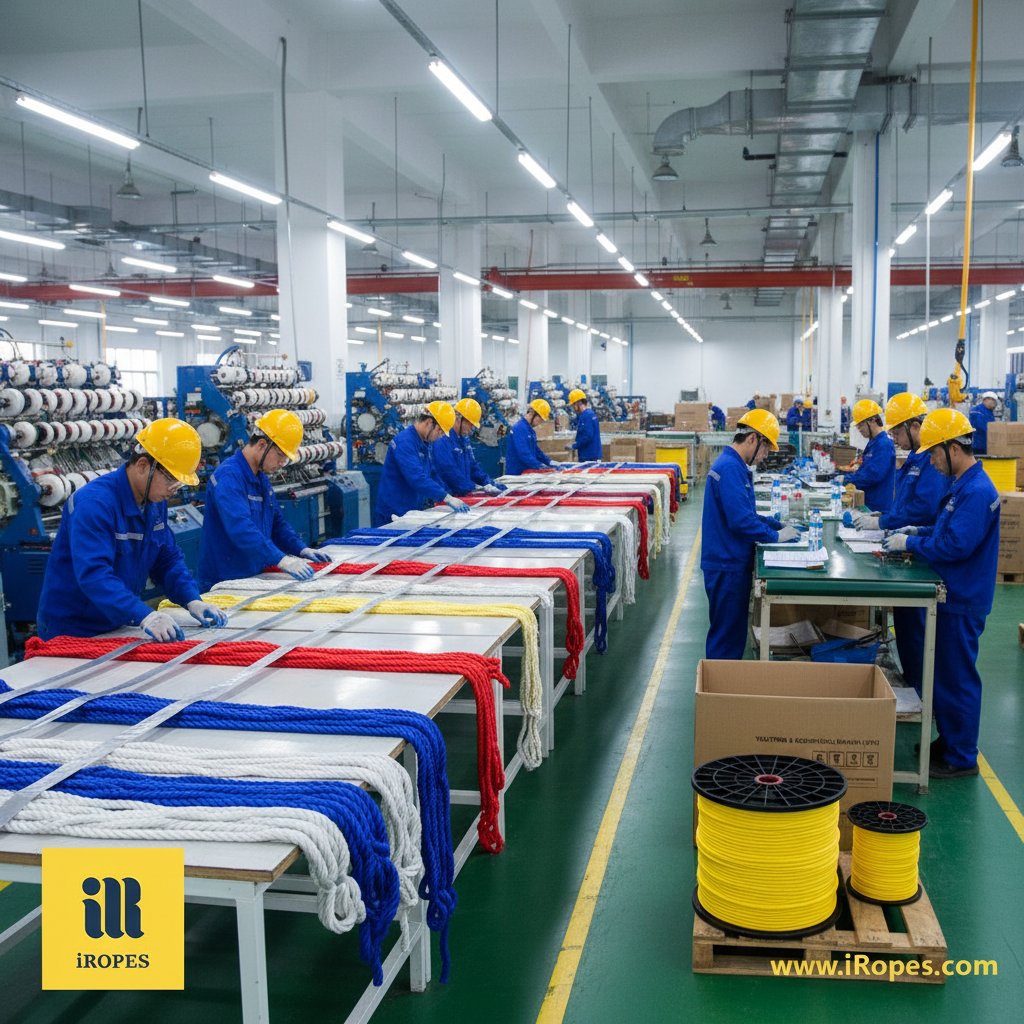
That's where iRopes steps in with tailored solutions that make customisation feel effortless. Our OEM and ODM services let you dial in marine polypropylene rope specs precisely—say, 10mm diameter for versatile dock work, vibrant colours for quick spotting at dusk, or woven-in reflective strips that glow under lights for night ops. We handle everything from eye splices to thimbles, all backed by ISO 9001 standards that guarantee consistency from our state-of-the-art facilities straight to your deck. For wholesale partners, it's a game-changer: snag competitive rates on bulk orders, rest easy with full IP safeguards on your designs, and count on pallet shipments worldwide that hit deadlines without a hitch.
iRopes Custom Edge
From branded cartons to length-cut precision, we craft polypropylene solutions that match your brand and boost fleet efficiency—delivered globally with zero compromises on quality.
Picture equipping your operation with lines that not only perform but reflect your standards—it's this level of personalisation that elevates everyday maritime tasks into seamless successes.
Navigating the complexities of maritime ropes reveals how marine polypropylene rope excels in visibility-driven tasks like dock lines, towing, and safety markers, thanks to its buoyancy, lightweight design, and resistance to UV and chemicals—ideal for commercial boating where quick retrieval boosts efficiency and safety. Yet, as we've debunked, polypropylene rope for anchor suits only secondary or shallow-water roles, with nylon reigning supreme for primary anchoring due to its elasticity and sinking properties, ensuring compliance with maritime standards and optimal holding in demanding conditions.
Leveraging these insights, businesses can procure tailored solutions that match vessel needs, scope ratios, and environmental factors, enhancing operational reliability without myths clouding judgement. For high-performance options in commercial marine applications, iRopes' OEM expertise delivers customisable maritime ropes with ISO 9001 assurance, competitive pricing, and global delivery for wholesale partners.
Discover Tailored Rope Solutions for Your Maritime Needs
If you're seeking personalised guidance on selecting or customising ropes for your commercial applications, the inquiry form above connects you directly with iRopes specialists ready to address your specific requirements.
